Visa
About Ankole Western University
A university rooted in western Uganda
Ankole Western University is situated on Kabwohe Hill in Kabwohe Division, Sheema Municipality, in south-western Uganda. Known as AWU, it developed from Ankole Western Institute of Science and Technology, which was founded in 2005. Its institutional history is closely connected with the educational work of West Ankole Diocese.
The university traces the idea of a local higher education institution to the expansion of diocesan secondary schooling. Its history records a 1982 synod resolution supporting the creation of a university, followed by work on tertiary curricula and the practical requirements for establishing an institution. The project continued through changes in diocesan leadership before the institute began operating. This background places AWU within a longer regional effort to extend education from secondary schools into tertiary study, with Kabwohe becoming the location for the developing institution.
Sources: About Ankole Western University ↗ · Historical background ↗
Christian purpose and institutional values
The university’s vision is to become a community-oriented centre of learning and research. Its mission connects professional education with accountability and Christian faith. The institutional motto, Light of the World, expresses that religious foundation.
Its published values include Christ-centredness, academic excellence, integrity, diligence, teamwork, transparency and accountability. The accompanying philosophy links human development with dedicated service to others. Together, these statements explain how the university presents the relationship between academic work, personal conduct and responsibilities within the wider community.
Fields of study and programme formats
The published programme list covers humanities and management, education, agriculture, computing and informatics, and theology and pastoral studies. Management-related bachelor’s subjects include business administration, public administration and management, social work and social administration, accounting and finance, and tourism and hospitality management. Education provision includes arts and science degrees with education, alongside in-service routes in primary and secondary education.
Agricultural study includes agricultural science and entrepreneurship and agribusiness management, as well as diploma subjects in animal production, crop production and animal health. Computing provision includes information technology, computer science, and library and information science. The list also includes a diploma in data science and analytics. Divinity, theology and pastoral study form another part of the academic range. Programme entries distinguish regular, weekend and in-service arrangements, with the format depending on the particular course rather than applying uniformly across the university.
Sources: Academic programmes ↗

Coordination of postgraduate study and research
The Directorate of Postgraduate Studies and Research coordinates postgraduate training and the research and publications produced by university staff and students. Its role also includes developing links with public and private stakeholders, particularly relationships connected with university–industry cooperation.
The directorate describes provision at postgraduate diploma and master’s levels. Its educational purpose combines professional development with the preparation of researchers able to address practical problems. Research, publication and external collaboration therefore appear within the same coordinating structure, connecting postgraduate education with the university’s wider academic work and relationships beyond the campus.
Library collections and digital access
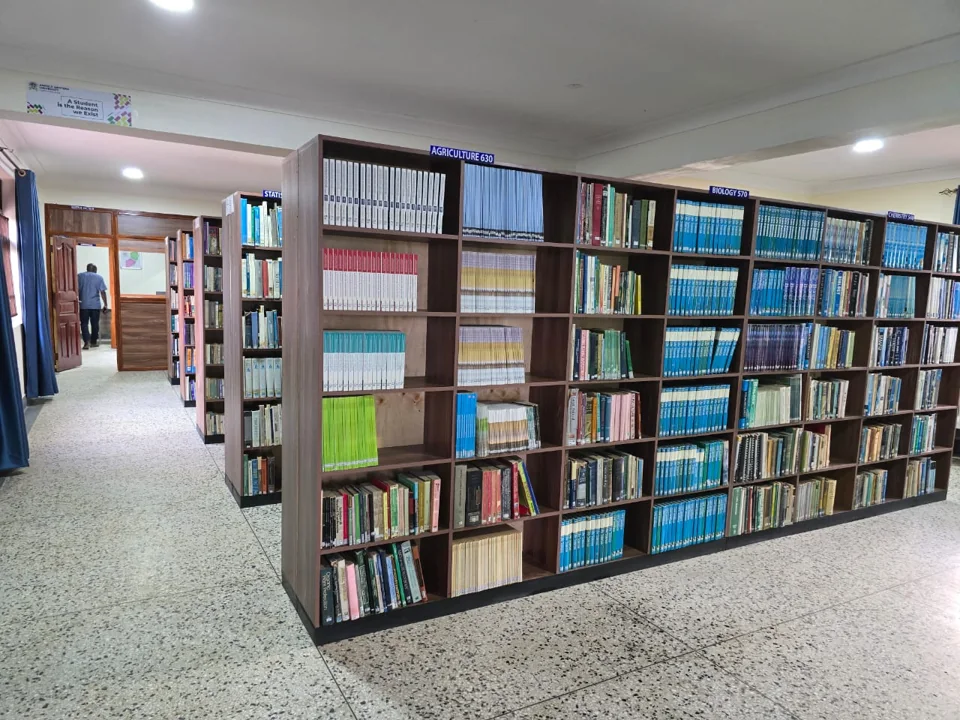
The university library combines physical collections with electronic research resources. Its published service description explains that membership of the Consortium of Uganda University Libraries provides access to academic databases and electronic materials. The myLOFT platform supports access to these resources, while library staff assist users with account creation and the use of digital tools.
The library also describes an information technology section with Wi-Fi and an expanded study area. Its adoption of the KOHA integrated library management system supports cataloguing, searching and the circulation of physical materials, including borrowing and returning books. Registered users receive email updates about acquisitions and services. These arrangements connect access to shelves and study spaces with electronic discovery and communication, giving students and staff several ways to locate resources and use the library’s support.
Sources: University library services and resources ↗
Student interests and participation
The student-life page describes a university community drawing learners from across Uganda. Clubs and student associations provide ways to participate beyond scheduled academic classes, including associations linked with students’ home districts and opportunities to learn about Ankole culture.
The university also identifies inter-faculty sport at Sheema Stadium and watching football among its examples of student recreation. Its account presents campus life through collaboration, cultural participation and shared activities as well as study. These activities give the university’s social environment a regional character, connecting students’ backgrounds and interests with their experiences of living and learning alongside other members of the institution.
Sources: Student life and culture ↗
Chaplaincy and spiritual participation
The Mustard Seed Chapel provides the focus for the university’s chaplaincy. Its published activities include Tuesday and Friday community hours, Sunday worship, Bible study, fellowship, workshops and spiritual counselling.
Students participate in chapel leadership, the choir and outreach missions. The chaplaincy also describes opportunities for students to develop church leadership and preaching roles. Spiritual participation is therefore organised through regular gatherings and student involvement, giving practical expression to the Christian identity described in the university’s institutional values.
Sources: Mustard Seed Chapel and chaplaincy ↗
Orientation and adjustment to university life
A university report dated 10 August 2026 records a freshers’ orientation session addressed by educationist Peace Busingye, a principal education officer in the Ministry of Education and Sports’ guidance and counselling department. The session discussed discipline, consistency and patience in academic and personal development.
The report also records discussion of relationships with parents and guardians, finding mentors, budgeting and distinguishing needs from other spending. It illustrates how orientation addressed everyday responsibilities alongside the transition into academic study. Students were encouraged to learn from people and experiences around them as well as from classroom teaching.
Authorship, publication and professional learning
On 12 August 2026, the university reported a workshop for staff and students of the Directorate of Postgraduate Studies. It was organised by the Uganda Reproduction Rights Organisation, the Uganda Registration Services Bureau and Writers-Authors Investment Company.
The workshop addressed authors’ rights, copyright and neighbouring rights, and the commercialisation of written work. Its stated educational purpose included strengthening authorship within the institution and improving the availability of Ugandan-authored books. The report connects postgraduate and staff development with the practical work of writing and publication, including awareness of the economic and moral rights associated with authorship.
Sources: Authorship and copyright workshop, 12 August 2026 ↗