Visa

About Africa Renewal University
A Christian university in Buloba
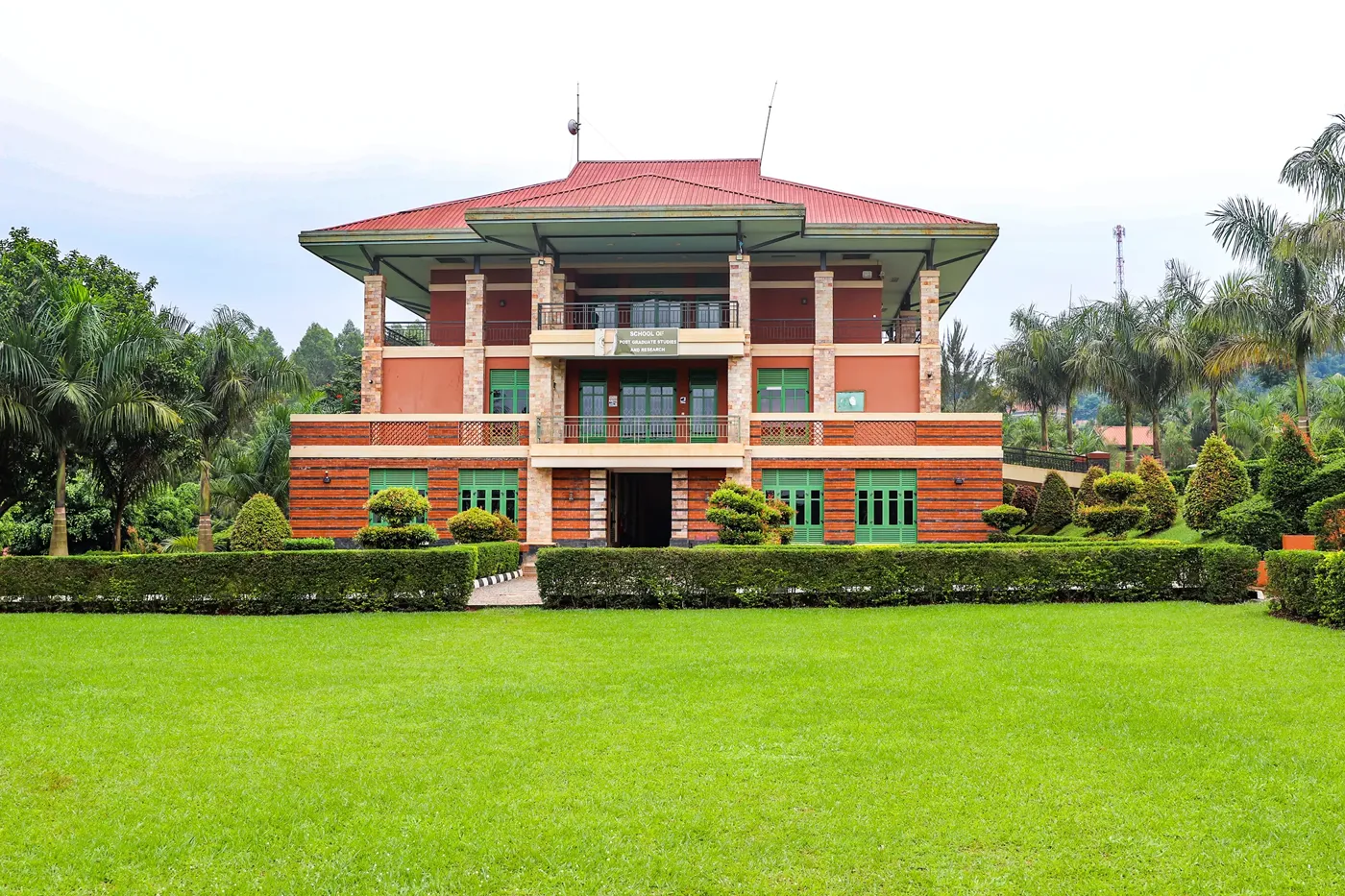
Africa Renewal University, commonly abbreviated AfRU, is a Christian higher education institution in Buloba, Uganda, on the Mityana Road outside Kampala. Its institutional history traces its origins to Gaba Bible Institute in 2007, followed by Africa Renewal Christian College in 2010 and the transition to Africa Renewal University in 2013. The institution developed from Africa Renewal Ministries, whose history it dates to 1990. This background connects the university's educational work with a wider religious and community-service organisation.
AfRU's published vision focuses on transformational leadership for the church and society. Its mission links study of Scripture, spiritual development and service, while its values include Christ-centred learning, integrity, excellence, servant leadership, community and diversity. These principles provide a framework for programmes extending beyond theology into education, business, computing and other professional subjects. The university describes leadership as a responsibility toward others, giving its religious identity a connection with the way it presents professional education and community participation.
Sources: Institutional history and mission ↗

Business and computing education
The School of Business and Computing brings together two departments with different but related subject interests. Business programmes listed by the school include business administration, finance and accounting, procurement and logistics, and business computing. The computing department lists computer science, software engineering, information technology and information systems. Its teaching description identifies case studies, simulations, group projects, internships, technical laboratories and guest lectures as ways to connect theory with practical questions. Workshops and mentoring also appear in its account of the student experience.
The Bachelor of Computer Science is presented as a three-year programme at Buloba. Its published course structure begins with programming fundamentals, computer hardware and software, mathematics for computing, and academic writing. Later subjects include object-oriented programming, data structures and algorithms, operating systems, database management, web and mobile applications, and research methods. The final-year description introduces artificial intelligence and machine learning, software engineering, computer networks and cybersecurity, alongside internships and a final project.
The computer science programme also includes biblical survey, Christian ethics and leadership subjects. Its stated learning outcomes combine the design and implementation of computer systems with professional conduct and collaborative work. This structure reflects the university's intention to place technical education within a wider approach to character and responsibility. Programming and systems knowledge are therefore presented alongside communication, research and ethical questions rather than as isolated practical skills.
Sources: School of Business and Computing ↗ · Bachelor of Computer Science ↗
Graduate business study
The Master of Business Administration is described as a two-year programme covering the principal functions of an organisation. Its published subjects include organisational behaviour, managerial economics, business research methods, strategic management, accounting and finance for managers, business law, corporate ethics and marketing. Later study includes operations and supply chains, entrepreneurship, human resource strategy, international business and trade, and Christian leadership in business. A final research project or thesis forms part of the course structure.
The MBA description emphasises evidence-based responses to organisational challenges and the integration of finance, strategy, innovation and people management. The programme is presented for learners interested in corporate, entrepreneurial, nonprofit or public-sector contexts. This broad organisational perspective complements the more specialised undergraduate pathways within the School of Business and Computing. Its combination of taught subjects and research gives students different ways to examine how organisations make decisions and adapt to change.
Sources: Master of Business Administration ↗
Education and theological formation
The university's education and theology information lists a Bachelor of Theology, Diploma in Theology and Certificate in Ministry, together with a Master of Arts in Theological Studies. The master's description identifies interests in theological studies, church planting, Christian leadership and community development. Practical learning includes local church internships, community outreach, discipleship activities, preaching workshops and exposure to mission work. These activities connect academic religious study with the settings in which participants may practise ministry and service.
Education provision includes arts with education, primary and secondary education pathways for practising teachers, early childhood care and education, and disability studies and special education. Diploma routes are also listed in several of these areas, alongside a Postgraduate Diploma in Education and a Master of Education Planning and Management. This range reflects attention to different stages of schooling and different educational needs, from early childhood to professional development for teachers and educational managers.
Sources: Education and theology programmes ↗
Library study and service beyond campus
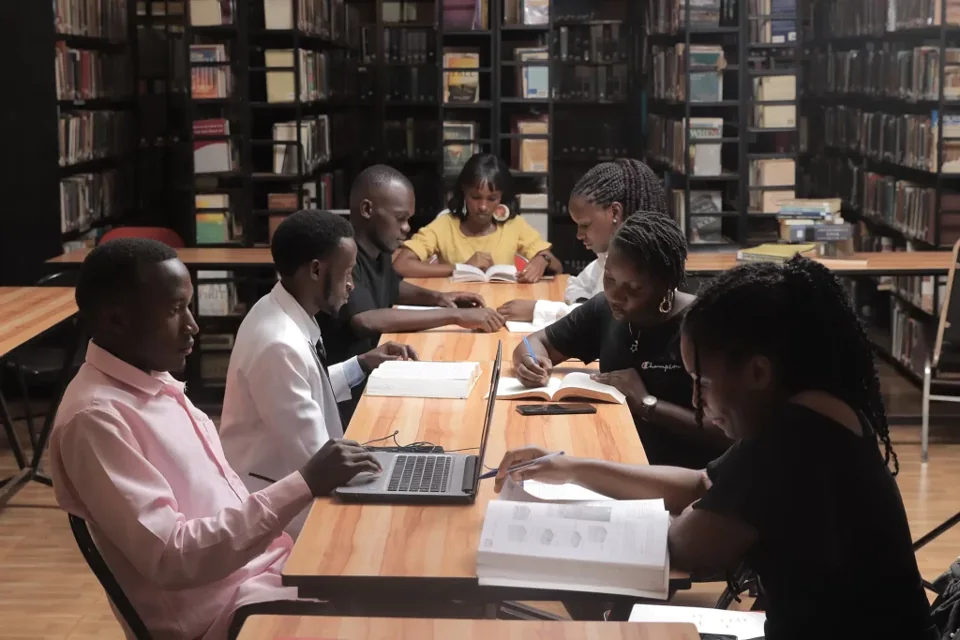
The AfRU Library describes collections supporting theology, health sciences, business, education and social sciences. Its services include borrowing, renewals, reservations, interlibrary loans, document delivery, orientation for new students and individual research assistance. Computers and internet access support information searching, while digital links connect users with electronic books, journals, the library catalogue and the university repository. The library also provides binding and repair services. These facilities support both everyday coursework and the research required within academic programmes.
Community engagement is coordinated through the Directorate of Community Life. The university describes student teams participating in outreach beyond the campus, including work connected with churches, local communities and public institutions. Its published examples include support at Buloba Police Station, activity associated with Yumbe Regional Referral Hospital, and partnerships in Fort Portal and Wakiso. Theology, social work and public health students are identified among those whose studies can connect with outreach. These activities give a practical setting to the university's recurring emphasis on service, linking its academic community with organisations and people outside the classroom.
Sources: University library ↗ · Community engagement activities ↗