Visa
About African Rural University
Women’s education for rural transformation
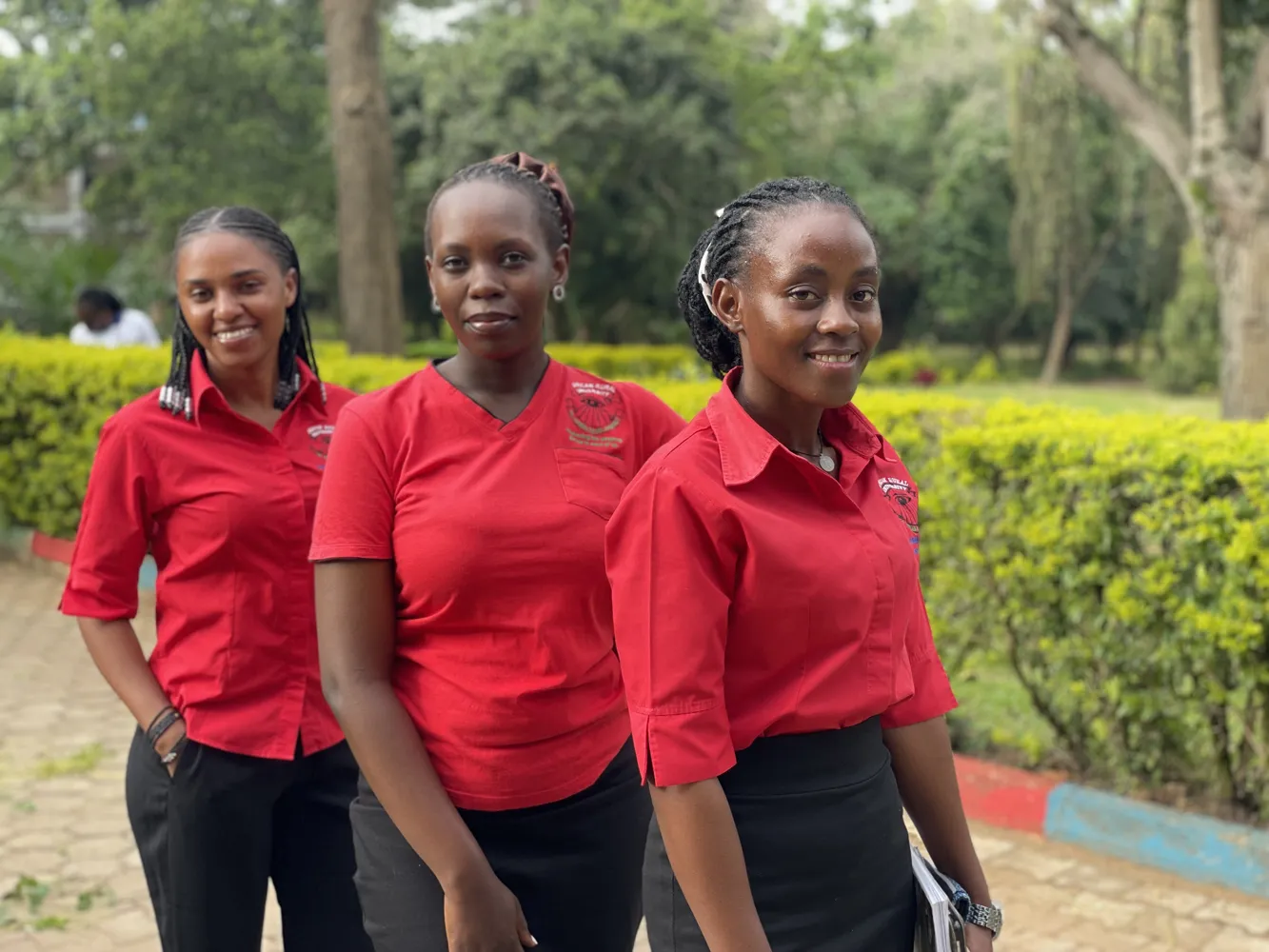
African Rural University, known as ARU, is an all-women university in western Uganda whose educational purpose centres on rural transformation. Established by the Uganda Rural Development and Training Programme, or URDT, in 2006, it connects academic study with work alongside rural communities. Its mission is to educate women who can support sustainable, locally directed change and help people develop their own leadership and capacity for improving their lives.
The university’s values include respect for life, healthy living, creativity, truthfulness, flexibility, freedom of choice and peace. These principles underpin an educational philosophy concerned with both individual development and community self-reliance. ARU describes its graduates as Rural Transformation Specialists, reflecting the close relationship it seeks between professional education, practical community work and the development of women’s leadership.
Sources: University history ↗ · Mission and values ↗
The Visionary Approach and education model
ARU’s model combines sixty percent theoretical learning with forty percent community practice. It draws on the creative process, systems thinking and indigenous knowledge. The central Visionary Approach asks people to define the future they want to create and organise purposeful action towards it. In teaching and fieldwork, this means considering the relationships between households, livelihoods, education, land and local institutions rather than treating each issue in isolation.
The Epicenter Strategy places students in rural settings during practicums and internships, supported by faculty and Traditional Wisdom Specialists. A related two-generation approach connects students with families associated with URDT Girls School, extending learning into households. Foundation courses reinforce the university’s emphasis on reflection and purposeful action, while collaboration with visiting educators provides further perspectives on community development and teaching.
Sources: ARU education model ↗
Undergraduate study
The Bachelor of Rural Development is a four-year programme organised around three years of academic instruction and a final year of field practice. The taught years are divided into two semesters, each lasting seventeen weeks. Its balance of lectures and practical work is intended to give students both a conceptual understanding of rural development and experience of working with communities. Sustainability and participatory approaches are central to the programme’s description.
ARU also lists a Bachelor of Science in Sustainable Agriculture. Its subject areas include crop production, soil science, animal husbandry, agroecology and sustainable farming practices. Statistics and microbiology provide scientific and analytical foundations alongside the agricultural content. The programme addresses the relationship between food production, long-term productivity and environmental health, combining practical farm-management concerns with the study of sustainable food systems.
The Rural Development programme describes three entry routes: an advanced secondary certificate with two principal passes obtained at the same sitting, a recognised diploma in a science, humanities or arts discipline, or the mature-age examination route. This recognises different educational backgrounds within the university’s professional preparation for rural development work.
Sources: Undergraduate programmes ↗
Practicums and the field internship
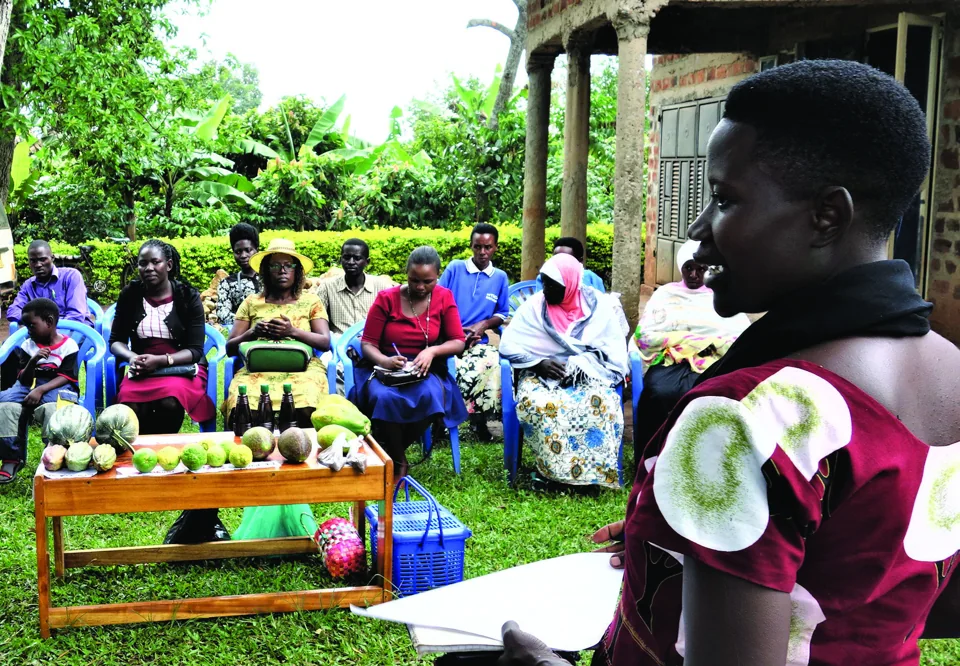
Field experience ranges from shorter practicums of approximately one month to a year-long internship. Students live and work alongside rural residents, putting their learning into practice through activities concerned with food security, access to education and sustainable agriculture. The university describes this work as a bridge between classroom theory and community-led initiatives, with students participating in planning and implementation rather than observing development work at a distance.
In their fourth year, students serve as apprentice Epicenter Managers in rural sub-counties. ARU alumnae and local leaders provide mentorship. Activities described by the university include community visioning sessions, training in organic farming, youth skills initiatives and work on water-related projects. The internship therefore brings together communication, planning, collaboration and the practical coordination of activities involving different members of a community.
Sources: Practicum and internship ↗
Participatory research and local knowledge
Participatory action research is another defining feature of ARU’s work. Students collaborate with residents to develop and implement initiatives, including agricultural improvements, cooperatives and community infrastructure. Their work connects with local government at parish and sub-county levels, as well as with ARU alumnae employed by URDT. These relationships provide a framework for linking student activity with local priorities and existing community structures.
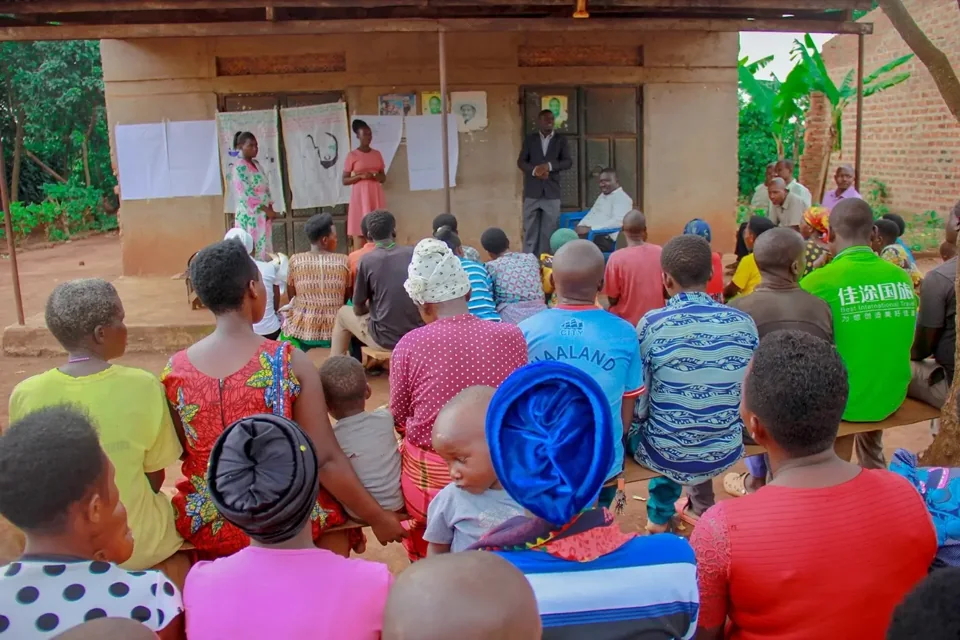
The university connects this method with the creative-process framework developed by Robert Fritz. Community members articulate a desired future and consider the practical steps needed to move towards it. Students and local collaborators exchange knowledge through training and discussion on subjects such as sanitation, farming and leadership. Indigenous and traditional knowledge form part of this exchange, alongside the concepts and methods introduced through university study.
Sources: Participatory action research ↗
Wellbeing, recreation and student leadership
Campus support includes a sick bay for basic care, first aid and health consultations, with links to local healthcare providers for additional services. Health-awareness activities address nutrition, hygiene, mental health and other aspects of wellbeing. Counselling is also described as part of the support available for students facing academic, personal or social difficulties. These services complement the demands of academic study and practical community work.
Recreation includes football, netball, athletics and volleyball. ARU organises sporting activities within the university and with other institutions, including URDT Girls School. Participation provides opportunities for teamwork and social connection alongside the academic programme. The Students’ Guild offers another setting for practical leadership. On 29 August 2026, the eleventh Guild administration formally handed responsibilities to the twelfth, with Bridget Atuhairwe passing leadership to Peninah Akampurira. The incoming cabinet took office to represent students and contribute to university affairs, making student government an active part of campus life.
Sources: Health support services ↗ · Games and sports ↗ · August 2026 Students’ Guild leadership handover ↗