Visa
About Amsterdam University of Applied Sciences
An applied-sciences university rooted in Amsterdam
Amsterdam University of Applied Sciences is the English name of Hogeschool van Amsterdam, commonly abbreviated HvA in Dutch and AUAS in English. The institution connects its educational identity with the metropolitan region in which it works. Its own introduction describes collaboration with residents, companies, start-ups, public authorities, social organizations and other knowledge institutions.
The university presents teaching and research as ways to address issues affecting urban life. Sustainability, health and social justice are among the themes in its account of a city that is liveable for everyone. Its work extends beyond classrooms into neighbourhoods in and around Amsterdam. The institution also emphasizes an inclusive environment and equal opportunities for students and staff, combining professional education with an interest in the society in which graduates will work.
Sources: An applied-sciences university rooted in Amsterdam ↗
A broad range of professional disciplines
The Dutch faculty directory organizes the university across six faculties. Business and Economics is based around economic education for students and working professionals, with a campus presence in Amsterdam Zuidoost. Digital Media and Creative Industries covers media, design and information technology.
Health, Sport and Exercise brings together education related to health and active living. Society and Law connects its teaching and research with social and legal questions in Amsterdam. Education and Pedagogy prepares people for teaching and pedagogical work. The Faculty of Technology addresses technical education and research, including practical knowledge relevant to a sustainable city.
This range brings different professional fields into one institution. The faculty descriptions relate their subjects to the university’s wider focus on professional practice and contemporary social questions.
Combining knowledge with practical learning
The university’s educational overview explains higher professional education through a combination of theory and practical application. Students study concepts and use them in realistic situations. The overview also describes research undertaken by students into questions arising in Amsterdam and its surroundings.
Programme development is presented as a process informed by contact with businesses and other institutions. Opportunities to broaden a course of study include minors and honours talent modules, allowing students to explore interests beyond the core of their programme. The university also describes education for people at different career stages, including further skill development, retraining and master’s study.
Its published educational priorities include sustainability, diversity and digitalisation. These themes connect the design of education with the changing professional environment, while practical assignments provide opportunities to relate academic material to specific situations.
Research shaped by questions from practice
HvA describes applied research as beginning with a question from professional practice. Researchers work with people such as teachers, nurses and entrepreneurs to investigate problems and develop knowledge, products or services. The intention is that research contributes to professional innovation and also improves teaching.
Research groups, known in Dutch as lectoraten, form a foundation for this work. They bring together professors of applied sciences, lecturer-researchers, doctoral researchers and supporting staff, sometimes with external specialists. Each group focuses on a particular theme, such as the urban energy transition or technology in health care.
The university also examines how research influences education, professional practice and society. Its account includes changes that emerge during collaboration, rather than considering only the final publication. Research outputs are made discoverable through institutional and wider platforms, including the HvA Research Database and Open Research Amsterdam.
Library services and information skills
The AUAS Library supports borrowing, searching for information and finding places to study. Its online catalogue, CatalogusPlus, provides a starting point for locating material. The library describes both quiet study settings and spaces where students can work together on projects.
Learning to find and evaluate information is another part of its services. A video series explains search strategies in stages, while the online Searchlight course develops information-searching skills from introductory to more advanced levels. Workshops cover topics such as recognizing misinformation, finding open data and desk research.
The library also provides guidance on acknowledging sources and using citation conventions. Its workshops and learning materials serve students, lecturers and researchers, placing information literacy alongside access to books and other resources.
Sharing research and supporting knowledge exchange
The university’s open-science account emphasizes making research knowledge accessible to educational institutions, researchers, professional communities and the public. It describes knowledge exchange through conferences, workshops, teaching, curriculum development and academic or professional publications. Open access is presented as an institutional objective for research output.
Research data management is addressed through guidelines for responsible handling, storage and sharing of data. The library, shared with the University of Amsterdam, provides support in this area. The two universities remain distinct institutions despite that shared service.
Innovation Exchange Amsterdam is another source of support. Its advisers assist with research funding, intellectual property, collaboration with external organizations and ventures based on research-related ideas. This gives staff and students several routes for exploring how knowledge produced at the university may be used beyond an individual project.
Sources: Sharing research and supporting knowledge exchange ↗
Makerslab as a space for experimentation
Makerslab is a prototyping space for AUAS students, researchers and employees. Its description emphasizes making things directly, with experts available to answer questions and help users work safely with equipment or techniques. The lab is located in the Theo Thijssen building on Wibautstraat.
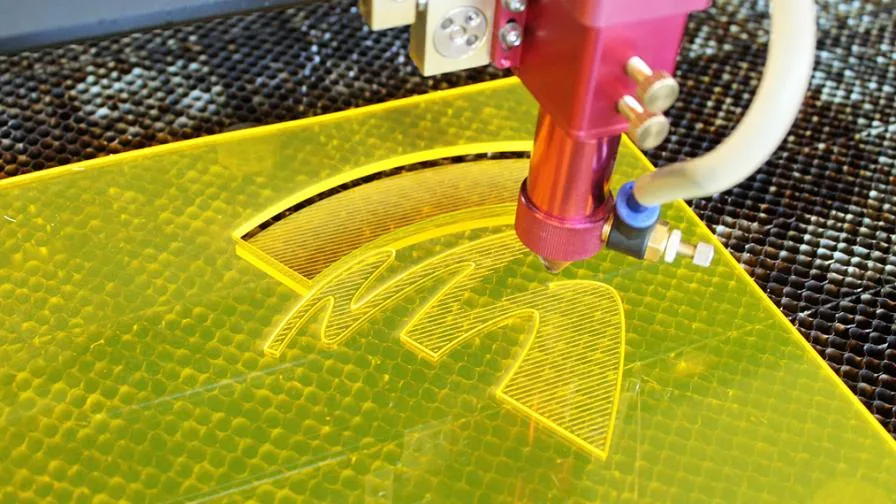
The published equipment examples include laser cutters, three-dimensional printers, vacuum-forming equipment, a UV printer and a RISO printer. A workshop provides hand tools and fastening materials. Users can explore processes and materials in the course of developing ideas and prototypes. The lab’s account sets this experimentation within an educational setting, where creating and testing can accompany design and research work.
Sources: Makerslab as a space for experimentation ↗
Robotic production and circular materials
Robotlab investigates how advanced design and manufacturing technologies can address social challenges. Its description brings together computational design, materials innovation and robotic production, with students, researchers and professional partners working collaboratively.
Several project examples concern the reuse of wood. The WOODCIRCLES project examines larger-scale use of waste wood in construction through a European consortium. Circular Wood 4.0 investigates interiors made from residual wood, while Circular Wood for the Neighborhood explored reusing material released by housing renovations. These examples make the university’s applied-research approach concrete: design and production methods are studied in relation to resources, construction and the circular transition.
Sources: Robotic production and circular materials ↗