Visa


About Aeres Hogeschool Almere
A campus focused on food, nature and cities
Aeres Hogeschool Almere is the Almere campus of Aeres University of Applied Sciences in the Netherlands. Its educational profile centres on Food, Nature and Urban Green, bringing together questions about food systems, biodiversity, health, geography and the future of cities. The campus is located at Arboretum West 98 in the Hortus area of Almere. It is one of Aeres Hogeschool's locations, alongside Dronten and Wageningen, and has its own subject emphasis and learning environment within that wider institution.
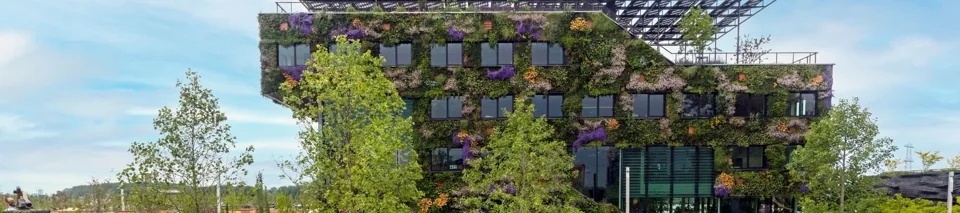
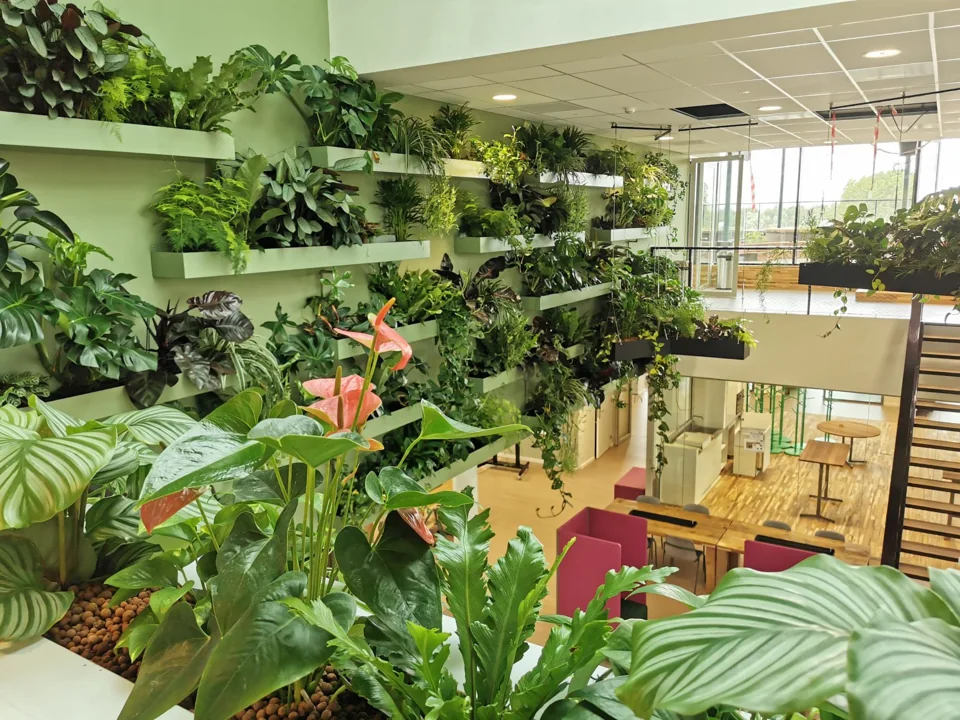
The campus building, known as the Groene Long or Green Lung, was completed in August 2021 after construction began in June 2020. The university's completion report described an open design integrating plants inside and around the building, green walls, solar panels and a roof terrace. It also identified the location as part of Flevo Campus, a knowledge setting concerned with healthy food, healthy living and a green environment. These themes connect the campus's physical design with the questions explored in its teaching.
Sources: Almere campus profile ↗ · Completion of the Groene Long building, 3 August 2021 ↗
Biology, food and health education
The Applied Biology programme focuses on practical biological research into nature, biodiversity, water quality and greener surroundings. Its 2026 factsheet describes work with plants, animals, nature and water, including species recognition, animal behaviour studies, soil and water measurements, and the design of ecological research. Students can develop an emphasis in plants, animals, nature or water. Fieldwork and practical investigation are central features, with internships in the Netherlands and abroad and a graduation project built around a chosen theme.
Biology, Nutrition and Health takes a different biological perspective by examining people, food, behaviour and the living environment. The programme introduces how the body works and how nutrition and surroundings relate to health. Its published subjects include nutrients, digestion and research skills, with opportunities to specialise in people or food. The factsheet describes placements with organisations such as municipal health services, municipalities or universities. Together, these two biological pathways illustrate the campus's interest in both natural systems and the relationship between human activity, food and health.
Sources: Applied Biology: 2026 factsheet ↗ · Biology, Nutrition and Health: 2026 factsheet ↗
Geography and environmental information
Earth and Climate combines knowledge of climate systems, soil, water, cities and ecosystems with geographical information. Its programme description includes working with GIS and geodata to create maps and visualisations. Students develop subject interests in soil or water and later explore climate-smart agriculture or climate-resilient nature. The course connects environmental understanding with practical analysis and advice, making geographical data a way to examine questions about the changing physical environment.
Geography and Data Visualisation brings geography together with design and data technology. The 2026 factsheet identifies interactive maps, three-dimensional visualisations, infographics and cartography among its methods. Students use GIS and design software to analyse information and communicate findings. Work on real assignments and a half-year internship form part of the published learning approach. This provides a distinct route for students interested in making complex spatial information understandable as well as investigating the underlying geographical questions.
Sources: Earth and Climate: 2026 factsheet ↗ · Geography and Data Visualisation: 2026 factsheet ↗
A master's perspective on food systems
Food Systems Innovation is an English-taught, full-time master's programme based in Almere. The published factsheet describes a one-year programme of 60 ECTS that approaches food-related challenges through a systems perspective. Students examine how different stakeholders and wider social or environmental factors interact, rather than considering a food issue in isolation. Research skills and design thinking are used to develop innovations grounded in scientific knowledge. Excursions, a city study tour and two internships connect that study with situations encountered outside the classroom.
Facilities for analysis and experimentation
Almere's GeoLab provides a practical setting for geographical analysis and visualisation. Its described equipment includes powerful computers for data processing and video editing, additional 4K screens, virtual-reality headsets and a video wall for displaying analyses with multiple inputs. The biology laboratory includes microscopes, precision balances, a microcentrifuge, DNA-analysis equipment, flow cabinets and water-quality analysis equipment. These facilities support different kinds of investigation, from biological samples to spatial datasets and visual communication.
The campus also describes an indoor growing room with ebb-and-flow tables, growing lights and a watering system for plant experiments. Insect cages support the rearing of insects and experimental work. The green discovery roof brings together practical educational and research uses concerned with sustainability, energy and food production, while providing outdoor space during breaks. Library support includes books, journals, digital scientific databases and access to the shared GreenI catalogue, which combines collections from several institutions specialising in green education.
Sources: Almere study facilities ↗
Applied work and student connections
External organisations can submit research or business questions to the Almere programme leaders, who assess where an assignment can be incorporated. The campus's internship office helps connect organisations with the appropriate academic contact. This arrangement provides a route for practical questions to enter teaching and student project work. Student support described by the campus includes mentors or study-career advisers, confidential advisers, student counsellors and coaches for circumstances affecting study.
Student life also reaches beyond individual programmes. Aeres identifies several independent Almere student associations, including Engine SVEIA, Bazinga and the rowing association Agon. They offer ways to meet students from different courses through social activities, personal development or sport. Their independence from the local higher education institutions makes them part of the wider student community in the city. Alongside laboratories, project assignments and the campus's environmental focus, these connections contribute to the experience of studying in Almere.
Sources: Almere campus profile ↗ · Research and business assignments in Almere ↗ · Student associations in Almere ↗