Visa
About American University in Bulgaria
An independent university in Bulgaria
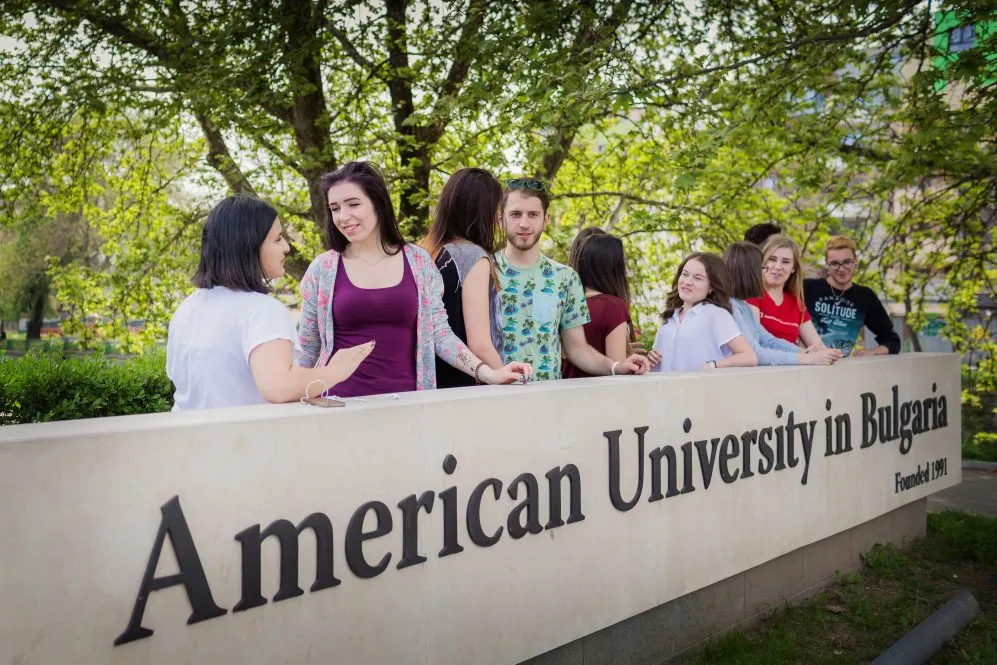
The American University in Bulgaria, commonly known as AUBG, is an independent, not-for-profit university with a residential academic community in Blagoevgrad. Its history reaches back to 1991, and its first class graduated in 1995. The development of the Skaptopara campus has been a significant part of the university's subsequent growth.
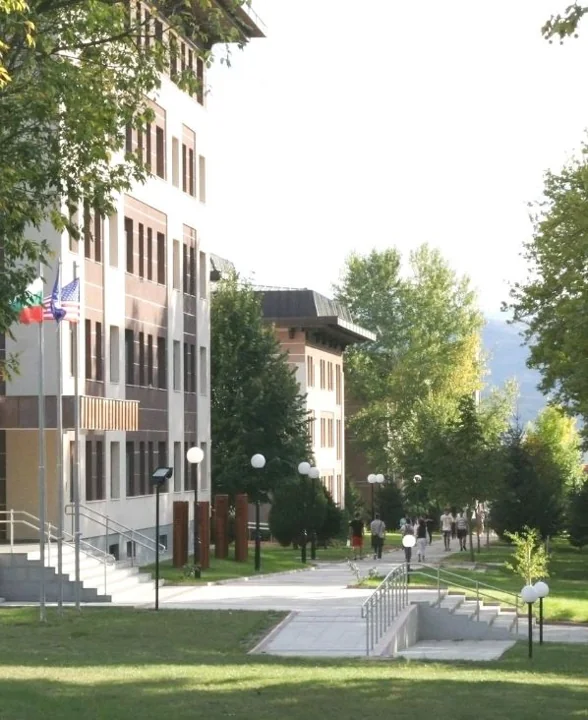
The institutional timeline records the opening of Skaptopara I residence hall in 1998, followed by further residential and academic buildings. The current library building opened in 2008, and the America for Bulgaria Student Center followed in 2012. AUBG also has a presence in Sofia through the Elieff Center for Education and Culture, which opened in 2003. These developments connect its academic work with spaces for residence, study and community activity.
Sources: Institutional history and Skaptopara campus ↗
A liberal arts approach to study
AUBG's liberal arts model combines specialized study with the opportunity to explore different disciplines. Students can investigate subjects during their initial years before deciding on their majors. The university describes the possibility of completing up to two majors and two minors, allowing combinations across fields such as business, journalism, political science and languages. Students who arrive with a clear interest can also begin pursuing it early.
The educational approach emphasizes critical thinking, communication, collaboration and creativity. Classroom discussion, written argument, projects and teamwork are among the ways the university describes developing those abilities. General education and foundation courses sit alongside courses within individual majors. Academic work is also connected with activities outside class, including debate, performance, student media and conferences. This structure gives students a combination of disciplinary focus, broader intellectual exploration and opportunities to apply ideas with other members of the university community.
Sources: Liberal arts education and academic choice ↗

Academic services and learning systems
AUBG identifies several offices and resources that support the organization of study. The Academic Catalog provides the formal account of academic requirements and regulations, while the Student Handbook introduces expectations and resources for university life. The Student Hub and Canvas serve different roles as internal information and learning platforms. The Center for Learning and Academic Success is another part of the support structure described on the academic website.
The Registrar's Office maintains academic records and coordinates processes including course registration, schedules, grades, transcripts and progress toward graduation. Its work connects students, academic departments and instructional activities. The E-Learn Office supports Canvas, providing technical assistance, consultations, course-design guidance and training for students and faculty. Together these services provide the administrative and technological framework through which students organize courses, access learning materials, document their progress and seek help with academic systems.
Sources: Academic offices, records and learning technology ↗
Panitza Library
The Panitza Library has supported AUBG since its early years. After occupying several spaces in the Main Building during the 1990s, it moved into a four-story building on the Skaptopara campus in 2008. The library is named for Dimi and Yvonne Panitza, whose donations helped establish its initial collection and supported its development.
Its resources combine print books and periodicals with electronic books, journals and research databases. Subject guides and discovery tools connect users with materials across disciplines, including business, computing, economics, history, literature, mathematics, politics and psychology. The library also offers information-literacy training and study spaces. Its program includes orientation, research workshops, faculty-publication features and book recommendations. Exhibitions, presentations and academic and cultural events give it a further role as a gathering place, bringing the use of collections into contact with the wider intellectual life of the university.
Information, democracy and civic education
The Center for Information, Democracy and Citizenship, or CIDC, brings education, research and technology into a program concerned with civic participation and public information. Its published priorities include media literacy, democratic citizenship, factual journalism and interdisciplinary inquiry. Its five program areas range from research on information threats to practical support for initiatives developed by faculty and students.
Named initiatives include English for Journalists, the Advocacy Academy, the AI Aware Universities project and journalism fellowships. Other projects address youth dialogue, participation and information literacy. The center also describes support for student-led and faculty-led activities through a civic and community engagement fund. Its approach involves cooperation across academic fields and with practitioners and policymakers. This gives AUBG an institutional setting for activities connecting classroom learning with journalism, public discussion, civic organizations and the responsible evaluation of information.
Sources: Center for Information, Democracy and Citizenship ↗
International exchange opportunities
AUBG's exchange arrangements connect its Blagoevgrad community with universities outside Bulgaria. Its published framework allows visiting students to spend a semester or an academic year at AUBG through Erasmus+, ISEP Study Abroad or the university's partnership with the University of Maine. The same networks provide routes through which AUBG students can study at participating institutions abroad.
The exchange page distinguishes the European Erasmus+ network from ISEP's broader international connections. It also names institutional partners beyond these networks, including the University of Maine in the United States, Institut Teknologi Sepuluh Nopember in Indonesia and Ritsumeikan Asia Pacific University in Japan. These relationships add an international dimension to a university whose campus community already brings together students and faculty from different backgrounds. Exchange therefore sits alongside residential university life as another way for students to encounter academic settings and perspectives beyond their usual courses.