Visa

About Alma Ata University
From specialist colleges to a university
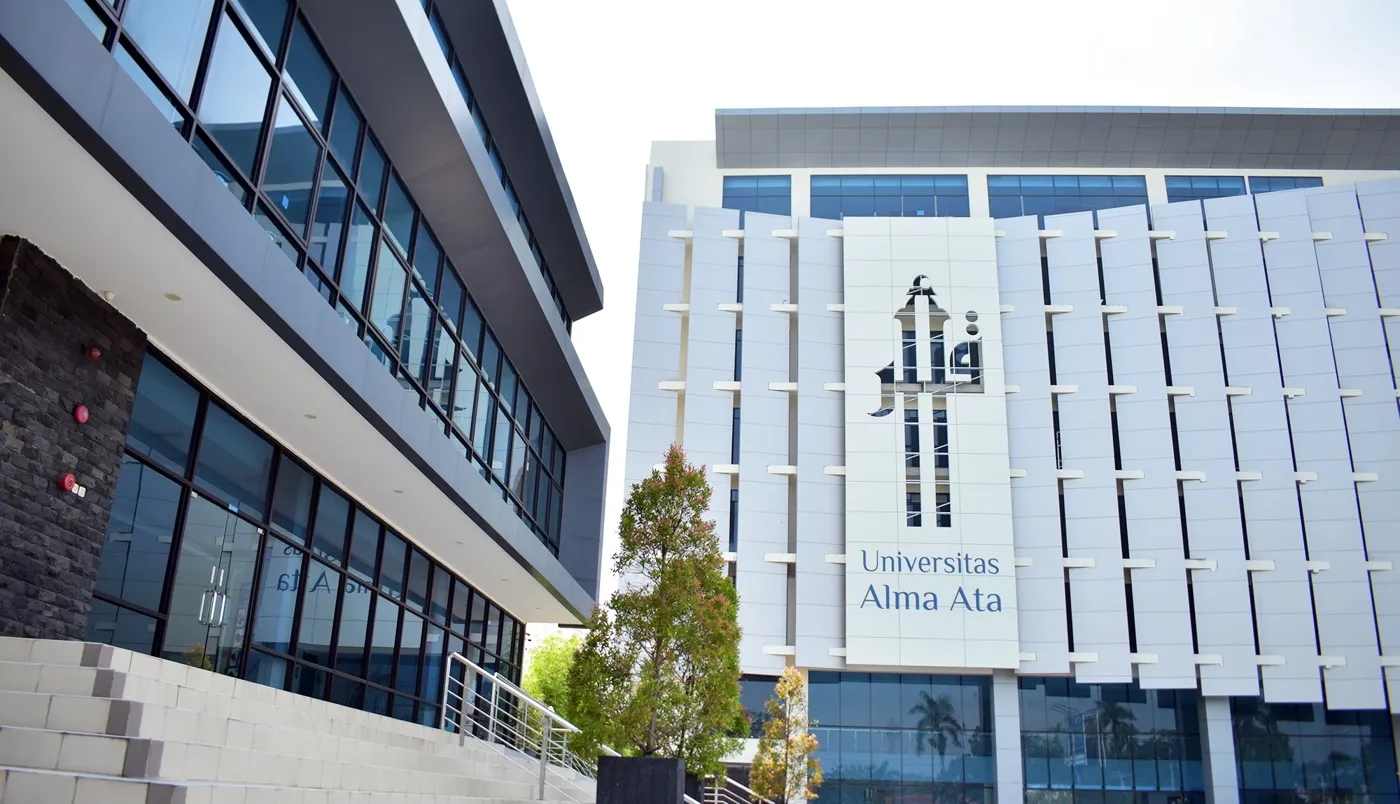
Alma Ata University, known in Indonesian as Universitas Alma Ata or UAA, is located in Bantul in the Special Region of Yogyakarta. Its institutional history begins with the Alma Ata Foundation, established in June 2001 by Muslim scholars and religious educators. The foundation subsequently developed a health sciences institution and a religious studies institution. These predecessors became the basis for the university, which took university form on 21 December 2015. The university's research office records this transition as part of its own institutional history. The foundation's educational work therefore preceded the broader university organisation that now brings several fields of study together.
Sources: Institutional origins and university transition ↗
Islamic values and educational aims
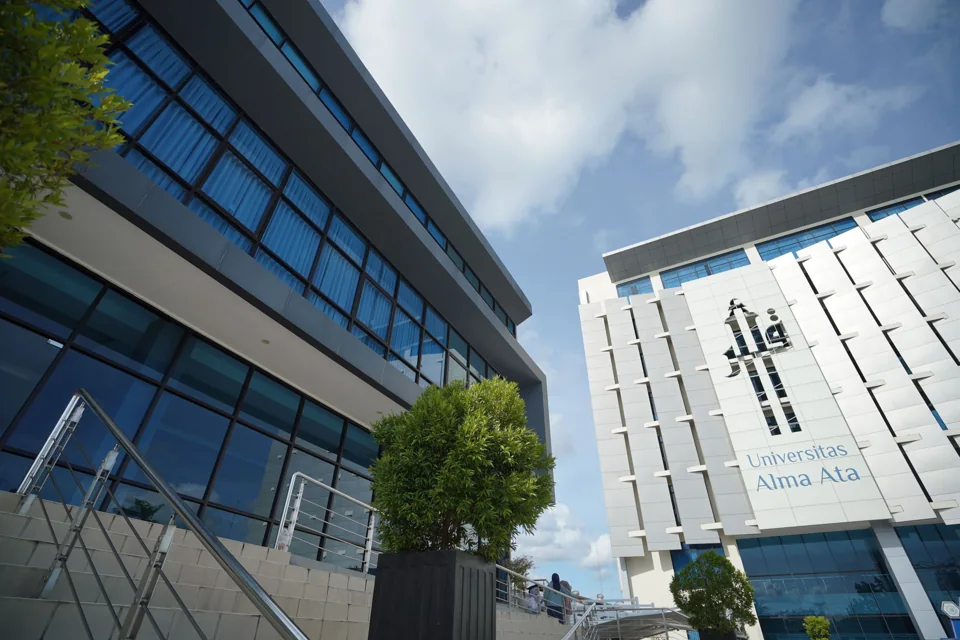
The university's published mission connects education, research and service to society with Islamic values and Indonesian national identity. It describes Alma Ata as a response by Muslim intellectuals and religious scholars to changes in society, knowledge and ways of life. Its vision sets out ambitions for 2040, including independence, international competitiveness and a contribution to social welfare. Another stated priority is an academic environment that develops a culture of quality through university governance. These are the institution's declared aims and principles. They provide the framework through which Alma Ata describes its teaching responsibilities and its relationship with the wider community.
Sources: University mission and vision ↗
Campus and fields of study
The university gives its address as Jalan Brawijaya 99 in Tamantirto, Kasihan, Bantul. Its current programme directory spans medicine and health sciences, education, economics and business, and science and technology. Health related subjects include nutrition, nursing, pharmacy, hospital administration and midwifery, alongside medicine and postgraduate public health. The education listings include mathematics education, elementary teacher education and Islamic religious education. Economics and business subjects include accounting, management, Islamic economics and Islamic banking. Informatics and information systems appear in the technology listings. Together, the directory shows the range of academic fields within an institution that developed from more specialised educational predecessors.
Teacher education and faculty development
The Faculty of Tarbiyah and Teacher Training traces its development through the earlier religious and educational institutions associated with Alma Ata. Its history describes a consolidation of education programmes into the faculty in 2021, followed by the addition of a master's programme in Islamic religious education in 2022. The fields discussed in that history include mathematics education, elementary school teacher education, Islamic elementary teacher education and Islamic religious education. This account illustrates how teacher preparation became organised across several educational settings within one faculty. It also connects undergraduate teaching subjects with subsequent postgraduate development, as the university extended its work in education.
Sources: Teacher education faculty history ↗
Economics and business
Alma Ata's Faculty of Economics and Business was established by a rector's decision dated 4 January 2016, shortly after the institution became a university. Its founding purpose concerned education in economics, banking, management and finance with an ethical foundation informed by Islam. The faculty lists four bachelor's programmes: Islamic economics, Islamic banking, management and accounting. This combination places general business and financial study alongside programmes that explicitly address Islamic economic and banking principles. The faculty's history connects its creation with demand for expertise in these fields, while identifying ethics and moral responsibility as part of the educational approach it seeks to develop.
Computing and digital technology
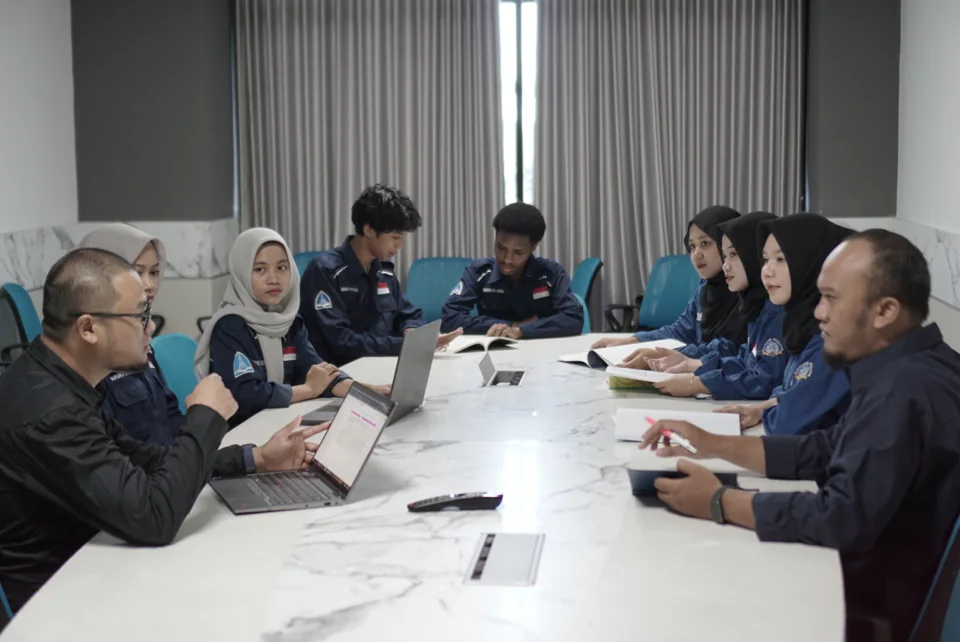
The Faculty of Science, Engineering and Technology describes a combination of theoretical understanding and practical computing skills. Its current bachelor's programmes are Informatics and Information Systems. The faculty identifies programming, software engineering, systems management, data analysis and digital innovation among the areas in which students develop knowledge and competence. Its account of the faculty's purpose connects technological change with ethical responsibilities and Islamic values. The programme description therefore addresses both the technical content of computing and the way it is applied. Official faculty photographs show academic discussion using laptops and books, providing a view of the learning environment associated with these subjects.
Sources: Science, Engineering and Technology faculty history ↗
Islamic religious education
Islamic religious education has a history that reaches back to the religious studies institution preceding the university. The programme's official history records teaching from May 2007. It describes an approach intended to prepare educators through moderate Islamic values, interdisciplinary learning and innovation in teaching. Practical learning in educational institutions forms part of that approach, together with attention to communication and other personal skills, entrepreneurship and educational innovation. Its institutional framework also refers to the Indonesian higher education responsibilities of teaching, research and community service. The programme thus links subject knowledge in religion with the study and practice of how that knowledge is taught.
Library development and resources
The university library's published history records an initial location in room HAM301 of the Abdullah Masduqi building. In 2023 it moved to a larger space on the fifth floor of the Menara Al Musthofa building. The library's website connects users with its online catalogue, integrated search and discussion room reservations. It also provides collection suggestion forms and information about borrowing clearance for academic administration. Subject resource links cover medicine and health sciences, economics and business, education, and science and technology. The library therefore serves the university's different academic fields through a combination of physical study space and routes to subject specific information resources.