Visa
About Akademi Akuntansi Effendiharahap
An accounting academy in Semarang
Akademi Akuntansi Effendiharahap, also presented as Akademi Akuntansi Efhar, is a vocational accounting institution in Semarang, Central Java, Indonesia. Its official website gives its address as Jalan Puspowarno Raya No. 14 in West Semarang. Accounting is the central subject of its educational provision, with a Diploma Three programme and separate short courses for people seeking specific accounting or taxation skills. The academy's institutional profile sets out an educational vision centred on professional, dynamic and ethical accounting, including hotel accounting. Its stated mission combines applied accounting education with research, entrepreneurship and continuing cooperation with educational institutions, government, businesses, public accounting offices, industry and the surrounding community. The facilities listed in that profile include a computer laboratory for accounting software practice, lecture rooms, a library covering accounting, taxation and finance, and space for academic consultation and student discussion.
Sources: Institutional profile ↗

The diploma curriculum
The D3 Accounting programme is described as a six-semester course leading to the Ahli Madya Akuntansi qualification. The published study sequence begins with accounting foundations, financial mathematics and introductory economics and business. Later semesters introduce more advanced accounting, taxation, auditing and accounting software. The programme places an industry internship in the fifth semester and a final assignment in the sixth. Its subject outline includes financial statements, cost and management accounting, tax reporting, internal audit procedures and financial statement analysis. Financial accounting teaching refers to Indonesian accounting standards, including standards for micro, small and medium-sized entities. Software practice is presented alongside the theoretical subjects, giving the programme a combination of classroom study, applied exercises and workplace experience.
Sources: D3 Accounting ↗
Accounting courses for broader audiences
Alongside its diploma, Efhar advertises accounting courses for business owners, administrative staff, recent graduates and other learners. These are organised into Basic, Intermediate and Advance stages, each divided into two numbered levels. The course page provides for both individual tuition and small-group learning, with each level described as ten ninety-minute meetings. The subject coverage includes reading balance sheets, income statements and cash-flow statements, recording transactions in journals, and preparing financial statements from transaction records. Other topics are accounting software, financial analysis and production costs. This course provision is distinct from the diploma route: it concentrates on a particular set of practical skills and is offered through shorter, staged units rather than the academy's full six-semester study sequence.
Sources: Accounting courses ↗
Taxation as a separate course strand
The Brevet Pajak A and B course provides a separate taxation strand. Its published outline distinguishes personal taxation, associated with Brevet A, from business taxation, associated with Brevet B, and offers the two together as a combined course package. Teaching topics include personal and corporate income taxes, value-added tax, tax-return preparation and the Directorate General of Taxes' Coretax system. The course description also lists simulations of completing tax returns, placing administrative practice alongside discussion of tax categories. Individual and group formats are advertised here too. These are descriptions of the academy's teaching subjects and course format; the emphasis of the published syllabus is on understanding tax administration and working through reporting exercises.
Sources: Brevet taxation courses ↗
Research and community service
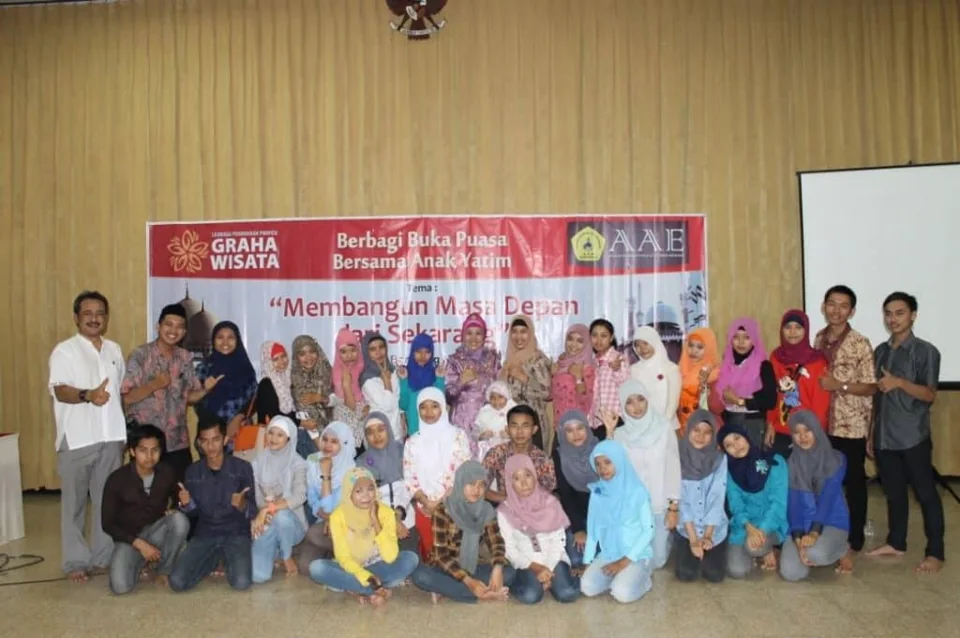
The academy identifies its Lembaga Penelitian dan Pengabdian kepada Masyarakat, or LPPM, as the unit coordinating research and community service. Its stated focus is applied accounting, taxation and finance, particularly work relevant to businesses and industry. The unit's responsibilities include facilitating research proposals, supporting lecturers and students in research activities, and encouraging publication of their results. Community service is described in terms of using accounting expertise to support nearby communities and micro, small and medium-sized enterprises. The LPPM also lists partnership development with government, businesses and other educational institutions among its functions. This gives the academy's published academic framework a research and public-service component in addition to its diploma teaching and short-course provision.
Sources: Research and community service ↗
How the academy describes quality assurance
Efhar's Lembaga Penjaminan Mutu, or LPM, is responsible for its internal quality assurance system. The unit's published remit covers planning, implementation, monitoring, evaluation and improvement across the academy's working units. It describes a repeating five-stage process: setting standards, implementing them, evaluating performance, controlling implementation and improving standards. The framework includes quality policies, standards, manuals and audit forms. Internal audit and self-evaluation are intended to identify progress and areas requiring correction, with findings brought into management review. The unit distinguishes internal assurance from external accreditation preparation and describes its coverage as extending beyond teaching to staffing, finances, facilities and academic administration. Its role is therefore both educational and organisational within the academy's stated management arrangements.
Sources: Quality assurance ↗
Professional conduct and institutional values
The academy's core-values page uses the phrase HIDUP BERKAH to organise a series of expectations about conduct and service. It emphasises performance, integrity, discipline, perseverance and professionalism, together with sharing, efficient use of resources, friendliness, intelligent working, gratitude and honesty. Its explanation of integrity links responsibility with trust between individuals and teams. Professionalism is described through service that does not discriminate according to a person's status, while the discussion of friendliness stresses courtesy and care. The page also connects resourcefulness and creativity with continuing improvement. These values add an ethical and interpersonal dimension to the institution's accounting focus, addressing how members of the organisation work with colleagues, partners and the wider community.
Sources: Core values ↗