Visa
About Ahmad Dahlan School of Economics
The historical school and its current identity
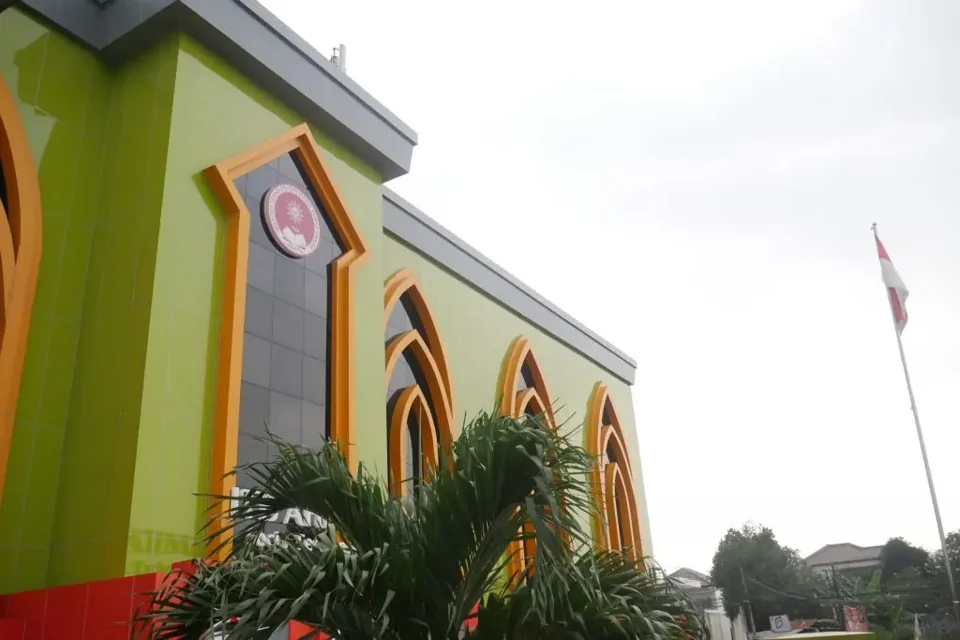
The Ahmad Dahlan School of Economics entry refers to the institution historically known as STIE Ahmad Dahlan Jakarta, now Institut Teknologi dan Bisnis Ahmad Dahlan Jakarta, or ITB Ahmad Dahlan. Its official history records that transition in 2018. The current institution identifies campuses in Ciputat, South Tangerang, and Karawaci, Tangerang, both in Banten. These official locations clarify the Jakarta institutional identity despite the directory’s conflicting Bandung location metadata.
The institution’s roots are in the Muhammadiyah Banking Academy, established in 1968 with a focus on finance and banking. In 1985 it became the Muhammadiyah Academy of Finance and Banking. It developed into STIE Ahmad Dahlan Jakarta in 1998 and adopted its present technology and business institute form in October 2018. Its educational philosophy connects technology, entrepreneurship and social contribution with Islamic and Muhammadiyah values. This history explains the continuity between an economics-focused school and an institution whose scope now includes computing and design.
The Ciputat campus is on Jalan Ir. H. Juanda in Cireundeu, South Tangerang. The Karawaci campus is on Jalan Imam Bonjol in Panunggangan Barat, Tangerang. These locations place the institute in Banten, adjoining the Jakarta metropolitan area.
Sources: Official institutional history and mission ↗ · Official campus locations and photographs ↗
Management with an entrepreneurial emphasis
The Bachelor of Management programme connects business study with information technology and entrepreneurship. Its featured subjects include marketing, human resources, international business, digital business, finance and retail. Social entrepreneurship and technology-oriented entrepreneurship form part of its stated emphasis, linking commercial activity with wider contributions to communities.
The programme’s mission includes education that develops managerial and entrepreneurial capabilities, research that advances management knowledge and community service applying that knowledge. Students are therefore introduced to both organisational functions and the responsibilities associated with using business expertise. The published programme description also provides different study formats, including regular provision and classes intended for working professionals. Its educational focus brings together management knowledge, digital change and the development of ideas that may be applied within enterprises or community settings.
Sources: Bachelor of Management ↗
Information systems and creative digital work
The Information Systems bachelor’s programme addresses the use of technology, artificial intelligence and business intelligence. Its featured courses include machine learning, big data and business intelligence, artificial intelligence systems, augmented and virtual reality, advanced web programming and mobile programming. Its published graduate profiles concern software development, systems analysis, data management, technology governance, auditing and advisory work. These are descriptions of the competencies and roles towards which the programme is directed.
Visual Communication Design brings a creative dimension to the institute’s technical education. Its specialisations include illustration, computer graphics, photography and videography. The programme emphasises research, collaboration, digital skills and socially oriented entrepreneurship. Digital da’wah media design and new media art appear among its featured subjects. Its description links technical tools with creative investigation and the development of communication solutions. Together, the computing and design programmes illustrate the institution’s expansion beyond its original banking and economics focus.
Sources: Bachelor of Information Systems ↗ · Bachelor of Visual Communication Design ↗
Facilities supporting study and collaboration
The institute’s facilities page identifies a multipurpose hall, library, computer laboratory, digital classrooms and a podcast room. The hall provides a setting for seminars, workshops and other academic and non-academic activities. The library is described as a resource for books and academic journals, while computer facilities support the study of technology and informatics.
The published account of digital classrooms emphasises discussion, sharing ideas and teamwork. The podcast room is also presented as a place for group discussion, projects and collaborative activity. These descriptions show how the institute connects physical spaces with different forms of learning: formal teaching, access to information, technical practice and communication. They complement the programme descriptions by identifying places in which students can prepare work and exchange ideas beyond individual lessons.
Sources: Campus facilities ↗
Student guidance and personal development
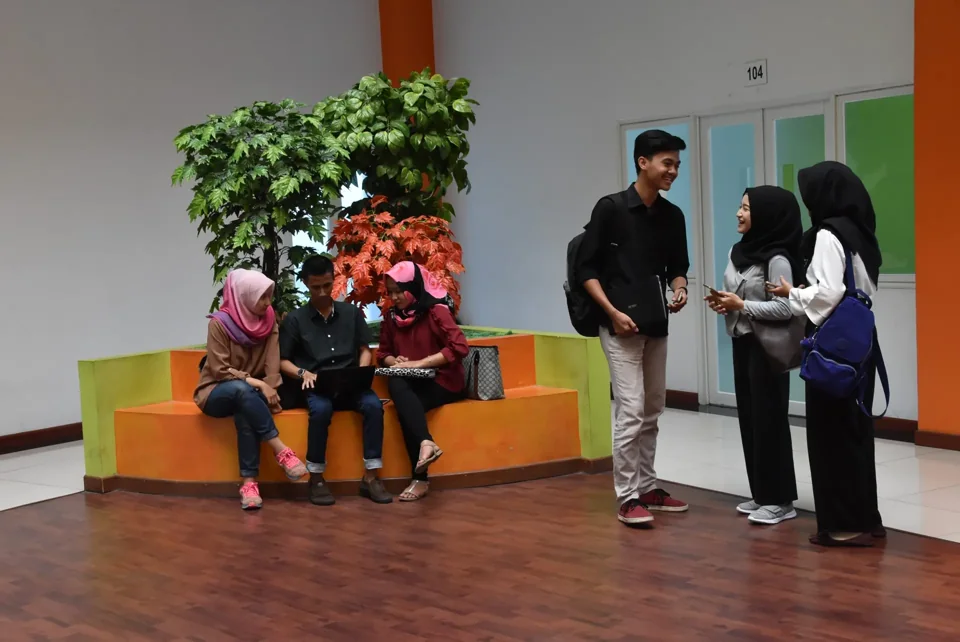
The student counselling and development service belongs to the institute’s student affairs provision. Its stated purpose is to support academic, personal, social and career development. The service connects the institution’s educational commitments with attention to student wellbeing and the development of character as well as professional knowledge.
The service’s digital platform provides information on counselling, character development and support for students’ potential. Its description stresses confidentiality, professionalism and empathy and expresses an intention to help build a safe, inclusive and supportive learning environment. This places individual guidance within the wider experience of studying at the institute. It recognises that academic progress occurs alongside personal and social development and that students may need different forms of assistance during their education.
Research and social-economic questions
The Center of Human and Economic Development, known as CHED, was established by ITB Ahmad Dahlan on 5 April 2019. Its purpose is connected with improving social and economic life in Indonesia. The centre identifies welfare and social-economic justice as central themes, including poverty, economic justice, social justice, sustainable development, sharia and supply chains.
Its activities combine research and advocacy, including studies intended to support discussion of regulations and public policy. Published forms of output include policy papers, policy briefs, academic texts, articles, journals and contributions to mass media. The centre also describes cooperation with professional organisations, educational institutions, associations, government and international or community organisations. This provides a research and public-engagement dimension to the institute’s business and technology education, linking academic expertise with questions affecting society.