Visa
About Al-Azhar University
Universitas Al-Azhar in Medan
Universitas Al-Azhar Medan is a higher education institution in North Sumatra, Indonesia. Its main campus is on Jalan Pintu Air IV No. 214, Kwala Bekala, Padang Bulan, Medan. The university also lists a Marelan campus on Jalan Veteran Pasar 8 in Desa Manunggal, Labuhan Deli, Deli Serdang. Its educational identity combines academic subject knowledge with Islamic values and moral responsibility.
The university’s rector’s introduction emphasizes the connection between professional competence and spiritual education. Its academic community is organized around economics, agriculture, engineering and law, with electronic academic services and faculty websites supporting communication between students, teaching staff and the institution.
Foundation and academic structure
The university dates its establishment to 27 December 1986 under Yayasan Hajjah Rachmah Nasution. The foundation’s notarial formation dates to January 1983, a separate event from the university’s creation. Its institutional history records an intervening organization into specialized colleges of agriculture, engineering, law and economics. A Directorate General of Higher Education decision dated 11 August 1992 brought those colleges together as Universitas Al-Azhar Medan. The initial faculty list also included teacher training and education, alongside agriculture, engineering, economics and law, before the later reorganization into specialized colleges.
The academic structure described in that history comprises economics programmes in management and accounting, a law programme, agrotechnology, and engineering programmes in electrical, mechanical, civil and industrial engineering. These subjects connect business and administrative study, agricultural development, law and several branches of technological education within one university organization.
Sources: Institutional history ↗
Educational purpose
The university’s published mission places science and technology education within an Islamic framework. Research and the development and dissemination of scientific knowledge are included alongside teaching. Community service is another stated responsibility, with an emphasis on activities that bring benefit to society.
Entrepreneurship and cooperation with other institutions also appear in the mission. Together, these priorities link academic study with ethical conduct, practical initiative and engagement beyond the campus. They provide the institutional context for the university’s different faculties and their educational work.
Sources: Vision and mission ↗
Facilities for study and practical work
The university’s facilities page identifies laboratories in physics, chemistry and biology, as well as language and computer laboratories. Engineering facilities are listed for electrical, mechanical, civil and industrial engineering. These resources reflect the range of scientific and technical subjects within its academic structure.
Other listed academic resources include a library, an experimental garden, audiovisual teaching facilities and a wireless internet network. The experimental garden provides a distinct resource within an institution that includes agricultural study. The campus facilities list also includes a mosque, sports areas for football, basketball and badminton, a canteen, a swimming pool and parking space. These facilities support academic work, worship and everyday campus activities.
Sources: Teaching facilities ↗
Quality and academic administration
The university’s internal quality assurance page explains the relationship between its quality policy and institutional documents. These include the university statute, the rector’s 2014 decision establishing the quality assurance unit, academic regulations and an earlier strategic plan. The page identifies these documents as foundations for the organization of internal quality assurance and the formulation of institutional standards. The strategic plan cited there covers 2016–2020, while the listed academic regulations date to 2017. These references document the development of the university’s internal policy framework.
A separate August 2026 seminar addressed the university’s academic information system, SIAKAD. Participants included academic staff and students from different programmes. Topics covered study-plan registration, lecture schedules, assessment transparency and integrated academic records. The session also included practical questions about technical difficulties, interface updates, account protection and confidentiality. Demonstrations and a question-and-answer session accompanied the explanation of the system’s features.
Sources: Internal quality assurance ↗ · Academic information system seminar ↗
Academic cooperation and guest teaching
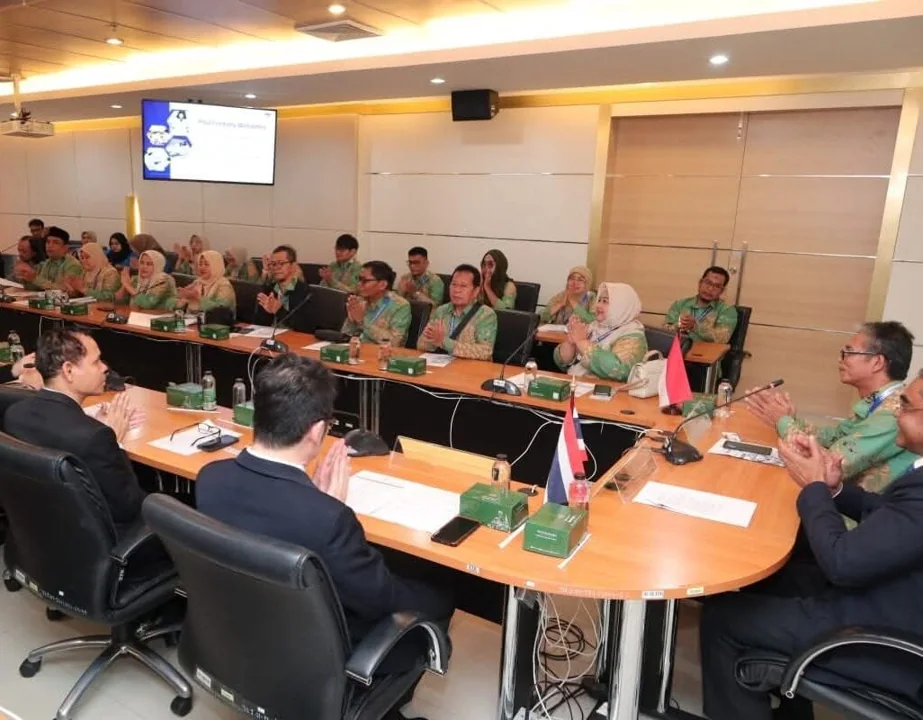
The Faculty of Law reports a collaboration and benchmarking visit to the Faculty of Law at Prince of Songkla University in Hat Yai, Thailand, on 11 September 2024. The exchange addressed educational systems, curricula, research and community service. It was intended to build international academic connections while comparing educational practices between the two faculties.
A different law faculty report describes agreements and a guest lecture with PT Pelindo and BMKG North Sumatra at the Medan campus on 20 January 2026. This activity connected academic law with port operations, maritime safety regulation, disaster mitigation and climate issues. Speakers from the two organizations contributed to the lecture and discussion. The cooperation was framed around education, research and community service, providing students with contact with organizations whose work raises specific legal and regulatory questions.
Sources: Law faculty collaboration in Thailand ↗ · Pelindo and BMKG cooperation and guest lecture ↗
Student research and thesis assessment
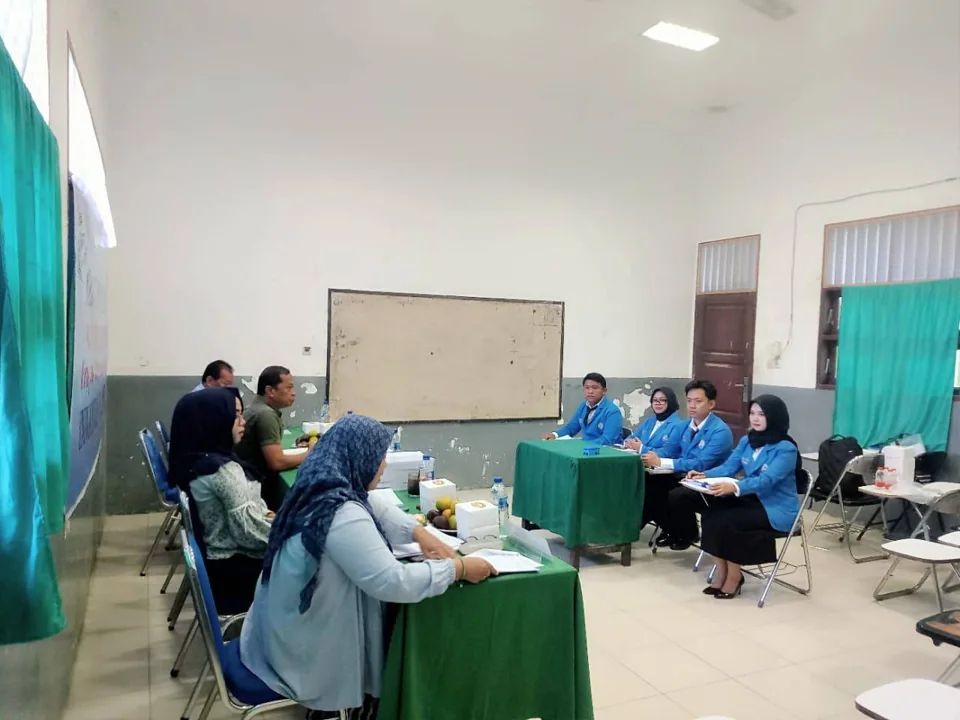
The law programme’s account of its 2025–2026 thesis examinations describes students presenting and defending their research before examiners and supervisors. The session formed part of the programme’s study-completion process and was chaired by the Faculty of Law dean, with a secretary and moderator guiding proceedings.
The report emphasizes the quality and integrity of student academic work and its contribution to legal knowledge and society. Thesis assessment therefore appears alongside classroom study, guest lectures and academic exchanges as a documented part of the faculty’s educational activity. The university’s public website also provides links to its student and lecturer portals, electronic library, journals and institutional repository.
Sources: Law thesis examinations 2025–2026 ↗