Visa

About Al Asyariah Mandar University
A university rooted in Mandar
Al Asyariah Mandar University, usually called UNASMAN, is based in Polewali Mandar, West Sulawesi, Indonesia. Its Indonesian name is Universitas Al Asyariah Mandar. The university grew from two institutions established in 1975: a teacher-training college, STKIP, and an agricultural college, STIP. Their merger into the university was authorised by education-ministry decision 59/D/O/2004, dated 27 April 2004. President Megawati Soekarnoputri inaugurated the university that year.
The founder, Annangguru Prof. K. H. Sahabuddin, connected higher education with religious values and Mandar cultural identity. That combination remains central to the institution's account of its purpose. Its history describes education, research and community service as responsibilities through which knowledge can support society and sustain cultural life.
Sources: A university rooted in Mandar ↗
Religious values and local culture
UNASMAN's vision places the development of science and technology alongside religious values and Mandar culture. The university presents this relationship as a foundation for its teaching and research. Its mission also extends to community service, where research findings are intended to contribute to work with communities.
Cooperation is another part of that mission: educational activities, investigation and public service are all named as fields for institutional partnerships. The university's stated educational purposes include developing students' academic and professional capabilities and enabling them to apply and share knowledge, technology, art and culture. It also places attitudes, ethical values and responsibility alongside subject knowledge in its description of graduate learning.
Sources: Religious values and local culture ↗
Government studies and local institutions
The bachelor's programme in Government Studies belongs to the Faculty of Social and Government Sciences. Its academic focus includes public policy, government management and the relationship between administration and local society. Traditional systems of government in Mandar are a particular subject of interest, giving regional institutions a place within the study of contemporary governance.
The programme's mission connects investigation of public participation and public policy with community service. It also identifies digital capabilities, electronic government and changes in bureaucracy as areas for development. Its educational approach brings professional, individual and social capabilities together with religious and Mandar cultural values. Programme management includes periodic discussion of teaching and learning, with a quality-assurance unit supporting evaluation and planning.
Resources for learning
The university describes a combination of physical and digital learning resources. These include lecture rooms, computer laboratories and a library holding books, journals, academic writing and other references. Computer facilities support practical exercises and research involving information and communication technology.
Digital services include SIAMA, the academic information system, and an online learning-management system. These provide routes into academic administration, information and online learning activities. The facilities description also includes worship spaces and provision for sport, arts and student activities. Rooms for student organisations support creative work, leadership and social activities. In this setting, academic study sits alongside opportunities for students to develop interests and take part in the wider life of the university.
Sources: Resources for learning ↗
Student representation and activities
Student representation operates at university and faculty levels. The university's Badan Eksekutif Mahasiswa, or BEM, is described as a body that carries out programmes and voices student aspirations. Faculty organisations include those for computer science, teacher education, agriculture, public health, and social and government sciences.
A separate set of student activity units gives students opportunities to organise around shared interests. The published list includes Mapala, sport, Kosaster Siin, Perbakin, LDK, scouting and KSR. These organisations add a participatory dimension to university life: students can join activities beyond their academic programme while also encountering representative structures within their own faculty and across the institution.
Computer-science field placements
An August 2026 university report describes the Faculty of Computer Science's preparation and send-off for field placements in the 2025–2026 academic year. Students were due to work with designated agencies and partner organisations, taking their computing and information-technology learning into practical settings.
The preparatory session addressed discipline, ethics, responsibility and professional conduct. Communication, teamwork and problem solving were also emphasised alongside technical capabilities. The report presents the placement as an opportunity to learn how organisations work and to adapt classroom knowledge to problems encountered outside the university. This example illustrates a practical component of the faculty's educational work and the preparation offered before students begin it.
Sources: Computer-science field placements ↗
Continuing education for teachers
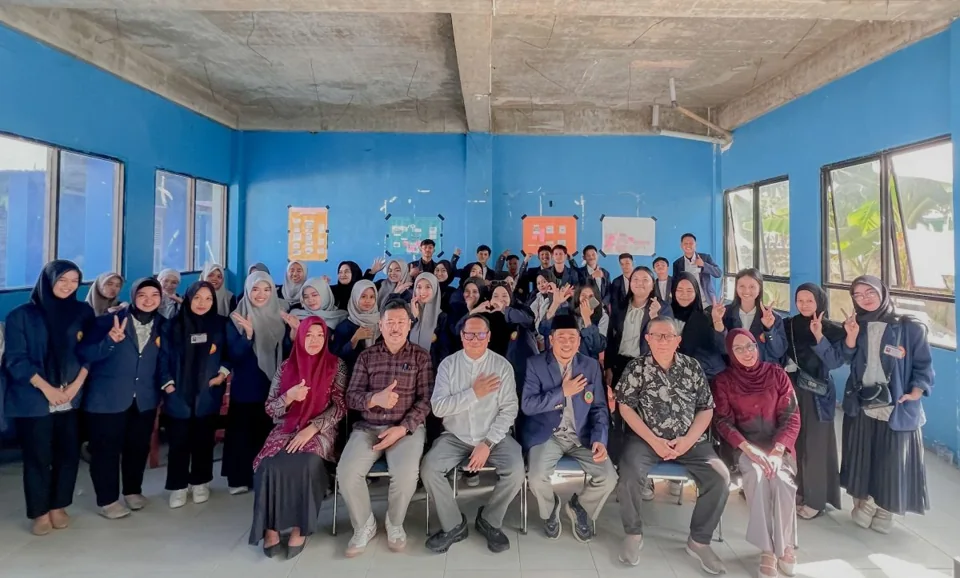
Teacher education has both historical and contemporary importance at UNASMAN. On 23 August 2026, its teacher-education provider held a completion and confirmation ceremony for the first 2026 phase of the PPG Guru Tertentu professional teacher programme. The university reported that the participants came from twelve Indonesian provinces.
The event combined attendance in person with online participation, accommodating a geographically dispersed group. The university's account describes preparation involving subject study, development of teaching materials, field practice and competency assessment. Speakers stressed continued learning, innovation and care for pupils after completion. The ceremony therefore provides a dated example of the institution's work with practising teachers and its emphasis on ongoing professional development.
Sources: Continuing education for teachers ↗
Community engagement in Poda-Poda
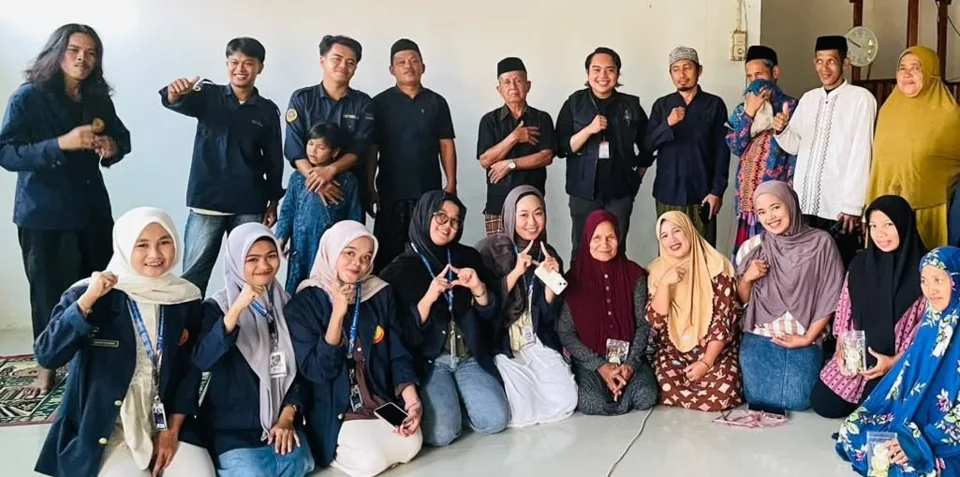
Community-based learning also appears in the university's Kuliah Kerja Nyata, or KKN, activities. On 21 August 2026, students worked with the government of Poda-Poda village and Puskesmas Tutar on a tuberculosis-awareness event at the village office. A speaker from UNASMAN's Faculty of Public Health contributed to the session.
Participants included residents, village young people and KKN students. The event created a setting for discussion between the university, local government, a community health centre and the public. Its educational purpose was to improve understanding of prevention and control through community outreach. This collaboration is one concrete example of how UNASMAN's public-service mission takes shape through student participation and partnerships with local organisations.
Sources: Community engagement in Poda-Poda ↗