Visa
About Akatsi College of Education
A teacher-education college in Akatsi
Akatsi College of Education is a public teacher-education institution in Akatsi, in Ghana’s Volta Region. Its work centres on preparing teachers for basic education through a four-year Bachelor of Education programme. Academic provision is organised through six departments: Education Studies, Mathematics and Computer Studies, Sciences, Languages, Social Sciences, and Vocational Technical Education. These departments bring subject knowledge together with preparation for classroom teaching.
The college opened in October 1963 as Akatsi Training College, initially enrolling 42 men. Seth K. Ahiable was its first principal. Its early accommodation consisted of wooden and corrugated structures previously used by Taylor Woodrow during construction of the Accra–Aflao road. The establishment involved local support, including land provided by Torgbui Letsa Korba II, the Dufia of Akatsi. The college’s history also records the involvement of local political and district leadership in bringing the training institution to the town. Women first enrolled in 1967, when 24 female students joined the institution. During the 2004/2005 academic year, provision moved from certificate to diploma education and the institution adopted the name Akatsi College of Education.
Sources: History ↗ · Academic Departments and Units ↗ · Academic departments ↗
Studying education and classroom learning
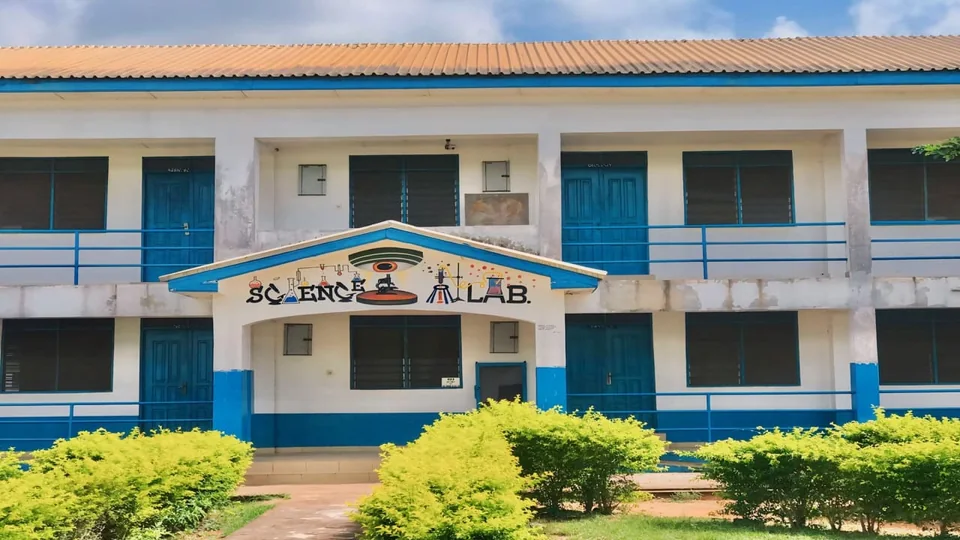
Education Studies addresses the professional knowledge that underpins teaching across subjects. The department’s courses include the foundations of education in Ghana, growth and development, guidance and counselling, and the psychological basis of assessment. Students also encounter research methods and school administration and management, connecting classroom work with the wider organisation of a school.
Preparation extends to differentiated planning for learning at upper-primary and junior-high-school levels. Inclusive school-based inquiry appears alongside study of the psychology of middle childhood. This range places learners’ development, assessment and inclusion within the same professional curriculum rather than treating teacher preparation solely as mastery of subject content.
Sources: Education Studies ↗
Mathematics, computing and language teaching
The Mathematics and Computer Studies Department combines a long-established mathematics tradition with a Computer Studies Unit created in 2007. Its junior-high-school education combinations include mathematics with ICT or science, and ICT with mathematics or science. Mathematics study covers algebra, geometry, trigonometry, calculus, statistics and probability, alongside methods for teaching basic mathematics and developing algebraic thinking.
Computing courses address both technical knowledge and educational applications. Examples include networks and data communication, laboratory management and computer maintenance, multimedia development for primary schools, and web and mobile application development for education. The department also includes legal and security issues in ICT and technology leadership and management.
The Languages Department works through English and Ghanaian-language units, including Ewe and Twi. Its English provision develops language and literacy, communication skills, literature, and approaches to teaching listening, speaking, reading and writing. Literacy across the curriculum connects language learning with other school subjects. Ghanaian-language studies include writing conventions, written literature, and the theory and practice of translation, giving future teachers opportunities to engage with language structure as well as classroom communication. Courses on the English curriculum and the principles of Ghanaian-language writing provide further connections between language study and the material that teachers encounter in school education.
Sources: Mathematics and ICT ↗ · Languages ↗
Learning through partner schools
Supported Teaching in Schools gives the college a dedicated structure for coordinating practical teacher preparation. The unit organises orientation for students and tutors on the school-based component of the four-year degree, and arranges workshops for mentors and lead mentors in partner schools. It allocates student teachers to schools and assigns tutors to provide coaching.
Its responsibilities continue during internship: monitoring student teachers’ activities, arranging supervision schedules, and collecting scores from tutors and mentors for the assessment officer. The unit also works with its committee to address difficulties involving student teachers and school mentors. Progress reports go to college management, linking school experience with the institution’s academic oversight.
Sources: Supported Teaching in Schools ↗
Student representation and support
The Students’ Representative Council provides a channel for student interests within college decision-making. Its executive structure includes a president, vice-president, general secretary, women’s commissioner and financial secretary, alongside other organisational responsibilities. Representation therefore has both a general leadership function and roles concerned with particular aspects of student affairs.
The Dean of Student Affairs has responsibilities covering academic, residential, disciplinary and social welfare matters. The office also acts as a link between students and the college administration, bringing students’ needs and concerns into institutional discussion. Its remit includes personal development and wellbeing as part of the overall student experience.
Sources: Student Leadership ↗ · Student Affairs ↗
Staff development and academic connections
Research development is another part of college activity. A July 2026 report records a two-day staff workshop on research and scholarly publication, facilitated by lecturers from the University of Professional Studies, Accra. The event formed part of that university’s community-engagement work and provided a specific occasion for academic staff development at Akatsi.
An October 2026 college report describes engagement with the University of North Carolina Greensboro, including a visit to Akatsi by an education representative and discussions involving management and departmental leaders. Areas under consideration included exchanges, research and professional development. The report identified a proposed November 2027 visit by students from UNCG’s Department of Specialized Education Services. These plans form part of a developing institutional relationship, with further work on a shared roadmap described in the college’s account.
Sources: Staff Research Workshop ↗ · UNCG Academic Engagement ↗