Visa
About Abetifi Presbyterian College of Education
A teacher-education institution in Abetifi
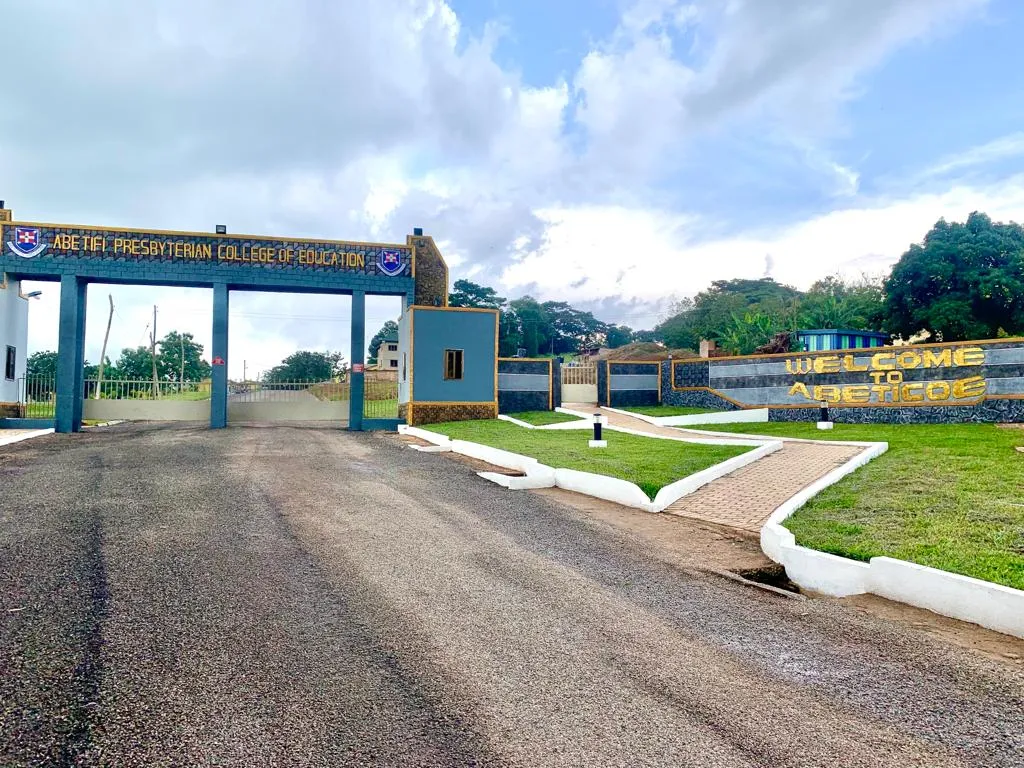
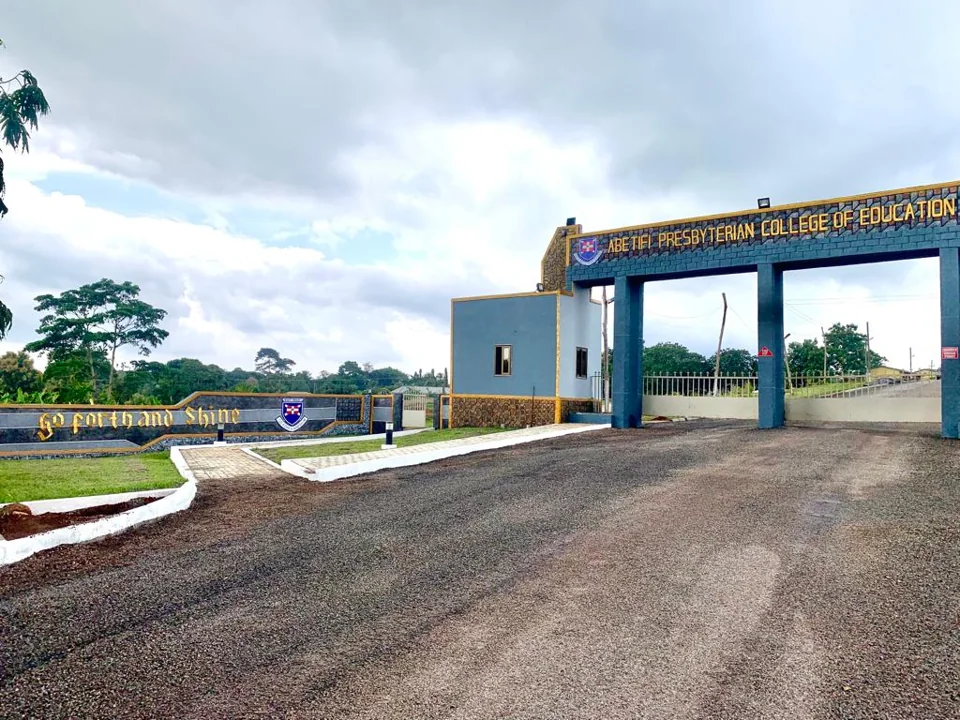
Abetifi Presbyterian College of Education is a teacher-education institution in Abetifi-Kwahu in Ghana's Eastern Region. Its history connects its foundation with the demand for more trained teachers following the 1951 Accelerated Development Plan of Education. The college officially opened on 7 February 1952 under the name Body Corporate Training College, with Presbyterian management and Rev. H. T. Dako as its first principal.
The institution was subsequently called Techiman Training College–Abetifi because an earlier plan envisaged locating it at Techiman. A decision in 1962 retained it at Abetifi, where it became Abetifi Training College. The name changed to Abetifi Presbyterian Training College in 1995. Local people contributed buildings and land during its early development. Originally a men's training college, it became co-educational in the 1977/78 academic year. Its history records successive certificate and diploma courses before the later Bachelor of Education programme. These changes reflect the college's continuing role in preparing teachers as Ghana's teacher-education framework evolved.
Sources: College history ↗
Degree-level preparation for basic education
The college's published academic information describes a four-year Bachelor of Education in Basic Education, with Primary and Junior High School routes. It presents the degree as an eight-semester programme. This structure places the institution's central purpose in the preparation of teachers for basic education, rather than in a broad catalogue of unrelated professional qualifications. The distinction between primary and junior high education is also important when reading the programme information and considering the intended area of teaching.
The entry-requirements page discusses both SSSCE and WASSCE qualifications. Its framework includes English language and mathematics alongside subjects relevant to the applicant's intended specialisation. Applicants should check the current admissions announcement for the applicable session rather than treating an undated general requirements page as a complete application timetable. The published material explains the educational routes and qualifications considered by the college, but does not by itself confirm an individual admission decision, an available place or a particular teaching appointment after graduation.
Presbyterian values and professional responsibility
The principal's published welcome describes the college's Presbyterian understanding of education as the development of intellectual, personal and practical capacities together. It connects academic learning with character and the ability to put knowledge into action. The message addresses students as future teachers and asks them to see their education as a responsibility toward other people. This gives the college's religious identity an explicit connection with its professional educational purpose.
The same welcome emphasises openness and diversity, describing students as coming from regions across Ghana. It encourages students to participate actively in college life and in the communities they will subsequently join. Respect for rules, professional guidelines and the college's code of conduct forms another part of the message. These are statements of institutional values and expectations rather than independent measures of student experience. They nevertheless explain how the college presents the relationship between teacher preparation, citizenship, personal discipline and service to the wider community.
Library support for teaching and learning
The college library describes its purpose as supporting teaching, learning and research in teacher education. Its stated vision focuses on a learning community strengthened through access to knowledge. The library's organisation includes electronic resources, acquisition and cataloguing, reference and user education, and circulation. These functions cover both the management of materials and assistance to readers seeking information for academic work.
The listed services include general reference help, reprographic services, electronic support, user education and collaboration with other libraries. Computers are identified as available for tutors and students, alongside Wi-Fi. The library page also points readers toward databases and journals, past questions, open-access resources and an institutional repository. These headings show the intended combination of print-oriented library work and digital information support; they do not establish the size of the collection or access rights to every external database. Within a teacher-training college, such services provide a practical setting for finding reading materials, preparing assignments and developing information-search skills.
Sources: College library: facilities and services ↗
Open resources and educational information
The library's open-access guide brings together links to educational materials and research-discovery services. It introduces open educational resources as materials released in the public domain or under licences that permit specified forms of use and adaptation. The guide lists services such as OASIS, MERLOT, OER Commons and open-textbook collections, presenting a starting point for locating teaching and learning materials beyond the college's own holdings.
Other entries direct readers toward scholarly literature, theses, subject repositories and publicly accessible collections. These include PubMed Central, the World Bank's Open Knowledge Repository, the OAPEN platform and Project Gutenberg. Their inclusion is evidence of the library's resource guidance, rather than a claim that the college owns or operates those services. Availability and reuse rights depend on each resource and its licence. For prospective teachers, the guide's practical relevance lies in bringing educational content and research-search tools together, while distinguishing openly reusable teaching materials from resources that may simply be searchable or readable online.
Sources: Library open-access resource guide ↗
Library development and published policy proposals
A page explicitly headed as a draft library policy records that the library moved into its current building in 2013, opposite the main administration building. The draft sets out proposals for collection development, electronic support, computer use, borrowing and the removal of outdated or unsuitable material. It describes the library as serving students, tutors, staff and researchers, with educational needs shaping decisions about resources.
The document discusses purchases and donations, relevance to academic programmes, the authority of authors and publishers, and the currency of information. It also addresses information-literacy training and responsible use of shared computers. These provisions show the kinds of principles proposed for managing a changing academic collection and balancing access among users. Because the page identifies the document as a draft, its detailed rules should not be presented as proof of an adopted policy. It is most useful here as an account of the college library's published planning priorities and approach to supporting academic work.
Sources: Draft library policy ↗