Visa
About Akademi Pariwisata Dharma Nusantara Sakti
Hospitality education in Yogyakarta
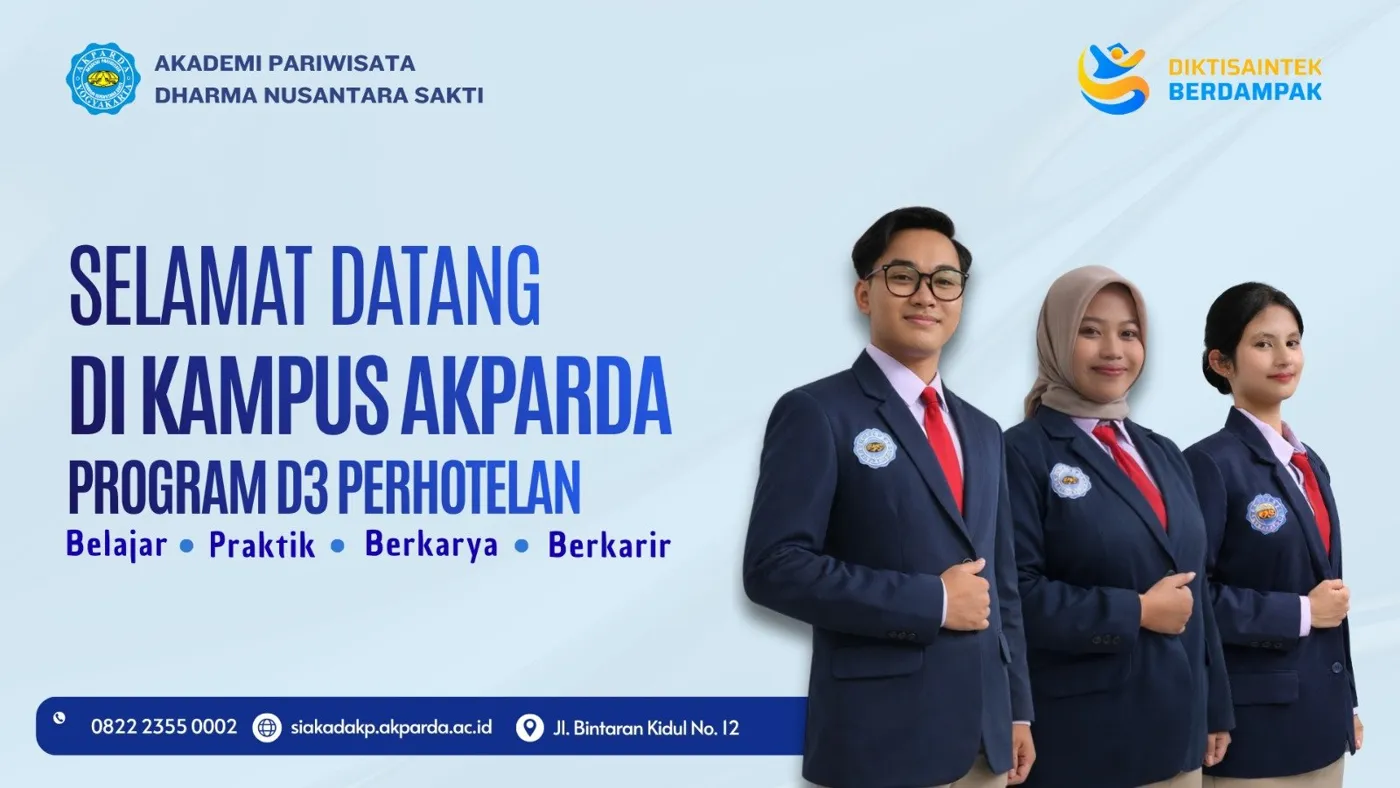
Akademi Pariwisata Dharma Nusantara Sakti, usually known as AKPARDA, is a vocational higher-education institution in Yogyakarta, Indonesia. Its official campus address is Jalan Bintaran Kidul 12. The academy focuses on tourism, particularly hospitality and culinary education, and presents a Diploma III Hospitality programme. Its programme profile combines theoretical learning with practical activity in front-office work, food preparation, housekeeping, food-and-beverage service and hotel operations management. Teaching with practitioners and contact with industry are part of the approach described on the official site. The academy's educational identity is therefore centred on the different services and operational functions that contribute to the work of hotels and the wider hospitality sector.
Sources: Official academy and programme profile ↗
Knowledge, enterprise and public engagement
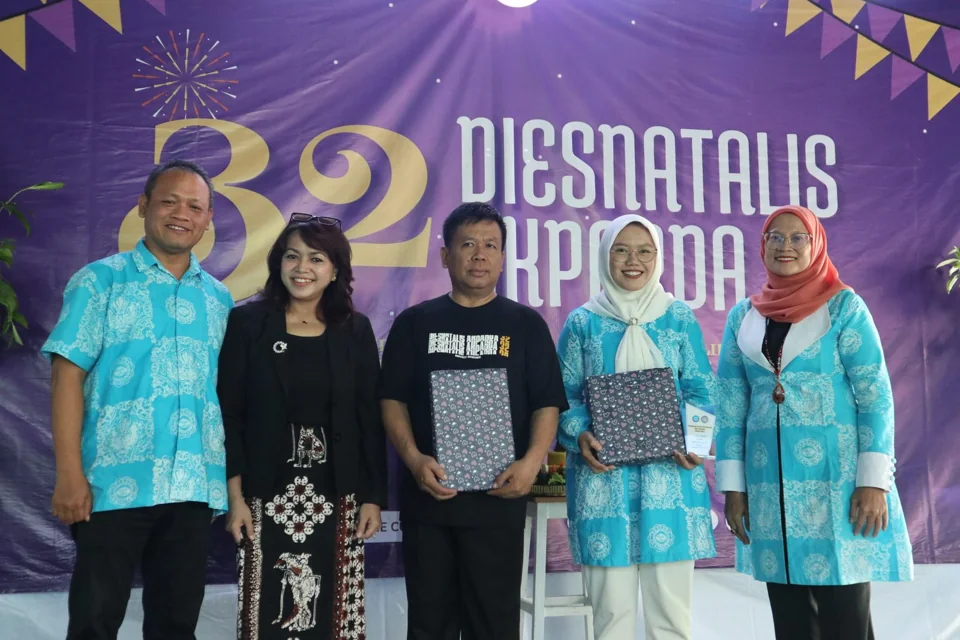
The published mission connects education with the development of knowledge and useful practical skills. It also identifies research and community service as ways to support the development of tourism and hospitality. A further strand concerns entrepreneurial initiative, creativity and the ability to develop a business. The accompanying institutional objectives place professional capability in tourism and hospitality alongside the development of enterprise. These aims provide a wider setting for the academy's practical programme: learning is intended to develop initiative and understanding as well as technical service skills. The mission places the institution's subject focus within teaching, inquiry and engagement with society.
Sources: Published mission ↗
Placement as part of practical education
The academy's placement page states that students must undertake an internship as part of their coursework and skills development. It describes opportunities with hotels in Indonesia and overseas programmes in Taiwan and Japan. A September 2026 report provides a specific example: a third-semester D3 Hospitality student undertaking Food and Beverage Service work in Taiwan. The account describes attention to the cleanliness and presentation of table areas and to keeping food-service areas organised. It places these responsibilities within the student's development of service skills, discipline and professionalism. This documented example shows how practical placement connects the hospitality curriculum with everyday operational tasks.
Sources: Practical placement information ↗ · Documented Taiwan food-and-beverage placement ↗
Geography studied at a tourism destination
An October 2026 institutional report describes Tourism Geography field learning at Lava Bantal in Berbah, Sleman. Students attended under the guidance of lecturer Nina Noviastuti. The purpose was to observe the geographical characteristics of a place, identify natural features with visitor appeal and consider the relationship between environmental conditions and destination development. The report describes observation as an opportunity to broaden understanding and develop analysis of tourism potential. This provides a specific example of contextual learning outside the academy: students encounter a destination directly and relate it to ideas introduced in a course. Geography is therefore treated as part of understanding tourism places, extending hospitality study beyond the operations of an individual hotel.
Sources: Tourism geography field learning ↗
Gastronomy and responsible resource use
AKPARDA reported collaboration with Universitas Pendidikan Indonesia through a gastronomy-tourism development programme held on 6 October 2026. The session examined gastronomy tourism from the perspective of the circular economy. Dewi Turgarini from UPI participated as the speaker, with Fitri Handayani moderating. The account links the programme with academic exchange between institutions and with responsible use of resources in tourism development. Participants were introduced to sustainability as a consideration in managing destinations and culinary potential. This extends the academy's culinary interests into discussion of how food-related tourism is developed and managed, bringing academic collaboration and environmental responsibility into the same learning activity.
Sources: UPI gastronomy collaboration ↗
Supporting a gastronomy event
Another October 2026 report records student participation in the launch of Wonderful Indonesia Gastronomy at Hotel Grand De Djokja in Yogyakarta. The programme ran from 2 to 4 October. Students contributed to supporting the event's delivery as part of an occasion promoting Indonesian gastronomy as a tourism attraction. The academy described their participation as direct experience in a tourism and hotel-industry environment and as an opportunity to develop professionalism in handling an event of national scope. This account documents a practical form of participation outside the campus. It connects the academy's hospitality and culinary focus with the organisation of an industry event and the presentation of Indonesian food culture.
An introduction to academic and professional life
New students joined AKPARDA's campus-life introduction for 2026/2027 from 1 to 3 September 2026. The official account describes introductions to lecturers and staff, followed by contributions from outside speakers. Topics included drug-abuse prevention, national responsibility, discipline and awareness of bullying. These sessions were intended to introduce academic life alongside expectations about respectful conduct and personal responsibility. On the third day, the programme included a visit to Grand Puri Saron Hotel Malioboro Yogyakarta. Students were able to observe a hotel environment connected with their field of study and gain an initial view of hotel operations and service standards. The orientation therefore combined familiarisation with the institution, personal-development topics and an early encounter with hospitality practice.
Sources: New student orientation 2026 ↗
Student relationships and experiential learning
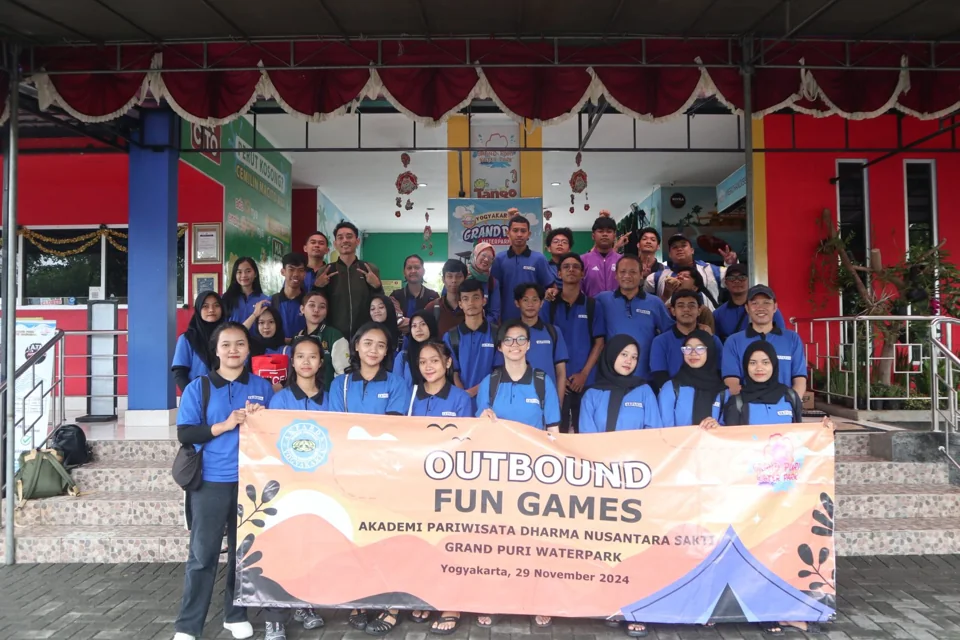
AKPARDA held a student gathering and outdoor-learning programme at Desa Wisata Segajih Live In and Education in Kulon Progo on 12–13 June 2026. The first day included introductions, group activities, creative performances and reflection. On the second day, outdoor challenges focused on teamwork, communication, leadership and problem solving. The academy's report describes the tourism village's live-in approach as involving culture, nature and the life of the surrounding community. For students, the programme brought the development of relationships across cohorts together with experience of an educational tourism setting. It illustrates another part of campus life beyond formal lessons, using shared activities to develop cooperation and the ability to adapt to unfamiliar surroundings.
Sources: Segajih community and outdoor learning ↗