Visa
About Akademi Manajemen Administrasi Yogyakarta
The academy name and AMAYO today
Akademi Manajemen Administrasi Yogyakarta, known as AMAYO, is the institution’s historical academy name; its official website now presents it as Sekolah Tinggi Ilmu Ekonomi AMAYO Yogyakarta, or STIE AMAYO. Its official historical account links the academy to Yayasan Rajawali Langlang Global Yogyakarta and records permission to provide education under Ministry of National Education decision 125/D/O/2000, dated 8 August 2000. The account also records the academy's first accreditation process in 2002. The current site's introduction refers to entrepreneurship and management education within the STIE setting. This broader presentation sits alongside the academy's established identity in administration and management, with historical material continuing to explain the institution's educational origins and development in Yogyakarta. The published history separately records institutional assessment in April 2024 and assessment of the Management programme by LAMEMBA in August 2025.
Sources: Official historical account ↗
Management and its applied concentrations
The institution's published overview describes the academy's Diploma III Management provision through three concentrations: Hospital, Medicines and Pharmacy, and Air Transportation. These are presented within management education. The overview places independence, character and professionalism alongside subject knowledge and practical capability. It identifies a simulation-and-practice development unit, BPSP, intended to bring knowledge, skills and attitudes together through practical activities. A spiritual-character development unit, BPAS, is described as part of a coordinated educational system with academic teaching and practical preparation. The alumni association, IKA, provides a further forum for maintaining connections and organising activities after study. The campus address given in this material is Jalan Brawijaya 101, on the southern ring road in Tamantirto, in the Yogyakarta area. Together, these elements describe a model combining management study with practical and personal development.
Sources: Institutional overview ↗
Professional character and academic purpose
The published programme mission links management education with teaching, research and community service. It identifies creativity, innovation, adaptability and a sense of national responsibility among the qualities the programme seeks to develop. Cooperation with organisations within Indonesia and overseas is also included as a way to support those academic functions. The institutional mission emphasises capable management personnel with professional skills, good character and a commitment to the country's development. It also describes accessible higher education as an institutional aim. These statements give the management focus a wider educational setting: subject competence is considered together with values, initiative and the ability to respond to changing circumstances.
Financial literacy and local enterprise in Panjangan
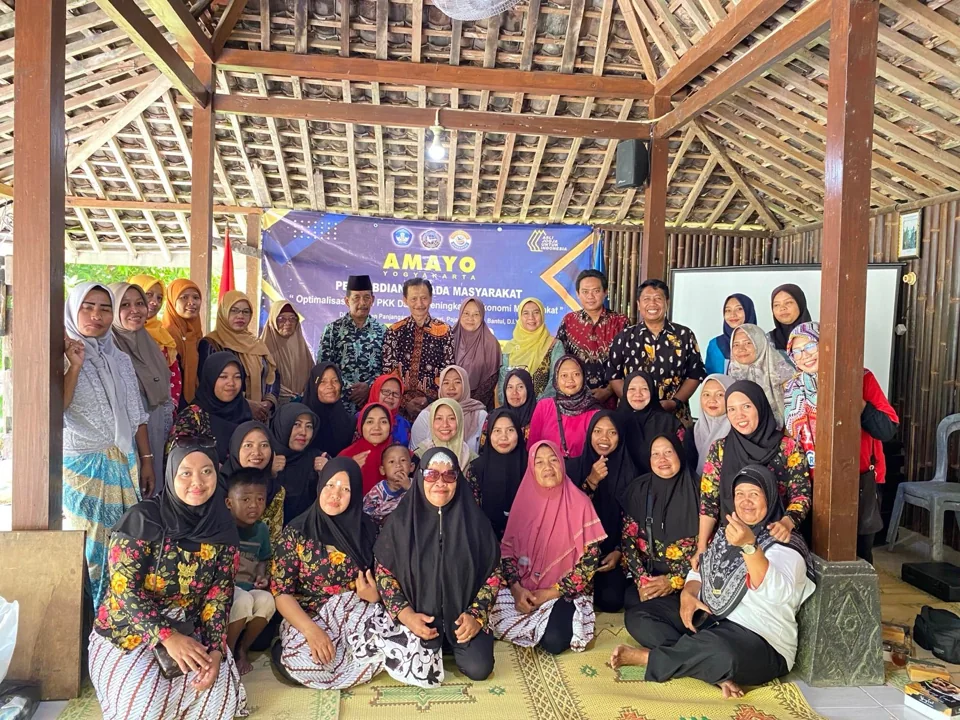
A February 2026 research-office report describes community engagement in Padukuhan Panjangan combining household financial education with food-enterprise activities. Participants discussed simple records of income and expenditure, the distinction between essential and secondary needs, saving and planning capital for small businesses. The approach included discussion of financial issues experienced in everyday family life. A practical session introduced tempeh-chip production, followed by ideas about packaging, pricing and marketing through direct sales and social media. The report places these activities within family economic empowerment and the use of locally available food products. This is a concrete example of AMAYO bringing management-related topics into a community setting through discussion, demonstration and practical participation.
Sources: Panjangan financial-literacy and food-enterprise outreach ↗
Business administration for a local enterprise group
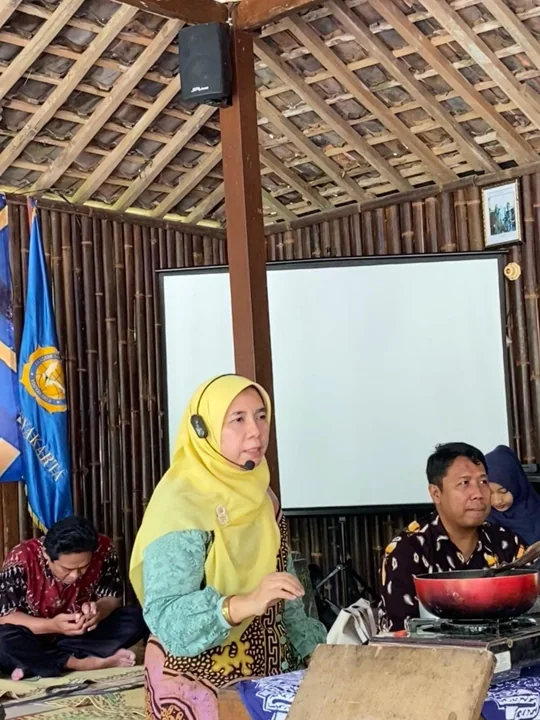
The research and community-service office, LPPM, published another account in August 2026 concerning KWT Amanah in Padukuhan Jetis. The activity addressed financial systems, human-resource management, effective record keeping and legal compliance for a local small-enterprise group. Its focus was the organisation of business activity rather than a single product or sales event. The report connects orderly administration with the ability to manage resources and enterprise activities more effectively. It also identifies the work as part of the institution's contribution to strengthening small-business capacity. This provides a second example of management knowledge being applied beyond the campus, with finance, people, records and organisational responsibilities considered together in a local setting.
Sources: Jetis business-administration outreach ↗
Supporting enterprise at a boarding school
An official account published in August 2025 records an LPPM and lecturer-team activity at Madrasah Aliyah Swasta Mu'allimin Temanggung on 16 July that year. The programme introduced open-pan drying technology for processing goat milk as an enterprise-development activity for boarding-school students. Practical training was accompanied by a plan for continuing assistance over the following year. The support described included business continuity, sales strategy and product marketing. Its educational purpose was to encourage entrepreneurial initiative and economic independence within the school community. The report therefore links a particular production technique with the management and marketing knowledge needed to develop a small enterprise, illustrating an applied form of cooperation between higher education and a community educational institution.
Lecturer and student involvement in community activities
AMAYO's December 2024 account of activities in Padukuhan Kamijoro describes participation by lecturers and the student executive organisation, BEM. The programme brought together several age groups through different activities: exercise for older residents, basic health checks, discussion of physical wellbeing, graphic-design education for young people and children's competitions. Lecturers and BEM members helped present material and support the sessions. The account emphasises cooperation between the academic community and local residents. This gives a wider picture of participation beyond the institution's management curriculum, showing students and staff working with a community on educational and social activities. It also documents an established pattern of outreach preceding the more recent enterprise and financial-literacy reports.
Sources: Kamijoro community service ↗