Visa
About Akademi Keperawatan Iskandar Muda Lhokseumawe
A nursing academy in Lhokseumawe
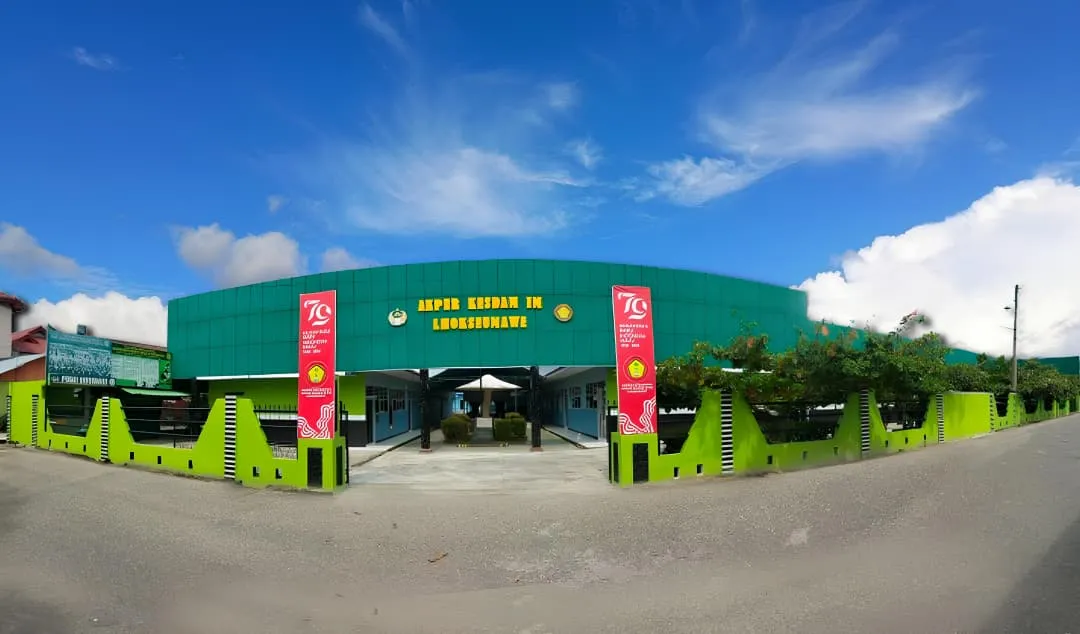
Akademi Keperawatan Iskandar Muda Lhokseumawe, known as AKIMAL, is a nursing higher education institution in Lhokseumawe, Aceh, Indonesia. Its official presentation also uses the name Akper Kesdam Iskandar Muda Lhokseumawe. The academy provides Diploma III nursing education and identifies its administrative connection with Kesdam Iskandar Muda under Yayasan Wahana Bhakti Karya Husada.
The campus address is Jalan Alkalali Number 9 in Hagu Selatan village, Banda Sakti district, Lhokseumawe. Its website brings together academic information and links to student services, including an academic information system, e-learning, an electronic library, a career centre, alumni services and an institutional journal. The main institutional presentation also identifies a director and deputy directors, showing the leadership structure supporting the academy's teaching and administration.
Sources: Official institutional homepage ↗
From nursing school to diploma education
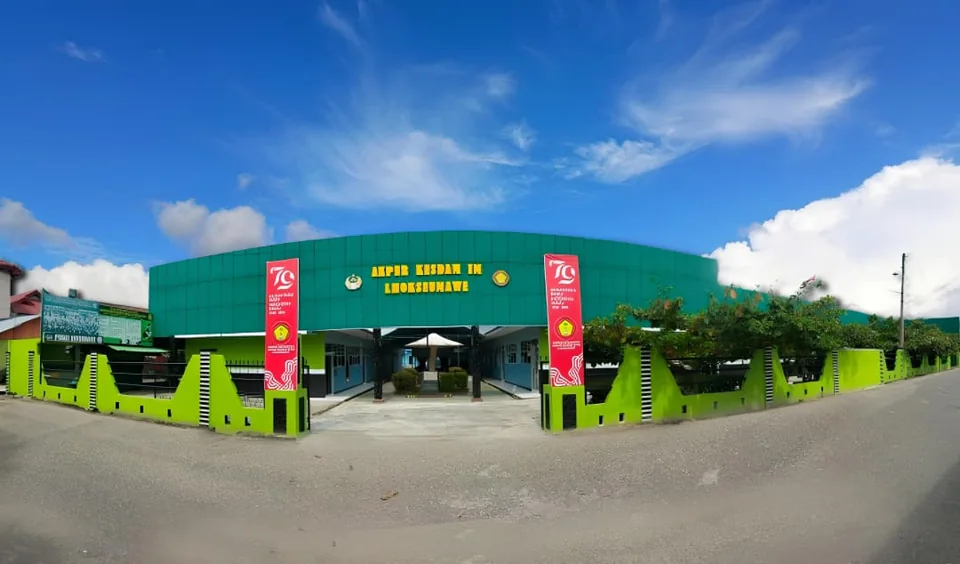
The academy traces its development to Sekolah Perawat Kesehatan Kesdam I/BB Lhokseumawe, whose authorisation dates to 7 August 1997. Following changes in the regional military command organisation, the school used the Kesdam Iskandar Muda Lhokseumawe name. It subsequently developed from school-level nursing education into an academy offering higher education.
The official history records permission for conversion to Akademi Keperawatan Kesdam Iskandar Muda Lhokseumawe on 18 June 2008. A further national education decision in 2011 concerned the transfer of supervision from the health ministry to the national education ministry, while the foundation remained the provider. These stages distinguish the earlier school, the conversion to diploma-level education and the later administrative transition. They also explain the Kesdam terminology that continues to appear in the academy's institutional history and current communications.
Sources: Academy history ↗
Educational direction and modern wound care
AKIMAL's institutional vision identifies modern wound care as a focus of its development towards 2031. This is presented as an educational direction rather than a completed institutional result. Its mission connects teaching with developments in science and technology, nursing competencies, research by lecturers and students, and community service.
The academy also identifies domestic and international cooperation and the development of entrepreneurial abilities among its aims. Its objectives describe an academic environment supporting nursing learning and research, alongside practical subject development and external relationships. Modern wound care therefore functions as a stated area of emphasis within a broader nursing education mission. The institutional account links that focus with the organisation of learning, the development of faculty and student work, and engagement with other organisations.
Sources: Institutional vision and mission ↗
Research and community service support
The academy's Unit Penelitian dan Pengabdian Masyarakat, or UPPM, supports research and community service activity. Its published responsibilities include managing the application and development of health-related science and technology within the academic community. It also seeks to strengthen the knowledge and abilities of staff and students undertaking research and community projects.
The unit identifies policies, facilities and supporting resources as part of its work, alongside expanding access to research and service opportunities. Cooperation with local, regional and national organisations appears among its stated responsibilities. Another strand concerns disseminating research and community activity through publications and intellectual property outputs. These functions give the academy an organisational setting for developing and sharing academic work beyond classroom teaching, while linking scholarly activity with the institution's wider community role.
The internal quality assurance system
The Unit Penjaminan Mutu, or UPM, describes its role as developing and maintaining the academy's internal quality assurance system. Its published framework uses a cycle of setting standards, implementing them, evaluating performance, controlling processes and making improvements, known by the Indonesian abbreviation PPEPP. The unit connects this cycle with documented and continuing institutional development.
Its responsibilities include monitoring, evaluation, internal quality audits and follow-up actions across education, research and community service. The unit also describes training, socialisation and assistance for the academic community in applying quality processes. Information systems and evidence are identified as supports for institutional decision-making. The framework links quality work with governance, cooperation and the academy's stated educational focus, providing a structure through which different institutional activities can be reviewed and improved.
Sources: UPM internal quality assurance ↗

Clinical placement with local hospitals
An official report published in August 2026 documents a maternity nursing placement involving eighty students. The reception of students took place on 3 August at two partner hospitals in Lhokseumawe: Rumah Sakit TK III Iskandar Muda 07.01 and Rumah Sakit MMC. Forty-six students were assigned to the first hospital and thirty-four to the second.
The academy described the placement as part of clinical learning concerned with maternity nursing, including care during pregnancy, childbirth and the postnatal period, together with newborn care. Representatives of the academy formally handed students over to hospital management. This dated account provides a concrete example of how local hospital relationships support the practical component of nursing education. It also shows the connection between academic organisation and the clinical settings in which students gain supervised experience.
Participation in academic development
AKIMAL reported participation in an accreditation workshop organised by AIPViKI Regional XII Aceh on 3 July 2026 in Banda Aceh. The event brought together higher education leaders, programme heads, lecturers and quality assurance teams from health-related institutions. Its subject was the implementation of an eight-criterion assessment instrument.
The report describes sessions on preparing assessment documents, self-evaluation, institutional governance and internal quality assurance. Discussion and the exchange of practices between institutions formed part of the programme. This activity is documented as staff development and preparation for institutional processes. It adds a dated example to the academy's published quality assurance framework, showing engagement with an external professional education association and with other higher education teams working on similar organisational tasks.