Visa

About Akademi Keperawatan Husada Karya Jaya
A nursing academy in North Jakarta
Akademi Keperawatan Husada Karya Jaya, commonly abbreviated AKPER HKJ, is a vocational nursing higher education institution in Jakarta, Indonesia. Its history begins with Yayasan Husada Karya Jaya, established through a notarial deed on 12 July 1994. The foundation obtained temporary permission to establish the academy on 22 March 1995, and the institution was inaugurated on 27 September that year.
The first teaching locations were at RSUD Koja and the North Jakarta branch of the Indonesian Red Cross. In September 2001, the academy moved to the Universitas 17 Agustus 1945 Jakarta environment on Jalan Sunter Permai Raya in North Jakarta. Its official history identifies this as its continuing campus location. The foundation changed its name to Yayasan Jaya Husada Jakarta in March 2009, followed by education-ministry permission in June. These milestones distinguish the academy’s establishment, campus relocation and changes in its administering organisation.
Sources: Institutional history ↗
Emergency and urban disaster nursing
The academy’s published vision centres on vocational nursing education with a particular emphasis on emergency care and nursing in urban disasters. Recognition within the ASEAN region is an institutional ambition. Its mission combines education with research and community service in these subject areas.
The stated objectives connect nursing knowledge and skills with preparedness and the needs of urban communities. Research is intended to contribute to teaching and professional practice, while community engagement provides another setting for lecturers and students to learn. The academy also identifies cooperation with hospitals, healthcare facilities, disaster-management organisations and educational institutions as a means of supporting development. This gives its educational direction both a professional focus and an organisational framework, linking the nursing programme with partners involved in healthcare and preparedness.
Sources: Mission and objectives ↗
The Diploma III programme
The academy identifies its educational provision as Diploma Tiga, or D3, Nursing. The programme description emphasises development of foundational nursing knowledge, practical abilities and professional attitudes. Emergency nursing addresses knowledge and basic skills associated with urgent-care situations, while urban disaster nursing concerns preparedness, response and the nursing role in disrupted city environments.
The published competence areas also include communication, cooperation in healthcare and caring behaviour. These themes place professional relationships alongside technical learning. The programme’s description therefore connects subject knowledge with the ways students work with other people and understand their responsibilities. Its practical orientation gives a context for the academy’s focus on emergency and disaster-related study, with learning directed toward the development of nursing competence and readiness to participate in professional environments.
Sources: D3 Nursing programme ↗
A student association founded in 2000
Himpunan Mahasiswa AKPER HKJ is the academy’s student association. Its official profile dates its establishment to 2000 and describes a role in intellectual development, leadership, professionalism and community engagement. The association also receives student aspirations and organises activities supporting the development of nursing students.
The profile identifies Pancasila, the responsibilities of higher education, institutional statutes and student regulations among its foundations. Active academy students form its membership. Published member rights include participation in activities, expressing opinions, voting and standing for election. Responsibilities include observing the organisation’s rules, contributing to activities and maintaining solidarity. The organisation’s account of itself emphasises academic values, nursing ethics and cooperation. This gives students a formal setting for participation in campus life and for developing leadership and organisational experience alongside their studies.
Sources: Student association profile ↗
Planned academic and social activities
The association’s work programme groups its activities into organisational development, education and professional learning, community service, and social and cultural participation. The organisational plan includes new-student introduction, gatherings, a suggestion channel and the recruitment of future office holders. The suggestion channel is listed for monthly evaluation.
The education and professional department’s plan includes first-aid training, seminars and scientific discussion. Community service appears as a recurring activity, while sports, futsal, shared exercise and religious occasions feature in the social programme. Dance, angklung and choir activities are also listed, with some schedules still to be determined. These entries are published plans for student activity. They show how the association intends to combine professional interests with recreation, creativity, communication and service, providing different ways for students to participate in the academy’s community.
The published schedule proposes first-aid training twice per semester, a seminar once per semester and scientific discussion on Fridays. Community service is listed every two months. Sports are scheduled for Wednesdays, futsal for Thursdays and shared exercise for Fridays, giving these planned activities a recurring place in student life.
Sources: Student association work programme ↗
Facilities and the learning environment
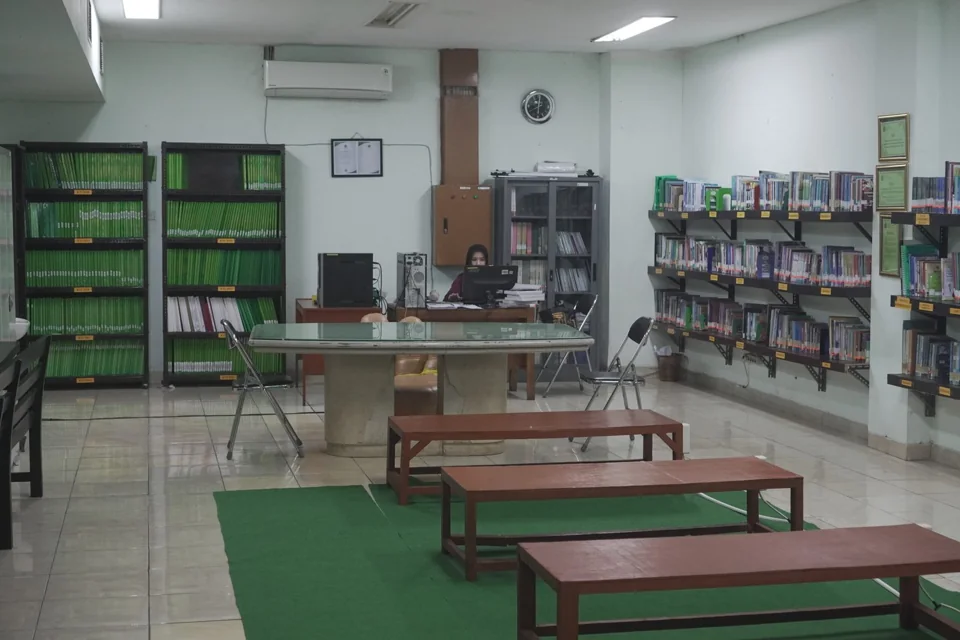
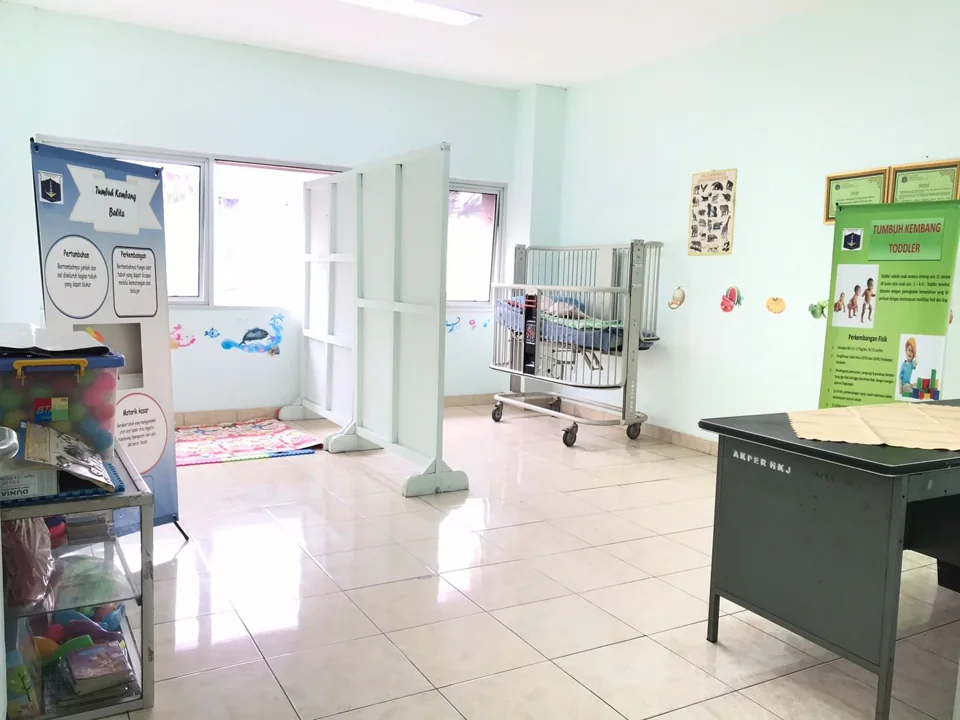
The academy’s official campus gallery identifies several spaces supporting study and student life. These include a main laboratory, child-nursing laboratory, medical and surgical nursing laboratory, computer laboratory, classrooms and a library. A music room and student health unit appear alongside the academic facilities.
The gallery’s photographs show the library’s reading tables, reference shelves and service desk, together with equipment and teaching materials in the child-nursing room. These provide concrete views of the physical resources presented by the academy. Its public information also connects clinical learning with cooperation at partner hospitals. Taken together, the campus spaces and clinical relationships support its account of nursing education through theoretical study, practical learning and experience in healthcare environments.
Sources: Official campus information and facilities gallery ↗