Visa
About Akademi Keperawatan Bethesda Serukam
From nursing school to academy
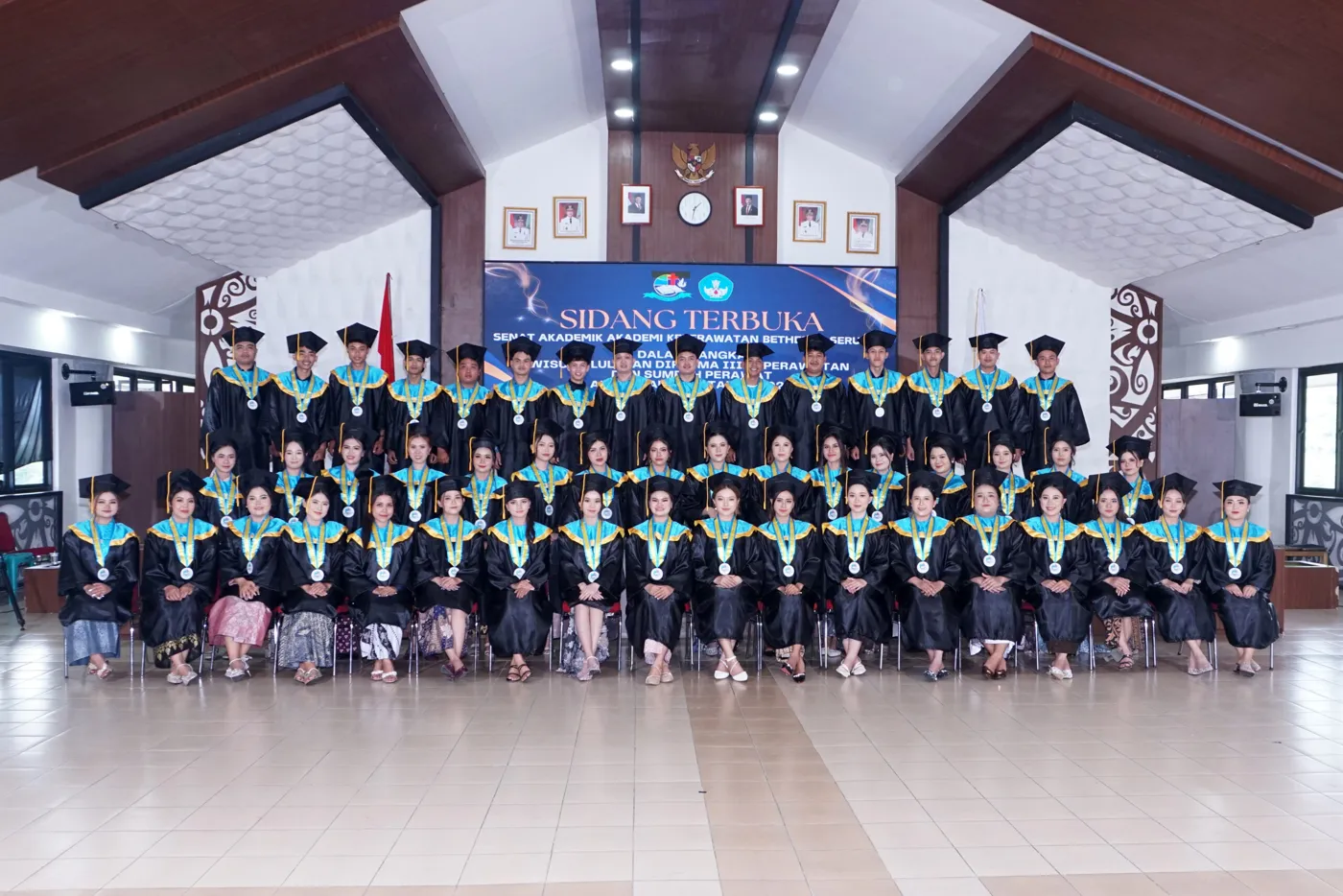
Akademi Keperawatan Bethesda Serukam is a nursing academy in Bengkayang, West Kalimantan, Indonesia. Its history begins with a secondary-level health nursing school rather than with a general university. The institution records the establishment of Sekolah Perawat Kesehatan Bethesda Serukam on 7 June 1989, under a Ministry of Health decision. This earlier school forms the foundation of the academy's institutional identity and its continuing emphasis on nursing education.
The school closed in 2001 as education moved to the higher-education level. The academy dates its conversion to 11 April 2001, citing the relevant approval in its historical account. These dates distinguish the beginning of nursing education at Bethesda Serukam from the later establishment of the academy. Its present profile retains an emphasis on community nursing and compassionate care.
Sources: History of Bethesda Serukam Nursing Academy ↗
Mission and institutional values
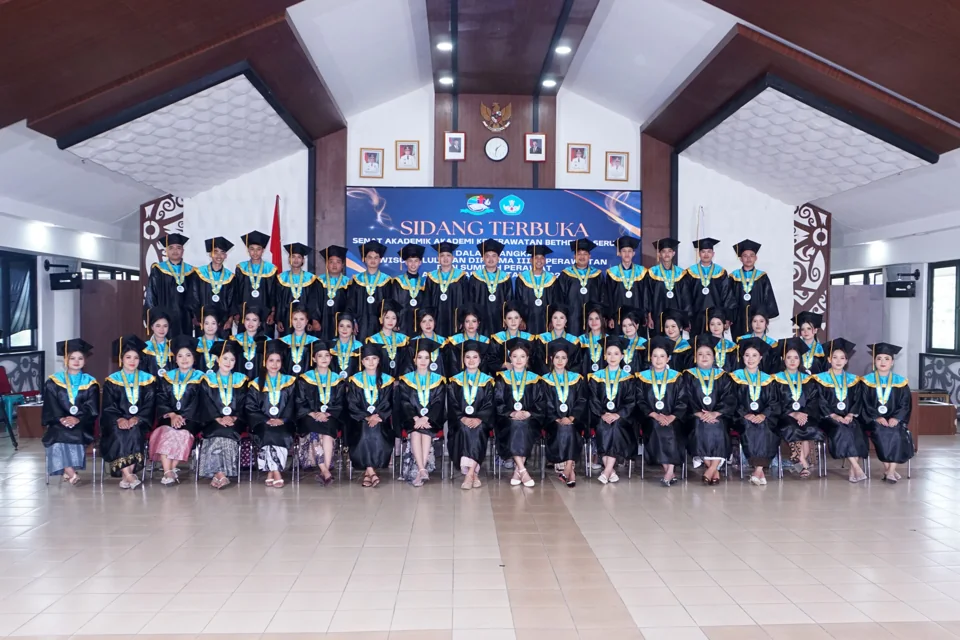
The academy describes its purpose through vocational nursing education, research and service to the community. Community nursing and compassion are recurring priorities in its mission. This places attention on the relationship between professional learning and the people and communities that nursing serves. Its stated educational direction also includes responding to developments in science and technology.
The mission connects institutional governance with Biblical values and calls for character development throughout the academic community. It therefore addresses both the organisation of education and the personal formation of those involved in it. Research in health and community service sit alongside teaching as explicit institutional responsibilities. Partnerships within Indonesia and overseas are another stated means of supporting education, research and service, making cooperation part of the academy's published development agenda.
Sources: Vision and mission ↗
Diploma study and learning resources
The academy offers a Diploma III programme in nursing, organised over three years and six semesters. Its academic description brings together classroom theory, laboratory work and clinical field practice. General education includes religion, Pancasila, citizenship and Indonesian language, alongside subjects such as English and entrepreneurship. Psychology, health anthropology and health promotion add perspectives on people and their social surroundings.
The nursing curriculum also includes biomedical foundations, pathophysiology, pharmacology and nutrition. Communication, professional ethics, health law, patient safety, nursing documentation and research methods contribute to the foundations of practice. Clinical areas listed by the academy include medical and surgical, maternity, child, mental-health, emergency and disaster nursing. Family and gerontological nursing connect with its community emphasis. Students also complete a final scientific paper.
The academy identifies a nursing laboratory, library and student dormitory among its facilities. Clinical cooperation includes Bethesda Serukam Hospital and other partners. Its academic information system provides access to study administration, including study plans, results and timetables.
Sources: Academic programme ↗
Teaching expertise
The published lecturer profiles show several strands of expertise supporting the nursing programme. These include nursing management, medical and surgical nursing, community nursing and public health. Religion and theology also appear among the teaching backgrounds represented. The combination reflects the academy's vocational focus and the faith-based values described in its mission.
The profiles record undergraduate and postgraduate educational backgrounds at institutions in Kalimantan and Java. They give students a more specific picture of the people involved in teaching than a general programme description alone, identifying academic preparation and areas of nursing knowledge within the academy.
Sources: Teaching staff profiles ↗
Welcoming the 2026 cohort
An official report describes the new-student orientation held from 31 August to 3 September 2026. The four-day programme introduced higher education, the academy's identity and academic life. Topics included ethics, mental wellbeing, a growth mindset and financial literacy. The programme combined these introductions with civic awareness and opportunities to meet members of the campus community.
Students encountered the student executive organisation, BEM, and activities connected with interests and talents. Academic advisers explained their guidance role, while alumni contributed perspectives on working life. Occupational and environmental health and safety were also included. The closing activities featured a welcoming jacket ceremony, recognition of students and group activities. An evening welcome brought together worship and friendly activities organised with BEM. The report presents orientation as a sequence of academic, social and institutional introductions rather than a single opening ceremony.
Sources: PKKMB orientation 2026–2027 ↗
A documented clinical learning experience
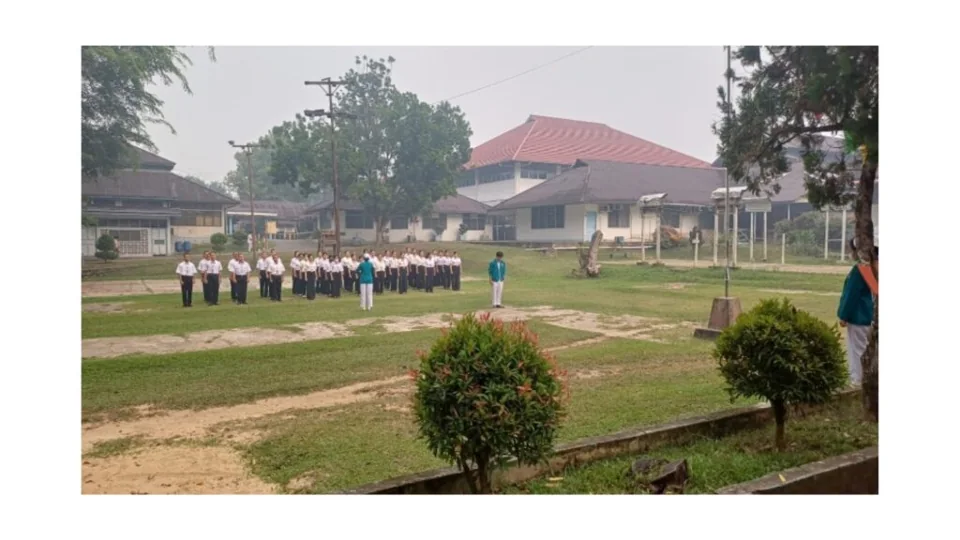
A separate report published in August 2026 describes a mental-health nursing placement for second-year students in their fourth semester. The two-week rotation took place at the West Kalimantan Provincial Psychiatric Hospital. It opened in the hospital hall on 27 July, with hospital clinical instructors involved in the students' learning and academy teachers providing periodic supervision.
The report describes educational work involving communication, group activities and health-information assignments. Students also worked through clinical cases as part of the rotation. A group case presentation took place on 6 August, before the placement ended on 8 August. These details offer a concrete example of how field learning is organised: an opening introduction, supervised activities and a presentation near the end. They also show the respective involvement of the hospital and the academy in a particular, dated student learning experience.
Research publication and shared knowledge
The academy's research and community-service unit, LPPM, publishes Jurnal Kesehatan dan Keperawatan Secerah Mentari, abbreviated JKKSM. The journal began with volume one, number one in October 2024 and states an April and October publication schedule. Its subject coverage includes health and nursing, with particular attention to family and community nursing, alongside fields such as nursing management, education and mental health.
The journal accepts research articles, case studies and literature-based work, including systematic and scoping reviews. Its published editorial process describes initial screening, double-blind peer review, revision and a final decision. It provides open access without charging readers to consult its articles. By offering a publication venue for lecturers, students and practitioners, the journal adds a research-sharing function to the academy's teaching activities. Its scope connects the institution's community orientation with a wider exchange of nursing and health knowledge.
Sources: About Jurnal Kesehatan dan Keperawatan Secerah Mentari ↗