Visa

About Akademi Inovasi Indonesia
A vocational academy in Salatiga
Akademi Inovasi Indonesia, usually abbreviated AII, is a vocational higher education institution in Salatiga, Central Java. It operates under Yayasan Inovasi Untuk Indonesia and offers the applied bachelor programme in manufacturing engineering technology, known in Indonesian as D4 Teknologi Rekayasa Manufaktur. Its official history dates its legal establishment to 21 July 2023, under ministerial decision 181/D/OT/2023.
The academy traces its educational approach to the Sustainable Education Project initiated by DTECH-ENGINEERING in 2020. The foundation followed in 2022, providing an organisational base for extending that initiative. This background places product innovation and industrial practice at the centre of its institutional development. Its stated mission combines engineering education, research into products with commercial potential and community service. It also identifies support for local people with ideas, and work with vocational schools, teachers and small enterprises in product design, computer-aided manufacturing and CNC operation. Innovation, teamwork and independent learning are recurring themes in this account of the academy’s purpose.
Sources: Institutional profile and history ↗
Manufacturing study through industrial projects
The published curriculum covers eight semesters and combines Teaching Factory and Project Based Learning approaches. The academy describes a daily pattern of classroom sessions followed by innovation work with its industrial partner, DTECH-ENGINEERING. Students enter the industrial environment from their first semester, while later study includes independent projects, industrial internships and a final assignment.
Early subjects include engineering mathematics, mechanics, materials, production processes, machining, engineering drawing and computer-aided design and manufacturing. Subsequent study introduces thermodynamics, quality assurance, digital technology, project management, electronics and production planning. The outline also includes mould and die design, smart manufacturing, three-dimensional printing, control and automation. Communication, English, leadership and entrepreneurship appear alongside technical subjects. This combination connects the design of a product with the processes and coordination needed to manufacture it. Across the programme, independent projects and industrial work provide settings for applying the scientific and technical content of the classroom curriculum.
Sources: Manufacturing curriculum ↗
Student participation in product development
The academy’s portfolio identifies transport-related products as a focus of student innovation in 2025. Its examples include motorcycle components and railway seats, developed within collaborations involving DTECH-ENGINEERING, vocational schools and PT INKA. The motorcycle work is presented through the ARUMI Motoparts and XYZ Racing brands, with students contributing to research, prototypes, production and marketing.
The railway-seat project involves design and production work with PT INKA, IMSC and DTECH-ENGINEERING. The academy describes both improvements to existing seats and new designs for railway equipment. Its portfolio explains a wider workflow beginning with market needs and ideas, continuing through detailed engineering and prototyping, and extending into production and sales. It also identifies different student roles within that process, including design engineering, computer-aided manufacturing, production planning, inventory and management. These examples give substance to the academy’s account of project-based education: product development involves technical decisions as well as coordination across a production team.
Sources: Student innovation portfolio ↗
Research proposal mentoring
In May 2025, the academy reported an intensive mentoring programme for students preparing submissions to Program Kreativitas Mahasiswa, the national student creativity programme. The activity ran from 12 to 23 May. Assigned lecturers worked with individual teams, while external mentors helped with the refinement of proposals.
The report describes students developing ideas related to Teaching Factory activities they had already undertaken. Their preparation included bringing team members’ ideas together, dividing writing tasks and discussing budgets and implementation plans for proposals that might receive funding. The process therefore connected practical innovation with the work of explaining and planning an academic project. The academy presented the activity as part of developing research, innovation and community engagement during students’ education, with mentoring continuing through proposal finalisation.
Sources: Research proposal mentoring, May2025 ↗
Links with vocational school education
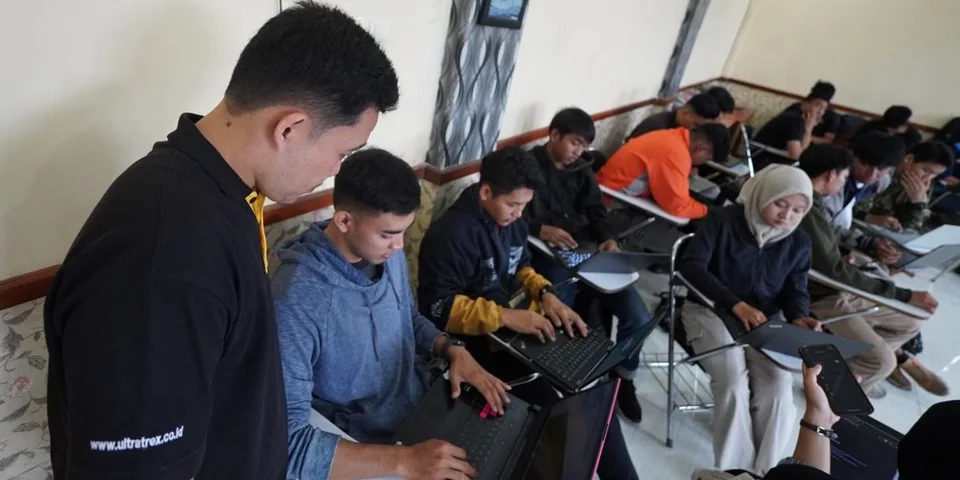
A June 2025 report records the academy’s participation in a discussion organised by SMK Al Falah Salatiga on vocational education in a pesantren setting. AII director Wikan Sakarinto joined Muchlis Rifa’i of DTECH-ENGINEERING as a speaker at the event, held in the school’s hall on 9 June.
The academy described SMK Al Falah as a school collaborating with AII and DTECH in the implementation of Teaching Factory learning. The discussion connected technical training and industrial relationships with communication, character and innovation. Students, teachers, foundation representatives and other participants took part. This local example shows the academy engaging with vocational education beyond its own degree programme, through discussion and cooperation involving a school, a higher education institution and an industrial partner.
Student community beyond project work
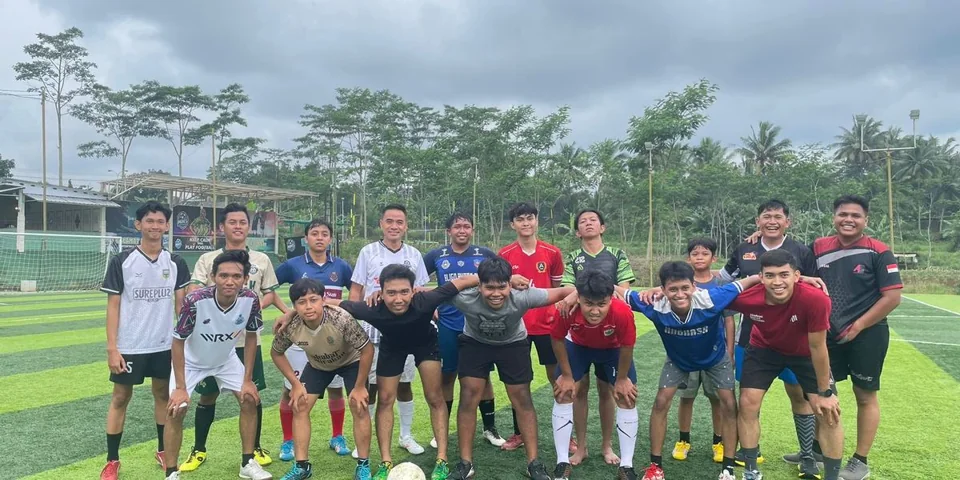
Student life also includes shared activities outside academic and industrial projects. The academy reported a minisoccer event held on 1 June 2025 at Madyantara Mini Soccer in Salatiga. It was initiated by Himatekram, the manufacturing engineering technology student association, as part of its regular activities.
The director joined students on the pitch, and the report described the event as an opportunity for physical activity and closer relationships within the academy. Its account connects informal recreation with teamwork, solidarity and student participation. Together with research mentoring and industrial projects, this example gives a view of an educational community in which collaborative work and shared activities feature both within and beyond the formal study programme.
Sources: Minisoccer activity, June2025 ↗