Visa
About Akademi Farmasi Bhumi Husada Jakarta
A pharmacy academy in Ciracas
Akademi Farmasi Bhumi Husada Jakarta is a specialist higher education institution in Ciracas, East Jakarta. Known as AKFAR Bhumi Husada, it provides Diploma III pharmacy education under Yayasan Bhumi Husada Jakarta. Its official history records the beginning of this programme in 1999 under a Ministry of Health decision.
The academy’s history also describes a transfer of educational supervision from the Ministry of Health to the Ministry of National Education in 2007. Its continuing educational purpose is the preparation of vocational pharmacy personnel. The academy’s address on Jalan Penganten Ali places its teaching and local community activities in East Jakarta. The specialised diploma focus distinguishes the institution from a general university offering a broad collection of unrelated degrees.
Sources: AKFAR Bhumi Husada Jakarta ↗
Educational direction and institutional values
The academy’s published vision sets a direction toward national distinction in pharmaceutical services by 2027, alongside professionalism, ethical character and independence. Its mission combines education with research and community service in the same field. These are institutional aims rather than a statement that a future target has already been achieved.
Information and communication technology has an explicit place in the educational mission. The academy also identifies partnerships with higher education institutions and other organisations, both within Indonesia and abroad, as part of its development. Internal quality assurance provides a further organisational principle. The mission therefore connects professional subject knowledge with technology, cooperation and the management of educational quality, rather than describing pharmacy education only as the delivery of classroom lessons.
Sources: AKFAR Bhumi Husada Jakarta ↗
Learning, orientation and academic support
The published student handbook describes a competency-based curriculum grounded in academic and moral values. It links teaching with opportunities to develop practical abilities and introduces new students to lecturers, laboratories, the library and other resources through campus orientation.
The handbook also describes participation in learning: students should have opportunities to ask questions, express views and communicate with lecturers. Academic guidance covers study planning, semester results and final assignments, supported in part by information systems. Assessment arrangements are explained at the beginning of classes, including attendance, assignments and examinations. Practical fieldwork and internships provide opportunities to apply learning beyond the campus. The handbook further identifies student involvement in research and community-service groups with lecturers. Together, these arrangements connect formal study, feedback and practical experience within the academy’s account of the student learning environment.
Sources: Pedoman Mahasiswa — Akademi Farmasi Bhumi Husada Jakarta ↗
A structured practical examination
An official report dated June 2025 describes an Objective Structured Clinical Examination for final-year students. The assessment took place on campus and involved internal teaching staff together with practitioners serving as assessors. It used separate stations and standardised scenarios to examine practical competencies.
The reported areas included professional communication, medicine-related counselling, prescription-handling tasks and other pharmacy skills. The stations had defined scenarios and time limits, giving the assessment an organised practical structure. This dated example shows how the academy evaluates the application of learning alongside theoretical study. The report presents the examination as part of the students’ educational assessment and preparation for professional settings, adding a concrete account of practical evaluation to the academy’s general mission for vocational education.
Sources: AKFAR Bhumi Husada Jakarta ↗
Community activity linked with entrepreneurship
In December 2024, the academy organised a community activity at RPTRA Ciracas Prima, a public recreation space used by local families. The published report connects the event with the community-service element of higher education. Students participated alongside invited professionals and local residents.
The day also incorporated an entrepreneurship-course activity. Students sold prepared food and drinks through stalls, giving their classroom work a public setting and a direct audience. A children’s colouring competition added another family-oriented activity. Later in the morning, invited professionals delivered health-information presentations. The report therefore describes several forms of participation within one local event: student enterprise, community engagement, family recreation and public education. It provides a specific example of the academy’s connection with its surrounding neighbourhood without treating community service as an abstract institutional aim.
Sources: AKFAR Bhumi Husada Jakarta ↗
Leadership and student participation
The academy’s January 2025 basic leadership programme took place over two days in Condet, East Jakarta. Its published account describes orientation, ethics and motivation sessions, group activities and leadership games. Staff accompanied the students, and the programme concluded with a closing event involving the academy’s leadership.
This activity added a collective experience outside the regular classroom timetable. The report emphasises knowledge, experience and preparation for later responsibilities as purposes of the programme. Its combination of discussion, shared routines and group tasks gave students opportunities to participate together in an organised setting. The dated account complements the academy’s academic sources by showing a form of student development focused on participation and leadership.
Sources: AKFAR Bhumi Husada Jakarta ↗
Practical settings and student interests
The academy’s practical-training page identifies experience in different types of pharmacy-related setting, including hospitals, pharmacies, pharmaceutical industry, community health services and regulatory organisations. Its published list illustrates the range of environments connected with vocational pharmacy education.
The same page describes student interests beyond professional training. These include outdoor activity, Muslim and Christian student groups, a choir, study visits and social activities coordinated through the student organisation. The combination places technical education alongside opportunities for cultural, social and organisational participation.
Sources: AKFAR Bhumi Husada Jakarta ↗
Laboratory learning spaces
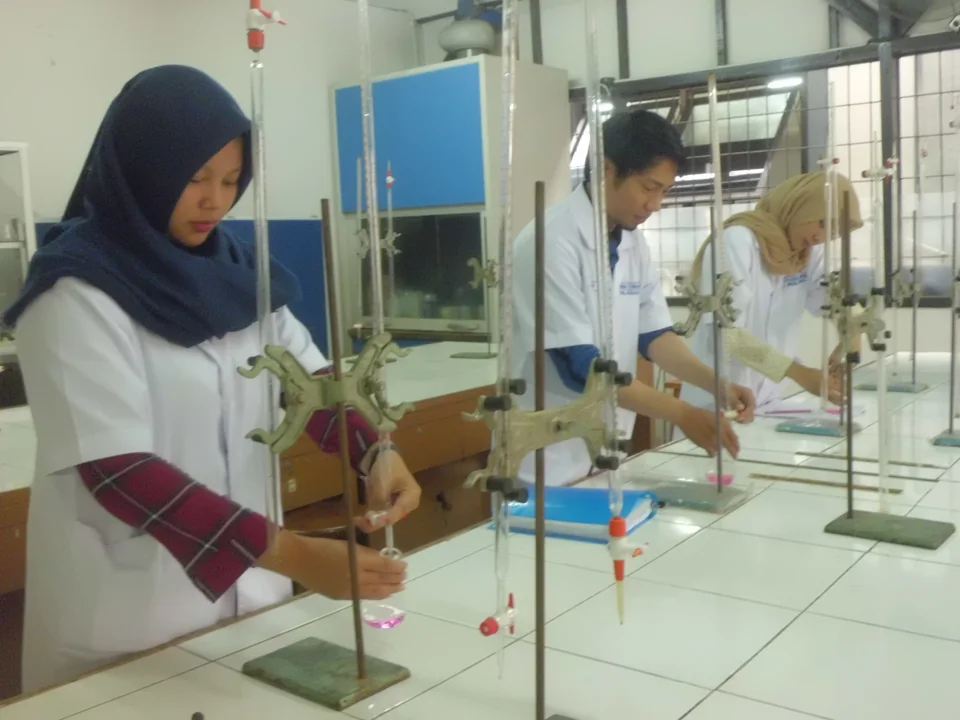
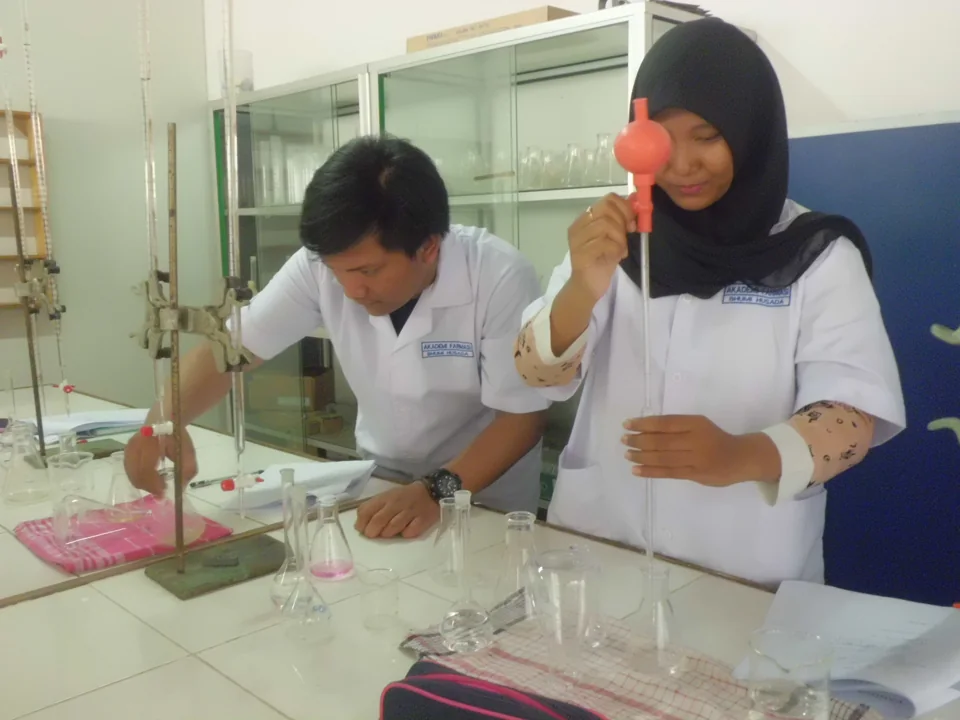
The official facilities gallery presents classrooms and practical rooms. Its laboratory photographs show students wearing academy-branded coats, working at benches with glassware and other teaching equipment. These images provide a concrete view of the practical learning environment described elsewhere in the academy’s educational material. The gallery complements the written sources with identifiable scenes of pharmacy students at work.
Sources: AKFAR Bhumi Husada Jakarta ↗