Visa
About Africa Centre of Excellence for Water Management
A regional postgraduate centre at Addis Ababa University
The Africa Centre of Excellence for Water Management, generally abbreviated ACEWM, is a postgraduate education and research centre hosted by Addis Ababa University in Ethiopia. Established in 2016, it serves a regional purpose extending across Eastern and Southern Africa. It is located within the College of Natural and Computational Sciences at the university's Arat Kilo, or 4 Kilo, campus in Addis Ababa. Its focus is the scientific, technical and institutional knowledge needed to address complex water-management problems.
ACEWM's mission brings together master's and doctoral education, problem-solving applied research and scholarly community service. Its institutional description also includes internships, technical training for working professionals and collaboration with partner organisations. The centre treats water management as an interdisciplinary subject, connecting scientific analysis with engineering, environmental questions and governance. Its published values include academic freedom, innovation, integrity, responsibility, accountability and inclusion. This combination places professional education and practical research within a regional setting concerned with equitable and sustainable use of water resources.
Sources: About ACEWM ↗
Master's study and the learning process
The centre's master's programme information covers water management, water quality, hydrology and water resources, water and development, wastewater, aquatic ecosystems, and water, sanitation and health. Its stated learning outcomes emphasise both disciplinary knowledge and the ability to work across subject boundaries. Students are expected to communicate project analysis, cooperate with specialists from other areas and recognise the contribution of their own expertise to a wider water-management problem.
Teaching methods include lectures, presentations, tutorials, seminars, demonstrations, fieldwork and laboratory activities. The programme description also identifies group workshops and numerical or computational modelling exercises. Assessment combines examinations with technical writing, field and laboratory reports, research-style articles and oral or poster presentations. This range of activities connects the acquisition of knowledge with the analysis and communication used in scientific and professional work.
A research thesis forms part of the master's pathway. The centre describes the assignment of supervisors, development and review of a research proposal, and feedback during the research process. The proposal is reviewed by specialists and presented before the main investigation begins. This creates a sequence in which students move from taught modules toward a defined problem, research design, evidence gathering and the preparation of a thesis and related scholarly material.
Sources: Master of Science programmes ↗
Doctoral education and research themes
Doctoral provision includes water management, aquatic ecosystems management, and water and health. The published water-management specialisations encompass water science and technology, hydrology and water resources, and groundwater resources. Water and health includes public-health and water-treatment perspectives. Doctoral research is described as an individual scholarly contribution that develops an original conclusion or method, with attention where possible to questions relevant to Ethiopia. The centre allows both monograph-based and article-based dissertation formats within its documented research framework.
The thematic research agenda brings these areas into a broader structure. Themes include water and wastewater science and technology, water supply and sanitation, aquatic ecosystems, hydrology, irrigation, watershed management, and socioeconomic and governance approaches to water. It also identifies the connections among water, energy, food and climate. The agenda calls for interdisciplinary research, synthesis of existing and new knowledge, and examination of the reasons that water-management interventions succeed or fail. These priorities link individual research projects with wider regional needs.
Sources: Doctoral programmes ↗ · Thematic research agenda ↗
Laboratories, digital resources and teaching spaces
ACEWM describes wet and instrumentation laboratories supporting master's and doctoral work, together with access to facilities in other Addis Ababa University units and partner institutions. Its core laboratory equipment list includes total organic carbon analysis, trace-element analysis, ultraviolet-visible spectroscopy, nitrogen analysis and sample preparation equipment. Field instruments are also identified for location measurements and water characteristics. The published facilities inventory distinguishes equipment in the centre from resources located in university departments, allowing laboratory work to draw on a wider scientific infrastructure.
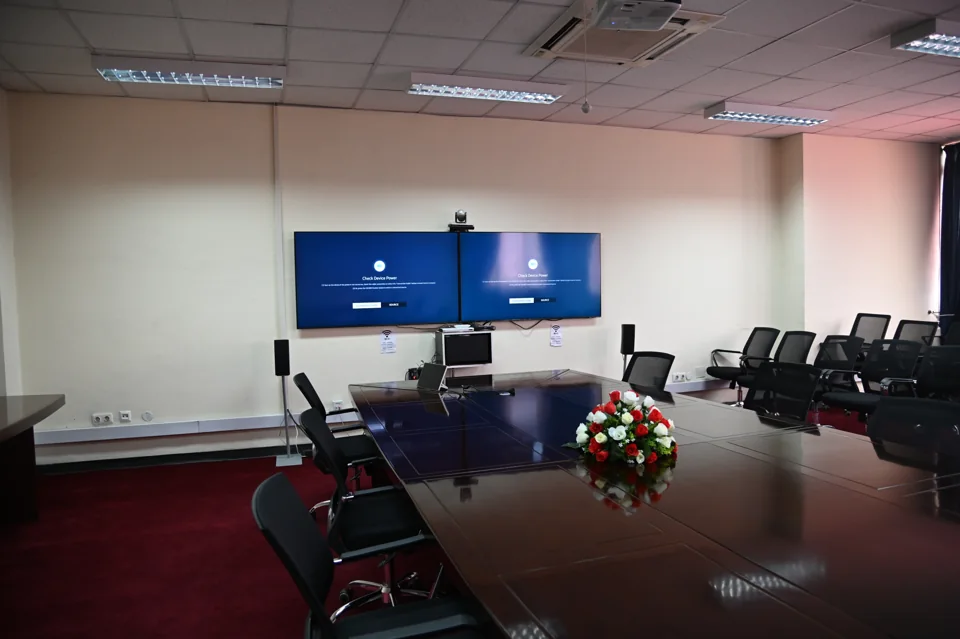
The library information directs students toward Addis Ababa University library services, its catalogue, electronic theses and dissertations, journals and open-access resources. Guidance areas include research design, citation and plagiarism avoidance. Teaching facilities include interactive digital boards, computational laboratories and a video-conferencing room with screens, cameras, microphones and sound equipment. These resources support face-to-face teaching, online participation, seminars and academic meetings, connecting specialist water research with the information and communication systems needed for postgraduate study.
Sources: Laboratory and library resources ↗ · ICT and conference facilities ↗
Curriculum review with stakeholders
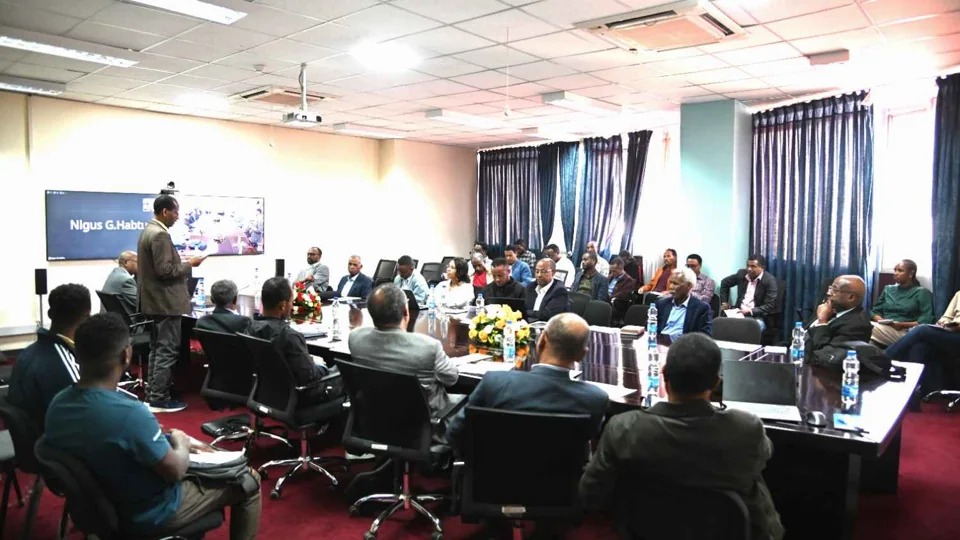
On 20 October 2026, ACEWM held a stakeholder validation workshop as part of its CTIL curriculum review. The centre's report describes discussion of four revised programmes: Water Management; Water and Wastewater Technology; Aquatic Resources Management and Ecohydrology; and Water, Sanitation and Health. Academic reviewers, programme coordinators and other stakeholders examined content, professional relevance, water governance and industry perspectives. The report presents these as revised curricula being strengthened through consultation before university approval.
The workshop also considered cross-cutting subjects including artificial intelligence, digital competencies, leadership, professional skills and industry engagement. Participants discussed digital tools in teaching, staff development, internships and partnership opportunities. Review groups brought their recommendations to a plenary session, and the closing work addressed responsibilities and timelines for incorporating feedback. This documented activity shows how the centre connects its established postgraduate teaching with changing research methods, professional expectations and consultation beyond the classroom.