Visa
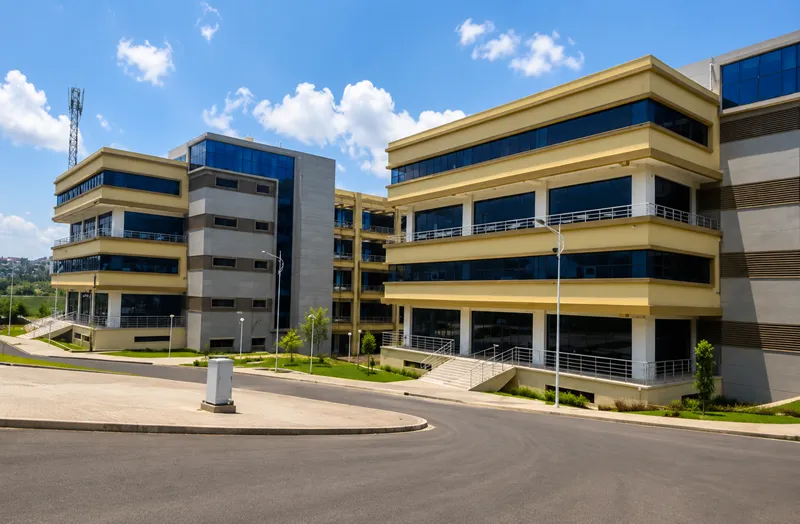

About Addis Ababa Science and Technology University
A university focused on industry
Addis Ababa Science and Technology University, commonly abbreviated AASTU, is an Ethiopian university whose educational and research mission is closely connected with industry. Its published mission combines science and technology training, applied research, technological adaptation and the development of industrial capabilities. National economic priorities form an explicit part of the way it describes its academic role.
The university's stated vision is to become an internationally recognised Ethiopian hub of science and technology with continental impact. It presents this as an ambition supported by national commitment. Its core values include professionalism, excellence, academic freedom, integrity, collaboration, inclusiveness and innovation. Transparency and accountability also feature in the framework. The mission additionally identifies the development of technical and managerial capabilities within industry as part of the university’s contribution. These priorities connect technical knowledge with the professional conduct and cooperative work expected across its academic community.
Sources: Mission, vision and values ↗
Engineering education
The College of Engineering lists nine departments spanning architecture, civil engineering, chemical engineering, electrical and computer engineering, mechanical engineering, electromechanical engineering, environmental engineering, mining engineering and software engineering. This combination brings established engineering fields together with computing, environmental questions and the design of buildings and infrastructure.
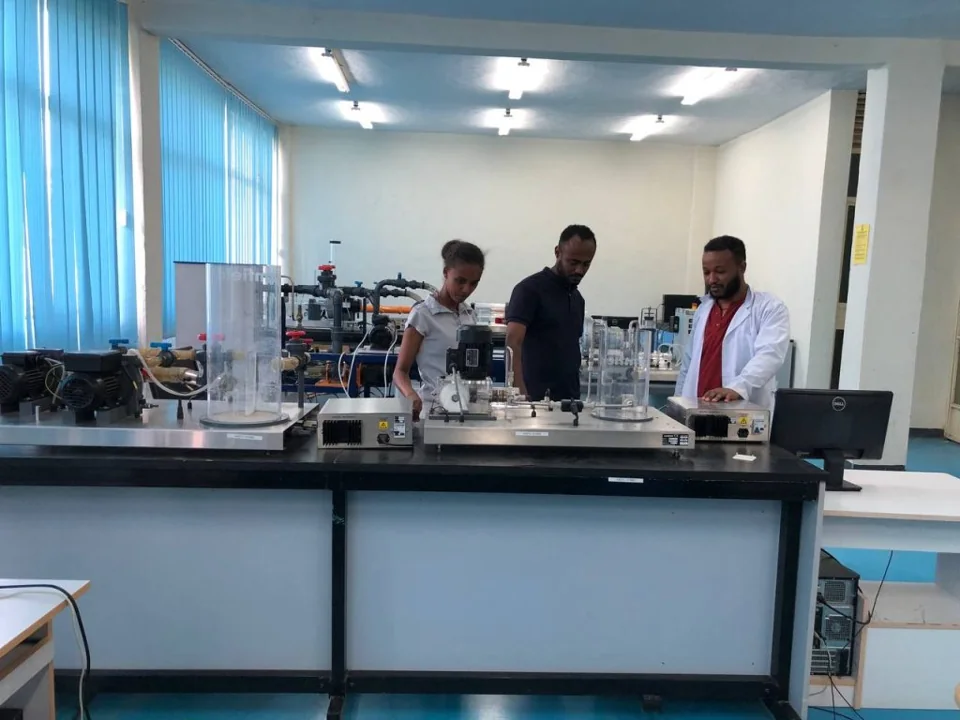
The college describes undergraduate courses leading to Bachelor of Science degrees. Its published outline specifies a five-year curriculum for regular-entry students and a six-year route for extension students. Mathematics, basic sciences, engineering sciences and general studies provide a shared foundation before more specialised work. The department structure gives students different disciplinary paths while retaining a common scientific basis. Laboratory activity, illustrated in the college's official photographs, forms part of the environment in which engineering knowledge can be explored through equipment and practical investigation.
Sources: College of Engineering ↗
Research and specialised centres
AASTU connects its academic colleges with specialised centres of excellence intended to support research, innovation and technology transfer. Its research directorate identifies eight thematic areas: artificial intelligence and robotics, biotechnology and bioprocessing, construction quality and technology, high-performance computing and big data analytics, mineral exploration and processing, nanotechnology, nuclear reactor technology, and sustainable energy. These are presented as fields for applied work aligned with national priorities.
The research structure also includes community engagement and university-industry linkage functions. Its stated approach emphasises collaboration with strategic local industries and research responding to practical demand. One example reported in March 2024 concerned a propolis collection screen for smallholder beekeepers, developed through a team spanning biotechnology, food science and mechanical engineering. That project illustrates cooperation across disciplines and contact with the Holeta Bee Research Center and local beekeepers, rather than research confined to one academic unit.
Sources: Research and centres of excellence ↗
Library resources and learning spaces
The university library supports teaching and research through both printed and digital materials. Its published resource description includes books, electronic books, journals, theses, research papers and databases. Online services complement physical collections, making the library a point of access for different forms of academic information.
The library's navigation identifies engineering and science libraries, provision for female students, and a graduate students' workstation. It also connects users with digital library services, electronic resources and the university's e-learning environment. Its service framework includes borrowing and access, study spaces and user support. These resources serve different stages of academic work, from finding background reading for a course to locating research literature and consulting completed theses. Quiet study areas and professional assistance accompany the collections, supporting both individual learning and more sustained investigation.
Sources: University library ↗
International academic connections
The International Relations and Partnerships office describes collaboration involving joint programmes, curriculum development, exchanges, research and technology transfer. Its published partner list spans institutions in several regions, including Fulda University of Applied Sciences in Germany, the University of Cape Town in South Africa, KAIST in South Korea and Xidian University in China. Different relationships are associated with activities such as seminars, staff exchange, joint supervision and research publications.
The office also documents specific projects rather than only institutional agreements. Its account of 2022–2024 initiatives includes sustainable energy, electrochemical science, solar cells and artificial-intelligence-supported resource management. In July 2026, a needs-assessment call concerning a proposed doctoral exchange with Technische Universität Dresden invited information from eligible doctoral students. That notice records development work toward an exchange arrangement, rather than evidence that every proposed opportunity had already begun operating.
Research dialogue on road infrastructure
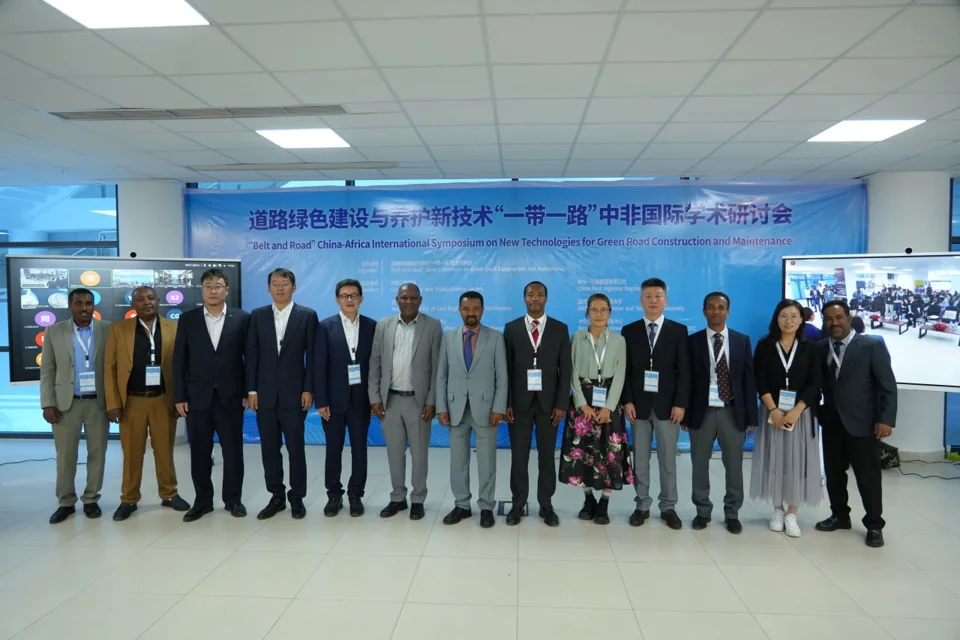
On 14 October 2026, AASTU hosted a China–Africa international symposium on technologies for green road construction and maintenance. Participants included academics, researchers, infrastructure specialists and industry representatives from Ethiopia, China and South Africa. Organising partners included Beijing University of Civil Engineering and Architecture and organisations working in highways and transport.
The technical programme covered pavement inspection, rehabilitation, sustainable construction, recycling waste asphalt and machine-learning approaches to predicting pavement deterioration. AASTU researchers contributed presentations on green construction, sustainable energy and innovation in paints and coatings. A specialised training and knowledge-exchange session examined methods for evaluating and forecasting asphalt performance. The event provides a concrete example of the university's industry-oriented mission: engineering research, technical training and international discussion brought together around the durability and maintenance of infrastructure.
Sources: October2026 green-road symposium ↗