Visa
About Addis Ababa University
A university with a national role
Addis Ababa University is a multidisciplinary university based in Ethiopia’s capital. Its institutional mission brings together teaching, research and community service, with academic work extending across undergraduate, master’s and doctoral education. Colleges, institutes and a school of law form part of a wider structure of departments, centres, schools and teaching hospitals. This combination places professional education, scientific enquiry and scholarship in the humanities within the same university community.
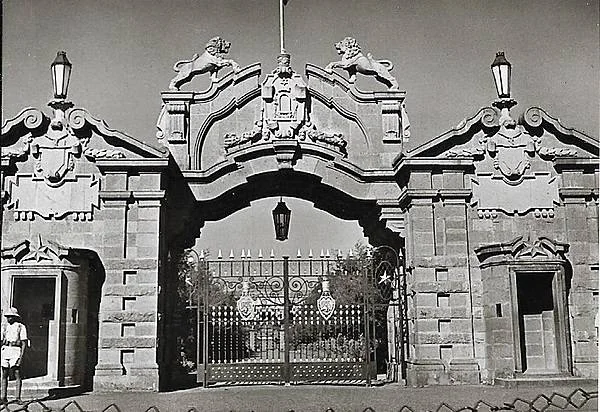
The institution began in 1950 as the University College of Addis Ababa, initially with arts and science faculties. It received a charter in 1954. In February 1961 several colleges were brought together as Haile Selassie I University, with the Guenete Leul Palace becoming an administrative centre at the Sidist Kilo campus. Following the 1974 revolution, the university briefly used the name University of Ethiopia before adopting Addis Ababa University in 1975. Master’s programmes began in 1979 and doctoral programmes in 1987. These stages mark its development from a college into a university with a substantial graduate education role.
Sources: University history ↗ · University overview ↗
Institutional reform and academic direction
The university’s historical account also describes a recent process of institutional reform. It records the Council of Ministers’ approval of an autonomous establishment draft regulation in August 2023 and subsequent work towards a self-governing university system. Its strategic plan for 2024–2028 links governance and organisational development with the quality of education, research and community engagement. The plan presents these activities as interconnected means of responding to Ethiopia’s social, economic, cultural and environmental challenges.
Sources: University history ↗
Social sciences, arts and humanities
The College of Social Sciences, Arts and Humanities illustrates the university’s changing academic structure. Established in 2025, it brought together the former colleges of social sciences, development studies, and performing and visual arts. Its formation also incorporated specialised work in human rights, federalism and peace studies, together with journalism. This arrangement connects several areas that examine social institutions, cultural expression and public life.
Subjects represented include social work, sociology, history, political science, geography, philosophy, theatre, fine arts and music. Development studies and questions concerning peace, governance and human rights add further dimensions to its academic work. The college describes undergraduate, graduate and doctoral training alongside creative practice and policy engagement. Its stated approach brings local knowledge into conversation with international scholarship, linking research partnerships with Ethiopia’s social and cultural concerns. Its overview places teaching and public service within the same strategic direction as research. Artistic activity and the study of social relationships are therefore presented as contributors to cultural enrichment and community development, as well as areas of academic investigation.
Research support and knowledge creation
The Research Office supports the development and dissemination of scholarly work through research awards, seed grants and collaborative projects. Its responsibilities also include publications, assessment of journal reputability, training and monitoring research activities. These functions provide an organisational framework for researchers as they move from developing ideas to communicating findings.
The university’s research overview emphasises generating knowledge and technology in response to national needs. It identifies interdisciplinary and multidisciplinary work as part of its policy, together with thematic approaches that bring related questions into a shared research agenda. Student capacity in contemporary science and technology is another concern. The stated aim is to connect scholarship with practical problems while supporting the development of researchers and the circulation of their work.
Sources: Research organisation and policy ↗
Libraries and open scholarly resources
AAU Libraries supports students and faculty through lending, electronic journals, books, training and research assistance. Its public services directory identifies a research data portal, an online catalogue, open access resources and Ethiopian Journals Online. The library also describes cooperation with publishers and research-access organisations, including arrangements that support Ethiopian researchers through publication-charge waivers or discounts. Branch libraries extend these services across different academic settings. The library system participates in the Consortium of Ethiopian Academic and Research Libraries. This connects its local services with a wider national effort to strengthen access to academic information and research infrastructure.
The university’s institutional repository, AAU-ETD, provides a complementary route to scholarly material. It collects, preserves and disseminates the university’s academic outputs through open access. Its holdings include master’s theses, doctoral dissertations and preprints, representing research across different fields. Current and former faculty, staff and students can contribute work through the repository’s submission arrangements. This service makes research available beyond the immediate classroom or department and provides a record of postgraduate scholarship.
Sources: AAU Libraries ↗ · AAU institutional repository ↗

Campus life and student participation
Campus life combines academic work with cultural exchange, clubs, voluntary activity and recreation. The university describes opportunities for student participation as part of personal development and community life. Sports and recreation are intended to encourage fitness, collaboration and social interaction alongside formal study. Annual intramural and intercampus competitions are organised for regular undergraduate students, creating opportunities to meet participants from other parts of the university.
Student services include accommodation and dining arrangements, career development, arts and cultural activities, and support focused on female students. The campus-life page also identifies Student Finance Services, which handles cost-sharing agreements, dormitory and meal payments, and associated records. Together these activities show the range of administrative and social arrangements surrounding study at the university. They complement its academic units by supporting the everyday experience of belonging to a large, distributed university community.
Sources: Campus life ↗