Visa
About Admas University
From training centre to university
Admas University is a private Ethiopian university whose institutional contact address is in the Dembel area of Addis Ababa. Its history begins in October 1998 with the Admas Business Training Centre, which offered specialised six-month programmes in response to training needs. The institution became a college in April 1999, a university college in March 2007 and a full university in July 2014.
These stages describe a gradual expansion from short courses into a broader higher education institution. The university's own account connects this development with increased academic provision and investment in human and material resources. It now presents undergraduate, postgraduate, distance and technical or vocational education alongside short training programmes. Its history also records activity outside Ethiopia, including Hargeisa and Puntland, while the Ethiopian campus and programme information forms the focus of this profile.
Sources: Institutional history ↗

Mission and educational values
Admas describes its mission through technology-supported higher education, research, training and community engagement. Regular, continuing and distance modes appear as complementary ways of reaching students. The university also identifies entrepreneurship, consultancy and university-industry relationships as parts of its educational role, linking academic knowledge with organisations and communities outside the institution.
Its published values include inclusiveness, academic freedom, equity, transparency and accountability. Collaboration, responsiveness and gender sensitivity sit alongside quality and efficiency. Individual values include honesty, creativity, competence and problem solving. The university's mission page sets out a 2035 aspiration for its place in East African higher education. This is a stated institutional ambition, rather than an independent ranking or evidence of an outcome already achieved.
Sources: Mission, goals and values ↗
Undergraduate subjects and learning
The undergraduate programme page presents study across business, technology, economics and development-related fields. Its listed subjects include accounting and finance, business management, marketing management, computer science, economics, agricultural economics, and rural development and agricultural extension. The range reflects both the institution's business-training origins and later diversification.
The university describes undergraduate study as combining coursework, practical training and a final research-based graduation project. Its general programme outline gives four or more years as the usual duration, depending on the subject. Students therefore encounter an educational structure extending from foundational courses to more specialised work and a culminating project. The programme directory provides separate links for individual subjects and admission information, allowing prospective students to examine a particular route within the wider academic offering.
Sources: Undergraduate study ↗
Postgraduate education
The School of Postgraduate Studies describes its purpose as responding to demand for master's-level education in different disciplines. Its published programme list includes accounting and finance, computer science, business administration and project management. These areas build on the university's wider interests in business, technology and organisational development.
The school outlines a two-year structure comprising four semesters. Three semesters are assigned to coursework, while the final semester is devoted to preparing a graduation thesis. This division distinguishes the taught and research components of the published study model. It also gives a concrete picture of postgraduate work: learning through advanced courses is followed by a sustained investigation presented through a thesis. Separate admission criteria accompany the school's programme information.
Sources: Postgraduate study ↗
Distance education and geographical reach
The College of Distance Education is another route through which Admas presents its educational services. Its published purpose emphasises flexible and accessible learning opportunities. The college identifies Mekanissa as its main centre and lists locations including Adwa, Axum, Bahirdar, Bishoftu, Debrebirhan, Dessie, Hawassa, Jigjiga, Jimma, Logia, Mekelle and Gondar.
This geographical spread shows how the university's delivery model reaches beyond a single Addis Ababa campus. Distance study appears alongside regular and continuing education in the institution's mission, giving it an organisational identity within the university rather than treating it simply as an isolated course format. The distance college also directs applicants to its own admission information, acknowledging that a study route has specific administrative arrangements as well as an academic purpose.
Sources: College of Distance Education ↗
An example from computer science
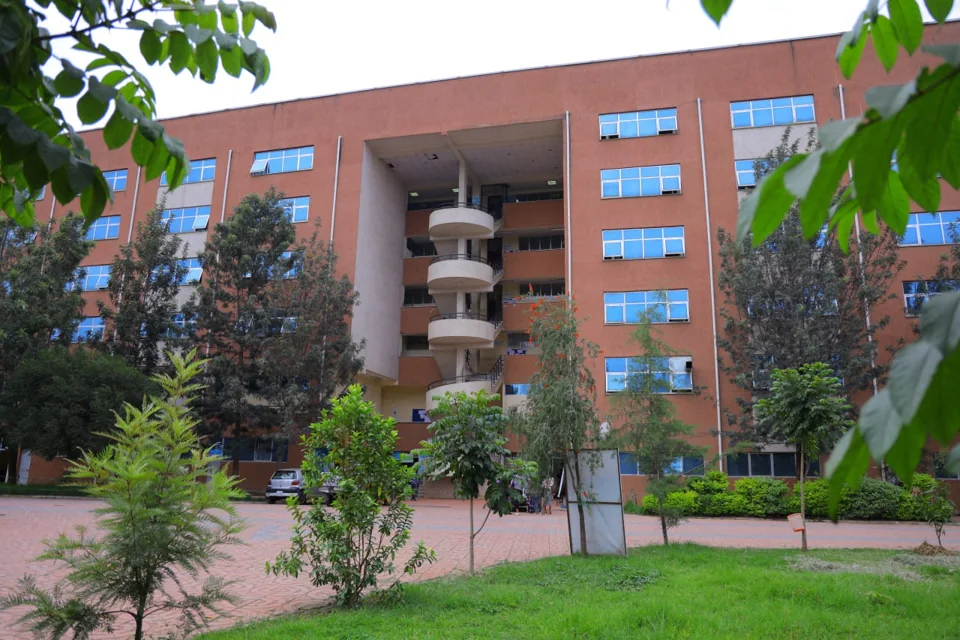
The Bachelor of Science in Computer Science illustrates the more detailed information supplied for individual programmes. Its published course outline covers programming, data structures and algorithms, database management, operating systems, computer networks and software engineering. Web development, cybersecurity, artificial intelligence, machine learning and mobile application development also appear in the list.
The programme's objectives connect theoretical understanding with practical skills in programming and problem solving. Research, ethics and professionalism are explicitly included in its educational aims. The department describes project-based learning and computer laboratory work as parts of the setting for study. These features show how the university presents a technical subject through a mixture of foundational concepts, application development and professional responsibility, rather than solely through a list of possible occupations.
Sources: BSc Computer Science ↗
Short courses and external engagement
Admas also describes an ICT training and consultancy office serving the university community and external organisations and individuals. Its published course areas include basic and advanced office software, full-stack development, database management, cybersecurity, cloud computing, virtualisation and digital marketing. This provision is presented separately from the full degree programmes.
The office's account combines training with consulting and networking services. It discusses the assessment of organisational needs and the planning of specialised skills development. Some parts of that account are explicitly plans, including proposed future partnerships with major technology training providers. The distinction between existing course categories and future ambitions helps define the office's role: it is a means of connecting the university's technical interests with shorter learning activities and external professional needs.
Sources: ICT training and consultancy ↗