Visa
About Ada College of Education
Teacher education in Ada
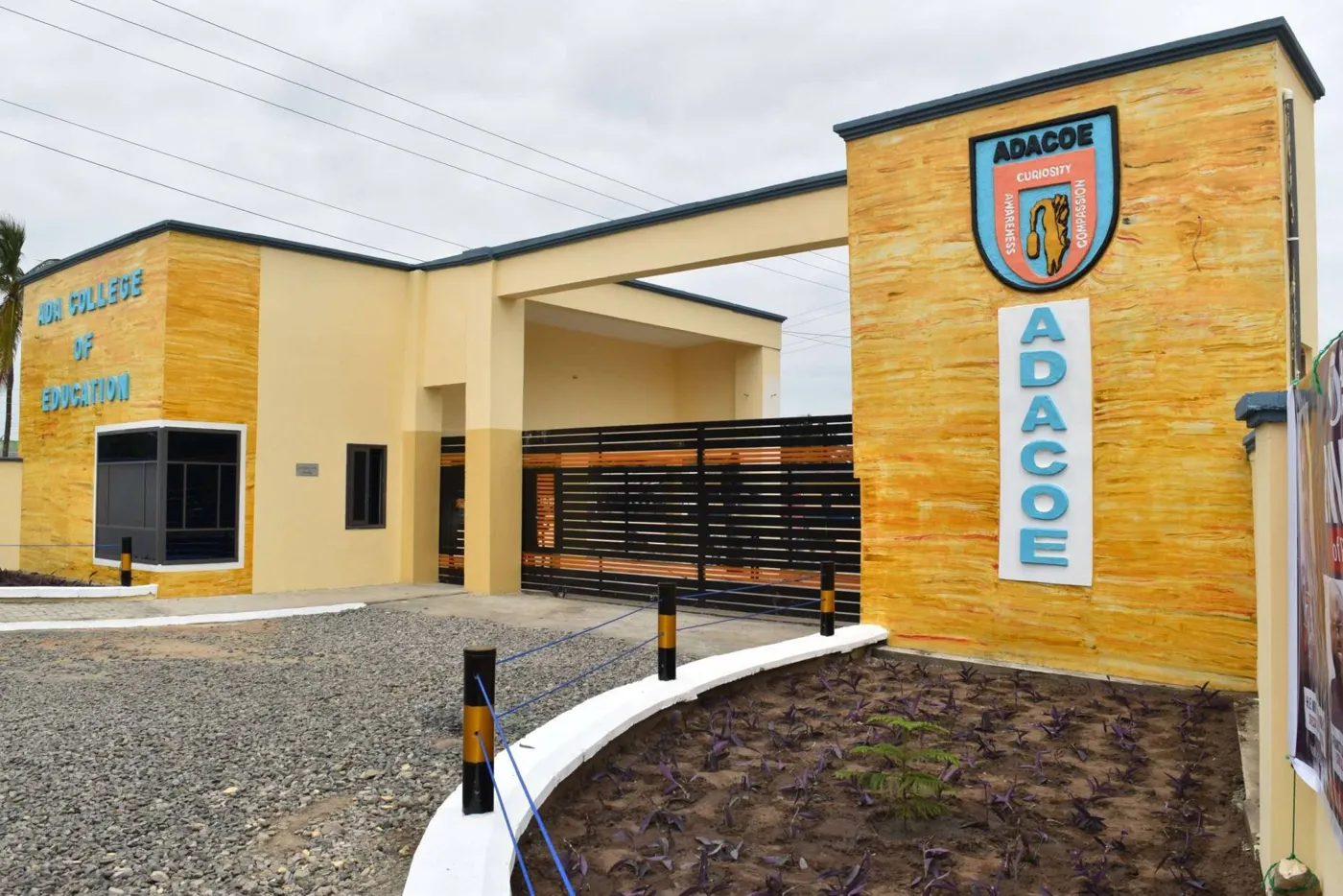
Ada College of Education is a teacher education institution in Ada, in Ghana's Greater Accra Region. Its mission is to prepare teachers with academic knowledge, professional competencies, practical skills and appropriate attitudes for basic schools. General education, science and technical education all feature in that mission. The college's stated vision emphasises disciplined and self-motivated teachers, while its motto brings together awareness, curiosity and compassion.
The college's report of its 2025–2026 matriculation identifies the Akenten Appiah-Menka University of Skills Training and Entrepreneurial Development, known as AAMUSTED, as its affiliate institution. A representative of the university participated in the ceremony. This relationship places the college's teacher preparation within a wider university partnership while its campus community retains its own leadership, departments and student organisations.
Sources: Mission and vision ↗ · 2025–2026 matriculation ↗
Origins and institutional development
The college was established in 1965 amid Ghana's expansion of primary education and the resulting need for trained teachers. Local chiefs and educational stakeholders supported its creation, and founding principal J. M. T. Dosoo organised the new institution using premises vacated by the Presbyterian Middle Girls' School at Ada-Foah. The first students began a four-year post-middle teacher training programme on 26 November 1965. Initially a male institution, the college faced interrupted admissions during its early years.
Its institutional history records renewed admissions in September 1975 under principal S. T. Tetteh, during whose leadership it also became co-educational. In 1988 the training structure changed from four-year post-middle education to a three-year post-secondary programme. Diploma-awarding status followed in 2004. These changes show how the institution's teaching role developed through successive national education reforms, from its original teacher training model to later forms of professional preparation.
Sources: College history ↗
Degree specialisations and a new cohort
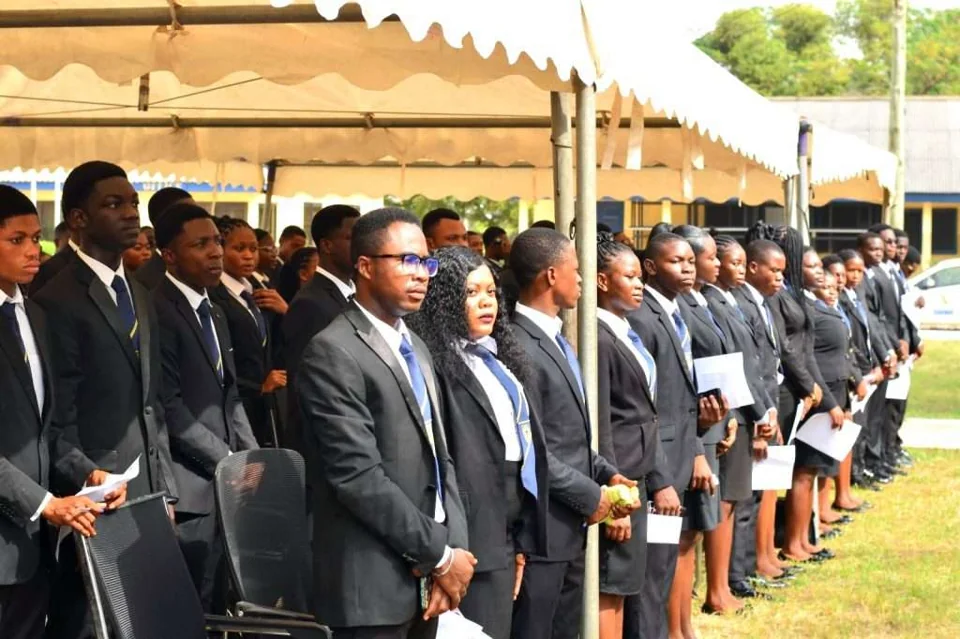
The 2025–2026 matriculation welcomed 334 new students, comprising 179 women and 155 men. The college reported admissions across Bachelor of Education specialisations in primary education, junior high school home economics, agricultural science, technical skills, visual arts, and the paired fields of mathematics and science. Primary education accounted for 67 entrants, while home economics welcomed 66 and agricultural science 55. These figures describe that particular entering cohort rather than the college's total enrolment.
The ceremony combined formal admission to the institution with an introduction to its professional values. The registrar administered the matriculation oath, and academic leaders, teaching and non-teaching staff attended. The college choir also contributed to the occasion, bringing a cultural element to the students' formal entry into college life.
Sources: 2025–2026 matriculation ↗
Mathematics and student leadership
The Mathematics Students' Association was inaugurated on 30 August 2025 at Gbanya on the college campus. Developed with the Mathematics and Computer Studies Department, the association was intended to support mathematical thinking, academic engagement and leadership. Its launch brought together college staff and students with invited academic and community representatives.
The programme used speeches and drama to explore mathematical reasoning in everyday problems. A student performance presented this theme through a story about finding solutions to life's equations. The association also adopted a constitution and elected an initial leadership team with positions covering the presidency, administration, finance and organisation. A Level 400 student designed its logo, giving students a role in shaping the organisation's identity as well as its governance.
Science education and local schools
In August 2026, the college combined the inauguration of its Science Students' Association with a mathematics association leadership handover. The programme connected student governance with practical teaching resources and engagement beyond the campus. Exhibits included inexpensive instructional models, classroom experiment kits and creative materials showing applications of science and mathematics.
An accompanying science and mathematics quiz involved three private basic schools in the district. Participants received awards and teaching resources, linking the college's own teacher education activities with younger learners in its surrounding community. Speakers discussed the place of STEM in teacher preparation and its connections with technical and vocational education. The event therefore offered several forms of participation: preparing exhibits, explaining ideas, organising an association and working with local schools.
Sources: Science and mathematics associations, August 2026 ↗
Practical learning in vocational education
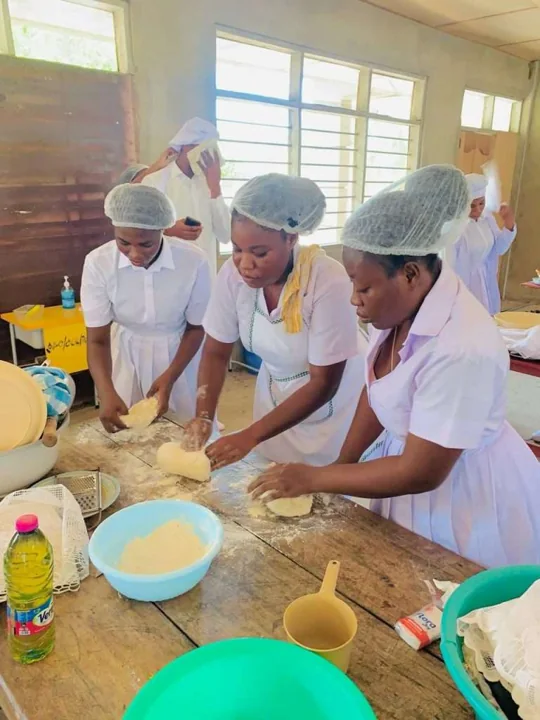
A March 2025 confectionery practical illustrates the vocational side of the college's training. Level 300 students from the Home Economics and Agricultural Science Unit worked on flour and sugar confectioneries under lecturer supervision. Organised into small groups, they practiced mixing, kneading, baking and decorating cakes, connecting classroom theory with a shared practical task.
The session also included hygiene, safe equipment use and time management. Students presented finished products for tasting and evaluation, making preparation and presentation part of the same learning process. The college's report describes cooperation and peer learning alongside individual technical practice. This example shows how a professional education course can combine subject knowledge, physical skills, planning and collaborative work.
Sources: Practical confectionery session, March 2025 ↗
Dialogue within the department
The Vocational and Technical Department held its first staff and student durbar in June 2026. Staff, class representatives, student leaders and other students used the gathering to discuss academic experience and professional development. Group discussions allowed participants to identify concerns and present them to the wider meeting, with staff responding through the appropriate departmental channels.
The department's report connects technical skills, visual arts and home economics with human well-being. Discussion of curiosity, awareness and compassion linked the college motto to everyday conduct: asking questions, understanding one's strengths and supporting colleagues. The gathering also gave students a direct role in conversations about their learning environment, complementing the representative roles developed through the college's subject associations.
Sources: Vocational and technical department durbar, June 2026 ↗