Visa
About Academy of Korean Studies
Research and education devoted to Korea
The Academy of Korean Studies, commonly abbreviated AKS, is a research and educational institution in Seongnam, Gyeonggi Province, in the Republic of Korea. Established in 1978, it brings together scholarly research, postgraduate education, historical collections and the dissemination of knowledge about Korea. Its work extends across the humanities, social sciences, culture and the arts, connecting the study of historical sources with questions about Korean society and culture.
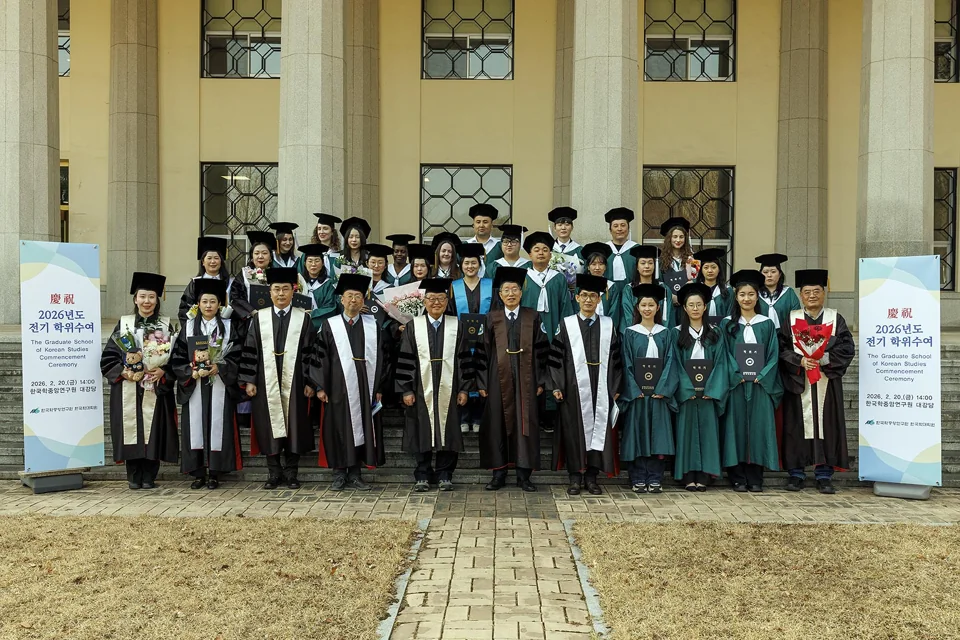
The Graduate School of Korean Studies opened in March 1980 as the academy's educational institution. Other milestones recorded in the academy's history include completion of its library in 1981, publication of the first edition of the Encyclopedia of Korean Culture in 1991, and the establishment of a Korean studies information centre in 1996. The timeline also records online encyclopedia services beginning in 2007 and the opening of the Korean Studies Data Platform in 2023. These developments show education growing alongside collections, reference publishing and digital access to research materials.
Sources: Graduate school introduction ↗ · Official academy timeline ↗
Graduate study built around research
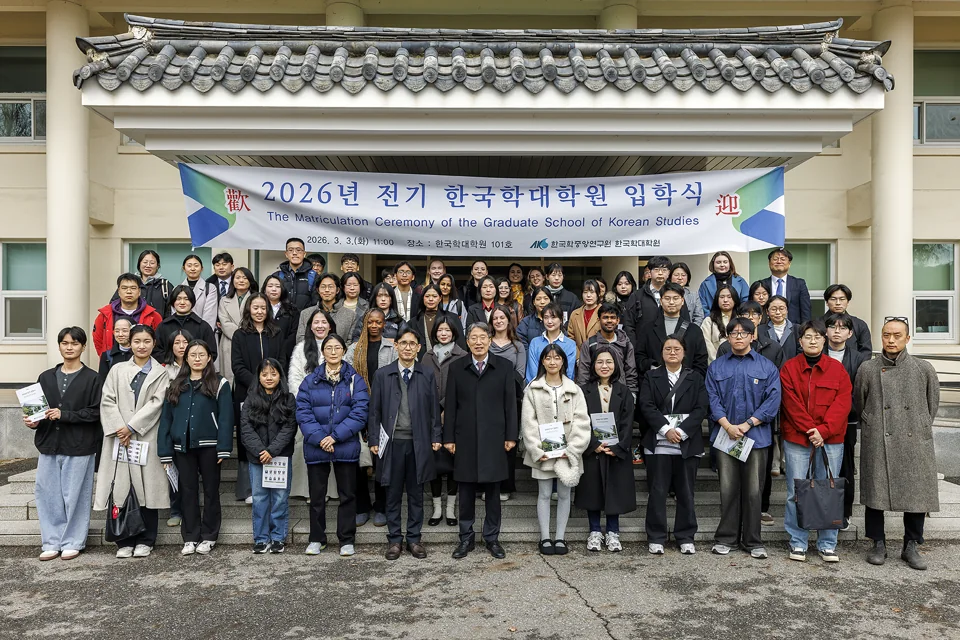
The Graduate School of Korean Studies emphasizes research-oriented education in the humanities and social sciences. Its description identifies interdisciplinary lectures, theme-specific investigations and participation in academy research projects as elements of its approach. Field surveys and courses connected with research activity provide ways to develop scholarship through practical engagement with sources and research questions. The school also provides instruction intended to strengthen students' understanding of Chinese classics and Korean language study for international students.
The academic setting includes fields such as Korean history, philosophy, language and literature, anthropology and folklore, religious studies, musicology and art history. Social science subjects contribute further perspectives on Korea's institutions, society and educational life. This breadth allows different forms of evidence, from written documents to cultural practices and artistic works, to be studied within a shared institutional focus on Korea. Graduate education is therefore situated within a wider research academy rather than being detached from its scholarly projects and resources.
Sources: Research-oriented graduate education ↗
Interpreting historical evidence
The Korean History major develops research through the interpretation, analysis and synthesis of primary sources. Its educational focus includes the systems, societies and cultures of different periods, with training in methods relevant to political, economic, social, cultural and intellectual history. The programme also considers prehistoric and ancient cultures and the skills needed for field investigation and the organization of field notes. Understanding neighbouring regions forms part of this wider historical perspective.
Diplomatics and Bibliography concentrates on traditional Korean books and manuscripts. Students examine the circumstances in which sources were produced, their forms and histories, and questions of authenticity and significance. Practical and theoretical training supports their use as evidence for research. Reading Chinese and Idu, evaluating documents in historical context and developing methods based on old books and manuscripts are identified educational priorities. These specialisms connect the training of researchers with the work of libraries, archives and museums.
Sources: Korean History major ↗ · Diplomatics and Bibliography major ↗
Jangseogak: preserving documents and making them usable
Jangseogak Archives combines the functions of a historical archive and research institute. Its collections bring together material associated with the Joseon royal family and records preserved by private collectors across Korea. The archive's account traces the movement of royal materials through several institutions before the collection was transferred to the Academy of Korean Studies in 1981. A new Jangseogak building opened in 2011.
Its work includes arranging and conserving documents, producing digital images, translation, annotation and research. These activities help turn fragile or difficult historical records into resources that scholars can consult and interpret. Digital Jangseogak and the Archives of Old Korean Documents provide routes to view historical documents online. Exhibitions and specialized reading workshops also extend access beyond individual research projects. Collection, conservation, scholarly interpretation and teaching thus form connected parts of the archive's role within AKS.
Sources: Jangseogak Archives ↗
A specialist library supporting scholarly work
The Library of Korean Studies has supported the academy's research and education since AKS was established. Its collection brings together Korean studies publications produced in Korea and overseas. Alongside collecting, the library distributes research materials to other educational and scholarly institutions, making exchange an element of its work. Exhibitions provide another means of presenting material to a wider audience.
Services for graduate students and faculty include lending, interlibrary cooperation, access to electronic resources, research assistance and reading facilities. The library also describes educational courses and public access to research materials and information searching. Its digitization work incorporates bibliographic information, original-text images and audiovisual resources. Cooperation with institutions such as the National Library of Korea, the National Assembly Library and the Korea Education and Research Information Service places its specialist holdings within wider information networks.
Sources: Library of Korean Studies ↗
Supporting Korean studies beyond the campus
The Korean Studies Promotion Service supports research and educational infrastructure in Korea and internationally. Its programme framework includes seed support for overseas institutions developing Korean studies, support for universities serving as regional centres, collaborative research programmes and translation of academically significant Korean texts. Other strands concern dictionaries, documentation of manuscripts and foundational research in the humanities and social sciences.
This wider activity complements the academy's postgraduate teaching and collections. It supports the creation of educational content, scholarly publications and research networks through which knowledge can circulate among institutions. Translation programmes seek to make important premodern, modern and contemporary Korean texts available to readers abroad. Taken together, these activities connect AKS's campus-based scholarship with the development of Korean studies as an international field.
Sources: Korean Studies Promotion Service ↗