Visa

A city where the most useful first stop is its history
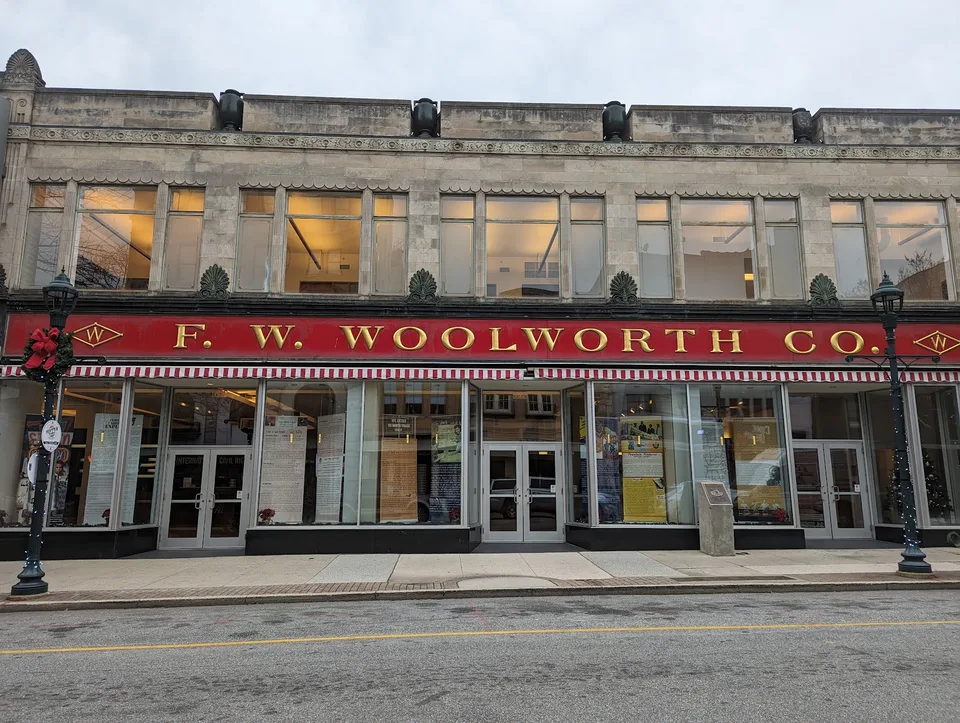
On South Elm Street, the former Woolworth building places a defining episode of the American civil-rights movement within the everyday downtown streetscape. Elsewhere, Greensboro offers a battlefield park, a science centre combining indoor and outdoor attractions, university campuses and performance venues. This North Carolina city rewards a visit organised around a few substantial experiences rather than a hurried circuit of every listing.
For a move, the questions become more specific: which campus or workplace, which school assignment, and how the household will travel between them. Greensboro is in Guilford County, within the Piedmont Triad region. Use the official visitor bureau's planning pages to orient yourself and the VisaWand USA guide for national context.
County-seat origins, railways and the 1960 sit-in
The Greensboro History Museum's account dates the city's founding to 1808, when voters wanted a county seat nearer the centre of Guilford County. Railway connections later helped shape its development. The visitor bureau's downtown history identifies the 1927 Southern Railway station, now incorporated into the J. Douglas Galyon Depot, as part of that continuing transport story.
On 1 February 1960, four North Carolina A&T freshmen began their sit-in at Woolworth's segregated lunch counter. The university library's historical resources provide a route into the documentary record. The museum in the former store opened in 2010. These dates explain why downtown is more than a collection of shops.
Downtown is the most concentrated cultural base
Downtown suits a visitor who wants to connect the civil-rights museum, city history, parks, meals and an evening performance without making a separate drive for every stop. Use the downtown dining directory and shop listings to identify current businesses, then check the individual opening hours. The distance between two central attractions can be manageable even when the airport or Science Center requires a separate journey.
Southside Town Square provides another small downtown green space to investigate. For accommodation or housing, inspect the exact building and its access, noise, parking and groceries rather than equating a downtown address with identical conditions everywhere. Performance nights can change parking demand. Compare both routines before deciding that centrality alone settles the choice.
Fisher Park, Lindley Park and campus journeys
The city's landscape-history account connects Fisher Park with a 1901 land donation and Lindley Park with development in 1917. These named neighbourhoods offer useful alternatives to a purely downtown search, but the history of their trees or parks does not establish current rents, school quality or a particular home's condition. Visit the property and the surrounding routes rather than buying into a general neighbourhood reputation.
For study, distinguish UNC Greensboro from North Carolina A&T State University and confirm where your programme meets. A room convenient to one university may involve an inconvenient journey to the other. Include evening classes, laboratory schedules and grocery shopping in the comparison. If travelling without a car, examine the actual bus stop and return service. Access to a campus, admission to a programme and the immigration status needed to study are separate checks.
Choose the civil-rights museum experience before booking
The International Civil Rights Center and Museum at 134 South Elm Street offers several ways to visit. Its signature staff-guided tour runs approximately 60–75 minutes and currently costs $20 for adults or $15 for K–12 students. The seated film-and-walkthrough experience runs approximately 90–105 minutes and costs $15 for adults or $10 for K–12 students. Those are distinct formats, not interchangeable names for one ticket.
Published business hours are Monday–Saturday 10 a.m.–6 p.m.; Sunday is closed. Book the experience that fits your party's attention, interests and time, and read its actual start time. Groups of ten or more should use the coordinator's process. From August 2026, the operator warns that street parking is limited Friday–Sunday. Arrange the museum visit first, then fit lunch or shopping around it.
Greensboro History Museum adds context without an admission charge
The Greensboro History Museum at 130 Summit Avenue offers free entry. It opens Tuesday–Saturday 10 a.m.–5 p.m. and Sunday 2–5 p.m., with Monday closed. This makes it a useful complement to the civil-rights museum, particularly when you want a broader picture of city life rather than a second version of the same experience.
The entrance is at Summit Avenue and East Lindsay Street. Its arrival information identifies two adjacent free parking lots, off East Lindsay Street and North Church Street, with accessible spaces. Allow time for the exhibitions that interest your household, then combine the visit with nearby downtown parks or a meal. A Sunday afternoon opening can work well, but it should not be scheduled as a Sunday morning activity.
Blandwood currently needs a Saturday plan
Blandwood Museum at 447 West Washington Street introduces the architecture, furnishings and social history of Governor John Motley Morehead's home. Its interpretation also addresses people enslaved there. The Italianate additions designed by Alexander Jackson Davis were completed in 1846, expanding an earlier house; the building's appearance should not be used to compress all its history into one construction date.
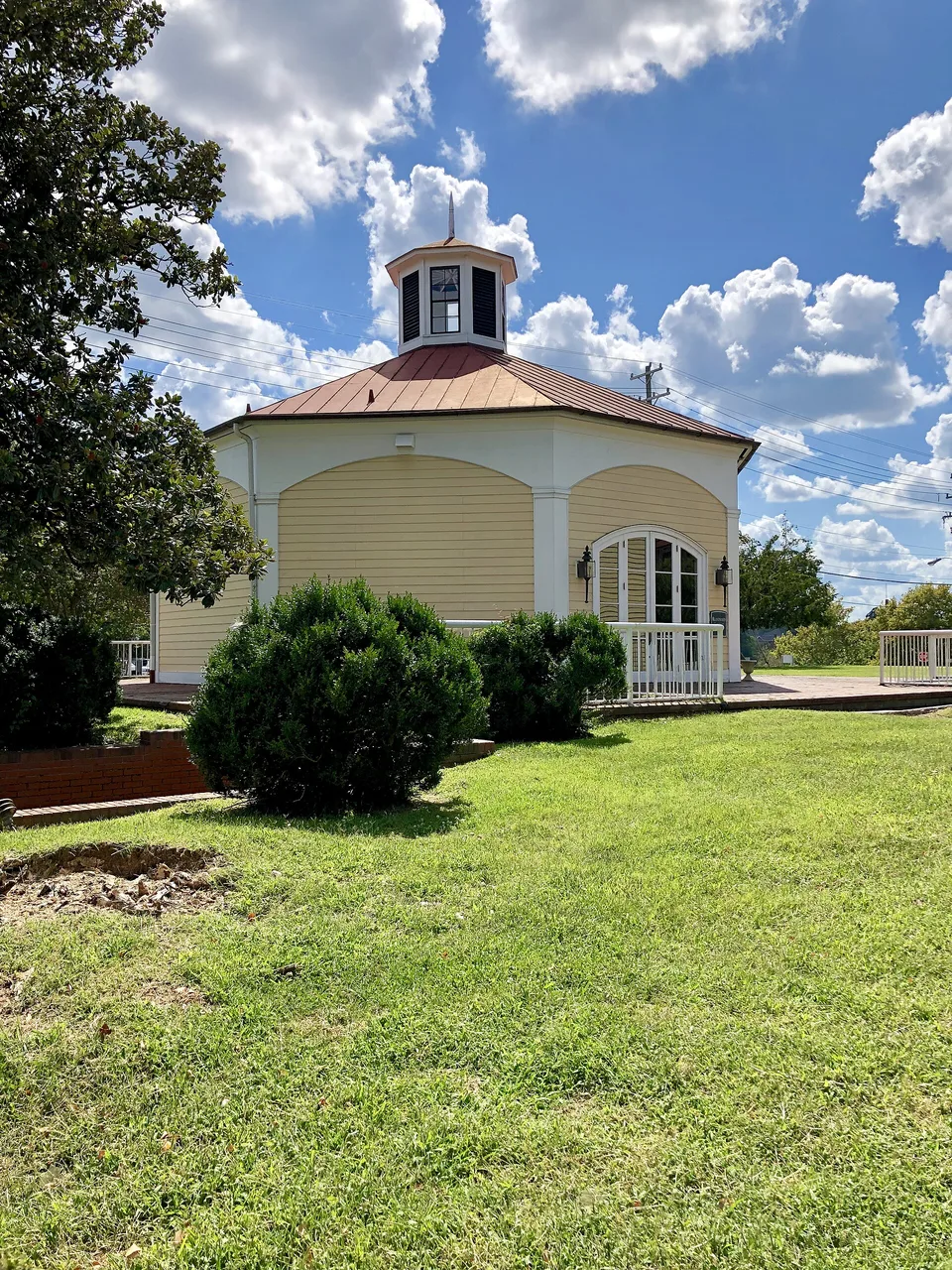
Current visitor information lists Saturday-only opening from 11 a.m.–4 p.m., with self-guided tours at $8 per person. The operator's latest notice says regular tour hours resume on Saturday 17 October. Confirm arrangements for your date instead of using older descriptions of broader opening hours. The separate Carriage House event pavilion is a different building, reconstructed with an opening in 1970. Its photograph in this guide does not show the historic mansion, and an event rental is not a museum admission ticket.
The Science Center merits a substantial part of the day
The Greensboro Science Center combines an aquarium, museum and zoo at 4301 Lawndale Drive. Normal hours are daily 9 a.m.–5 p.m., with specified holiday and event exceptions. It uses flexible admission pricing, so consult the official ticket system for your actual date and party rather than relying on an invented flat charge. Seasonal adventures such as SKYWILD and the FLYWAY Zipline require separate consideration and tickets.
Free parking is available on a first-come basis, but expansion work currently brings temporary parking and access changes. Read the operator's latest directions before arrival. The current event programme includes Winter Wonderlights from 18 November 2026 through 3 January 2027. Check its ticket and daytime-closing arrangements separately from an ordinary visit.
Families should check the children's museum's Monday rules
At 220 North Church Street, the Miriam P. Brenner Children's Museum offers interactive play. General admission is $12.95 per ticket, with children under 12 months free. Friday evening admission, 5–8 p.m., is $6 per person. Ordinary Monday morning opening is for members only; planned school-closure days have separate arrangements. Tuesday–Thursday hours are 9 a.m.–5 p.m., Friday 9 a.m.–8 p.m., Saturday 10 a.m.–6 p.m. and Sunday 1–5 p.m.
Bring closed-toed shoes for the Outdoor Play Plaza, which closes during certain weather conditions and when the heat index reaches the operator's limit. Outside food and drink can be used in the designated Snack Shack and Nannie's Patio, not throughout the play areas. Choose this or the Science Center according to the children's interests instead of assuming both fit comfortably into one afternoon.
Downtown parks offer a break, with seasonal limits
LeBauer Park and Center City Park sit across Davie Street from each other in the cultural district. Both open daily 7 a.m.–10 p.m., subject to weather, maintenance and special arrangements. The Children's Garden has its own hours. The operator states that LeBauer's splash pad has closed for the 2026 season, so an October visit should not promise water play.
Use the parks between museum visits or as the focus of a shorter outing. Consult the current programme rather than assuming a concert, rink or organised activity is running whenever the park is open. The city's information directs programming enquiries to the operator. Follow the rules for play spaces and fountains, and distinguish accessible park entrances from any particular child's ability to use every feature. During Tanger performances, nearby garages may have event arrangements; check the parking conditions for the visit you are making.
Guilford Courthouse provides a different historical landscape
Guilford Courthouse National Military Park commemorates the battle of 15 March 1781 between forces led by Nathanael Greene and Cornwallis. It offers a landscape-based experience beyond downtown museums, with a free self-guided audio tour through the NPS app. There is no entrance fee, allowing an outing shaped by your interest and available time rather than the need to make a paid ticket worthwhile.
Use the official operating information to distinguish grounds access from visitor-centre opening. Download useful material before walking and choose a route suited to the party, the weather and the time left in the day. A quieter battlefield walk can complement a substantial museum day, but it still needs an onward journey and enough daylight for the route you select.
A performance should anchor the evening
The Steven Tanger Center for the Performing Arts gives a Greensboro visit an evening focus when its actual programme fits. Use the venue's official ticket links, seating information and event-specific rules, and compare the final price before committing. A concert, touring production and another performance can have different running times and conditions.
The venue's parking information covers on-site parking, downtown decks and city streets. Check event arrangements instead of applying an old claim that all evening or weekend parking is free. If staying outside downtown, settle the return journey before buying tickets, particularly when depending on buses. For a visitor attending a performance as the main purpose of the trip, a central room may simplify the evening.
Stay near the journeys you will repeat
Downtown accommodation can suit a museum-and-performance weekend. An airport-area property may suit an early flight or a work address nearby, while a university or sports visit deserves a comparison with its specific venue. The visitor bureau's accommodation resources help identify options; the address and booking terms determine whether an individual property works for you.
Compare the final room total, cancellation conditions, parking, breakfast, laundry and kitchen facilities. Confirm any airport shuttle with the property for your actual arrival time rather than assuming every hotel provides one. Families and longer-stay visitors should ask about bed layout and cooking arrangements. If considering a holiday rental, review Greensboro's short-term rental permit information and the property's status. An online listing is not proof of authorisation.
PTI's public-transport link uses an on-demand service
Piedmont Triad International Airport's ground-transport page identifies taxi, rideshare, rental-car and selected hotel-shuttle options. It also directs passengers to PART's on-demand service. Compare these against the full route to your Greensboro address, including luggage, arrival time and any transfer. The airport serves the wider region; an airport-area transport option is not automatically a door-to-door ride to every city hotel.
PART On-Demand MicroTransit currently operates Monday–Friday 6:15 a.m.–9:15 p.m. and Saturday 7:15 a.m.–7:15 p.m. Book through its app or regional call centre and confirm the zone, pickup and connection you need. The published page does not list Sunday service, so obtain confirmation before relying on it for a Sunday flight. An evening delay could move your arrival beyond service hours; arrange a workable alternative. Check the reverse journey separately rather than assuming the same connection suits departure day.
GTA and PART have different fare and transfer rules
Greensboro Transit Agency publishes a $1.50 regular cash single fare, free transfers, a $4 day pass and a $58 31-day pass. With its Umo card or app, fare capping limits regular charges to those day and 31-day totals. Children five and younger ride free; discounted fares have separate eligibility and identification requirements.
Use the current GTA routes and service updates for the actual time you need, particularly for an early shift or an evening return. PART is a separate regional operator. Its fare guidance permits free transfers between PART services when using Umo, while cash-paying bus passengers pay on each boarding. On-demand riders need prepaid fare, Umo or an accepted card payment; direct cash requires prior loading through the transport centre. Do not assume a shared payment brand makes every operator's pass, discount or transfer rule identical.
Rail arrival places you at the downtown depot
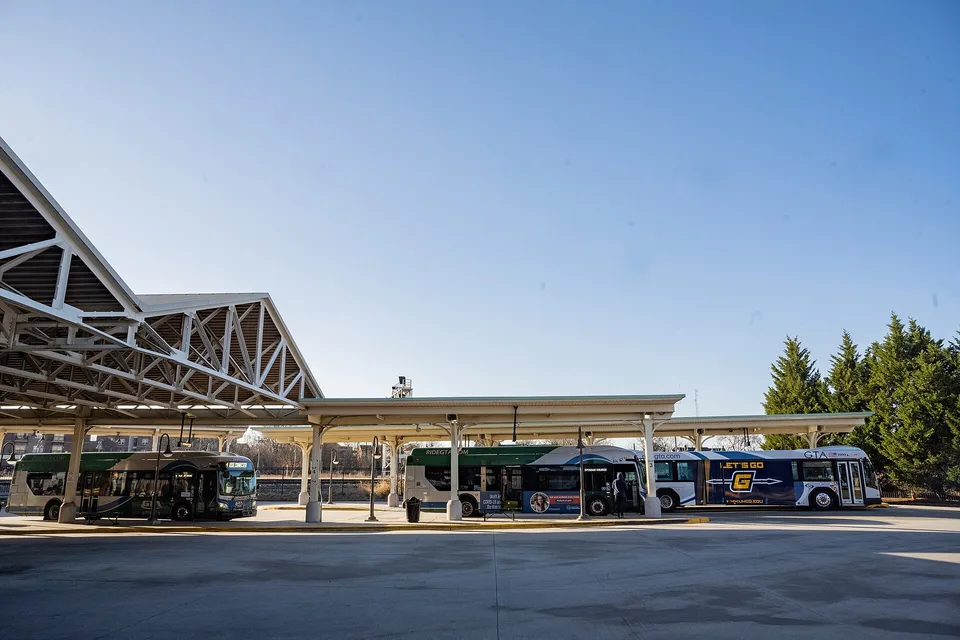
The Greensboro rail station is at 236 East Washington Street, within the J. Douglas Galyon Depot complex. NC By Train's schedules provide Piedmont and Carolinian route information, including regional travel between Raleigh and Charlotte through Greensboro. These are intercity services, not a metro operating between neighbourhoods. Book your date and check the actual journey, baggage arrangements and onward connection.
Current alerts announce select Carolinian adjustments for 16–26 October because of track work, alongside Piedmont and Carolinian changes for events on 15–25 October. Read the applicable alert rather than copying a departure time from an older station table. The depot's bus connections can help with the final city journey, but verify the service available at your train's arrival time. A historical station photograph illustrates the place; it does not establish today's platform, route or departure.
Food shopping and dining benefit from local addresses
The Greensboro Farmers Curb Market operates year-round on Saturdays from 8 a.m.–noon. Check its current seasonal and special-day information before planning another market morning. Arrive with time to shop, ask vendors about produce and choose purchases your accommodation can store or prepare. A market visit offers a useful introduction without claiming every stall or item is available all year.
Downtown's dining and shop directories identify options for a meal or independent retail outing. Friendly Center, near Friendly and Wendover avenues, provides another shopping destination to compare. For a move, investigate ordinary groceries, a pharmacy and household errands, not just a memorable restaurant. Ask businesses directly about dietary requirements and current hours. Combine shopping with journeys you already need to make, and compare complete meal totals. These are practical ways to assess the city without invented personal recommendations or a supposed definitive local food ranking.
Budget using confirmed admission and your own accommodation quote
Free entry at the History Museum and battlefield park gives you useful low-cost options. Add the civil-rights museum experience you select, children's admission or a dated Science Center ticket where relevant. Accommodation, meals, driving or the appropriate bus passes will determine much of the total. The city parking page should guide garage and street choices; event arrangements and recent changes make old blanket statements about free weekends unreliable.
A relocation budget needs a separate calculation: rent, initial payments, utilities, insurance, internet, food and commuting. Compare properties with the same household size and travel pattern. Request information about the individual home's heating and cooling use where available instead of treating an unsupported average as a promise. An inexpensive advertised rent can lose its appeal when the daily journey or included-services agreement does not match what your household requires.
Seasons affect outdoor time and the home you choose
The National Weather Service's Greensboro normals provide a regional picture of temperature and rainfall across the year. Expect warm-season outdoor plans to need breaks and attention to conditions, while colder weather can change walking comfort and road travel. Spring and autumn can suit a combination of museums, parks and a battlefield walk; a particular weekend still depends on the forecast.
Check current forecasts and warnings before travelling, and retain an indoor alternative when storms or other conditions change the plan. Seasonal facilities have their own calendars, as the closed splash pad illustrates. During housing inspections, look at drainage, insulation, heating and cooling equipment and responsibility for repairs. If possible, test the home's practical access and everyday journeys under conditions resembling those your household will regularly encounter, rather than only during a pleasant introductory afternoon.
Two full days, with an optional family or Saturday extension
Make the first day a downtown cultural visit: book the civil-rights museum experience, allow a lunch break, then visit the History Museum during its opening hours. Add time in the parks and an actual Tanger performance if the programme fits. Do not schedule both museums on Sunday morning, when their hours make that plan impossible.
Use the second day for Guilford Courthouse or a substantial Science Center visit, choosing according to the party's interests. On a Saturday, the market can provide an early start and Blandwood an afternoon alternative when its tours are operating. Families may prefer the children's museum in place of another historical stop. This is a suggested sequence, not an organised package. Prospective residents should exchange one leisure block for property viewings, a commute test and grocery shopping, while retaining enough time to examine the homes without rushing between appointments.
Renting involves a home inspection and a clear agreement
Begin with the city's housing resources and inspect the home, access, laundry, heating, cooling, parking and condition before paying. Confirm the letting party's authority, repair process, included services and rules on pets or additional occupants. The city fair-housing service provides a route for discrimination enquiries and landlord–tenant mediation, rather than a guarantee of a particular legal outcome.
For covered residential tenancies, North Carolina law caps security deposits at two weeks' rent for weekly tenancies, one-and-a-half months for monthly tenancies, and two months for longer terms. Accounting and refund obligations generally run from termination and delivery of possession: 30 days, or interim accounting within 30 and final accounting within 60 when claims cannot yet be determined. Read the statute's conditions and obtain advice for a dispute. Keep a signed condition record and receipts; distinguish a security deposit from other separately regulated charges.
Set up services, schools and healthcare before the move
The city water and sewer page explains service setup; it currently lists a combined deposit and service fee of $165 for residential tenants. Confirm who holds the account and which costs the lease includes. Check electricity service at the exact address, and use the collection calendar for waste and holiday changes. Verify internet installation and service dates before relying on remote work.
Families should use Guilford County's school locator and registration instructions, including address, immunisation and other required records. Healthcare needs provider access and insurance dates; county public-health contacts identify local services, while a qualifying move may create a special enrollment opportunity subject to conditions. The public library's card information helps with another household service. Drivers should consult NCDMV's new-resident guide: applicable licensing and vehicle paperwork generally falls within 60 days of establishing permanent residence when operating a vehicle.
Immigration purpose and nearby alternatives
Tourism uses the relevant visitor visa guidance, or official ESTA application and Visa Waiver Program information where eligible. Study follows student visa requirements and the institution's process; work and permanent relocation require separate employment or immigrant routes. A campus visit or rental does not create immigration permission. VisaWand consultant listings offer advisers to investigate, without government endorsement or guaranteed approval.
For regional comparison, High Point and Winston-Salem have VisaWand location directory pages, while the completed Raleigh guide supports a broader North Carolina choice. These places need their own transport and housing checks. Use the USA destination page for wider planning, then return to the specific Greensboro address and purpose. A worthwhile stay connects verified opening hours, realistic journeys and accommodation; a successful move also depends on household services and the appropriate legal status.
Official planning resources
Reviewed 13 October 2026. Use the official resources linked throughout this guide for admission, transport, housing and immigration decisions. Prices, services and rules can change; confirm the details relevant to your dates. Photography illustrates the locations and is not a live view.
View all official resources
- Official Greensboro trip planning
- Greensboro founding and county-seat history
- Downtown Greensboro history
- North Carolina A&T sit-in history resources
- Downtown Greensboro dining directory
- Downtown Greensboro shops
- Downtown parks and Southside Town Square
- City landscape and neighbourhood history
- UNC Greensboro international admission requirements
- North Carolina A&T international admissions
- International Civil Rights Center and Museum visits
- Greensboro History Museum hours and admission
- History Museum parking and transport
- Blandwood Museum tours
- Preservation Greensboro current opening notice
- Blandwood Carriage House event pavilion
- Greensboro Science Center hours and pricing
- Science Center dated admission tickets
- Science Center exhibits and seasonal events
- Miriam P. Brenner Children’s Museum visits
- LeBauer and Center City parks visitor information
- City downtown park information
- Guilford Courthouse battlefield information
- Guilford Courthouse park hours
- Steven Tanger Center performance calendar
- Tanger Center event parking
- Greensboro short-term rental permits
- PTI Airport ground transport
- PART On-Demand airport-area transport
- Greensboro Transit Agency fares
- GTA current routes and schedules
- GTA service updates and tracking
- PART fares and transfer rules
- Greensboro rail station and service alerts
- NC By Train Piedmont and Carolinian schedules
- Greensboro Farmers Curb Market visits
- Friendly Center location and shopping
- Current city parking charges
- Greensboro climate normals
- National Weather Service regional forecasts
- Greensboro housing resources
- City fair housing and tenant mediation
- North Carolina residential rental and deposit law
- Starting Greensboro water and sewer service
- Duke Energy service setup
- Address-based waste collection schedules
- Guilford County school assignment locator
- Guilford County school registration
- Guilford County public-health contacts
- Health insurance special enrollment conditions
- Greensboro Public Library card information
- North Carolina DMV new resident guide
- U.S. visitor visas
- Official ESTA application
- CBP ESTA explanation
- U.S. student visas
- U.S. temporary worker visas
- U.S. immigration routes
Plan the next part of your journey
Explore the United States guide, browse other cities or compare consultants for your travel and relocation questions.