Visa

Durham at two useful scales
Durham is easiest to appreciate by combining a compact downtown outing with time around its university attractions. Reused tobacco buildings, performance venues and places to eat give the centre a distinctive setting. Duke’s gardens, chapel and art museum offer a different pace, while the Museum of Life and Science can anchor a substantial family day.
This guide concerns Durham, North Carolina, in the Research Triangle region. Durham, Raleigh and Chapel Hill are separate destinations. A regional airport or research-park address does not make every journey between them short or simple. Verify the location when comparing a hotel, employer, campus or prospective home.
For a visit, group nearby stops and leave time to enjoy them. For a move, look beyond the appeal of the attractions and test whether housing, work and essential services fit the household’s week. VisaWand’s United States country guide provides the national context; the local details below help turn an interest in Durham into a practical plan.
Districts that suit different kinds of trip
The tourism board’s Durham district guides distinguish downtown, Ninth Street and Duke University, the NCCU and Fayetteville Street area, North Durham, Rockwood and Lakewood, and Southpoint and Research Triangle Park. Use these as starting points for planning rather than assuming each covers a uniformly walkable area.
Downtown suits a visit centred on dining, history and performances. Ninth Street and the Duke area can suit a campus-focused trip, but check the specific destination: gardens, hospital facilities and university buildings have different entrances and parking arrangements. The NCCU and Fayetteville Street guide provides another perspective on university life and the surrounding community.
For housing or a longer stay, compare the actual address with your recurring journeys. A district that works well for an afternoon of browsing may not serve an early shift, childcare or groceries equally well. Southpoint and research-park visits need their own transport plan rather than being added casually to a downtown walk.
Downtown and the tobacco buildings
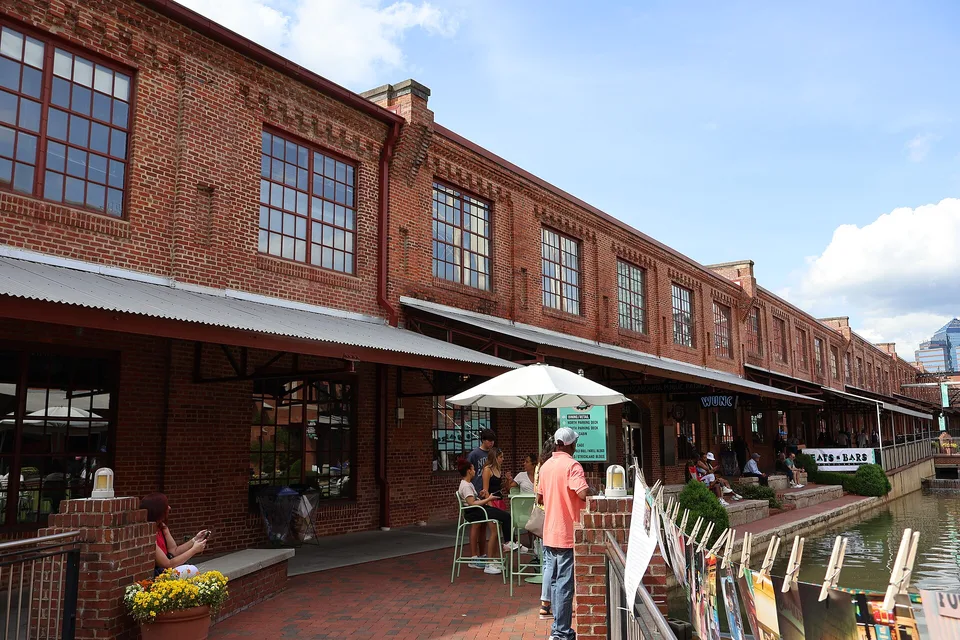
The official downtown district guide is useful for organising a first visit around the city centre and its reused industrial spaces. At the American Tobacco Campus, brick buildings and outdoor gathering places let you see how a former industrial site has gained a different role in everyday city life.
Choose a meal or a performance by checking the individual business or venue’s current programme. The buildings provide the setting; they do not establish that every shop, event or dining option will be available whenever you arrive. Keep enough time for a walk instead of treating the campus only as a photograph stop.
Combine this with the city centre’s historical markers and public spaces. The photograph in this guide shows the campus in April 2023, so visible signs and businesses should not be read as a current directory. Use the linked visitor information to decide what to include on your dates.
Black Wall Street and a fuller local history
The state’s historical account of Black Wall Street describes a four-block area along Parrish Street associated with nationally recognised Black entrepreneurship. North Carolina Mutual Life Insurance Company moved its headquarters there in 1906; Mechanics and Farmers Bank was founded in 1907. The nearby Hayti community was an important centre of residential, educational, cultural and religious life.
That history deserves more attention than a passing label. The same account describes the destructive effect of urban renewal on Durham’s Black business community, particularly Hayti, during the 1960s. Read the markers and seek out historical interpretation to understand the city’s achievements and losses together.
Durham’s tobacco legacy and university associations are other parts of its story. A useful visit connects these themes without assuming that commercial redevelopment explains the whole city. Leave room to explore the neighbourhoods and institutions relevant to your interests, and distinguish a historic building’s significance from its current visitor access.
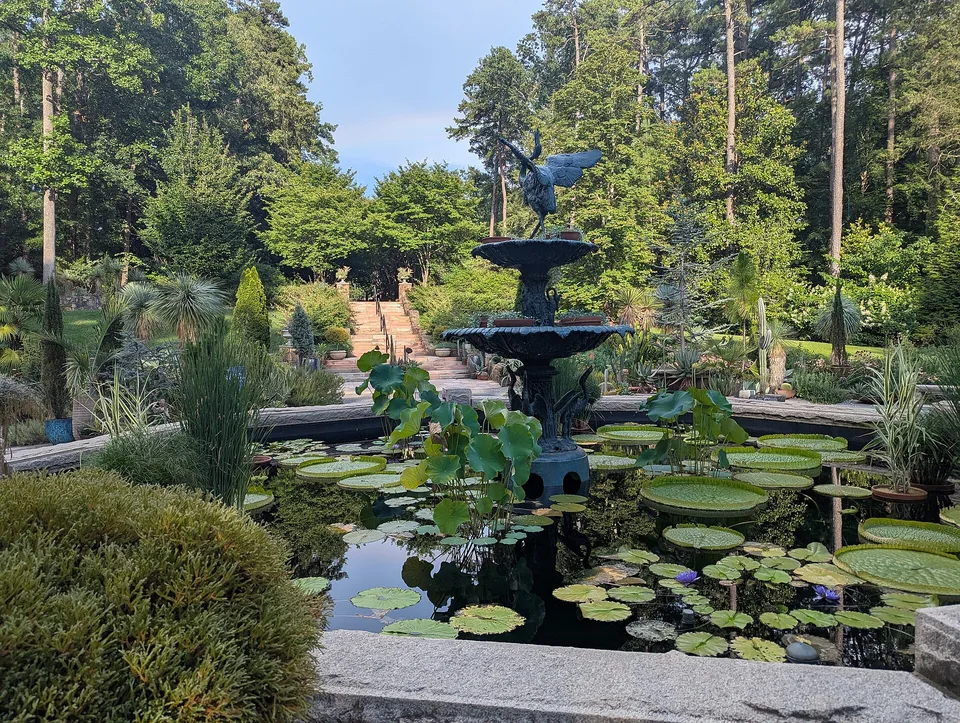
Duke Gardens: free entry, paid parking
Duke Gardens’ current visitor information distinguishes the grounds from the main entrance and welcome facilities. The grounds open from 8am to sunset throughout the year. Admission is free. The main entrance, gardens parking lot and Barnes Welcome Center open daily from 9am–7pm during March–October and 9am–5pm during November–February.
This distinction matters for an early walk or a late afternoon visit. The visitor lobby operates 9am–5pm, and the café 10am–4pm, with university-holiday closures. Do not assume every facility follows the grounds’ longer hours. The navigation address is 420 Anderson Street.
Parking is limited and costs $2 per hour; free admission does not mean free parking. Check the current payment instructions before arrival. Walk-in entrances can suit a visit from nearby campus locations or bus stops, but choose the route for your party’s needs. Dogs are permitted only before 10am under the current policy, so an evening dog walk should not be planned around an older rule.
Duke Chapel and a considerate campus visit
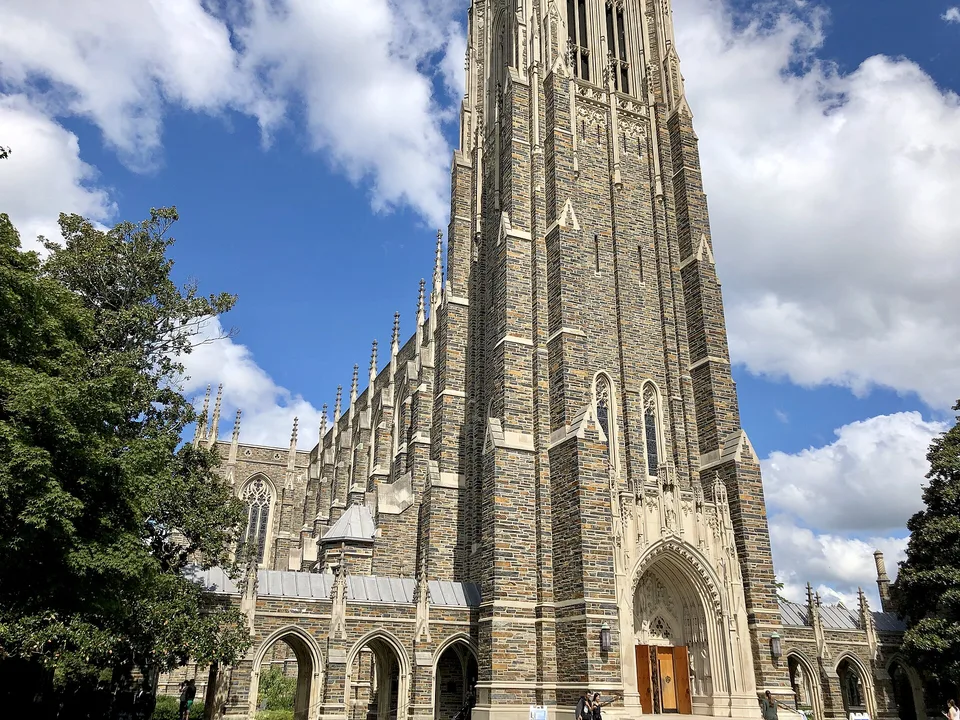
The Duke Chapel visitor page lists public opening from 10am–8pm daily, with exceptions for private ceremonies and other events. Check its calendar before travelling. The sanctuary’s Gothic architecture and stained glass provide a worthwhile stop, but this remains a place used for worship and university life.
The tower is closed to the general public. There are no public restrooms inside the chapel; the operator identifies nearby facilities in the Bryan Center, Page Auditorium and Divinity School. These are useful distinctions when planning with children or anyone who needs regular facilities.
The chapel is at 401 Chapel Drive. The closest public parking is the Bryan Center garage at 125 Science Drive, with availability and event arrangements varying. As of this guide’s October 2026 review, the chapel’s current notice directs visitors to side doors during front-door maintenance through 16 October. Confirm the arrangement for your date rather than following the historical photograph’s entrance view.
Nasher Museum: an indoor stop with clear costs
The Nasher Museum’s current visit page states that admission is free for all. Regular opening is Tuesday, Wednesday, Friday and Saturday 10am–5pm, Thursday 10am–9pm, and Sunday noon–5pm. Mondays are closed. Check the exhibitions and calendar before choosing the day.
The museum address is 2001 Campus Drive, while its visitor parking lot is at 650 Alexander Avenue. Parking costs $2 per hour and is processed through Duke’s Blue Spot website under the NASH lot. Keep your licence-plate details available; the visitor desk can help if payment is difficult.
The operator describes an accessible entrance path and designated parking spaces, with passenger drop-off arrangements on Anderson Street. Contact the museum about specific assistance needs. Café and store hours are separate, and groups of eight or more are asked to give advance notice. Free entry makes an art visit easy to include in a budget, while parking and meals remain separate expenses.
A family day at the Museum of Life and Science
The Museum of Life and Science’s visitor page lists adult admission at $24, seniors aged 65 and over and eligible military visitors with identification at $22, and children aged 3–15 at $19. Children aged two and under enter free. All children must be supervised by someone aged 18 or over.
During the published autumn-to-spring period, regular public hours are Tuesday–Sunday 10am–5pm, with Monday closures and specified holiday exceptions. The 9am opening is for members. The museum is at 433 West Murray Avenue and provides free parking on both sides of the road; its parking deck operates subject to weather conditions.
Train rides are a separate purchase, with a non-member price of $6. The ticket information also explains Durham Community Days: current county residency evidence is required from every adult claiming free entry. This is not a general visitor discount. Build the outing around your family’s pace and the current exhibit information, rather than adding it as a brief stop between campus attractions.
Choosing where to stay
A downtown base suits a visit built around the American Tobacco Campus, meals and evening entertainment. Compare the final accommodation price with parking, breakfast and any mandatory charges included. Look at the actual walk to your destinations rather than relying on a broad central-location description.
For a university, hospital or admissions visit, confirm the precise campus or facility first. Ask the accommodation about the relevant shuttle route, operating hours and reservations. A property advertising Duke access may still require a separate journey to the building you need. For an early flight, an airport-area stay deserves the same check against the shuttle timetable.
For a relocation scouting trip, consider staying near the proposed workplace for part of the visit. Test the commute at the time you would normally travel. Confirm kitchen equipment, laundry, minimum stays and cancellation terms for longer accommodation. A pleasant sightseeing base can be useful without being representative of the residential area you are considering.
RDU connections and the regional journey
The airport’s official public-transport page identifies GoTriangle route 100 and the RDU Shuttle as serving Raleigh–Durham International Airport. Passengers can connect through the Regional Transit Center to other routes across the Triangle. This is an onward-connection plan, not a promise of a direct bus to every Durham address.
The airport lists pickup between Zones 2 and 3 at Terminal 1 and between Zones 6 and 7 at Terminal 2. Check the current regional timetable and transfer before booking around an early departure or late arrival. Allow time for luggage, reaching the stop and the connection to your accommodation.
Compare public transport with a confirmed taxi, app-based ride, rental car or accommodation shuttle according to the actual arrival time and party size. Obtain current prices from the provider. Rail and intercity-bus stations require an onward journey from the airport; do not assume a train platform is inside the terminal or that the airport name describes a downtown location.
GoDurham and GoTriangle have different fares
The current GoDurham fare announcement confirms fare-free service through June 2027. Older references ending the policy in June 2026 are superseded. Use the operator’s routes and alerts to check the specific bus you need; a zero fare does not establish a convenient journey or frequency.
Regional travel is different. The GoTriangle fare information lists a $2.50 full fare, with fare-cap arrangements and concessions under its rules. Check the payment method and eligibility relevant to your journey before assuming that a cap or discount applies. GoDurham’s free policy should not be extended to every regional operator.
The GoDurham holiday-service page explains Sunday-level operation on several holidays and no service on Christmas Day. Christmas Eve service ends at 7:30pm. For ordinary travel, check the route timetable, transfer and return departure. The same exercise matters for a move: test the complete home-to-work journey, including the walk at each end and any late-shift or weekend requirements.
Food, shopping and a transparent budget
Downtown’s reused warehouses offer a distinctive setting for meals and browsing, while Ninth Street and the other district guides provide alternatives. Compare current menus, opening hours and dietary information before choosing a restaurant. A tourism listing introduces a possibility; it does not establish a personal recommendation or a guaranteed price for your visit.
For shopping, separate leisurely browsing from practical errands. A campus visit may leave time for a café and a shop, but a prospective home needs checking against grocery stores, pharmacies and household supplies. Map those journeys from the actual address rather than assuming the nearby dining district meets every need.
Two adults and one child aged 3–15 paying standard Museum of Life and Science admission would spend $67. Three non-member train rides would add $18. This gives an $85 admission-and-train example, excluding meals, accommodation and onward transport. Nasher and Duke Gardens entry can provide a lower-cost alternative, with parking charged separately. Choose activities that suit the party rather than filling a budget with every available purchase.
Seasons and when to visit
The tourism board’s seasonal weather guidance describes four distinct seasons, including hot, humid summers and winter conditions that can bring ice to roads. Spring and autumn can suit a visit that combines gardens, campus walks and indoor attractions. Check the forecast for the dates rather than treating a seasonal description as a promise.
In summer, keep outdoor sections manageable and allow for refreshments and an indoor break. In winter, leave extra time for travel if conditions deteriorate. A garden visit depends on daylight and facility hours; the museum schedules provide useful alternatives when outdoor plans become less appealing.
For a relocation scouting trip, consider how the home works outside your preferred season. Inspect heating and cooling, ask about maintenance and assess the route to work in poor weather. The practical question is whether everyday arrangements remain workable when conditions change, rather than whether a pleasant weekend suggests comfortable weather throughout the year.
A weekend that leaves time to enjoy Durham
On Saturday, start with a downtown walk and the American Tobacco Campus, then choose lunch nearby. Give the afternoon to the city centre’s history and the districts that interest you. Add an evening performance only after checking the venue’s programme and arranging the return journey.
On Sunday, begin at Duke Gardens, with the main entrance opening at 9am under the published schedule. Continue to the chapel if its calendar permits, then visit Nasher after its noon opening. Leave comfortable transfer time and adjust the order to your party’s pace. A family might instead make the Museum of Life and Science the day’s main outing.
Keep Monday closures in mind when extending the weekend: Nasher is closed, and the science museum’s autumn-to-spring schedule also normally excludes Mondays. A third day for a prospective move is best used for viewings, service enquiries and a commute test. Avoid adding a regional excursion if it would reduce each local stop to a hurried photograph.
Housing, deposits and inspecting the property
Compare a home’s full monthly cost, including utilities, parking and laundry, with the journeys it requires. Ask how repairs are reported, what the lease says about pets and who maintains outdoor areas. At a viewing, inspect windows, storage, heating and cooling controls, and signs of moisture. Keep written answers to questions that influence the decision.
North Carolina’s security-deposit statute sets different limits by tenancy: two weeks’ rent for a week-to-week tenancy, one and a half months for month-to-month, and two months for longer terms. A single deposit cap should not be applied to every lease.
The separate deposit-accounting statute generally requires an itemised accounting and remaining balance within 30 days after tenancy termination and delivery of possession. Where the claim cannot be determined within that period, an interim accounting is required within 30 days and a final accounting within 60. Retain the lease, payment records and dated condition photographs; seek advice about a dispute rather than relying on an abbreviated rule alone.
Utilities, schools and the first household week
The city’s water-service setup page tells applicants to allow three to five days for processing. Renters need a signed lease containing the required names, address and rental information, along with identification details. A $50 service-initiation fee appears on the first bill, and a deposit is additional. Confirm which services the landlord manages before applying.
Arrange electricity, gas and internet separately for the exact property. Retain confirmations and clarify responsibility for old accounts when changing addresses. Put essential appointments in a realistic order so that collecting keys, establishing services and obtaining groceries do not compete with a full sightseeing schedule.
Families should consult Durham Public Schools’ enrolment resources and confirm the assigned school before choosing housing around an assumed place. Ask the district about documents, deadlines, language assistance and your circumstances. A transfer or preferred programme needs its own confirmation. Include childcare, school travel and other recurring household journeys when comparing homes, especially if they occur at different times from the main work commute.
Medical and university trips need their own plan
If the purpose of the visit is an appointment, a campus meeting or an admissions event, build the day around that commitment first. Confirm the building, entrance, check-in time and parking instructions with the institution. Leave a buffer between the airport journey and any appointment that would be difficult to reschedule.
For a medical visit, ask the provider and insurer about coverage, expected charges and any documents required. Check whether accommodation can meet the household’s access needs and whether another person will need transport, meals or workspace while accompanying you. A sightseeing itinerary can remain an optional extra rather than creating pressure around an uncertain schedule.
For a study or employment move, establish healthcare arrangements from the arrival date. Compare the relevant insurance documents for prescriptions, consultations and the providers included in the plan. Keep medication and important records accessible during travel. Ask the institution or employer about its own services and eligibility requirements before assuming that a visitor can use facilities intended for enrolled students or staff.
Permission for visiting, study and employment
Accommodation or a home lease does not grant United States immigration permission. The State Department’s visitor-visa guidance explains temporary visits and activities that require other categories. Ordinary employment, full-time study and permanent residence need separate planning.
Eligible travellers considering the Visa Waiver Program should read the official programme guidance and use the official ESTA application portal when applicable. Check nationality, passport and activity requirements before booking. Travel authorisation permits travel to seek admission; it does not guarantee entry at the border.
For a course, consult the official student-visa information and the institution’s international office. For an employment move, review temporary-worker visa categories with the employer and a qualified adviser. Permanent plans require the separate official immigrant-visa resources. VisaWand’s consultant listings can help identify support. Compare experience, written scope and fees, and establish the lawful route before making commitments that depend on living or working in Durham.
Regional alternatives and the next decision
Raleigh and Chapel Hill are useful destinations to investigate when considering the wider Triangle, but assess each against the purpose of the trip or move. The same airport serves regional journeys; it does not make a hotel, workplace or campus in another municipality equivalent to a Durham address.
Read the completed Raleigh guide for a city comparison, or investigate Chapel Hill’s location page as a separate destination listing. Use VisaWand’s United States location directory to compare places, distinguishing destination listings from completed guides. The United States destination page provides broader consultation context. For a short visit, finish the plan with attraction days, transport and accommodation that work together. For a move, keep the shortlist attached to verified homes, employment or study arrangements, essential services and immigration permission. Leave unresolved questions visible until you have a dependable answer.
Official planning resources
Reviewed 13 October 2026. Use the official resources linked throughout this guide for admission, transport, housing and immigration decisions. Prices, services and rules can change; confirm the details relevant to your dates. Photography illustrates the locations and is not a live view.
View all official resources
- Discover Durham districts and neighbourhood planning
- Discover Durham downtown and industrial reuse
- North Carolina historical marker account of Black Wall Street
- Duke Gardens current hours and access
- Duke Chapel visitor hours and access
- Duke Chapel current access notice
- Nasher Museum current admission, hours and parking
- Museum of Life and Science current prices and visiting hours
- Museum of Life and Science admission arrangements
- RDU official public transport connections
- GoDurham fare-free service through June 2027
- GoTriangle regional fares and payment
- GoDurham current service and office hours
- Discover Durham seasonal visitor weather
- North Carolina residential security-deposit limits
- North Carolina deposit accounting and return
- Durham municipal water-service setup
- Durham Public Schools enrolment entry point
- U.S. visitor visas
- Official Visa Waiver Program requirements
- Official ESTA application
- U.S. student visas
- U.S. temporary worker visas
- U.S. immigration routes
Plan the next part of your journey
Explore the United States guide, browse other cities or compare consultants for your travel and relocation questions.