Visa
A city whose hills shape the visit
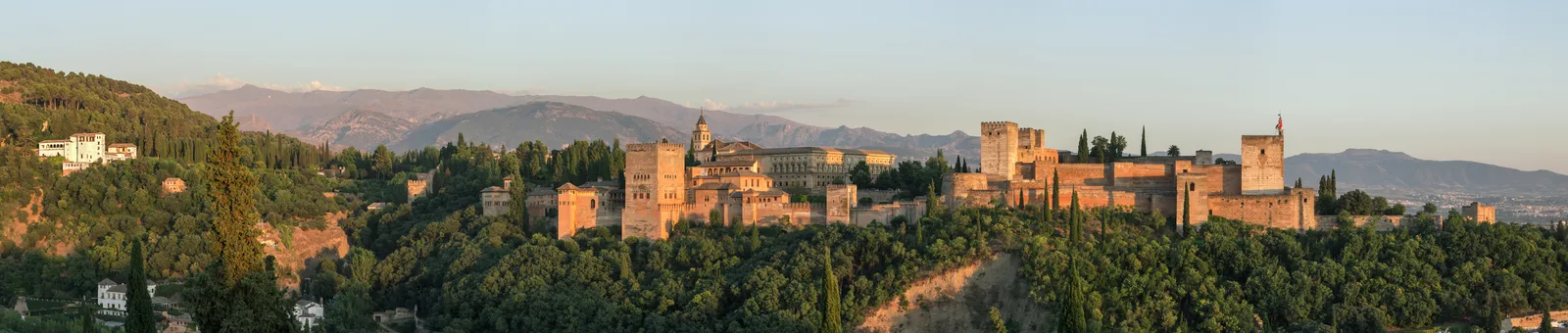
Granada invites you to look up: towards the Alhambra, across the houses of the Albaicín and, on clear days, beyond the city towards the mountains. The same landscape that makes its views memorable also makes practical planning worthwhile. A room with a wonderful outlook can involve a steep walk home, and a leisurely morning can become a rush if you misunderstand your palace admission time.
Give the city three full days for an introduction that includes its major monuments and neighbourhoods. Add time if you want a mountain excursion, a substantial museum visit or a slower evening programme. Granada rewards a schedule with pauses: the city is more than an Alhambra ticket with a night’s accommodation attached.
VisaWand’s Spain country guide provides the national context. Here, the emphasis is on Granada in Andalusia: choosing a base, organising visits, understanding transport and assessing whether the city could work as a home. Begin with the city council’s official tourism website for current events and visitor information.
Book the Alhambra before building the itinerary
For many travellers, the Alhambra determines the dates of the trip. Check availability before paying for inflexible travel arrangements. The official Alhambra General ticket covers the Nasrid Palaces, Partal, Alcazaba and Generalife. These are distinct parts of the complex; a ticket labelled gardens is not a substitute for one that includes the palaces.
At verification, the general product displayed €22.27. The booked date applies to the complex visit, while the Nasrid Palaces have their own specified entry time. The published daytime schedule runs from 8:30 to 18:00 between 15 October and 31 March, and to 20:00 between 1 April and 14 October. Check notices and the product for your date.
Plan the route around that palace appointment, allowing time to reach its entrance. The Patronato’s visitor questions explain that late arrival can mean refusal of palace access. Tickets are personal, and visitors must carry the ticket and the required original identity document. Every child needs a ticket, including where admission is free. Read the age-specific instructions when booking rather than assuming children can simply accompany an adult.
Make room for the complex beyond the famous courtyards
Give the Alhambra a substantial part of a day. Moving between fortified spaces, gardens and palace interiors creates a different experience from entering a single museum. Look at the relationship between architecture, water, planting and the views over Granada, rather than treating every courtyard as a short photograph stop.
The official practical advice is particularly useful for families. Large backpacks are restricted, and pushchairs cannot enter the Nasrid Palaces or Generalife Palace. Check the available storage and carrying arrangements before arrival. Eating and drinking are restricted to designated areas; photography rules exclude flash, tripods and selfie sticks in the specified interiors.
Visitors with reduced mobility should consult the accessible route and discuss their particular requirements with the monument. An adapted itinerary does not establish that every historic room or tower is accessible. Keep the day’s other commitments modest. A long uphill approach followed by the full visit and another timed monument can make an otherwise attractive plan unnecessarily tiring.
Compare combined tickets by what they actually include
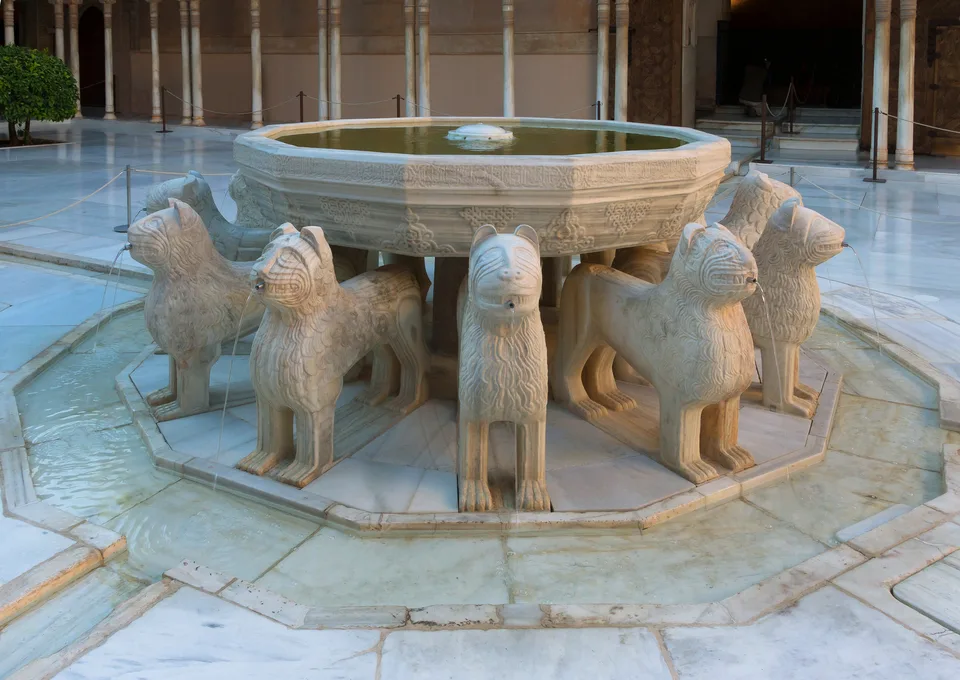
The Dobla de Oro General ticket is worth comparing if you want to explore Granada’s Andalusi monuments as well as the Alhambra. At verification it displayed €30.48. It includes the general Alhambra visit and additional sites such as El Bañuelo, Dar al-Horra and several historic houses. The Alhambra remains tied to its booked date and palace time; the additional monuments can be visited the day before, the same day or the following day, within their own opening arrangements.
The municipal Granada Card is another product, combining selected monuments and transport. Check the exact variant and available Alhambra visit before purchasing. Do not infer that a night-palace or gardens option provides the same experience as general daytime admission.
Its transport instructions require collection of the physical urban bus card from designated machines using the booking’s bus code. The allowance is nine urban journeys during the card’s validity. Metropolitan buses, including the airport service, are excluded. The tourist-train inclusion is a single tour rather than unlimited hop-on, hop-off travel. Compare the total with the places you genuinely intend to visit.
Choose between the lower centre and a hillside address
For a first visit, compare accommodation around the cathedral, Gran Vía, Plaza Nueva and the lower central streets. Plot the actual entrance and arrival route, then consider the distance to the visits you have booked. A convenient base can save energy for the steep sections you choose to explore.
The Albaicín offers a more atmospheric hillside stay, with trade-offs that deserve attention before booking. Ask about steps, gradients, the nearest practical taxi drop-off and luggage access. Confirm whether a property’s advertised terrace belongs to your room or is shared, and whether a lift reaches the floor you need.
Realejo provides another way to stay close to cultural visits without choosing the Albaicín. It has both higher and lower streets, so assess the individual address rather than relying on the neighbourhood name. Hotels, hostels, guesthouses and apartments serve different needs: an apartment kitchen helps a longer stay, while a staffed reception may matter more for a late arrival. Compare heating, cooling, cancellation terms and the full price for your dates. Avoid judging sleep quality from a daylight street photograph. For a brief stay, check luggage storage if your flight departs several hours after checkout.
Explore the Albaicín through its houses and viewpoints
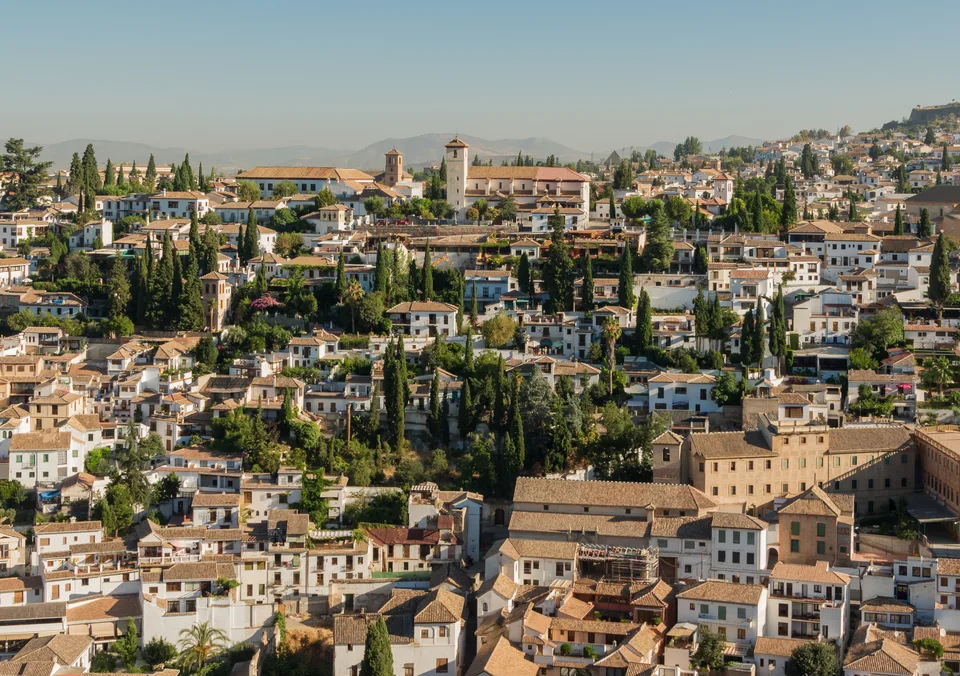
The municipal Albaicín introduction describes narrow streets, steep hills and cármenes: traditional houses with gardens or orchards. Its UNESCO recognition dates to 1994. The district’s appeal lies in the whole urban fabric, not only in reaching one famous viewpoint.
Start with a manageable route and leave room to turn aside into a small square or stop for a drink. San Nicolás gives the familiar view towards the Alhambra, but the approach is part of the experience. Wear shoes that grip on uneven surfaces and consider using transport for one direction if the climbs would otherwise dominate the outing.
Casa de Zafra is the council’s suggested starting point for understanding the neighbourhood. If you want interiors as well as views, check the historic houses and their separate hours before choosing a route. Keep residential courtyards and private gardens private, even where an open gate reveals a tempting glimpse. A viewpoint visit and a paid church or tower visit are separate decisions; check what you are entering before joining a queue.
Give the cathedral and Royal Chapel separate attention
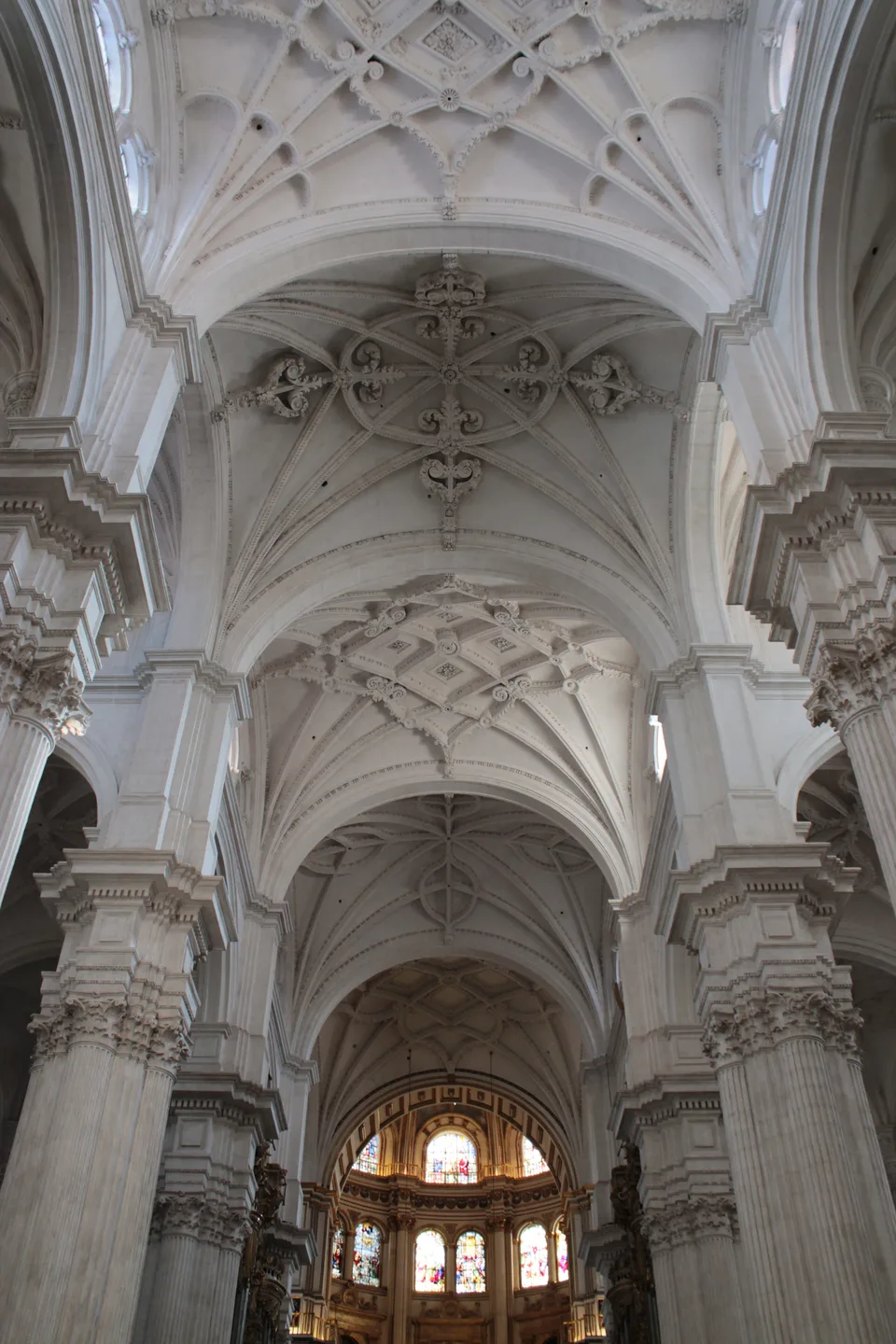
The cathedral brings a different architectural scale to Granada’s story. Its official history traces the development of the building, including the first stone in 1523 and the involvement of Diego de Siloé. A visit here helps balance an itinerary otherwise dominated by the Nasrid monuments.
Use the archdiocese’s official cathedral booking page for current admission. Its displayed tariffs distinguish an exhibition period from later prices, so check the charge attached to the actual date you select. Cultural visiting hours also differ on Sundays, and worship can interrupt sightseeing. Ask about access limitations rather than assuming a historic religious building has an unrestricted route throughout.
The neighbouring Royal Chapel is a separate visit, with the tombs of Isabella and Ferdinand alongside those of Joanna and Philip. Its standard adult admission displayed €7 at verification, with an app audioguide included. Photography and video are prohibited inside. Adapted access is via the cathedral and depends on its opening arrangements, an important detail if the chapel’s own hours appear suitable but the adjoining route is unavailable.
Read another part of Granada in Realejo
Realejo’s history reaches beyond a convenient place for dinner. The council’s Sephardic House introduction connects it with the Jewish settlement known as Garnata al-Yahud and the community’s history before the expulsion of 1492. Treat that history as part of Granada’s story, alongside the palaces and later Christian monuments.
The Casa de los Tiros museum offers another point of entry. Its sixteenth-century building has an imposing façade, and the municipal description identifies its focus on the city’s history. Check the museum operator’s current hours before adding it to a tightly planned morning; do not assume every cultural building keeps the same weekly schedule.
Leave some of the outing for walking between places. Realejo works well as a contrast to a heavily booked Alhambra day, especially if you choose one interior and allow the rest of the afternoon to develop at a slower pace. The practical advantage is flexibility: a neighbourhood walk can absorb a late lunch more easily than another fixed admission.
Choose a flamenco evening on clear terms
The city’s flamenco information distinguishes Sacromonte’s cave venues, associated with zambras, from tablaos around the Albaicín and Plaza Nueva. An evening performance can add music and movement to a visit otherwise spent looking at buildings.
Compare the actual programme, duration, seating and price before booking. Some venues offer dinner, while others sell a show with a drink or another limited inclusion. Establish what the ticket covers and what costs extra. Travellers with access requirements should confirm the entrance, seating position and toilet arrangements with the venue; a cave setting or a general accessibility label does not answer every practical question.
Plan the return journey before the performance begins, especially if staying across the city or beyond the central area. A later finish can change your transport options. Give the evening its own space rather than placing it after a day that already exceeds your energy. The better choice is the performance that suits your interests and circumstances, not necessarily the most elaborate package.
Enjoy tapas without assuming every order is the same
Granada’s official tapas introduction describes a custom that can make eating out particularly sociable: many bars include a tapa with a drink. The arrangements vary. Some offer a sequence, others a choice, and others their own fixed dish. Ask what is included before ordering, particularly when choosing a different drink or requesting food separately.
Try an area that fits the day’s route, such as the central streets around Navas or Realejo’s Campo del Príncipe, rather than crossing the city for an unverified recommendation. Read the menu and ask about ingredients. A complimentary dish is still food whose contents matter if you have an allergy or dietary restriction.
Budget for the meal you want, including paid portions and drinks, rather than assuming tapas will replace every lunch and dinner. For self-catering, check the nearest grocery shop’s actual hours and the kitchen equipment available. Compare prices by quantity when shopping for food or gifts, and leave room in luggage for fragile purchases.
Keep arrival transport separate from city sightseeing
The airport service operator Alsa lists a bus between Federico García Lorca Granada-Jaén Airport and Granada, with stops serving the bus station and central areas. Its published journey estimate is around 45 minutes, depending on traffic. Search for the travel date and correct stop; flight-linked schedules are more useful than an assumed fixed interval.
The airport stop is outside arrivals on level zero. Check luggage conditions and the last service before relying on the bus for a late flight. If your accommodation is uphill, include the final connection or walk in the comparison. A transfer to a central stop does not necessarily deliver you close to the front door.
For arrivals at a railway or coach station, establish which station the ticket names and how you will continue. The metro’s official route information shows both Estación Autobuses and Estación Ferrocarril stops. Keep the departure-day plan equally practical, allowing for connections, disruption and the carrier’s check-in requirements.
Use buses and metro for different journeys
Walking works well for linked central visits, but the hills make selective transport useful. Consult the urban bus operator’s current notices before choosing a stop. In August 2026, C30 returned to its Pavaneras terminus at Plaza Isabel la Católica; earlier roadworks advice can therefore be misleading. Check live changes close to the visit.
The metro is useful for journeys along its corridor, including the stations, Recogidas and the southern university and hospital area. It is not a direct ride to the Alhambra. The official metro tariff page lists a single journey at €1.35, with a reusable flexible card costing €0.30. Validate as instructed: on surface vehicles, and at entry and exit for underground stations.
Compare fare products for the journeys you will actually make. A tourist day ticket is tied to the day of purchase, rather than providing a rolling 24 hours. Bus, metro, metropolitan and airport products have different rules; a familiar card name should not be taken as proof of coverage.
Match the season to walking and indoor visits
Granada’s inland location deserves more attention than a general promise of southern Spanish sunshine. AEMET’s Granada Airport climate table gives useful historical context: for 1981–2010, the average daily maximum in July was 34.8°C, while January’s average daily minimum was 0°C. These are station averages at the airport in Chauchina, not extremes or a forecast for the city centre.
Spring and autumn are sensible starting points for a walking itinerary. In summer, place longer climbs earlier in the day, allow shaded or indoor breaks and confirm effective air conditioning at the accommodation. Winter visits need proper layers, particularly after dark, and heating deserves a direct question when booking an apartment.
The Parque de las Ciencias visitor information offers another substantial indoor option. The museum’s general pattern is Tuesday-to-Saturday opening and a shorter Sunday, with most Mondays closed. Check the calendar and the ticket components before assuming the museum, BioDomo and planetarium are one interchangeable admission.
Spend three days with one main commitment each
On day one, make the Alhambra the main event, organising the visit around the booked Nasrid Palaces appointment. Keep the rest of the day for a meal and a gentle central walk. The suggestion is deliberately flexible: arrival time, weather and your preferred pace matter more than filling every available hour.
On day two, visit the cathedral and Royal Chapel, then leave time for the surrounding centre and lunch. Continue into Realejo if your energy allows, choosing one museum or simply exploring the streets. A flamenco performance can complete the evening, provided the return journey is arranged.
On day three, give the Albaicín a proper outing, combining a viewpoint with a historic house if the hours work. Alternatively, choose the science museum for a contrasting day. A fourth day creates space for an excursion without squeezing it between two city appointments. Keep arrival and departure days separate from this framework unless you genuinely have enough usable time.
Test the daily commute before choosing a home
Granada’s university life makes shared rooms, residences and apartments important parts of the housing market. The University of Granada accommodation guidance provides a useful starting point for eligible university users. It also explains why the best district depends on the campus: Cartuja, Aynadamar and the Health Sciences campus are different destinations.
For a longer move, shortlist homes around the journey you must make regularly. Test that route at the relevant time, including the walk from the stop. Check whether a lower rent creates a recurring taxi cost or an awkward trip home. A holiday address with views may be less convenient for work or study.
View the property before committing where possible. Inspect heating, cooling, ventilation, hot water, noise and stairs. Ask which utilities and building charges are included, record the condition and meter readings, and obtain clear written deposit and repair terms. Student-room estimates published by different university pages vary; they should not be treated as a current budget for a whole household.
Arrange address records and healthcare for your circumstances
Granada’s municipal address-registration procedure explains the padrón for people habitually living in the municipality. Applications require identification and evidence connected with the home; the precise supporting documents depend on the circumstances. In-person appointments and an online route with a digital certificate are listed. Check the requirements before attending, particularly for a family or a shared address.
Address registration records where you live. It should be kept separate from the question of permission to reside or work in Spain. When taking over a home, establish whose name is on each utility account, how bills are shared and what steps are needed to change the holder.
For an eligible temporary visitor, the Andalusian government’s EHIC information explains access to medically necessary care under the applicable rules. That does not establish identical cover for every traveller or a long-term resident. Confirm health entitlement, insurance and the appropriate local health centre for your own status before relying on a particular arrangement.
Establish the immigration route before a long stay
Use Spain’s official entry and visa information to identify the relevant consular resources for your nationality and travel purpose. Confirm requirements with the Spanish consulate responsible for your residence before committing to a long stay. A successful accommodation search is not evidence of immigration eligibility.
For non-EU nationals, the European Commission’s employed-worker guidance describes work and residence authorisation, normally involving employer action before the visa stage. The self-employment guidance sets out a different route. Tourism, employment, study and permanent relocation should each be assessed on their own requirements. Remote work also needs the appropriate assessment; do not assume that working online removes immigration obligations.
VisaWand’s Spain destination and consultant listings and consultant directory can help you compare professional assistance. Check qualifications, the written scope and fees. For permanent relocation, clarify the status that would permit your intended activities, the post-arrival formalities and renewal conditions before signing a lengthy tenancy.
Add the mountains or another city with a clear purpose
Sierra Nevada’s natural park offers a contrast to the city’s streets and monuments. The surrounding natural park and the higher national park are distinct protected areas. Choose an outing appropriate to the season and your experience, and check the visitor information for the intended route. A mountain day needs its own weather and transport planning, rather than borrowing the city forecast.
For a wider Andalusian itinerary, compare VisaWand’s Málaga city guide and Seville city guide. Allow transfer time and enough nights to make another base worthwhile. Granada does not need to carry every possible excursion within a short stay.
The Spain location directory provides further destination pages. Decide what you want the next stop to add: a coastal setting, a different architectural story or a slower pace. Leaving a little unscheduled time in Granada may be more rewarding than moving again simply to lengthen the list of places visited.
Official planning resources
Reviewed 16 October 2026. Use the official resources linked throughout this guide for admission, transport, housing and immigration decisions. Prices, services and rules can change; confirm the details relevant to your dates. Photography illustrates the locations and is not a live view.
View all official resources
- Granada City Council: official tourism
- Alhambra General: official admission
- Alhambra: visitor questions and access
- Alhambra: official visitor tips
- Dobla de Oro General: official combined ticket
- Granada City Council: Granada Card
- Granada City Council: card transport rules
- Granada City Council: Albaicín
- Granada Cathedral: official history
- Archdiocese of Granada: cathedral tickets and access
- Archdiocese: Royal Chapel visit
- Granada City Council: Sephardic House and Realejo
- Granada City Council: Casa de los Tiros
- Granada City Council: flamenco venues and traditions
- Granada City Council: tapas customs and routes
- Alsa: Granada airport connections
- Metro de Granada: route and service news
- Granada urban bus operator: current route notices
- Metro de Granada: tickets and validation
- AEMET: Granada Airport climate normals
- Parque de las Ciencias: planning a visit
- University of Granada: choosing accommodation
- Granada City Council: address registration
- Andalusian government: European Health Insurance Card
- Spain official tourism: entry and visa resources
- European Commission: employed worker in Spain
- European Commission: self-employment in Spain
- Spain official tourism: Sierra Nevada Natural Park
Plan the next part of your journey
Explore the Spain guide, browse other cities or compare consultants for your travel and relocation questions.