Visa
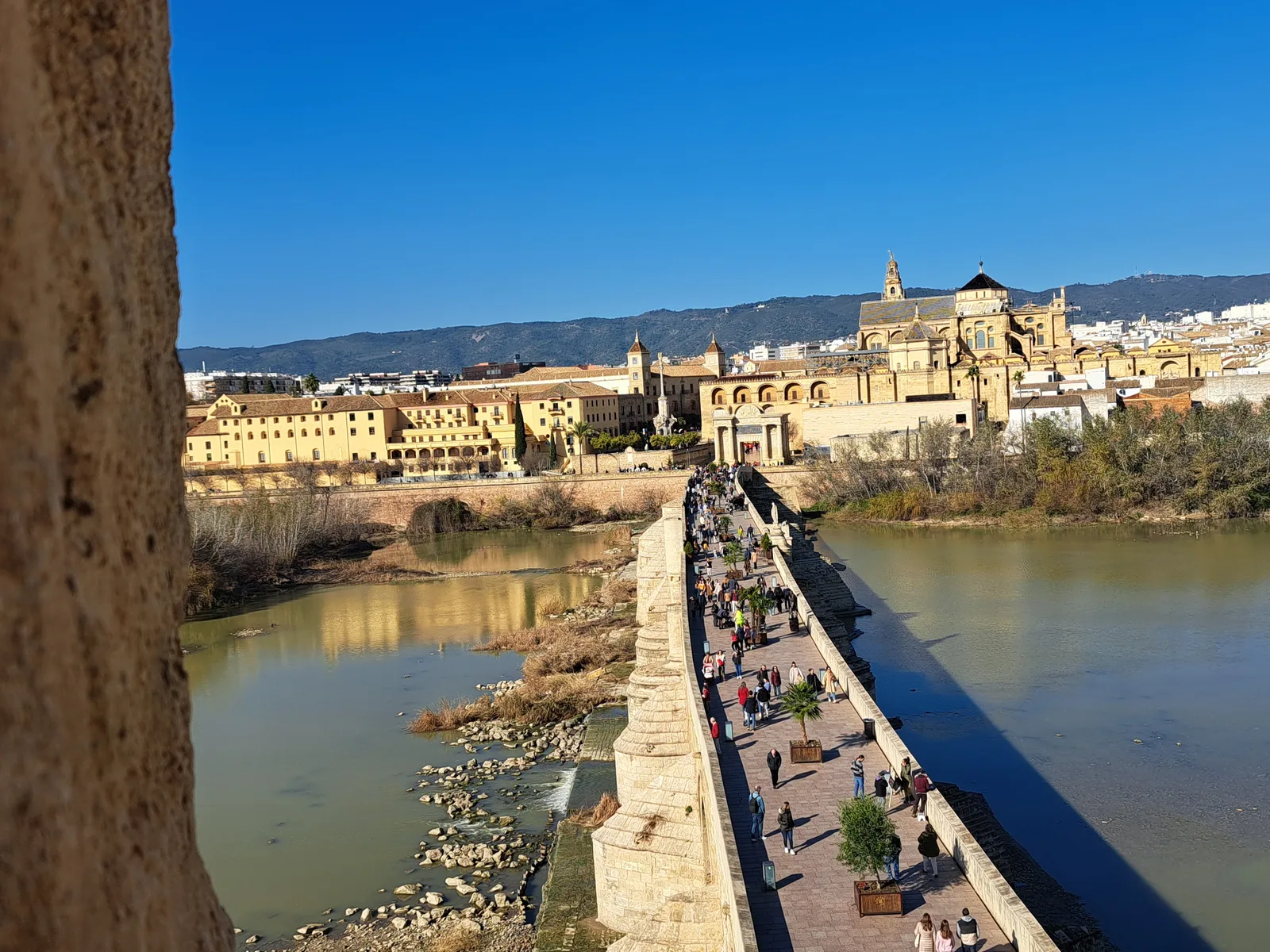
Córdoba rewards an overnight stay
Córdoba’s great attraction is the way a substantial Andalusian city gathers around an extraordinary historic core. The Mosque-Cathedral, courtyard houses and lanes of the Judería make a compelling first visit, but the Guadalquivir riverfront and streets beyond the busiest monuments give a longer stay its rhythm. This is Córdoba in southern Spain, distinct from its Argentine namesake.
Allow two nights if you can. A day trip can accommodate the principal monument and a walk, but leaves little room for the archaeological site outside town, a palace visit or an unhurried dinner. Three nights suit travellers who prefer separate mornings for major sights and afternoons with fewer commitments. A summer visit needs a different timetable from a spring weekend.
For prospective residents, the useful questions are equally concrete: where your workplace or university campus sits, how a flat handles summer heat, and whether its apparent charm comes with awkward access. Use this guide alongside VisaWand’s Spain country guide and Spain destination page when comparing the city with other bases.
The history is visible in the buildings
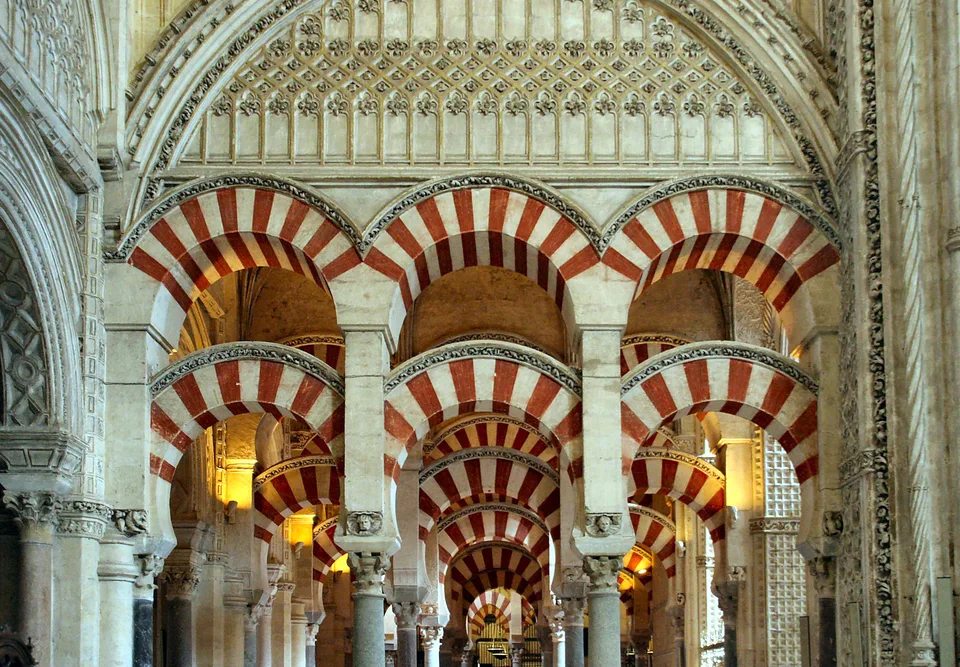
The UNESCO account of Córdoba’s historic centre traces a Roman foundation in the second century BC, the establishment of an emirate in the eighth century and the declaration of an independent caliphate in 929. The Mosque developed over successive building campaigns; after the Christian conquest it became a cathedral in 1236. Its Renaissance cathedral construction belongs to the sixteenth century.
The resulting monument asks for more attention than a quick photograph of striped arches. Look for changes in scale, light and architectural language as you move through it. The surrounding historic centre matters too: UNESCO first inscribed the mosque in 1984 and extended the property in 1994. That designation does not mean every building across modern Córdoba belongs to the protected property.
This history is best approached through particular sites rather than a sweeping story of uninterrupted harmony. Religious, political and domestic life changed over centuries. Leave room for those differences, and avoid treating the whole city as a preserved medieval stage set. Its heritage buildings now share space with homes, businesses and active worship.
Choose your base by its everyday route
The Judería is the obvious choice for walking out into the historic lanes near the Mosque-Cathedral. San Basilio, also called Alcázar Viejo, provides another courtyard-focused part of the old city. Around Plaza de las Tendillas and the Gran Capitán shopping area, a stay can place modern errands alongside sightseeing. The official visitor-information service supplies maps that help connect these areas.
Choose between them by tracing a real route from the accommodation entrance, rather than trusting a neighbourhood label. How will you reach it with luggage? Can a vehicle stop nearby? Is the room above a busy terrace, or looking into an enclosed courtyard? A quiet-looking listing photograph cannot answer those questions.
For a train-based visit, compare the station transfer with your planned walks before paying extra for a monument-facing address. For a longer stay, map groceries, a pharmacy and the actual commute. Historic surroundings can be worth the inconvenience, but a practical apartment slightly outside the sightseeing circuit may suit a household better. Inspect the particular block; broad claims that an entire district is quiet or cheap are unreliable.
If you arrive before check-in, establish where bags can go and whether collection remains possible after your last visit. For an early departure, arrange the transfer the evening before. These small decisions matter particularly on a short break, when an awkward luggage handover can consume the only free morning. Ask for written directions to the entrance, including any steps between the nearest vehicle drop-off and reception.
Reserve the Mosque-Cathedral thoughtfully
The Mosque-Cathedral’s official admission page currently lists general admission at €15. Reduced categories require eligibility evidence, and children under ten enter free. The bell tower has a separate €4 ticket; a daytime monument ticket also includes access to the Fernandine church route. Check the calendar for your date, because worship and exceptional celebrations affect visiting arrangements.
There is normally a free individual visiting period from Monday to Saturday, 08:30–09:30, subject to exceptional celebrations. Entry stops at 09:20 and clearing begins then. Groups cannot use this arrangement. It is a short opportunity with a firm ending, so paying for an ordinary visit may make more sense if this is your main reason for coming.
The visitor rules require suitable clothing and respectful behaviour in an active Catholic church. Keep your footwear on, remove hats and leave tripods behind; photographing religious celebrations is prohibited. Ask about adapted access through the Deanes entrance if needed. The tower involves narrow stairs and excludes children under seven; children aged seven to fourteen need an adult. Check its access restrictions before purchasing rather than assuming everyone can climb.
Check the Alcázar’s restoration notice first
At the time of review, the municipal Alcázar booking page states that only the gardens are open to visitors. The rest of the monument is undergoing restoration. It also warns that equipment for the nighttime light-and-sound installation is visible in the gardens. Older photographs and descriptions of interior rooms should not be treated as a promise of current access.
The published winter timetable, covering 16 September to 15 June, is Tuesday–Friday 08:15–20:15, Saturday 09:30–17:30 and Sunday and public holidays 08:15–14:15. The summer timetable is shorter. Recheck the booking calendar and what your chosen product includes before arranging the rest of the day around it.
This is still an option for someone who specifically wants a garden visit. Someone mainly interested in palace interiors should adjust expectations and consider another indoor attraction. A combined museum ticket is only useful when its included places match your interests and available opening days. Compare the actual products rather than buying a bundle because its headline price looks economical. Restoration can change the value of a visit without making the place unworthy of attention.
Patios and Viana beyond the festival
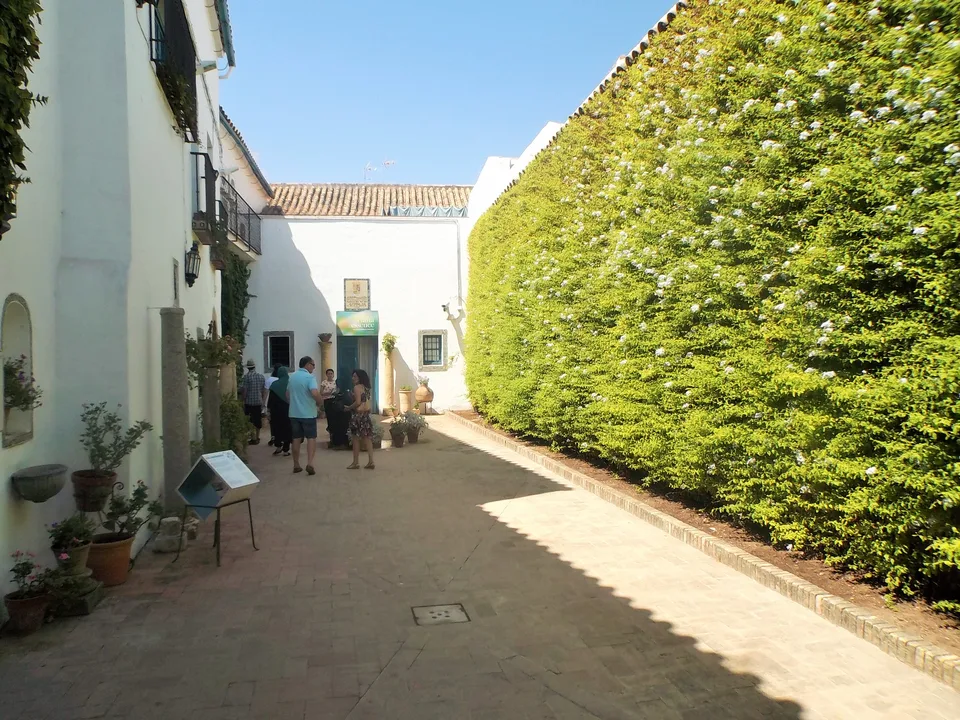
Córdoba’s courtyard tradition concerns occupied homes and the work of their residents. UNESCO’s account of the Fiesta of the Patios recognises that living tradition, inscribed in 2012. Respect closed doors and requests about photography; the presence of flowerpots does not make a private entrance an invitation to walk inside.
The official festival website advertised 4–17 May for its 2026 edition. Those dates are past, and they should not be carried forward as next year’s schedule. If courtyards are the purpose of your trip, establish the next published programme before committing to non-refundable accommodation. Outside the festival, check specific opening arrangements instead of assuming that competition houses remain accessible.
Palacio de Viana gives a more predictable ticketed alternative, with twelve patios and separate palace visits. The patio ticket is €8.50, the palace visit €9 and the combined ticket €14. The palace tour lasts about forty minutes in Spanish, with written information in English and French. Personal photographs are permitted in the patios but not inside the palace. Ask about the recommended accessible route and lift if required; choose a ticket for the areas you actually want to see.
Give Medina Azahara its own morning
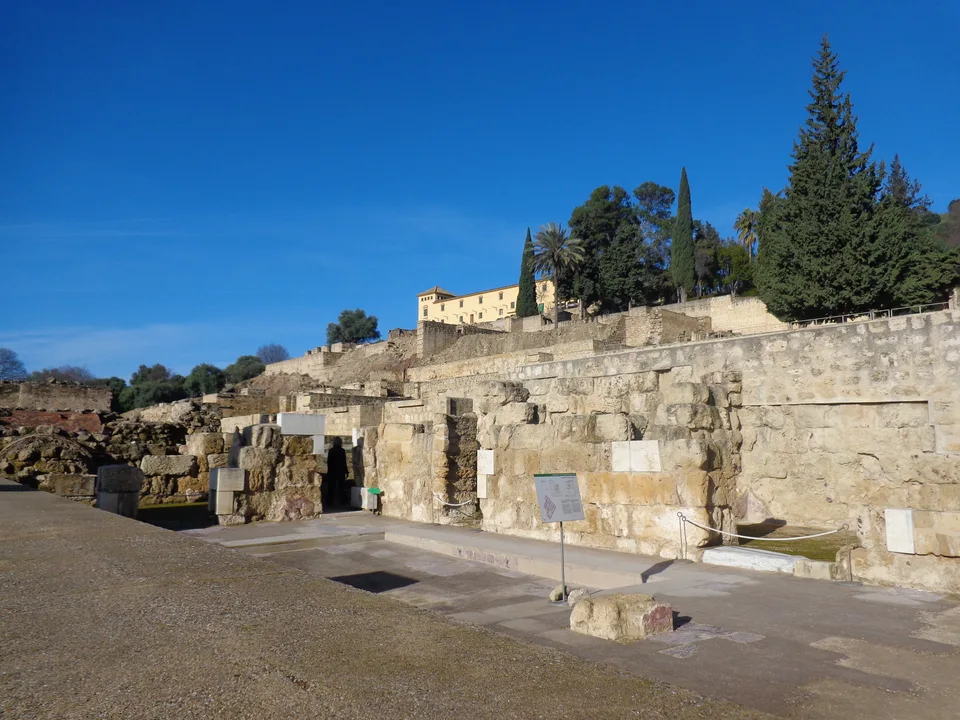
Outside the centre, Medina Azahara offers a different scale of encounter: the remains of a planned caliphal city. It is a separate UNESCO World Heritage property, inscribed in 2018, rather than another neighbourhood inside the historic-centre inscription. Go for archaeological context and the relationship between buildings and landscape, allowing time to understand what survives.
The Andalusian museum service’s visitor information recommends about two and a half to three hours for the complete visit. Start at the museum, where visitors travelling independently in parties smaller than ten can collect admission without a prior reservation. Groups of ten or more must reserve. Admission is free for documented EU citizens and €1.50 for other nationalities.
The shuttle between the museum and archaeological site is a separate charge: €3 return at the general rate. It normally runs every fifteen to twenty minutes, with the final outward departure an hour before closing. This is not transport from central Córdoba. Arrange that first leg separately and allow for both journeys. Check seasonal opening and the current accessible areas; a historic photograph is not evidence that a particular hall is open today.
Getting there without a misleading connection
Córdoba has its own airport. Aena’s current destination list shows Barcelona and Gran Canaria, operated by Vueling and Binter. That limited list makes it worth comparing other arrival airports, but it is inaccurate to describe Córdoba as having no commercial air service. Confirm operating dates directly before shaping an itinerary around a flight.
For Málaga arrivals, Aena’s rail information identifies the C1 airport connection to Málaga María Zambrano, approximately eight minutes on the local train. Continue from there using a separately checked onward service. The airport train itself does not take you to Córdoba. Allow for walking between services and the consequences of a delayed flight.
Seville is another airport to compare. Its EA airport bus currently costs €6 for a single journey; the €8 return is valid only on the day purchased. Plan the onward station transfer as part of the journey. Use Renfe’s current journey planner for Córdoba connections, departure stations and fares, checking whether your selected itinerary requires changes or replacement transport. Compare the complete arrival time and total ticket cost, rather than the flight price alone.
Walking, buses and a manageable daily pace
Build central sightseeing around short groups of visits, with a return to your accommodation when that helps. A route that looks compact on a map can become tiring when every stop involves standing, queuing and walking on hard surfaces. Carry only what you need for the next part of the day, especially when an attraction restricts bulky bags.
Aucorsa’s tourist bus card is listed at €5 for twenty-four hours or €10 for seventy-two hours. Check purchase arrangements and conditions with the operator. A pass is useful only if the routes serve your accommodation and activities; proximity to a stop matters more than a general promise of being well connected. Do not assume that a tourist card covers a separate excursion shuttle.
A car needs its own calculation. Ask the property for permitted access and parking instructions before entering historic streets, and include parking in the room-price comparison. For an ordinary central stay, adding a rental vehicle can create more logistics than it solves. For excursions, price the specific day’s alternatives. Travellers with mobility requirements should ask each venue about gradients, steps and toilet access rather than relying on the word “accessible” in a general destination description.
Rooms, apartments and the cost of comfort
Select accommodation by the building as well as the address. For a short visit, straightforward check-in and luggage storage can be more useful than a large apartment. For a family or longer stay, examine the sleeping arrangements, cooking equipment, laundry and whether everyone can use the living space comfortably once beds are occupied.
Cooling deserves explicit questions. Ask which rooms have air conditioning, whether guests control it, and whether its use has restrictions. Check window orientation, shutters and ventilation. In cooler weather, ask about heating too. A courtyard can be attractive without telling you anything about the temperature or sound insulation of the bedroom above it.
Compare final prices for identical dates, occupancy and cancellation terms. Include cleaning charges, parking and any deposit, and establish whether the booked unit has a lift. Avoid interpreting a low off-season quotation as the normal cost of living in Córdoba. Festival periods, weekends and the particular property can produce very different offers. No single hotel rate or apartment advertisement provides a reliable citywide budget. Keep a written record of the facilities that matter before making a non-refundable booking.
Budget for the trip you intend to take
The verified admission prices give a practical framework without pretending that everyone spends the same amount. Add your chosen paid sights, then accommodation, meals, arrival travel and any excursion transport. Keep separate lines for discretionary extras such as guided interpretation or a tower climb, so you can see what a decision actually adds.
Use current menus and dated accommodation quotations to complete the budget. A room that saves a little each night can cease to be economical if it repeatedly requires taxis, while a central room may justify its price for a brief visit. Compare those trade-offs using the routes you will take rather than a generic “budget traveller” total.
For a month or longer, include laundry, groceries, internet, cooling, heating and any transport subscription. Ask which utilities are included and whether there is a consumption cap. Keep an arrival reserve for temporary accommodation while inspecting housing. Avoid sending a deposit solely because a listing appears unusually inexpensive or claims that another applicant is waiting. A useful budget explains its dates and assumptions; it cannot be inferred from somebody else’s holiday spending.
Seasons change the shape of a day
Summer heat is a central planning issue. AEMET’s Córdoba airport climate normals for 1981–2010 give a July average daily maximum of 36.9°C. That is a historical station average, not the maximum temperature you might encounter or a forecast for your travel dates. Check current forecasts and warnings before setting out.
In hot weather, put exposed walks early, reserve a substantial indoor or accommodation break, and carry water. A full midday schedule that feels efficient on paper can make the trip less enjoyable. Give an outdoor archaeological visit particular thought, including the time spent waiting for transport. A hat and shade strategy belong in the plan alongside the tickets.
Spring and autumn are sensible seasons to consider for a walking-focused visit, while checking the forecast and event calendar for your exact dates. May courtyard interest can affect the kind of stay you want: participation in a festival is different from a quiet architectural break. Winter requires layers and accommodation with appropriate heating. Whichever season you choose, leave enough flexibility to move an outdoor outing when conditions make it uncomfortable.
A realistic three-day plan
Day one: use your booked Mosque-Cathedral slot as the anchor, leaving the rest of the morning for the surrounding Judería. Pause for lunch and a proper break. Later, walk towards the river and Roman Bridge, allowing time to stop rather than treating the crossing as a timed transfer. Keep dinner plans flexible around your energy and arrival arrangements.
Day two: devote the morning to Medina Azahara, including the journey from town, museum reception and shuttle. Return without an ambitious chain of afternoon reservations. An evening stroll or a meal gives the day a gentler finish. If the site’s opening day or weather does not fit, exchange this day with the next.
Day three: visit Viana, choosing patios alone or the combined option according to your interests. Continue through the centre at your own pace. Add the Alcázar gardens only if their current scope appeals and the opening timetable works; leave room for your station transfer. With one day, prioritise the principal monument and surrounding streets. With two, choose between the outlying archaeological excursion and a fuller day inside the city instead of compressing all three days into two.
Moving here starts with housing and the commute
Treat a trial stay as a chance to test ordinary routines. Visit potential homes during the day and evening, assess cooling and street noise, and walk the route to groceries. Ask about furnishings, inventory, repair responsibilities, utility bills and the exact duration and purpose of the tenancy. Holiday accommodation and a habitual home involve different decisions; obtain appropriate advice before accepting unfamiliar contract terms.
For students, the actual campus matters. The University of Córdoba’s Lucano housing information concerns eligible students studying at Rabanales; it should not be read as a general guarantee of accommodation for everyone attending the university. Verify your teaching location before choosing a room or assuming a city-centre address provides the easiest daily journey.
For household administration, consult EMACSA’s water customer service about the property’s supply arrangements, and the council’s municipal address-registration procedure for the documents relevant to your occupancy. Andalusia’s Salud Responde provides health-service information and appointment assistance. Establish your healthcare entitlement and insurance separately. Test internet at the actual address if working or studying from home, and clarify school arrangements before committing to a family move.
Tourism, study and work require different preparation
The Spanish Foreign Ministry’s entry conditions explain the short-stay framework for third-country nationals: generally up to ninety days in any 180-day period across the Schengen area, with visa requirements depending on nationality and circumstances. Count time elsewhere in Schengen too. Visa exemption does not remove the other entry conditions, and a visitor itinerary is not permission to take employment.
The ministry’s national-visa information distinguishes longer stays for work, study or residence, and notes that work can require a national visa even below ninety days. Use the Spanish consulate responsible for your place of residence to identify the applicable route and current documents. EU, EEA and Swiss citizens have a different framework. Municipal registration, a lease or a university offer does not replace the immigration permissions relevant to your case. VisaWand’s consultant listings can help you find professional assistance.
When comparing onward stops or alternative bases, explore the Seville location page, Málaga location page and Granada location page. These location pages help navigation; check each for available editorial coverage. The Spain location directory provides further places to compare before finalising your route.
Official planning resources
Reviewed 17 October 2026. Use the official resources linked throughout this guide for admission, transport, housing and immigration decisions. Prices, services and rules can change; confirm the details relevant to your dates. Photography illustrates the locations and is not a live view.
View all official resources
- UNESCO: Historic Centre of Córdoba
- Córdoba official visitor information
- Mosque-Cathedral official admission and hours
- Mosque-Cathedral visitor rules
- Municipal Alcázar booking: gardens and restoration notice
- UNESCO: Fiesta of the patios
- Official Córdoba patios festival
- Palacio de Viana visits and tickets
- UNESCO: Caliphate City of Medina Azahara
- Andalusian museum service: Madinat al-Zahra visitor information
- Aena: Córdoba airport destinations
- Aena: Málaga airport rail connection
- Aena: Seville airport EA bus
- Renfe: current train times and fares
- Aucorsa: tourist bus card
- Córdoba tourism: local food
- AEMET: Córdoba airport climate normals
- University of Córdoba: Lucano housing eligibility
- EMACSA: water customer services
- Córdoba council: municipal address registration
- Andalusia: Salud Responde
- Spanish Foreign Ministry: entry conditions
- Spanish Foreign Ministry: national visas
Plan the next part of your journey
Explore the Spain guide, browse other cities or compare consultants for your travel and relocation questions.