Visa
Decide whether Casablanca belongs in your trip
Casablanca rewards visitors interested in how Morocco works today: Atlantic commerce, ambitious religious architecture, shopping streets and a transport network built for daily life. Its appeal is spread across distinct districts. You might spend a morning studying carved plaster at Hassan II Mosque, an afternoon following downtown facades and an evening beside the sea. Those experiences require a little planning between them.
Allow two full days for a first visit, with a third if you want a slower coastal afternoon or a regional excursion. That is an editorial suggestion rather than a minimum stay. Travellers chiefly seeking an immersive historic medina may prefer to give more nights to Fes. Casablanca makes particular sense alongside an international arrival, a business appointment or an interest in modern urban Morocco. The national tourism office’s Casablanca introduction is a useful starting point.
Read the city through different periods
The contrast between older streets and twentieth-century urban development gives Casablanca much of its character. Downtown architecture deserves attention at walking speed: look above shop signs for balconies, decorative panels and the relationship between commercial ground floors and apartments above. A visit focused only on the mosque misses this broader cityscape.
Casamemoire, a Moroccan nonprofit founded in 1995, works to safeguard twentieth-century architectural heritage. Its heritage programmes can add context that a list of attractive buildings cannot. Check the current programme before arranging your day; an annual heritage event does not mean guided visits run free every morning. Keep building entrances clear, and treat occupied apartments and offices as working premises even when their facades are remarkable.
Choose a base around your actual journeys
For a short stay, compare the downtown streets around Place des Nations Unies and Casa Port with the coastal districts around Ain Diab. The former is worth investigating if station access and urban walks dominate your plans; the latter if you intend to spend substantial time along the Corniche. Verify the walking route from the exact entrance before booking.
Maarif offers another urban option, particularly for travellers who value shopping and everyday services. The regional tourism board describes the Maarif and Golden Triangle shopping area, but that description is not evidence that every nearby apartment is quiet, luxurious or good value. Ask about street-facing bedrooms, construction and late check-in arrangements. A hotel using “Casablanca” in its name may be inconvenient for your particular combination of mosque, meetings and railway station.
Give downtown a connected walking route
The regional tourism board’s downtown circuit connects Place Mohammed V, central architectural sights and cultural stops. Use it as a framework, then reduce the route to suit your pace. Place Mohammed V offers an opportunity to compare the city’s monumental civic setting with the smaller commercial streets you encounter elsewhere. Public squares and facades are useful anchors when museum opening arrangements remain uncertain.
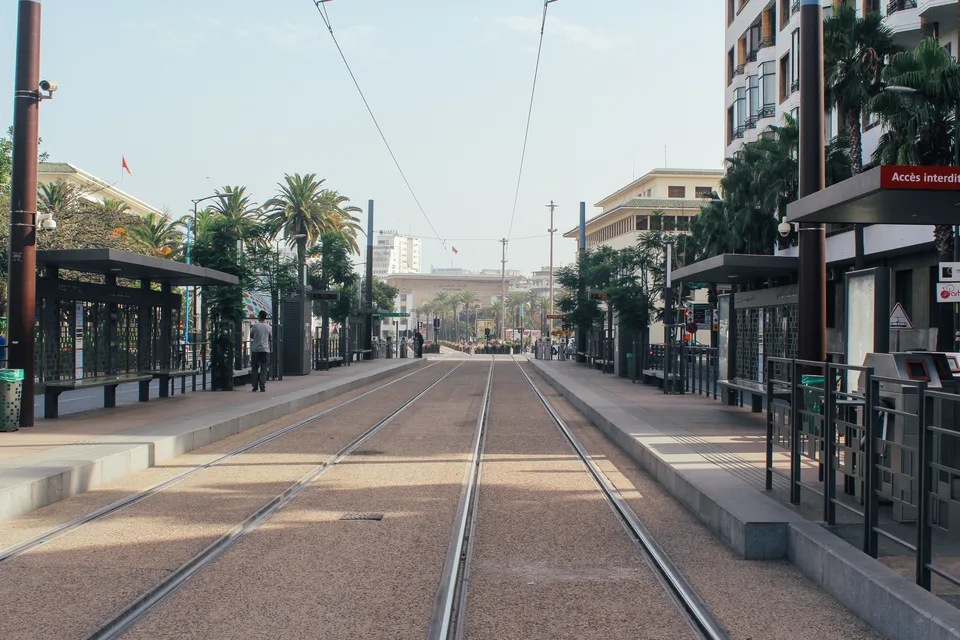
Build in Parc de la Ligue Arabe for a change of pace, and consider the streets around Boulevard Mohammed V if architectural detail is your main interest. Photograph the sequence as well as individual buildings: shopfront, balcony, pavement and tram corridor together explain something about how the centre functions. Leave any scheduled interior visit until you have verified access directly. An administrative building’s presence on the circuit does not make its offices a walk-in attraction, and a theatre exterior does not establish that a performance is available that evening.
Make Hassan II Mosque your fixed appointment
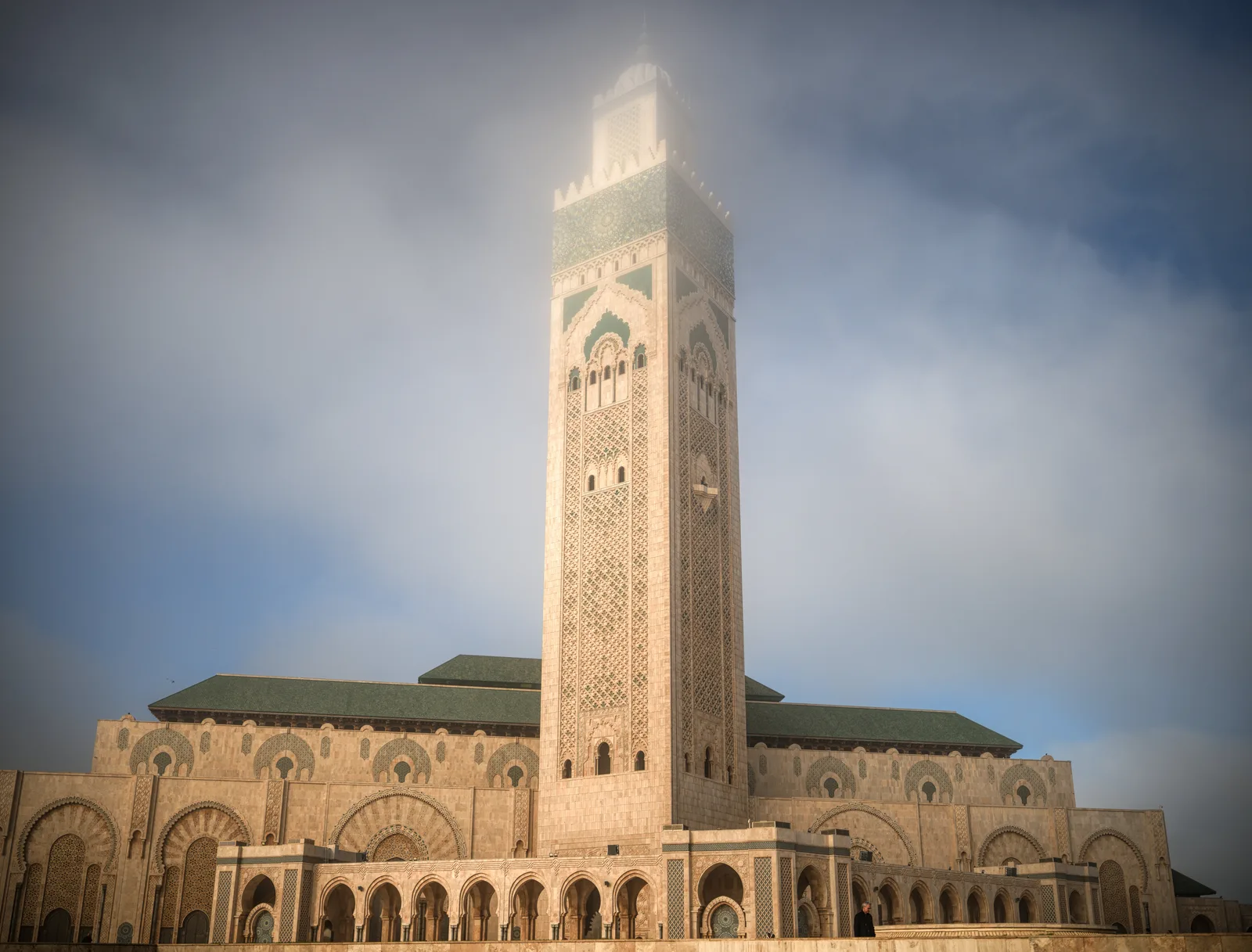
Hassan II Mosque stands beside the Atlantic, its monumental scale balanced by intensely detailed surfaces. The foundation records its inauguration on 30 August 1993. Its history of the mosque explains the combination of Moroccan craftsmanship and modern construction behind a building that can look much older in photographs.
The foundation’s guided-visit page lists a foreign-adult ticket at 140 MAD, with different resident, student and child categories. From 16 September to 14 March, Saturday–Thursday tours are listed at 09:00, 10:00, 11:00 and 14:00; Friday omits 11:00. The summer schedule adds 15:00, while Ramadan has its own timetable. Recheck shortly before visiting.
The published route includes the prayer hall, minaret hall and ablution room; it does not promise a climb up the tower. Clothing must cover shoulders, torso and below the knees, and shoes come off inside. The foundation prohibits video cameras and sound equipment in the mosque. Arrive ready for a guided religious-site visit, allowing time to find the ticketing point and confirm the appropriate tour language.
Add the museum for the craft story
The mosque complex’s museum is a separate decision. Its official museum information lists foreign-adult admission at 30 MAD and ordinary opening periods of 09:00–13:30 and 14:30–17:00, with different Ramadan hours. Do not assume that a mosque ticket automatically covers it, or plan to enter during the midday break.
The museum is worth considering if the decoration makes you curious about materials and making. Its displays include spaces devoted to zellige, plaster and wood. Pairing it with the mosque concentrates one day’s paid sightseeing in the same complex. Visitors with limited time can instead prioritise the guided mosque interior and leave an unhurried interval afterwards to appreciate the building’s setting without rushing straight into another transfer.
Keep the old medina and Habous separate
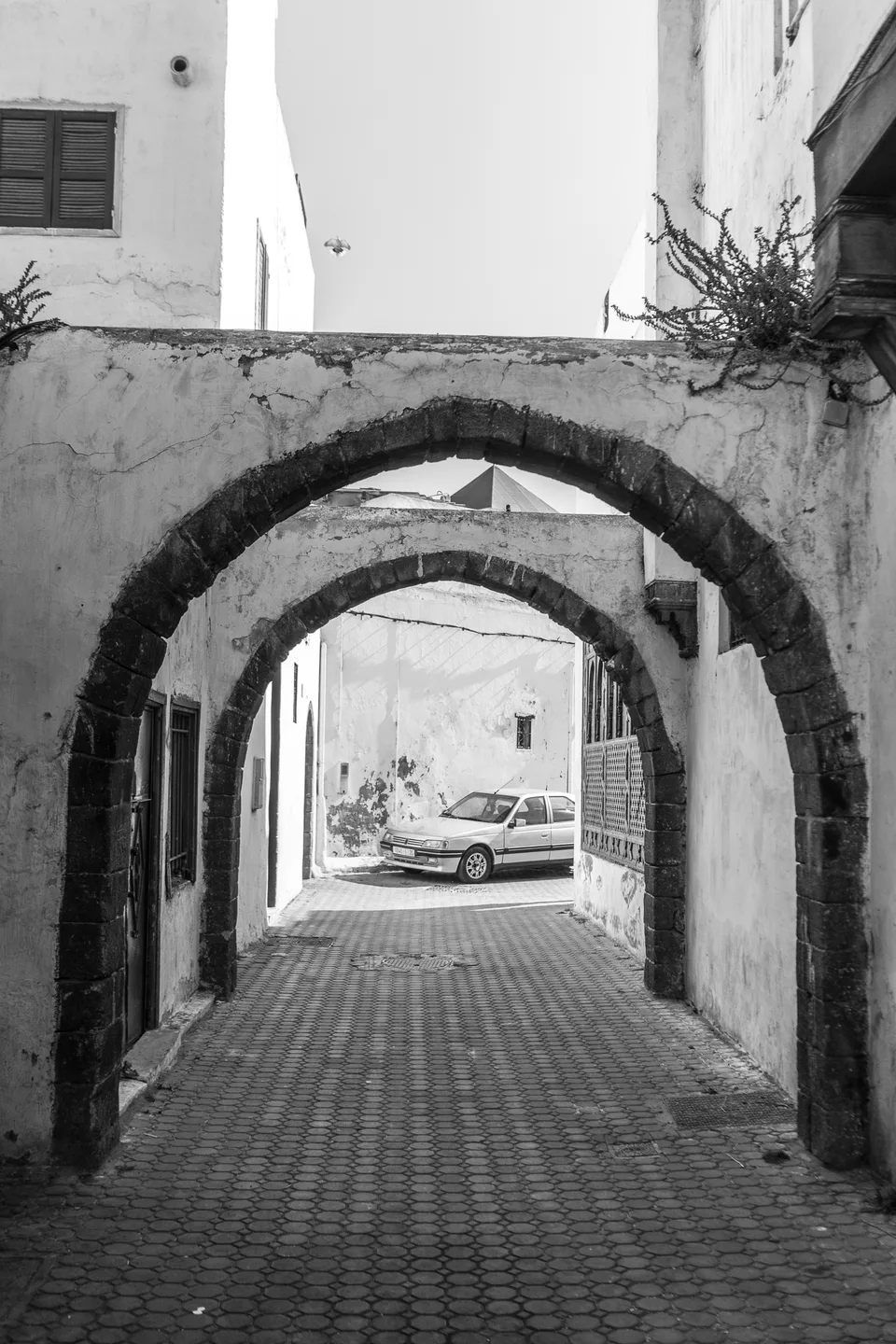
The old medina near the central city and port is one part of Casablanca; Habous, often called the new medina, is another. They should not be treated as interchangeable names for one neighbourhood. In either area, take a purposeful walk with a sensible return point rather than expecting every lane to be a designated visitor attraction.
The regional tourism board’s Habous account places the district’s development in the twentieth century, during the French protectorate. Its arcades, shops and traditional architectural vocabulary make an interesting comparison with downtown streets. Browse books and craft goods if they interest you, checking opening arrangements on the day. Do not infer public access to administrative buildings, palace grounds or religious interiors simply because they appear on a sightseeing map. A good exterior walk remains worthwhile without a promised interior tour.
Give the Corniche an afternoon
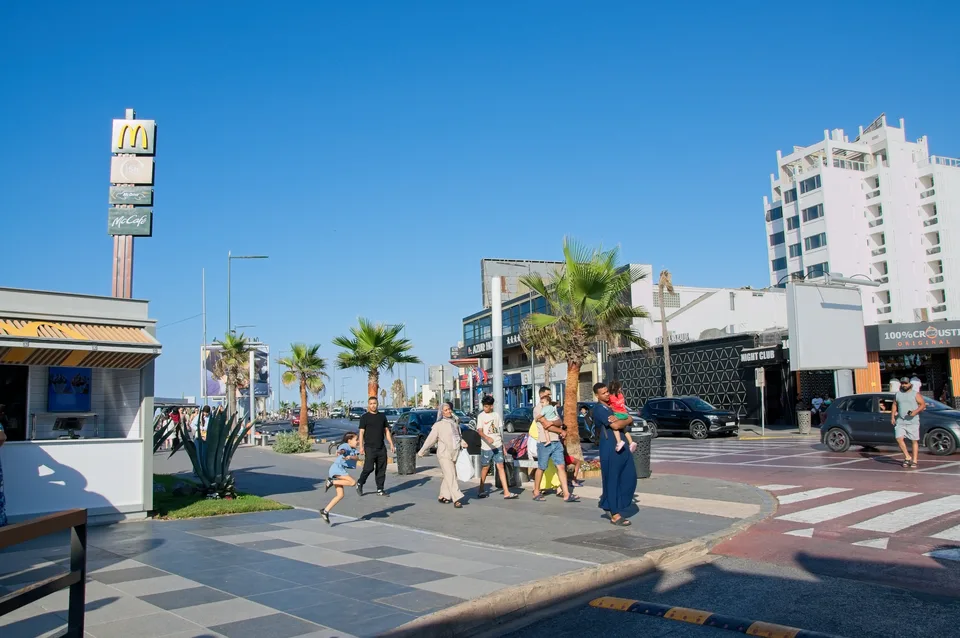
Along Ain Diab, the attraction is the combination of sea air, promenade activity and places to pause. The tourism office’s Casablanca beach information also describes private seaside complexes. Distinguish a public walk from paid access to a pool, beach club or other facility; ask what the charge includes before settling in.
For a first visit, make the Corniche a flexible afternoon rather than building the entire day around swimming. Wind, sea conditions and your return journey can change the experience. Choose a place where you can comfortably stop, eat or turn back. A waterfront hotel may suit this plan, but a sea-facing address alone says little about noise, safe bathing conditions or how easily you will reach tomorrow’s meeting.
Book accommodation for practical comfort
Compare the complete nightly charge, including any separately stated local taxes, breakfast and cancellation conditions. For apartments, establish whether cleaning, electricity and a late arrival cost extra. A low headline rate can become poor value if you repeatedly need longer transfers or cannot leave luggage before an evening departure.
Older buildings merit specific questions about lifts, stairs, bathroom access and heating. On the coast, ask about window seals and ventilation as well as air conditioning. Request recent photographs of the booked room category, not only the lobby. Families should confirm bed arrangements and cooking facilities in writing. Travellers with mobility needs should describe the access they require from street to bedroom; a property’s general accessibility label cannot answer every question about thresholds or lift dimensions.
Plan the airport connection before landing
Mohammed V airport is outside the central city. ONCF’s published airport railway timetable identifies the corridor linking the airport with Bouskoura, Casa Oasis, Casa Voyageurs and Casa Port. Its dated schedule suggests roughly an hour between the airport and Casa Port, but allow additional time for immigration, baggage, waiting and the final journey to your accommodation.
The timetable file could be verified through its indexed official content during this review, although direct access timed out. Use ONCF’s journey planner to recheck services for your travel date. Exact fares and last departures are therefore not quoted here. Casa Port and Casa Voyageurs are different stations: book onward trains from the station actually shown on your ticket. For a late arrival, arrange a licensed taxi or confirmed accommodation transfer with the total price and meeting point agreed beforehand.
There is also an official Alsa airport shuttle, advertised at 50 MAD with cash, bank-card and rechargeable-card payment. The operator describes day-and-night operation, departures every 25–40 minutes and a route serving Casa Port, Place des Nations Unies and Parc de la Ligue Arabe among its central corridors. Check the actual boarding stop and departure information for your arrival. Unlike the rail journey, a road transfer is affected by road conditions; neither published frequency nor an airport connection guarantees an exact door-to-door time.
Use the expanded tram and busway network
Casatramway’s current lines and schedules list four tram routes and two busway routes. T2 serves Ain Diab Plage, T3 serves Casa Port and T4 reaches Parc de la Ligue Arabe. These are useful anchors, but choose your journey with the official network map and the exact destination address. A district name can cover a much larger area than a convenient walk from its nearest stop.
The operator’s fare page lists a single journey at 8 MAD and a two-journey ticket at 14 MAD. A rechargeable card costs 15 MAD initially, with journeys at 6 MAD. Under the published transfer rules, tram-to-tram and tram-to-busway connections use the same pass within two hours of first validation. Check validation instructions when changing services. These rules do not establish that airport trains or ordinary city buses are included.
Fill the gaps with buses, walking and taxis
Casabus operated by Alsa provides a separate urban bus network, with its own route information and fares. Check the particular line rather than applying tram ticket prices to a bus journey. For walking sections, examine crossings and the final approach to your destination; a short straight-line distance can conceal an awkward road layout.
The UK government’s Morocco safety advice recommends licensed guides and care with taxis and valuables. Confirm the meter or agree the fare before setting off, and do not assume every app-based offer is authorised. Keep enough small cash for ordinary transactions without displaying the contents of your wallet. At night, choose a clear pickup location and check the return option before leaving the coast or a restaurant. Transport works best when planned alongside the day’s activities.
Eat according to appetite and location
Casablanca offers an opportunity to combine Moroccan cooking with a coastal meal. Tagines, couscous and pastilla provide starting points; the national tourism office’s food introduction explains the wider culinary context. Ask what a dish contains rather than relying on its name, particularly for vegetarian meals, allergies or a pastilla whose filling is not obvious from the menu.
Choose a place with a clearly stated menu and confirm whether fish is priced by portion or weight. Ask about sides and service charges before ordering if the total matters to your budget. For a busy sightseeing day, an uncomplicated lunch near your next stop may be more useful than travelling across the city for a fashionable address. Leave time for a seated break: the pleasure of a coastal afternoon can disappear if every meal becomes another transfer.
Shop with a purpose and an exit price
Habous suits browsing for books and craft goods, while Maarif and the Golden Triangle offer a different retail experience. Decide whether you are looking for a usable household item, a souvenir or a particular material before comparing prices. For luggage, clothing and electronics, check receipts, warranty arrangements and return conditions as carefully as you would at home.
Where bargaining is part of the transaction, establish the final price before agreeing to buy. You can appreciate a demonstration without committing to a purchase. Inspect the actual item you will take away and check delivery charges separately for anything bulky. Avoid building a budget around an assumed “local price” that has not been quoted to you. A short, focused shopping visit leaves more room for architecture, the sea and meals than an obligation to visit every market.
Build a budget from verified components
A foreign adult choosing both the mosque tour and its museum should currently allow 170 MAD for those separate admissions. Add a two-journey tram ticket and those specific items total 184 MAD. This is an illustrative calculation, not a complete daily budget: accommodation, meals, airport travel and any other purchases remain additional.
Using the advertised airport shuttle in both directions adds another 100 MAD. Keep that calculation separate from any taxi between the city stop and your hotel. Two people sharing a transfer should compare the quoted total against individual tickets, including luggage and the final connection, rather than assuming either option will always be cheaper.
For a longer stay, the tram operator lists a weekly subscription at 60 MAD and a monthly subscription at 230 MAD, with card costs to consider. Compare the applicable product with the journeys you expect to make before paying. Keep taxi allowances separate from public transport and include a contingency for a late return. Rather than quoting an unverified citywide hotel or rent average, collect comparable offers for your actual dates, room type and cancellation needs. That produces a budget you can use.
Match the season to your plans
Casablanca’s Atlantic position gives it a different weather profile from inland destinations. The national tourism office’s climate guidance is useful background, but a city visit still needs a local forecast. For a trip centred on walking, plan layers, comfortable footwear and a rain option instead of treating every coastal day as beach weather.
An indoor mosque visit or museum can anchor a less inviting afternoon, while the Corniche is easier to enjoy when conditions suit lingering outdoors. Check the timing of Ramadan and religious holidays for the year of travel, since service and visitor schedules can change. Recheck attraction hours directly rather than carrying an ordinary timetable into a holiday period. If your itinerary combines Casablanca with inland Morocco, pack for both places rather than assuming one city’s forecast covers the entire journey.
A realistic two-day introduction
On day one, make the mosque tour your fixed morning appointment, then decide whether to add the museum. Have lunch without committing to an ambitious onward schedule. Spend the afternoon around the old medina and downtown, using a short architecture walk that ends near your accommodation or a straightforward transport connection. This leaves room for delays and a proper pause.
On day two, explore Habous, then choose between further central-city architecture and an afternoon on the Corniche. Check the transit route before lunch so that the coast becomes a relaxed destination rather than a hurried detour. With a third day, extend whichever part most interested you or add a regional trip after checking trains. This itinerary is a planning suggestion; opening arrangements, walking stamina and your arrival time should determine the final sequence.
Moving here starts with the commute
For a possible move, use an initial temporary stay to test ordinary journeys at the hours you will actually travel. Compare a downtown or Maarif address with any coastal option against the location of your employer, school or regular appointments. A pleasant weekend visit does not establish that a weekday commute is manageable.
View housing in person where possible. Check plumbing, damp, daylight, street noise, electrical outlets and mobile reception inside the rooms. Ask which utility accounts are active, who pays building charges and how repairs are authorised. Record the inventory and meter readings, obtain written deposit and notice terms, and use qualified local advice for a contract you do not fully understand. Rent figures vary with the individual offer; this guide does not present unverified listings as a reliable market average.
Establish the household before making commitments
For work from home, test the connection in the actual apartment and confirm installation times with the provider. For children, establish school availability, language of instruction, fees and the real school journey before signing a long lease. Locate a suitable grocery shop, pharmacy and clinic from the proposed address, and ask how building access and deliveries operate.
The FCDO’s health guidance advises appropriate insurance and planning for medical needs; it lists 150 for an ambulance. Keep prescriptions and insurer contact details accessible. A consultation or deposit may require payment arrangements different from those at home, so confirm directly with the provider. A successful household budget should include transport, connectivity, utilities, healthcare and periodic travel as well as rent. These checks are especially valuable when an attractive furnished apartment encourages a quick decision.
Separate a visit from work, study and residence
Use Accès Maroc’s official eligibility service with your own nationality, residence status and purpose of travel. The official e-Visa conditions concern specified visitor purposes; an electronic visitor authorisation should not be treated as permission to settle or take employment. Contact the Moroccan consular authority responsible for your application when your circumstances do not fit the published categories.
The British-passport entry guidance and UK government’s living-in-Morocco guide are useful official resources with a specific audience. Their British visa-free allowance does not apply automatically to other passports. Longer residence involves the relevant Moroccan authorities, while employment and study require their own checks. Obtain the correct advice before accepting work or relying on a course place as a residence route. Renting or buying a home does not itself grant permanent residence. VisaWand’s consultant directory can help you find professional support for your circumstances.
Compare the next stop with the trip you want
For a deeper historic-city visit, continue to Fes; for a different mix of major sights and accommodation, compare Marrakesh. Travellers whose priority is a longer coastal holiday can also consider Agadir. None should be added as a casual extra simply because it appears on the same country map: check journey times and how many nights remain.
For a nearby alternative, use the Casablanca-Settat tourism board’s destination information to investigate Mohammedia or El Jadida, then verify access and opening arrangements for the specific outing. VisaWand’s Morocco country guide provides broader planning context, while its Morocco location directory helps identify other places without implying that every listing has a finished article. The Morocco destination page is another starting point for country-level exploration. Keep Casablanca’s own days spacious enough to see the city between its headline stops.
Official planning resources
Reviewed 15 October 2026. Use the official resources linked throughout this guide for admission, transport, housing and immigration decisions. Prices, services and rules can change; confirm the details relevant to your dates. Photography illustrates the locations and is not a live view.
View all official resources
- Moroccan National Tourist Office: Casablanca
- Hassan II Mosque Foundation: history
- Hassan II Mosque Foundation: guided visits
- Hassan II Mosque Foundation: museum visits
- Casablanca-Settat tourism: Habous
- Casamemoire: architectural heritage
- Casablanca-Settat tourism: Maarif and the Golden Triangle
- Moroccan National Tourist Office: Casablanca coast
- Casatramway: lines and schedules
- Casatramway: tickets and subscriptions
- Casatramway: transfer rules
- Casatramway: network map
- Casabus operated by Alsa: route planning
- ONCF: Casa Port–Mohammed V airport timetable
- ONCF: rail search and booking
- Moroccan National Tourist Office: climate and seasons
- Moroccan National Tourist Office: Moroccan food
- FCDO: safety and local laws
- FCDO: health
- FCDO: living in Morocco
- Accès Maroc: official eligibility checker
- Accès Maroc: official e-Visa conditions
- FCDO: British-passport entry requirements
- Casabus operated by Alsa: airport shuttle
- Casablanca-Settat tourism: downtown walking circuit
Plan the next part of your journey
Explore the Morocco guide, browse other cities or compare consultants for your travel and relocation questions.