Visa
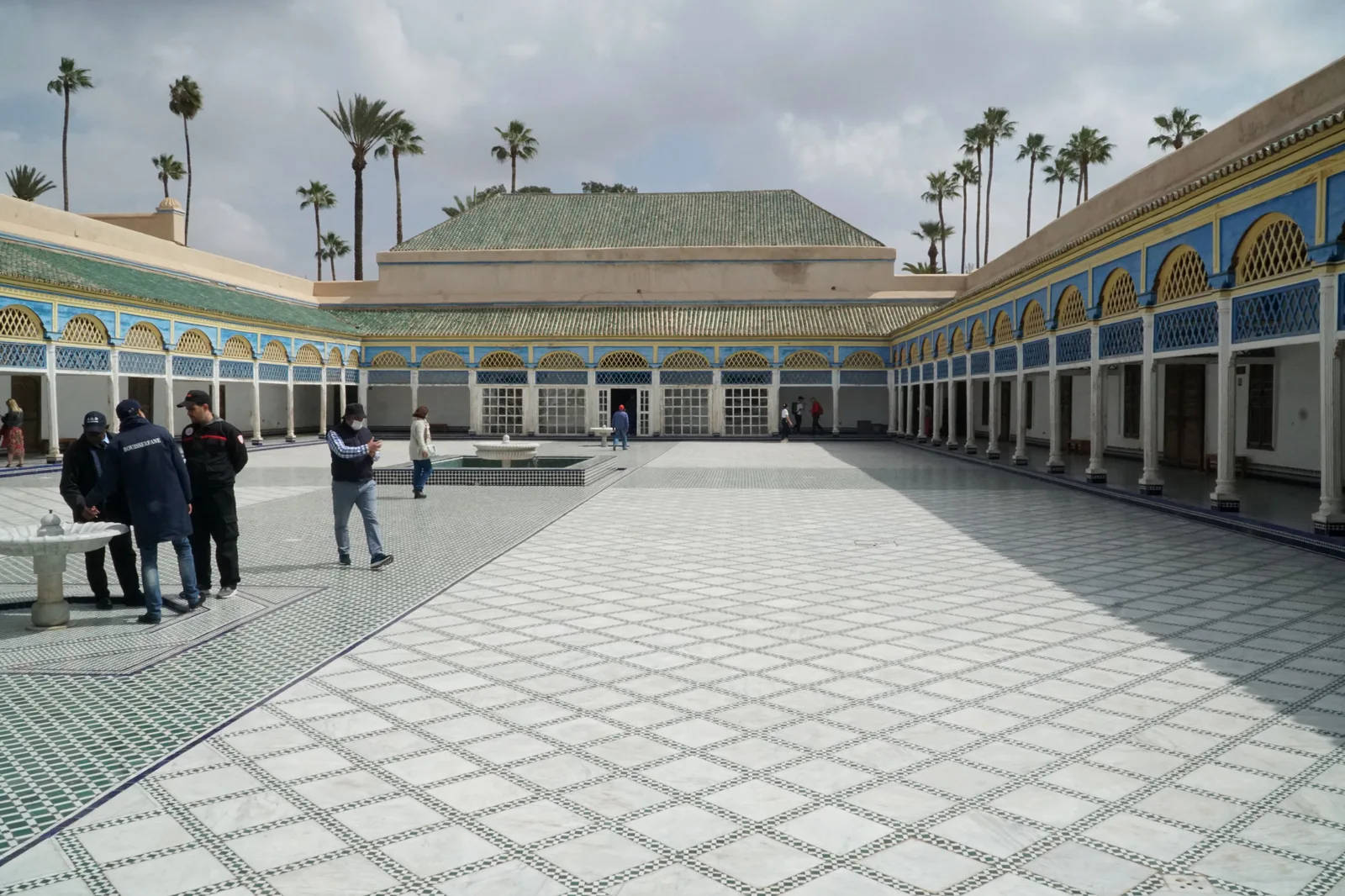
Decide which Marrakesh you want to experience
Marrakesh can mean a courtyard breakfast inside the medina, a succession of palaces and gardens, or a hotel holiday with occasional trips into the old city. Those are different stays. Choose your base and daily rhythm accordingly: a resort pool does not put the souks outside your door, while a secluded riad may still involve a walk with luggage through busy lanes.
The national tourism overview sets out the city's contrast between its historic centre and newer neighbourhoods. For a first visit, allow three full days before adding excursions. If considering a move, extend the reconnaissance beyond the attractive centre to include an ordinary commute, groceries, healthcare and the condition of possible homes. The pleasures of a short break are only part of that decision.
Read the city's history through its buildings
The UNESCO record for the Medina of Marrakesh dates the city's foundation to the Almoravids in 1070–72. It later became an Almohad capital, exerting influence across North Africa and into Andalusia. The Koutoubia, ramparts, gates and gardens make that history visible; later monuments include the Ben Youssef Medersa, Saadian Tombs and Bahia Palace. The medina entered the World Heritage List in 1985.
Notice the different forms of space rather than treating every monument as another decorated courtyard. A madrasa organised student life, a palace displayed authority, and market lanes supported production and exchange. The medina remains a living neighbourhood. Give residents' doorways and working shops the consideration you would expect at home, and ask before making people the subject of photographs.
Stay in the medina for walking and atmosphere
A medina address suits visitors who want early access to the old streets and evenings around Jemaa el-Fna. Yet the medina is not one uniform hotel district. Compare the actual walking route from your riad to the places you intend to visit, and ask which vehicle-accessible meeting point the property uses. A short straight-line distance can conceal several turns and a luggage-carrying stretch.
For an evening arrival, send the property your flight details and agree what happens if it is delayed. Keep the meeting-point name and a telephone contact available offline. If stairs are difficult, request a ground-floor room and confirm whether reaching breakfast or the terrace still involves steps.
Ask for arrival instructions that work after dark and establish whether staff will meet you. Check internal stairs, room ventilation and whether a roof terrace is essential to your choice. A small courtyard property can offer intimacy while transmitting sound between rooms. Request the precise room category, not simply the most attractive photograph of the building. For anyone needing step-free access, obtain details of the entire route, including the entrance.
Compare Gueliz, Hivernage and an outlying hotel
Outside the ramparts, Gueliz and Hivernage provide the wider avenues and contemporary accommodation highlighted by the national tourist office. Gueliz is worth considering when restaurants, shopping and everyday city errands matter. Hivernage offers another hotel-oriented base. Neither eliminates the need to plan journeys into the medina; compare access to your specific destinations rather than relying on a neighbourhood's reputation.
A property farther out can make sense for space, a pool or a deliberately contained holiday. Count the transport cost and time for each return to town before comparing room rates. Prospective residents should test several areas instead of assuming a holiday favourite will suit a school run or workplace. Start with VisaWand's Morocco country guide, then use the Morocco location directory to compare other places without treating every directory entry as a completed travel guide.
Return to Jemaa el-Fna at different times
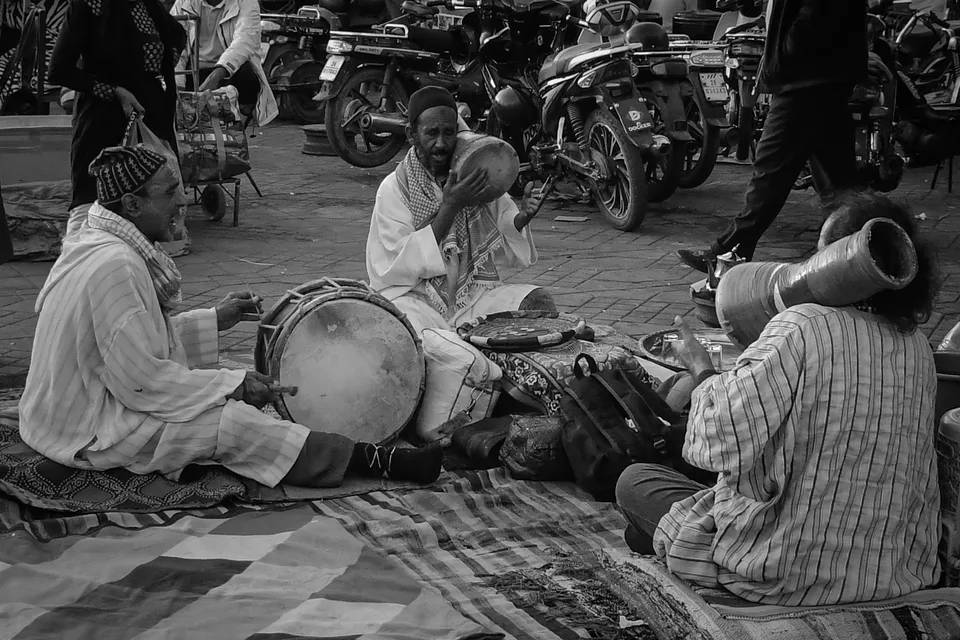
Jemaa el-Fna is more revealing as a changing public space than as a single evening appointment. Pass through during daylight to understand its position, then return later when your energy and interests allow. UNESCO recognises its cultural space alongside the surrounding historic city. Musicians, oral traditions and public performance are part of its importance, not merely decoration for a restaurant view.
Keep the encounter respectful and unhurried. Ask permission before photographs of people and establish any expected payment before accepting a service or posing. If you want a guided introduction, use someone with an official badge and local authorisation, as recommended in the official safety advice. Keep your accommodation's directions available for the return; unsolicited advice about a supposedly closed route is not a reason to abandon your plan.
Explore the souks with a purpose and a stopping point
The regional tourism guide to the souks provides useful orientation around Semmarine and the adjoining trading lanes. Textiles, slippers, leather goods and metalwork offer different reasons to browse. Pick one or two things you genuinely want to understand or buy, and leave time to compare materials and workmanship. Shopping is more enjoyable when it does not become an obligation to purchase at every stop.
Agree the item, quantity and final price clearly. For a substantial purchase, obtain a written description, receipt and delivery terms; check what shipping, insurance and possible charges at home add to the cost. Ask about provenance rather than assuming every object is locally handmade or antique. Take breaks away from the busiest passageways. A shorter, attentive circuit often leaves a better impression than pressing on after heat or negotiations have become tiring.
Look closely at Ben Youssef Medersa
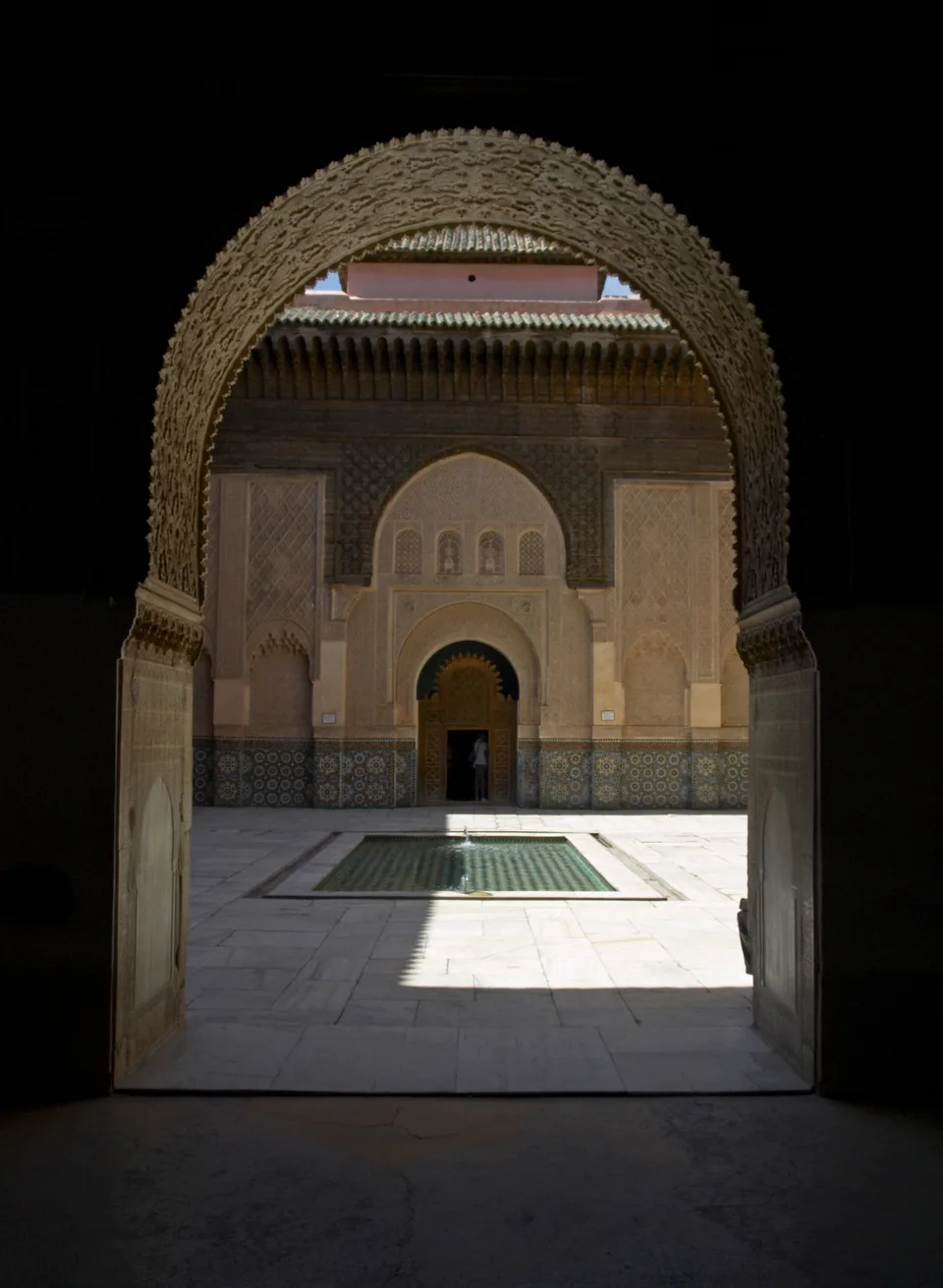
Ben Youssef offers a concentrated encounter with carved wood, zellij and sculpted plaster. The medersa's official website dates its Saadian construction to 1564–65 and explains the building's restoration. Look between the grand central space and the rooms once used by students: the contrast helps make sense of the institution rather than reducing it to a photographic backdrop.
The published admission price is 50 MAD, with 10 MAD listed for children under 12. The site currently says its online ticketing is under maintenance and directs visitors to buy at the entrance. It lists daily opening from 09:00 to 19:00; check for seasonal or special notices before a late visit. Do not confuse a historic madrasa visit with permission to enter a functioning mosque nearby. Allow enough time to stop and observe detail without blocking others' passage.
Choose your southern monuments rather than rushing them
Bahia Palace rewards attention to its sequence of courtyards, gardens and decorated rooms. Its nineteenth-century domestic and ceremonial spaces offer a different experience from the scale and remains of El Badi. The Culture Ministry's Bahia ticket page lists 100 MAD for a foreign adult; the El Badi ticket page also lists 100 MAD. They are separate admissions, not two names for the same palace or a single ticket.
The Saadian Tombs add a funerary monument to the southern circuit, again with a listed foreign-adult price of 100 MAD. Choose two substantial visits with a meal and rest between them, rather than making three consecutive queues the whole day. Check current access before travelling, particularly if one room or architectural feature is your main reason for visiting. Historical photographs do not establish which areas are accessible today.
Treat Koutoubia as an exterior landmark
Koutoubia's minaret is a useful point of orientation and a major element of the historic skyline. Its presence also reminds visitors that Marrakesh's religious buildings are not all visitor attractions. Plan an exterior view and time in the surrounding public space rather than expecting an interior sightseeing circuit.
France Diplomatie's cultural guidance states the restriction on non-Muslims entering Muslim places of worship. Respect entrances, worshippers and instructions at the site. Modest clothing is appropriate around religious places, and photography should not interrupt prayer or access. This distinction makes itinerary planning easier: paid historic monuments and a functioning mosque have different visiting arrangements. You can appreciate the minaret's relationship to the city without needing to turn every building into a bookable experience.
Reserve Majorelle through the actual ticket office
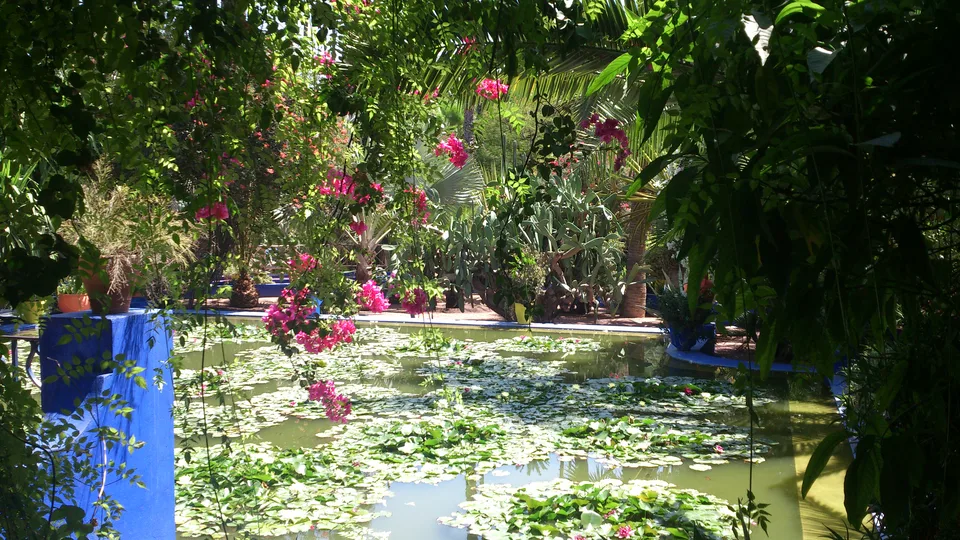
Jardin Majorelle is a planned garden with an artistic history, not simply a blue wall for photographs. The garden's own account describes Jacques Majorelle's planting from 1922 and the purchase by Yves Saint Laurent and Pierre Bergé in 1980. Leave space to look at planting, water and the relationship between colour and shade.
Use the official Majorelle ticket office and select the sites you actually want. Standard garden admission is 170 MAD; museums require the appropriate option. At review, the booking page listed the garden open daily from 08:00 to 17:30, last entry 17:00. Its current hours differ from other operator pages, so confirm your selected date and time. The nearby Yves Saint Laurent museum has a separate schedule and is closed on Wednesdays. Do not assume garden access includes every museum or private area.
Find a different garden experience in Mouassine
Le Jardin Secret provides a garden visit within the medina rather than another journey to the newer city. Its grounds and historic architecture make it a useful pause during a walking day. Choose it because you want that change of pace, not because every garden must be included in a short stay.
The operator's practical information lists standard entry at 100 MAD and the tower as a separate 40 MAD charge. Its Moroccan-citizen reduction explicitly excludes foreign holders of a Moroccan residence permit. The operator describes accessible grounds with exceptions for the tower and one café, so ask about your route if access is important. Published pages differ on some seasonal closing times; confirm before relying on a late arrival. Budget for the optional tower only if its access and viewpoint suit you.
Eat with curiosity and ask what is included
Tanjia is a local speciality worth looking for: the regional tourism account links the dish and its cooking tradition closely with Marrakesh. Rather than ordering by a familiar-sounding name alone, ask what the kitchen is serving, how portions work and whether advance ordering is necessary. Spread culinary exploring over several meals, leaving room for a simpler lunch when a long sightseeing day demands it.
Check whether bread, drinks and other items brought to the table are included in the quoted price. Establish the total before agreeing to a menu or shared meal. For serious allergies, explain the ingredient and cross-contact concern clearly: official health guidance warns that allergen information is not consistently supplied. A recommendation, attractive rooftop or busy food stall cannot guarantee that a kitchen can meet your particular needs.
Build a budget from admissions and actual quotations
At the reviewed standard prices, Ben Youssef and Le Jardin Secret together cost 150 MAD before extras. Majorelle's garden alone costs 170 MAD. Three southern monuments at the foreign-adult rate total 300 MAD. Those choices make a measurable difference before you add accommodation, meals and transport. Calculate for your group's ages and eligibility rather than multiplying an adult price indiscriminately.
Compare complete room quotations, including breakfast, any applicable taxes, cancellation conditions and transfers. A cheaper room requiring frequent cars can change the balance, while an expensive-looking riad may include services you would otherwise buy. Keep separate allowances for shopping and excursions so they do not obscure the everyday cost of being in the city. The Morocco destination page can help locate relevant consultation services; check the scope and fee before paying for advice.
Arrange the airport transfer around your final approach
Marrakech Menara is the airport serving the city, but the final approach to a medina property matters as much as the airport journey. Give your driver the meeting point agreed with your accommodation and clarify who handles the last walking stretch. For a late arrival, arrange the handover in advance instead of assuming a car reaches the riad's door.
The regional tourism transport page lists airport bus 19 at a reference fare of 30 MAD per trip, with daytime and evening operation. Confirm the stop and current last departure for your arrival. For a taxi or private transfer, obtain the full quoted fare, vehicle capacity and luggage terms; do not rely on an old citywide flat-price claim. A prearranged meeting is particularly useful when travelling with children, restricted mobility or several bags.
Combine walking with realistic city and rail journeys
Use walking for linked medina sights when the heat, surfaces and your mobility allow. Beyond that circuit, compare a suitable bus with a licensed taxi and establish the fare or meter arrangement. Booking through an app does not itself prove a vehicle is licensed to carry passengers. Repeated short car trips may be convenient, but include them in the accommodation comparison.
For onward travel, ONCF's official booking service provides dated timetables, fares and class choices. Marrakesh connects into the national rail network; check the actual service and any interchange for your destination. Do not assume a high-speed service runs all the way to the city because it appears in publicity about network expansion. Compare the full journey, including the station transfer, and leave room for disruption before an international flight. Check ticket conditions before choosing the cheapest fare.
The booking service was not consistently reachable during our checks. If it does not load, confirm your options at an ONCF station ticket office before committing to onward connections.
Match the season to your preferred rhythm
The official regional planning information describes the contrast between hot summer afternoons and cool winter mornings and evenings. Spring and autumn are sensible starting points when walking is the priority, but weather on your dates still matters. Build summer days around early visits, shade and rest; in winter, ask about effective room heating as well as daytime sunshine.
Ramadan changes the timing of meals, services and daily life. Check current opening notices and ask your accommodation about practical arrangements while respecting local customs. Mountain conditions are a separate question from city weather. Rain, cold or road restrictions can change an excursion even when a city morning looks promising. Flexible reservations are more useful than relying on claims of guaranteed sun or a fixed list of perfect months.
Three days that leave room to enjoy the city
Spend day one understanding the medina: a manageable souk circuit, Ben Youssef and an unhurried lunch. Return to Jemaa el-Fna later if you have the energy, keeping the route home clear. Leave purchases that require serious comparison until you understand what is available.
On day two, choose Bahia and either El Badi or the Saadian Tombs. Include an exterior Koutoubia stop and a substantial rest, rather than adding every garden as well. On day three, use a prebooked Majorelle slot, with the appropriate museum option if wanted, then spend time in Gueliz. Le Jardin Secret can replace another visit for a more compact medina day. Check Wednesday museum closures when arranging the order. Add an excursion on a fourth day rather than compressing it into a departure morning.
Choose an excursion for its actual landscape
The regional Agafay guide describes a rocky desert of hills and open ground outside Marrakesh. Choose it for that landscape and the particular camp or activity you have researched. It is not a substitute description for the Sahara's large sand dunes. Compare transport, meal inclusions and optional activities before accepting a package headline.
An Atlas outing deserves its own weather and road check. For hiking, hire a professional guide and confirm that your insurance covers the intended activity and altitude. For a different overnight base, consider Essaouira's Atlantic coast and historic town. Its port and seaside setting offer a clear change of emphasis. Decide whether you want a day with substantial road time or a separate stay, rather than promising yourself the complete experience in a brief stop.
VisaWand's Essaouira location page provides another way to compare that destination and related services. Keep the two bookings coordinated: a transfer quotation should name the actual properties and the pickup time, especially when a walking approach is involved.
Test housing against everyday needs
Use a temporary base while inspecting homes and their surroundings. Mubawab's Marrakesh apartment advertisements can help establish a shortlist, but asking prices are not completed rental transactions or proof of availability. Confirm whether a quoted amount is for a daily holiday let or a longer tenancy, furnished or unfurnished, and which fees are separate.
Inspect ventilation, cooling, winter heating, water pressure and signs of damp. Check the entrance, lift and stairs yourself. Obtain a comprehensible written agreement covering the deposit, notice, repairs, inventory and return of funds; clarify any agent's fee before payment. Photograph the condition at handover and obtain receipts. For families, verify school admission, language of instruction and transport directly before choosing a home around an assumed place. A convenient holiday address may be inconvenient for a regular workplace or campus.
Check utilities, commuting and household setup
Test your actual commute at the relevant time, including where a car can stop and how far you must walk. A medina home can involve carrying groceries along lanes; a more distant apartment can involve repeated transport spending. Try the routine before signing a long agreement. Ask where essential shopping and a suitable pharmacy are located.
Separate rent from electricity, water, internet, management and cleaning charges. Establish meter readings, billing evidence and who holds the accounts. Test the connection where you intend to work, rather than relying on reception-area Wi-Fi. Check cooking equipment, laundry arrangements and furniture so that your arrival budget includes making the home functional. Keep copies of tenancy and address documents: longer-stay administration may require evidence of where you live, and the acceptable documentation should be confirmed with the responsible office.
Arrange healthcare before it becomes urgent
The official health guidance gives 150 as the ambulance number and recommends accessible funds alongside insurance covering treatment and possible evacuation. Identify a provider suitable for any ongoing condition, then check payment arrangements with both the clinic and insurer. Do not assume a short-stay policy covers planned treatment or a long period of residence.
Bring an appropriate supply of prescribed medicine and verify how to obtain continuing prescriptions locally. A pharmacy may need to refer you to a Moroccan doctor if the exact medicine is unavailable. For a move, establish healthcare arrangements before giving up cover elsewhere. Keep medical information and assistance contacts accessible to your household. The official living-in-Morocco guidance provides a further planning starting point, particularly for British nationals, while individual eligibility and documentation require direct confirmation.
Separate visitor admission from residence, employment and study
Use Accès Maroc and the Moroccan representation responsible for your passport to establish the appropriate entry route. Requirements depend on nationality and circumstances. The British entry guidance, for example, describes visa-free tourism for British citizens for up to 90 days; that is not a universal entitlement. Check the admission granted and arrange any longer stay before it expires.
Morocco's official immigration law distinguishes visitor, student and authorised professional circumstances. A tenancy or tourist entry does not by itself authorise work or establish permanent residence. For employment, the Spanish government labour guidance on hiring in Morocco explains the employer's role in obtaining authorisation on the foreign worker's contract. Study requires coordination with the institution and relevant authorities. Discuss your own documents, dependants and intended activity with an appropriately qualified adviser; VisaWand's consultant listings can help identify relevant services. Confirm qualifications, fees and scope, and verify application requirements with the competent authority.
Official planning resources
Reviewed 14 October 2026. Use the official resources linked throughout this guide for admission, transport, housing and immigration decisions. Prices, services and rules can change; confirm the details relevant to your dates. Photography illustrates the locations and is not a live view.
View all official resources
- National tourism city overview
- UNESCO Medina of Marrakesh heritage record
- Regional tourism transport overview
- Moroccan official entry authorisation portal
- British official Morocco entry guidance
- Jardin Majorelle history, prices and accessibility
- Official Jardin Majorelle booking and current opening information
- Ministry of Culture Bahia Palace tickets
- Ministry of Culture El Badi Palace tickets
- Ministry of Culture Saadian Tombs tickets
- Ben Youssef Medersa official visitor information
- Le Jardin Secret official admission and access
- Regional tourism tanjia cultural background
- Regional tourism souk orientation
- Regional tourism seasons and arrival context
- Regional tourism Agafay landscape
- ONCF official train booking and timetable service
- Official Morocco safety, local customs and road guidance
- Official healthcare, emergency and allergy guidance
- Official British residence and household planning guidance
- Moroccan immigration law 02-03 official text
- Spanish government labour office guidance on Moroccan employment authorisation
- Mubawab Marrakesh apartment advertisements
- France Diplomatie Moroccan cultural and worship-site guidance
- National tourism Essaouira coastal alternative
Plan the next part of your journey
Explore the Morocco guide, browse other cities or compare consultants for your travel and relocation questions.