Visa
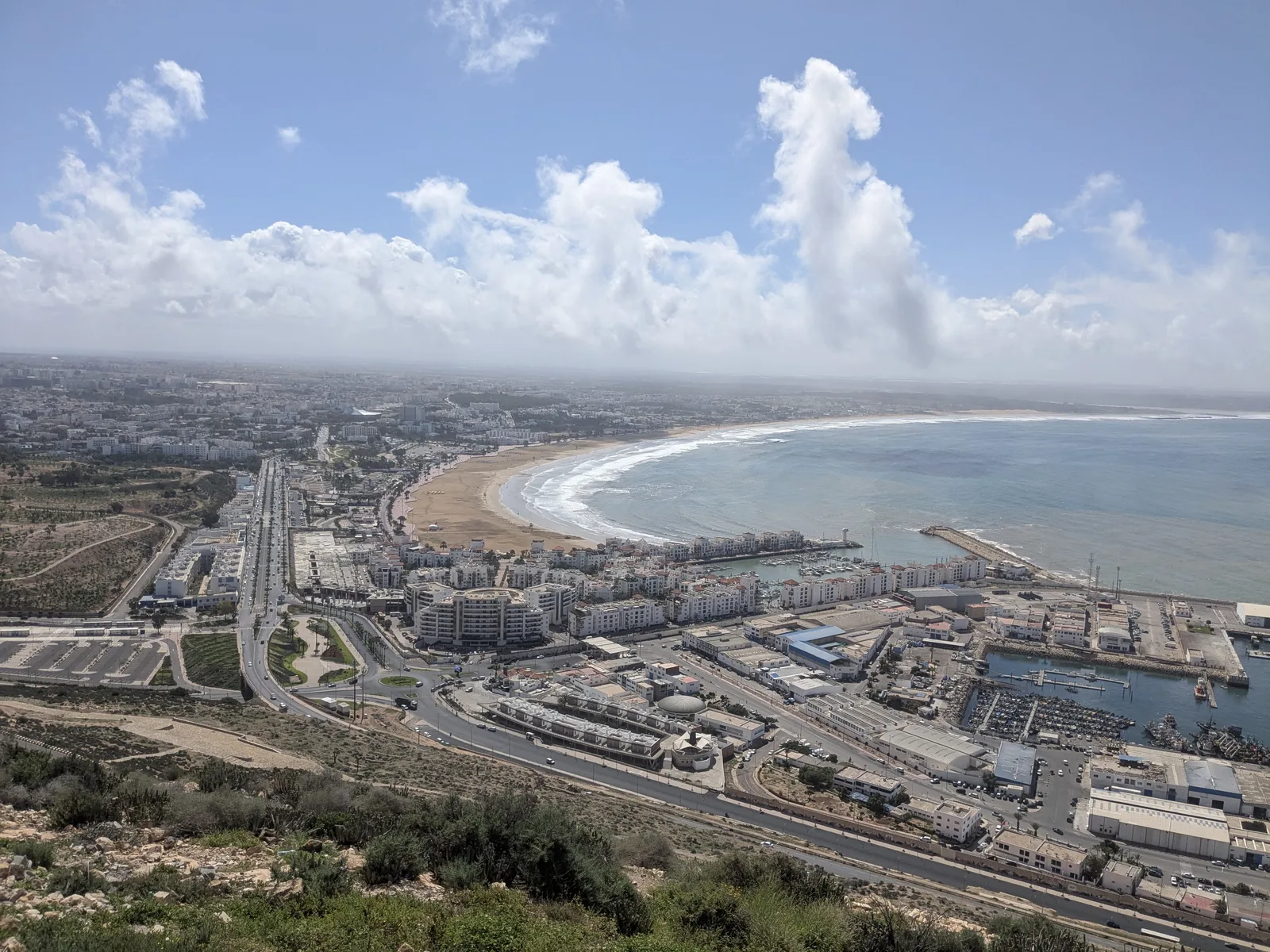
Choose Agadir for an Atlantic base
Agadir makes most sense when the sea is part of the daily routine. You can walk beside the bay, spend a morning shopping, then look back over the city from the hilltop kasbah. It suits a holiday with space between activities and a longer stay where ordinary services matter alongside the beach. It is a different proposition from a trip built around the lanes of an old imperial city.
The Moroccan tourism office's Agadir introduction places the resort on the Atlantic coast, with Taghazout among the surrounding destinations. They are connected places to compare, rather than interchangeable hotel addresses. Allow three full days for a first look at Agadir and one chosen excursion; stay longer for surfing or a slower coastal break. Use VisaWand's Morocco country guide for the national context, then choose your local base around the journeys you will actually make.
Read the rebuilt city through its history
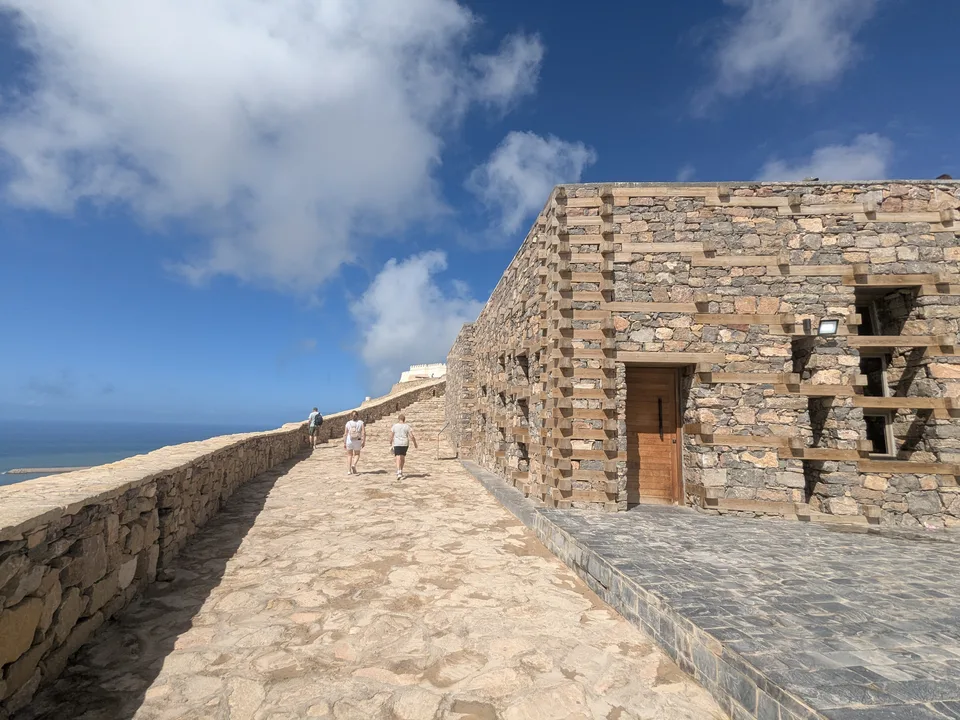
The earthquake of 29 February 1960 is central to understanding Agadir. At Agadir Oufella, the restored heritage landscape is also a place of remembrance. The kasbah's historical account explains the hill's relationship with Portuguese settlement on the coast, Saadian fortification and maritime trade. Its reconstructed gate draws on historical images, surviving evidence and archaeological work.
That history helps explain why a visitor should not expect an intact old town comparable with Marrakesh. Look at the modern city with that distinction in mind, rather than treating its different street pattern as a lack of character. A visit to the hill is more meaningful when the view is connected with the lives and places affected by the earthquake.
Avoid climbing fragile remains or treating memorial ground as an unrestricted backdrop. Follow the marked route, read the interpretation and give the site more time than a quick photograph before returning downhill.
Pick an area by the shape of your day
For a short beach holiday, compare accommodation along the seafront with options around the marina. Check the exact entrance and walking route, rather than relying on a broad description such as central or sea view. A property facing the coast may still involve stairs, road crossings or a longer walk to the sand than its listing suggests.
An inland base can work well if markets, appointments and household errands matter more than stepping outside beside the water. Compare actual routes to Souk El Had and the places you expect to use regularly. Visit a prospective street after dark and during the day before committing to a long rental.
For surf-focused travel, compare Agadir with a separate base north along the coast. Taghazout accommodation should be assessed on its own transport and beach access.
Make the beach a flexible daily pleasure
The bay offers an easy framework for time outdoors: a morning walk, a beach interval or a late afternoon spent watching the water. Decide whether your priority is swimming, a promenade, surfing lessons or simply staying near the sea. Those are different requirements, and one hotel location may not satisfy all of them equally.
Do not mistake a sheltered-looking photograph for a safety assessment. The current government safety advice warns of strong currents, unexpected waves and limited lifeguard cover at many Moroccan beaches. Check local instructions and conditions where you intend to enter, and avoid isolated swimming. Supervise children closely even when other people are in the water.
Ask a watersports provider about instructor qualifications, equipment, group size and insurance before paying. Build in the possibility of rescheduling. A day when the water is unsuitable can still work for a walk, a museum or the market without turning into a lost holiday day.
Visit Agadir Oufella with the right ticket
The kasbah's practical visitor information lists normal opening hours of 10:00–19:00, extending to 20:00 in summer and shortening during Ramadan. Last admission is thirty minutes before closing. Confirm the applicable timetable for your date, particularly if the plan depends on late light or sunset.
For international visitors, the listed base admission is MAD 90 for adults aged eighteen and over, MAD 65 for ages seven to seventeen, and free below seven. Different rates apply to Moroccan nationals and residents; bring the required proof if claiming a concession. The base ticket covers the kasbah interior, while optional interpretation and transport need checking separately.
Choose your ascent and descent before setting out. The site lists walking, cable car, taxis and shuttle access. Ask about the final approach, surfaces and assistance if mobility is a concern. A vehicle reaching the hill does not establish that every part of the visitor route is accessible.
Separate the cable-car fare from the kasbah
The Danialand cable-car operator connects the lower station at Cité Suisse with Agadir Oufella. Its live tariff panel, checked on 15 October 2026, shows a standard adult return at MAD 140 and one way at MAD 100. The resident tariff is different. Confirm your category at purchase; older indexed prices can lag behind the visible tariff panel.
For a standard adult return plus the international adult kasbah ticket, the two listed components total MAD 230 before any other costs. Do not assume a cable-car ticket automatically includes the heritage site's interior. Request the exact inclusions of any package.
Check the last return service and any weather-related suspension before going up. A late-running transport service does not extend the kasbah's visiting hours. If you intend to walk one direction, first confirm the route is open and appropriate for your fitness and the conditions, rather than improvising a descent after dark.
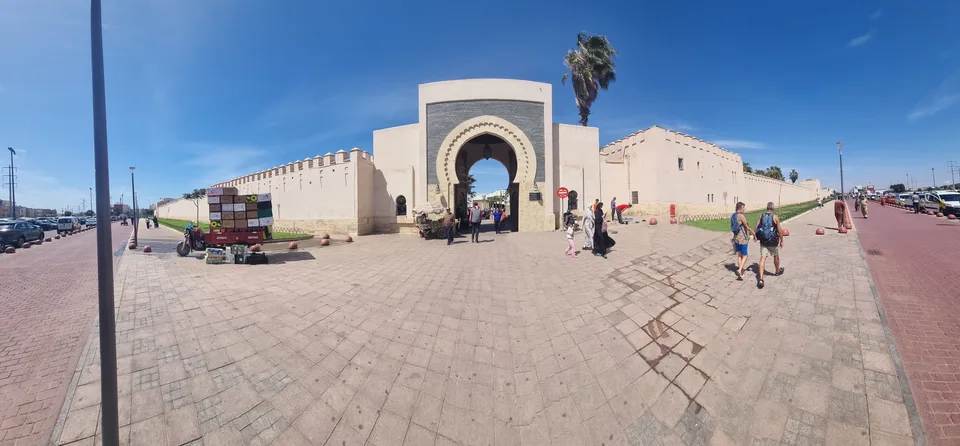
Leave a morning for Souk El Had
Souk El Had's regional visitor page describes a market used for fresh produce, clothing, household goods and local products as well as souvenirs. It is in the Amsernat area and closes on Mondays for weekly cleaning. Despite its name recalling a Sunday market, it should not be approached as a Sunday-only attraction.
Go with enough time to browse without a shopping target. Note the entrance you use and a clear meeting place before separating from companions. Carry modest cash, compare products and clarify the final price before agreeing to buy. For food or cosmetics, inspect ingredients, packaging and storage instead of accepting every authenticity claim at face value.
This is also a useful place to think beyond a holiday. The questions change when you are buying regular groceries or household items rather than gifts. Compare the convenience of carrying purchases home with the transport cost of repeatedly returning from a distant beach property.
Find art beyond the resort setting
Agadir Musée d'Art combines modern and contemporary artworks with decorative arts including jewellery and textiles. The Fondation Nationale des Musées identifies the institution as inaugurated in 2023. Its approach gives visitors another route into the region's cultural life, rather than presenting Agadir solely through its beach and earthquake history.
The current museum page lists Tuesday to Sunday opening from 10:00 to 18:00, with Monday closure. It gives MAD 40 for foreigners, alongside separate Moroccan and resident rates and concessions. Check current eligibility and exhibitions directly before visiting. The address is Avenue Hassan II, passage Ait Souss.
Fit the museum into a day when you want time indoors, but avoid assuming it will rescue a Monday itinerary when the souk is also closed.
Decide whether Crocoparc fits your interests
Crocoparc's practical information places it in Drarga, outside central Agadir along the RN8. Its currently published individual entry is MAD 100 for adults and MAD 70 for children aged three to twelve. A transport package costs more and includes specific services, so distinguish park admission from a collected excursion.
The operator currently lists 10:00–18:00 opening, with ticket sales ending thirty minutes before closure; seasonal and holiday exceptions apply. Feeding activity changes with temperature, so do not promise children a particular feeding display without current confirmation. Ask about the visit format and whether the experience matches your preferences concerning captive wildlife.
Check transport in both directions before leaving. The operator publishes minibus packages requiring a reservation, including options from Agadir and Taghazout. For a family or someone with access needs, confirm pickup arrangements and the exact assistance required. A published accessibility statement is a useful starting point for that conversation.
Compare Taghazout with a city beach stay
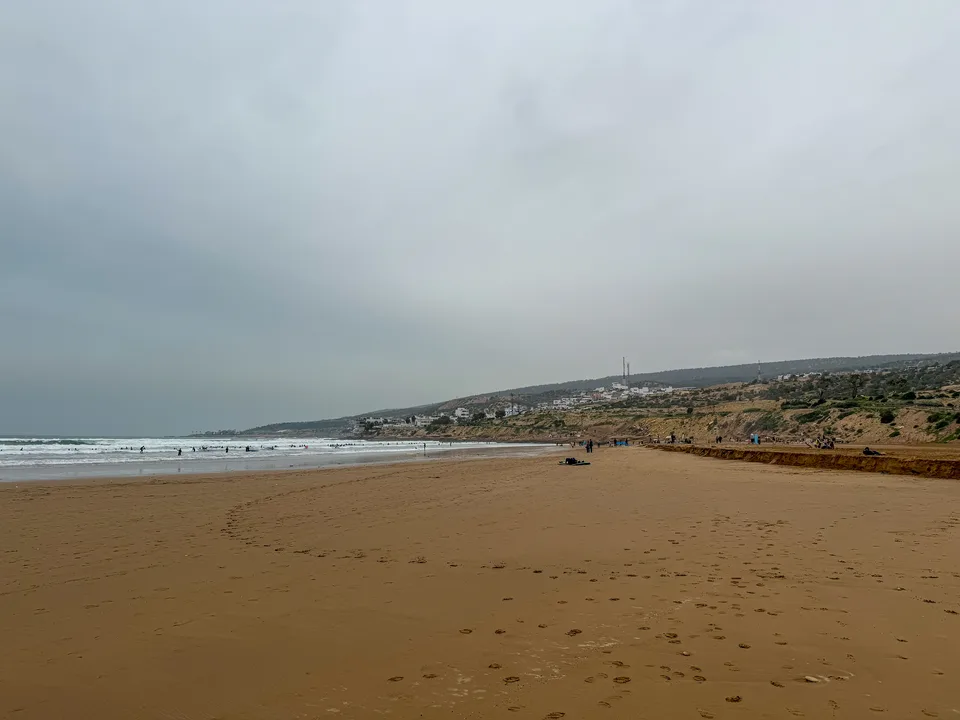
Taghazout lies north of Agadir and is strongly associated with surfing. The national tourism office's beach information identifies the area's better-known surf breaks, including spots suited to experienced surfers. That distinction matters: an attractive coastline is not a promise that every break is appropriate for a beginner.
For a first lesson, ask the school to select conditions and a location suitable for your ability, rather than choosing a famous name yourself. Establish transport, board and wetsuit provision, supervision and cancellation terms. Check that your insurance covers the activity you actually book.
Visit for a day before moving your whole stay if you are unsure which atmosphere suits you. A quieter coastal routine can be appealing, but regular trips back to Agadir may change the calculation. VisaWand's Taghazout location directory identifies the separate settlement; it is not a completed travel guide or a guarantee of local services.
Treat a nature excursion as a planned outing
South of Agadir, Souss-Massa National Park protects a varied coastal landscape including wetlands, dunes and steppe. The regional tourism authority describes organised eco-visits with accredited guides and advance booking through the park or authorised operators. Arrange access to the intended circuit rather than assuming the entire protected area can be explored freely by car.
Ask where the outing starts, how much walking it involves and which costs the quote includes. Wildlife sightings depend on conditions, season and luck; no responsible itinerary should guarantee a particular bird or animal. A half-day focused on one landscape may be more satisfying than a rushed sweep across several distant stops.
For any inland outing, check current weather and access with the operator. The same forecast does not necessarily describe the coast, a valley and higher ground. Keep a flexible alternative in Agadir if heavy rain or another local restriction affects the route.
Use the airport bus when its route works
Agadir Al Massira is the airport serving the city. The ALSA airport shuttle page lists the AE Aerobus between the airport and the Vallée des Oiseaux interchange. The published fare is MAD 50 one way or MAD 80 return per person, with tickets available aboard or at the airport agency.
The operator describes an approximately fifty-minute journey. Treat that as a planning estimate rather than a guaranteed connection, and consult the actual timetable for your day. Add the walk or onward ride from the city stop to your accommodation. For a late arrival, establish the next departure rather than assuming a bus is waiting immediately after immigration.
A prebooked transfer can make more sense with substantial luggage, several passengers or an address outside the central route. Obtain a total price and meeting instructions. Reconfirm your flight directly with the airline.
Distinguish local buses from an intercity connection
ALSA's Agadir network information is the place to check local routes and services. Search using your actual start and destination, and establish the stop in each direction. A route number copied from an older guide may not describe the service you need today. Keep a backup option for the final journey of the evening.
For travel from other Moroccan cities, compare coach options through Supratours. The ONCF subsidiary provides coach connections to places beyond the railway network, including Agadir services. A combined journey involving a train elsewhere and a coach to Agadir is not a direct train arrival in the city.
Check the station or agency named on your ticket, baggage rules and connection time. Do not confuse Agadir, an airport meeting point and nearby Inezgane simply because a search groups them together. Leave a buffer before a flight and confirm where the last leg actually ends.
Eat around the region's ingredients
The national tourism office's gastronomy introduction highlights amlou in the south: a spread associated with argan oil, honey and almonds. It is a useful breakfast discovery, but also an important allergy check. Ask about the actual ingredients and preparation instead of assuming every jar follows one recipe.
Fish dishes, tagines and couscous offer other starting points. Choose a restaurant through its current menu, hygiene and suitability for your party, rather than an unsupported claim that a particular anonymous stall is a local secret. For fish sold by weight, confirm the quantity, preparation and total price before ordering. Check whether accompaniments are included.
Compare eating near your room with travelling elsewhere for every meal. A self-catering stay needs practical shopping and cooking facilities; an all-inclusive hotel needs a realistic assessment of how often you will use its meals. Neither arrangement is automatically better value for every itinerary.
Build a budget from specific choices
Use Moroccan dirhams, abbreviated MAD, when comparing everyday costs. As a checked illustration, an adult international kasbah ticket at MAD 90, a standard cable-car return at MAD 140 and foreign museum entry at MAD 40 total MAD 270. Add a return airport bus at MAD 80 and those selected components become MAD 350. This is not a day pass or a complete holiday budget.
Accommodation, food, local journeys and excursions can change the total considerably. Obtain date-specific quotes with taxes, meals, transfer arrangements and cancellation terms clearly stated. Price a surf lesson or guided nature outing as a separate activity, with equipment and insurance questions resolved before purchase.
Keep a reserve for an unexpected taxi or changed plan. A cheaper room may lose its advantage if it creates several extra journeys each day.
Match the season to the activity
Agadir's Atlantic position moderates its climate, as the tourism office's climate overview explains. That does not mean continuous sunshine or identical conditions every week. Check the forecast for your dates and pack for breezes and cooler intervals as well as time in the sun. A coastal holiday needs different expectations from a hot inland city break.
Choose dates around the experience you want. For surfing, discuss suitable conditions with a qualified school, particularly when you are learning. For walking and excursions, consider daylight, heat tolerance and the weather at the destination rather than just at your hotel. Keep sun protection and drinking water available on clear days.
During Ramadan and major holidays, check attraction hours and meal arrangements individually. Summer timetables should not be copied into a winter itinerary. If a particular pool or attraction is essential to your booking, ask whether it will operate on those exact dates.
A three-day introduction with room to pause
This suggested plan gives the city more time than a list of excursion pickups. On day one, walk along the bay, establish your local transport options and visit Agadir Oufella with an agreed return route. Add the cable car if it suits your budget; leave time to read the memorial interpretation.
On day two, visit Souk El Had in the morning and Agadir Musée d'Art later, checking opening arrangements first. If that day is Monday, move both to another day. Keep a relaxed meal interval rather than rushing directly between them.
On day three, choose one priority: a beginner-appropriate surf lesson near Taghazout, Crocoparc, or an organised Souss-Massa nature visit. Do not combine all three. With only two days, stay closer to Agadir and reduce the selection. A longer visit can separate city errands, beach time and excursions into shorter, more comfortable days.
Test housing through an ordinary week
Before moving, try the routine you expect to live. Visit prospective rentals in daylight and after dark, test travel to work or study, and carry groceries back from the shops you would actually use. A holiday near the waterfront does not establish that the same address will suit a household throughout the year.
Inspect water pressure, hot water, ventilation, cooling or heating, appliances and noise. Establish whether electricity, water, internet, building fees and maintenance are included, how bills are calculated, and who handles faults. Test internet inside the actual apartment if your work depends on it; a lobby connection proves little about an upstairs room.
Use a written tenancy agreement, confirm the owner's authority and record the condition of the property and contents. Clarify deposit repayment and early departure terms before transferring money. Obtain independent legal advice for a substantial transaction, especially if documents or negotiations are in a language you do not understand.
Arrange essential services before a long stay
Locate suitable medical care and confirm insurance coverage for routine treatment, emergencies and any evacuation that might be needed. The government health guidance gives 150 as the ambulance number. Check prescription medicine arrangements and bring the supporting paperwork required for your circumstances. A nearby pharmacy is useful, but it does not replace a plan for specialist treatment.
For children, verify school admission, language of instruction, fees, term dates and the daily journey with the institution. Ask what documents need translation or legalisation before making a housing commitment. Test mobile coverage and identify a practical backup for internet access.
The British government's living-in-Morocco guidance describes residence and employment procedures for British nationals. Use it within that scope, and consult the Moroccan authorities and your own consulate for your case. A holiday impression should not substitute for checking the administrative requirements of an actual household move.
Separate a holiday from work and residence
Start with the official Accès Maroc eligibility checker, which distinguishes the travel formalities applicable to different passports and circumstances. Do not assume that all nationalities have the same exemption, e-Visa eligibility or permitted stay. Use your current documents and intended purpose when checking, then confirm unresolved points with a Moroccan diplomatic mission.
The government's e-Visa conditions cover tourism or business and explicitly state that this e-Visa does not entitle its holder to apply for residence. Business travel should not be read as unrestricted permission for local employment. Work, study and residence require the appropriate separate arrangements; discuss the sequence with an employer, institution and the responsible authority before moving.
For British citizens, current entry guidance gives passport validity and visitor requirements. Those passport-specific rules are not universal advice. If using VisaWand's consultant directory, verify an adviser's credentials, fees and authority before engaging them. A rental contract does not itself grant permanent status.
Compare the next destination deliberately
Agadir can anchor a wider journey, but repeated long excursions can undermine a coastal stay. Compare a separate inland stop with daily return travel. VisaWand's Marrakesh guide offers a completed guide for that different city experience. For a regional comparison, use the Taroudant location directory; it identifies a destination rather than supplying a finished travel article.
The Essaouira location directory can also help you consider a different Atlantic stop. Check actual transport and accommodation availability before linking destinations into one itinerary. Nearby on a regional map does not necessarily mean convenient as a short outing.
Use VisaWand's Morocco location directory and Morocco destination page to compare the wider route.
Official planning resources
Reviewed 15 October 2026. Use the official resources linked throughout this guide for admission, transport, housing and immigration decisions. Prices, services and rules can change; confirm the details relevant to your dates. Photography illustrates the locations and is not a live view.
View all official resources
- Moroccan National Tourist Office: Agadir and Taghazout
- Agadir Oufella: history and heritage
- FCDO: safety and activities
- Agadir Oufella: hours, admission and access
- Danialand: cable car and current tariff panel
- Souss-Massa regional tourism: Souk El Had
- Fondation Nationale des Musées: Agadir Musée d’Art
- Crocoparc: current prices, hours and access
- Moroccan National Tourist Office: coastal activities
- Souss-Massa regional tourism: national park visits
- ALSA: Agadir airport shuttle
- ALSA: Agadir urban network
- Supratours: intercity coach bookings
- Moroccan National Tourist Office: gastronomy
- Moroccan National Tourist Office: climate
- FCDO: health
- FCDO: living in Morocco
- Accès Maroc: official eligibility checker
- Accès Maroc: official e-Visa conditions
- FCDO: British-passport entry requirements
Plan the next part of your journey
Explore the Morocco guide, browse other cities or compare consultants for your travel and relocation questions.