Visa
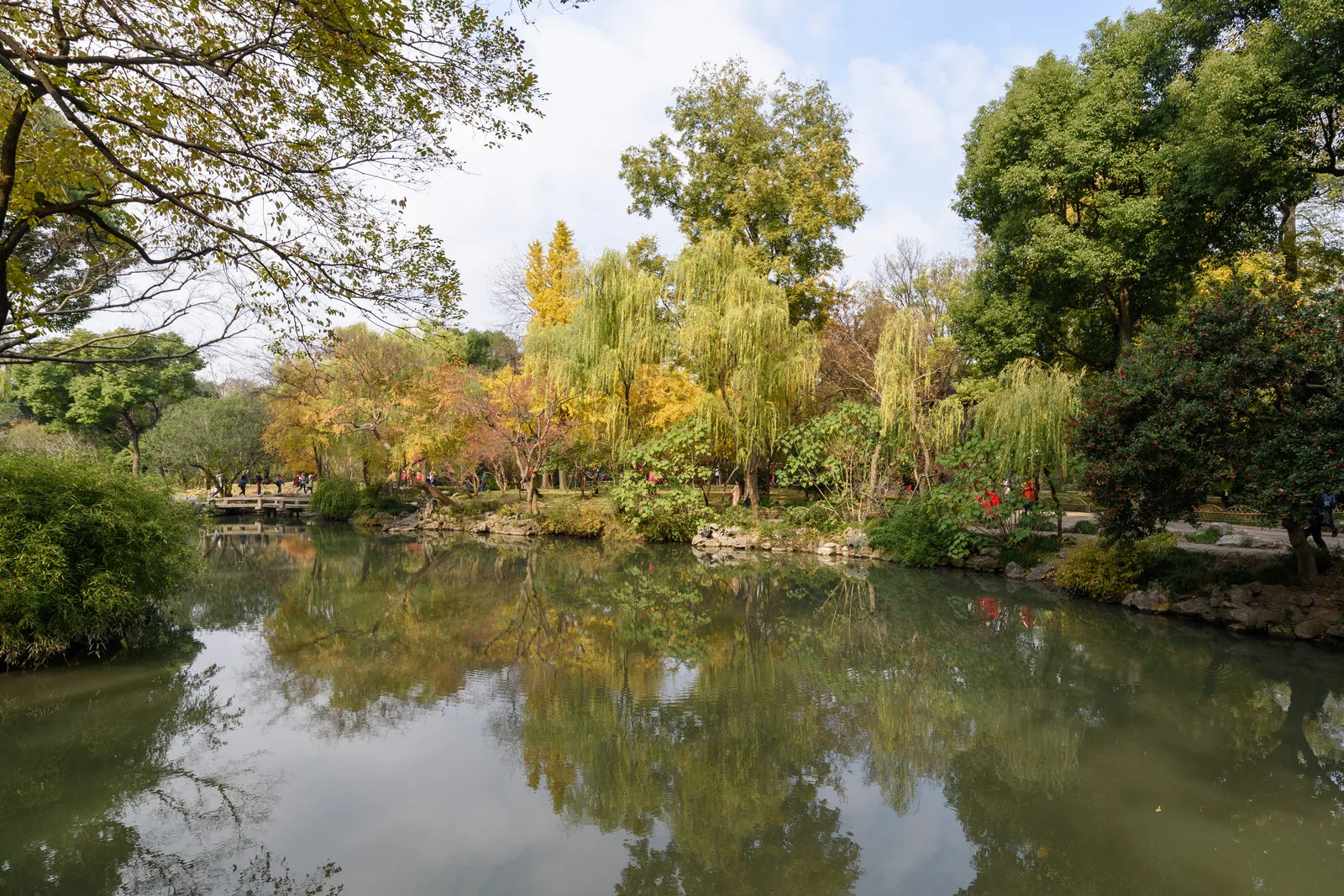
Suzhou rewards an overnight stay
Suzhou makes most sense when you give it time between appointments. A garden visit needs a booked slot; an old canal lane rewards wandering without one. In Jiangsu, west of Shanghai, this is a substantial contemporary city whose historic centre remains one of its strongest reasons to visit. The same trip can take you from whitewashed waterside houses to the broad waterfront of Jinji Lake.
Two nights give a first visit room to breathe. A day trip works if you choose one garden and one neighbourhood rather than assembling a checklist of famous names. Prospective residents need a different map: the address of a workplace or university matters more than proximity to a picturesque bridge. This guide concerns Suzhou in Jiangsu, not the city with the same English spelling in Anhui. Use VisaWand’s China country guide alongside the local planning below.
Read the gardens as inhabited landscapes
The Classical Gardens of Suzhou World Heritage property comprises nine gardens, not the entire city. UNESCO describes designs dating from the eleventh to nineteenth centuries in which rocks, water, planting and buildings create miniature landscapes. That gives visitors a useful way to look: a framed view through a window can matter as much as a pavilion.
These were spaces shaped by people and changing ownership, rather than untouched pieces of nature. Notice how a corridor conceals and then reveals water, or how a stone arrangement alters the apparent depth of a courtyard. Visiting several gardens is worthwhile when you compare those choices. Repeating essentially the same hurried circuit three times is less rewarding. Choose one substantial garden first, then decide whether architecture, rockeries or a smaller enclosed space interests you enough to add another.
Choose a base before choosing a hotel
For a first sightseeing stay, start with the old city in Gusu District. Compare addresses around Pingjiang, Guanqian and the museum area against the actual entrance you plan to use. An attractive lane can involve a final walk with luggage; ask where a taxi can stop and whether your room faces evening activity.
The Jinji Lake area offers a different setting, with modern waterfront surroundings that may suit a business itinerary or a preference for larger contemporary hotels. Dushu Lake is more relevant to some university stays. These areas should not be treated as interchangeable simply because both lie east of the historic centre.
For any property, check the walking route to a metro entrance, room heating and cooling, lift access and cancellation terms. Compare the total for your dates, including breakfast and deposits. Ask whether late arrival is possible and how to reach reception if the entrance sits inside a pedestrian lane; a map pin alone may not explain the final approach. No single nightly rate describes the city’s varied accommodation market reliably.
Humble Administrator’s Garden: leave space to look
The Humble Administrator’s Garden is a sensible first choice if you want to understand why garden design brings people to Suzhou. Give the visit a generous morning rather than squeezing it between two fixed departures. Pause at the edges of rooms and covered walks: the transitions are part of the experience, not merely routes to a photograph.
The garden authority’s published opening table lists 7.30am–5.30pm from March through October, with entry ending at 5pm; November through February closes at 5pm, with last entry at 4.30pm. Special announcements can override ordinary hours. Check the date and product when booking, especially if an offer includes evening admission.
Its visitor rules prohibit drones, smoking and climbing protected structures. Rockeries and waterside paths deserve care in wet weather. Travellers needing a step-free route should ask about the specific accessible circuit before buying; a historic garden is not automatically accessible throughout.
Make a second garden a deliberate choice
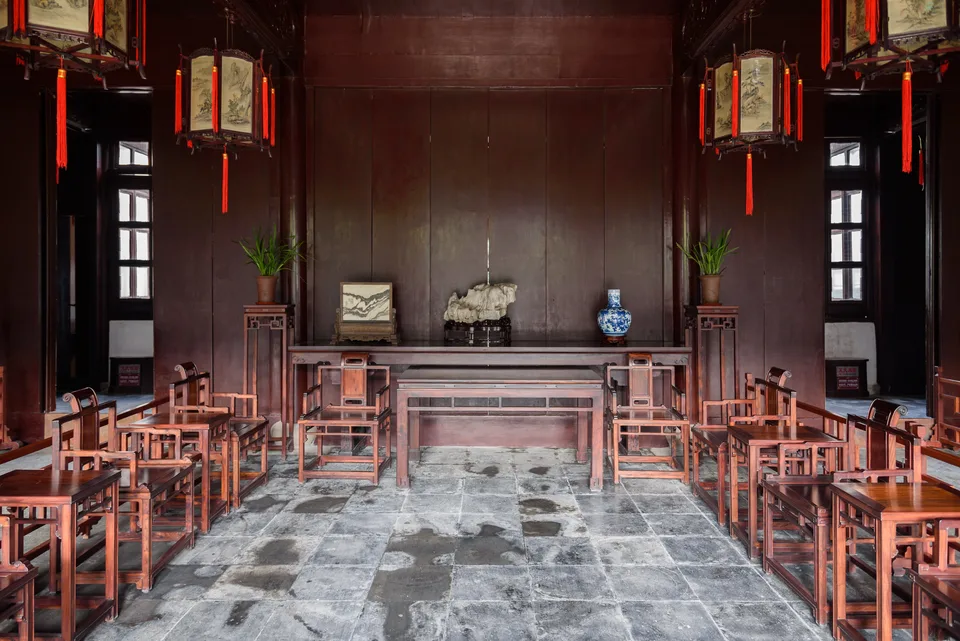
The Lingering Garden offers a useful comparison. The garden authority traces its beginnings to a private garden established in 1593, with later rebuilding and ownership changes. Its rooms, corridors, stone features and inscriptions invite attention to the relationship between architecture and landscape.
The current posted visitor notice specifies timed online reservations within a seven-day window including the day of purchase, through Suzhou Garden Tourism’s official channels. Treat that as a rule for this garden; do not assume every attraction uses the same booking window or identification process.
One good approach is to visit the Humble Administrator’s Garden on the first morning and Lingering on the next. That gives each a distinct place in the trip and avoids an afternoon spent rushing between entrances. If you already feel saturated with gardens, spend the second morning on silk history instead. Fewer admissions can produce a more memorable visit.
Suzhou Museum requires a separate reservation
The Suzhou Museum building designed by I. M. Pei opened in 2006 beside Prince Zhong’s Mansion, near the Humble Administrator’s and Lion Grove gardens. Its collections connect the city’s visual culture with painting, calligraphy, ceramics and craftsmanship. The architecture makes it a worthwhile complement to a garden, rather than simply an indoor substitute when it rains.
The museum’s current reservation notice requires real-name booking for the main museum, available up to seven days ahead. Same-day reservations depend on remaining capacity. Normal hours are Tuesday–Sunday, 9am–5pm, with last admission at 4pm; Mondays close except public holidays. Summer 2026 evening extensions were seasonal and should not determine an October itinerary.
Bring the valid identity document used for your booking and arrive for your slot. Overseas visitors who cannot complete the reservation process should contact the museum rather than rely on unofficial sellers. Leave time for road restrictions and luggage storage arrangements around the entrance.
Walk Pingjiang without turning every stop into a purchase
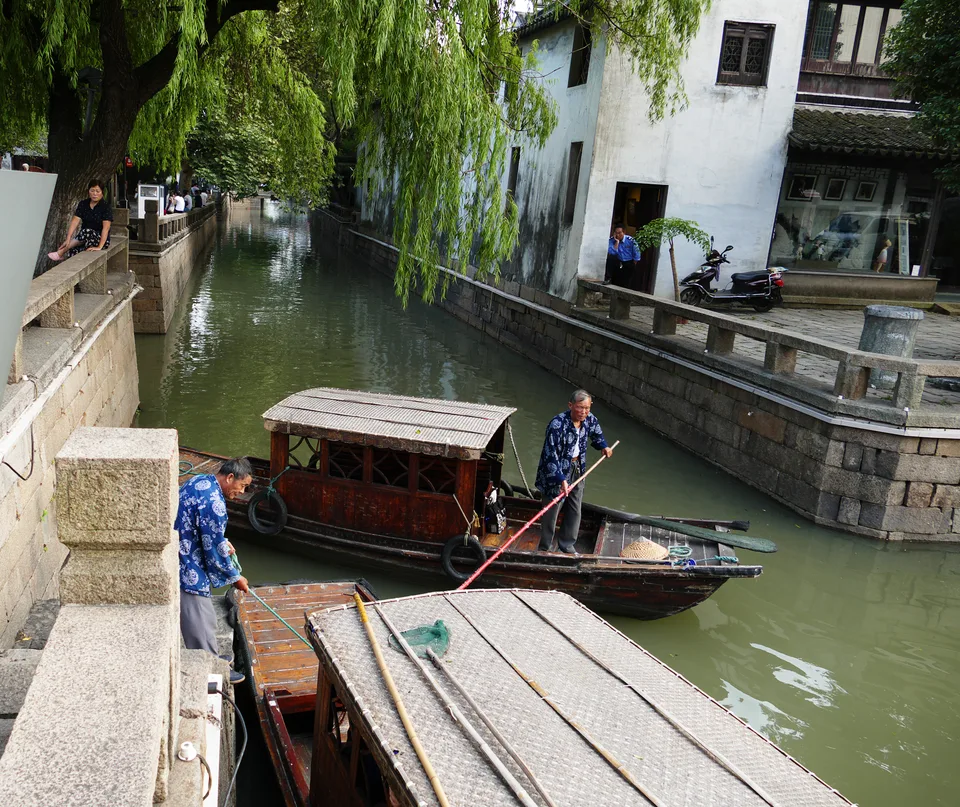
The municipal description of Pingjiang Road highlights its parallel arrangement of water and streets, bridges, waterside houses and deeper alleys. That is the attraction: a street pattern you can experience on foot. Keep some time free after a booked museum or garden visit so the neighbourhood does not become a hurried passage to your next appointment.
Look at the smaller connections between the main waterside route and surrounding lanes. Step aside for residents and deliveries, ask before photographing someone closely, and distinguish publicly accessible streets from private doorways. This is an inhabited district as well as a visitor destination.
Canal boats can change your perspective, but confirm the departure point, route, duration and total charge before paying. A short local boat excursion is not equivalent to a trip on the Grand Canal or a lake cruise. Weather and water conditions may also alter what operates on your day.
Shantang and silk broaden the picture
Shantang Street provides another way to see Suzhou’s canal-side urban character. The municipal heritage account records a history exceeding a thousand years. Treat it as a separate neighbourhood visit rather than assuming that one canal street stands for every part of the old city. Check individual venues and boat services separately; a street visit does not include all paid experiences nearby.
For a more focused cultural stop, the Suzhou Silk Museum at 2001 Renmin Road introduces the material and processes behind the city’s silk reputation. Before visiting, confirm the museum’s current opening arrangements and any reservation requirements for your date, particularly around public holidays.
Seeing weaving and textile displays before shopping gives you better questions to ask about fabric, embroidery and manufacture. It does not establish the quality of an unrelated shop’s stock. Keep museum interpretation and retail claims separate when deciding what to buy.
Jinji Lake shows a different Suzhou
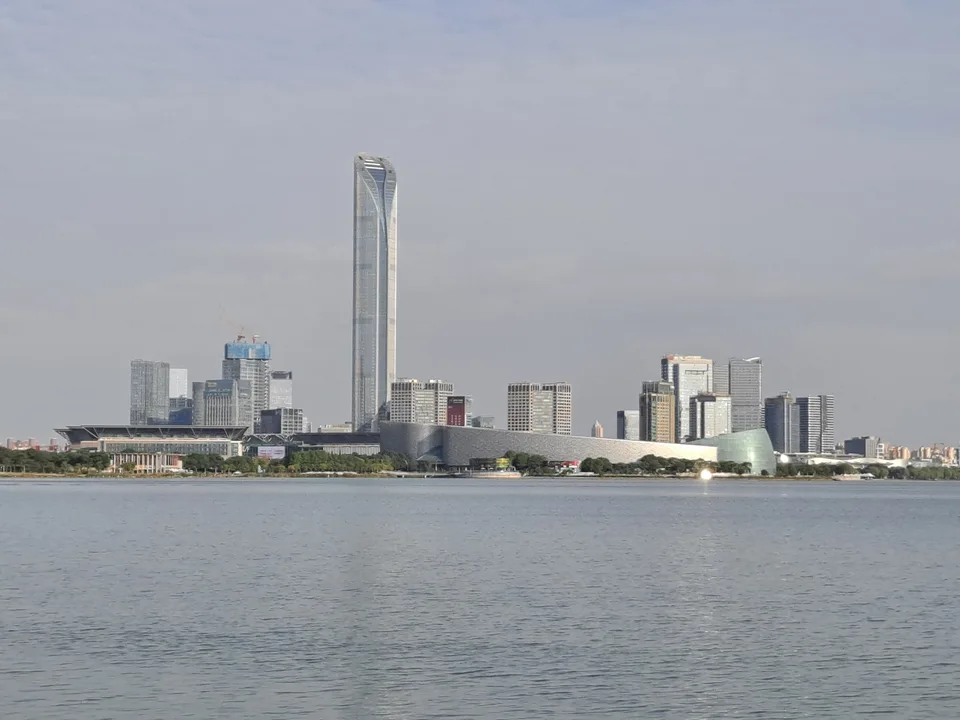
The Jinji Lake waterfront changes the scale of the visit: open water, broad views and contemporary high-rises replace the close framing of old-city lanes. It works well as an afternoon or evening contrast after a garden morning. Choose a particular stretch of waterfront and a convenient return route rather than trying to see everything around the lake in one outing.
The municipal visitor information describes lake cruises, including night experiences, but its older advertised prices should be checked with the operator before purchase. Ask which pier you leave from and return to. Do not assume a photograph of illuminated buildings guarantees a particular display or boat departure on your date.
For someone considering a move, use the outing to look beyond the view: walk to the nearest practical shopping, test the journey to your prospective office and assess whether the surroundings suit your everyday routine.
Arriving through Shanghai or Wuxi
Suzhou is served through airports in neighbouring cities, including Shanghai Hongqiao, Shanghai Pudong and Sunan Shuofang in Wuxi. The municipal transport overview is useful for identifying those gateways and the different railway stations. Its road journey estimates are planning indications, not promises for a particular arrival.
Hongqiao’s transport hub offers onward railway connections to Suzhou. From Pudong, the Shanghai Airport Link Line connects to Hongqiao Airport Terminal 2, where you continue towards the railway hub. A March 2026 service update extended the last Pudong-to-Hongqiao departure to 10.15pm. That does not guarantee an onward train to Suzhou after a late landing.
Allow for immigration, baggage, walking and a separate rail departure. If arrival is late, price an overnight stay or a confirmed road transfer before choosing the flight. For Shuofang, check the current Suzhou-bound coach stop and timetable; Wuxi’s airport metro connection should not be mistaken for a direct Suzhou metro service.
Book the correct railway station
Suzhou Railway Station, Suzhou North, Suzhou Industrial Park station and Suzhou New District station are different destinations. Compare the final journey from each to your accommodation. A slightly shorter train ride can lose its advantage if it leaves you much farther from the address you actually need.
Use China Railway’s official English booking service to check the specific departure, arrival station and ticket conditions. Enter the traveller’s identity details carefully and carry the corresponding document. Leave time for station entry and security rather than treating the departure time like the arrival time at a roadside bus stop.
This matters on a Shanghai day trip in both directions. Save the full station name and your accommodation’s Chinese address before leaving. If you are travelling to a university or industrial site, ask your host which station they recommend for that precise campus or workplace, then compare it with the available trains.
Metro tickets, walking and the final kilometre
The official metro ticketing rules set a starting fare of 2 yuan for the first six kilometres, with distance-based increases. Use the same ticket or payment credential to enter and leave. Station access, transfers and the walk at either end still matter when comparing a metro trip with a taxi.
The operator’s Suexing app tourist-pass information lists 18 yuan for 24 hours and 40 yuan for 72 hours. For these electronic passes, the clock starts on purchase. Registration and payment binding are required; do not buy hours before you need it, or assume every foreign card or document will work without checking. These are app products, not a promise about physical tickets at every station.
Walk compact sightseeing clusters, then use transport between them. Keep an offline copy of essential addresses. When using a taxi or booked car, confirm the pickup point carefully where historic lanes restrict vehicle access.
Eat locally, with attention to ingredients
Suzhou-style soup noodles provide an accessible introduction to local food. A 2026 municipal commerce account describes toppings ranging from braised pork and eel to fried fish, duck, shrimp and crab roe. Choose from the actual menu rather than arriving with a fixed expectation that a seasonal topping must be available.
Ask about broth as well as toppings if you avoid meat, seafood or particular allergens. Removing a visible ingredient does not establish what went into the soup. A short written explanation in Chinese is more useful than assuming a dish’s English name communicates a dietary requirement.
For shopping, compare materials and prices before buying silk or embroidery. Ask for fibre composition, care instructions and a receipt; an attractive display alone does not demonstrate provenance or handwork. Keep larger purchases out of a rushed transfer day so there is time to inspect them and understand any delivery or return arrangements.
Build a budget from your chosen activities
The garden authority’s published daytime admission table puts the Humble Administrator’s Garden at 80 yuan in April, May and July–October, and 70 yuan in the other months. Lingering is 55 or 45 yuan on the same seasonal division. Together, those two ordinary adult admissions total 135 yuan in the higher-price months or 115 yuan otherwise. June is in the lower-price group.
Confirm the final product and eligibility at checkout: a night experience, tour or package can carry different terms. Add accommodation, meals, intercity rail, local transport and optional boats separately. This produces a more useful estimate than an unsupported universal daily allowance.
For payments in China, prepare more than one method. Test any mobile payment setup before relying on it and keep a cash fallback. A successful payment at one hotel does not establish that every small business accepts the same overseas card.
When to visit and how weather changes the plan
Suzhou’s subtropical monsoon climate brings distinct seasons, hot summers and a winter that requires warm clothing. Spring and autumn are sensible starting points for a walking trip, provided you compare actual dates, forecasts and holiday demand rather than assuming an entire season guarantees comfortable weather.
In summer, put outdoor garden time early in the day and leave room for indoor breaks. In wet weather, slow down on stone paths and around water. In winter, check a hotel’s heating arrangements and bring layers for sitting still as well as walking. A bright photograph of a garden tells you little about the temperature on your travel dates.
Keep one flexible period in the itinerary for rain or a missed reservation. Check official weather warnings before lake outings or longer excursions. Do not build the trip around historical temperature extremes presented as present-day limits; weather can exceed an old summary.
A realistic three-day first visit
Day one: arrive, leave luggage at your accommodation and explore Pingjiang at an unhurried pace. If your arrival is early and your museum booking fits, visit it that afternoon; otherwise keep the first day flexible. Have dinner near your base rather than adding a cross-city journey after travel.
Day two: give the Humble Administrator’s Garden the morning, with an advance ticket arranged for the appropriate slot. Leave lunch and the afternoon open for the museum if booked, or the Silk Museum after checking its reservation. Avoid booking both as compulsory back-to-back stops. A second canal walk is an option, not an obligation.
Day three: visit Lingering if you want a garden comparison, then choose Shantang or Jinji Lake according to your interests and departure station. With only one day, keep the garden-and-Pingjiang combination and save the lake or second garden for another visit. Adjust all museum plans around Monday closures.
Moving: match the home to the daily journey
For a longer stay, begin with the exact work or study address. A historic-centre apartment, a Jinji Lake property and accommodation near Dushu Lake can produce very different daily journeys. Test the route at the time you would commute, including the walk inside a large campus or employment site.
Take temporary accommodation while viewing homes if your schedule allows. Inspect heating and cooling, damp, window seals, hot water, internet arrangements, lift reliability and evening noise. Request a written inventory and an explanation of deposits, utilities, management charges and repair responsibilities before signing or transferring money.
Students should follow their institution’s arrangements. XJTLU’s accommodation guidance distinguishes privately managed SIP apartments from its Taicang arrangements; the university does not directly own or manage the listed SIP residences. Its pre-arrival information requires advance booking for university-arranged accommodation. Check your actual programme and campus rather than applying another student’s contract terms to your own stay.
Household services and healthcare deserve advance checks
Before committing to a neighbourhood, locate a supermarket, pharmacy, laundry option and the healthcare facility your insurer expects you to use. Ask how utilities are billed and whether internet installation requires the landlord’s assistance. Establish what is supplied in the home; even organised student accommodation can require residents to provide bedding.
Suzhou has university-affiliated hospitals, including the First Affiliated Hospital of Soochow University. Confirm the relevant campus, appointment process, language support and insurer acceptance directly. The existence of an English university page does not guarantee English-speaking staff for every department or direct settlement of an overseas policy.
Keep medical records and prescription details accessible, and discuss continuing treatment before travel. Families should verify school admission, fees, location and transport independently before choosing housing. A nearby school building does not establish eligibility for a place, and a scenic neighbourhood does not resolve those practical needs.
Entry permission and residence are separate decisions
Check the National Immigration Administration’s current entry and transit information for your nationality, travel document, route and purpose. A visa exemption or eligible transit arrangement is not permission to take employment, begin a course or settle permanently. Transit conditions include route and onward-travel requirements; proximity to Shanghai does not remove them.
For employment or study, arrange the appropriate permission before starting the activity. The NIA’s residence-permit guidance distinguishes purposes and requirements; some entrants must apply within 30 days as indicated by their visa. Student permission does not create unrestricted employment rights. Permanent residence is a separate process, not an automatic consequence of renting a home.
Foreigners also need accommodation registration. Under the September 2026 online registration arrangements, non-hotel stays can be registered through the official online service; the 24-hour obligation still matters, while hotels handle guest registration. Use VisaWand’s consultant directory to find relevant assistance and verify advisers’ credentials before engaging them.
Nearby alternatives and the next stage of the trip
Tongli offers a water-town excursion with the Retreat and Reflection Garden as a specific focus. The garden authority’s heritage account places it in Tongli and records its nineteenth-century origins. Give the excursion its own travel allowance; it should not be squeezed between an old-city reservation and a tightly timed train.
For a broader regional comparison, consider Shanghai for a major metropolitan stay and Hangzhou for a different lake-and-city experience. Compare transport, accommodation and your interests rather than treating these destinations as interchangeable additions to a single packed day.
VisaWand’s China location directory helps identify other places, while its China destination page lists consultant options for China. For Suzhou itself, the strongest plan is selective: enough time for a garden, a neighbourhood and an everyday meal, with the practical arrangements settled early enough to enjoy them.
Official planning resources
Reviewed 16 October 2026. Use the official resources linked throughout this guide for admission, transport, housing and immigration decisions. Prices, services and rules can change; confirm the details relevant to your dates. Photography illustrates the locations and is not a live view.
View all official resources
- UNESCO: Classical Gardens of Suzhou
- Suzhou Garden Authority: opening hours
- Humble Administrator’s Garden: visitor rules
- Suzhou Garden Authority: Lingering Garden history
- Lingering Garden: visitor and booking notice
- Suzhou government: Suzhou Museum
- Suzhou Museum: current reservation notice
- Suzhou government: Pingjiang Road
- Suzhou government: Shantang Street
- Suzhou government: Silk Museum
- Suzhou government: Jinji Lake
- Suzhou government: airport and railway connections
- Hongqiao government: Airport Link Line hours update
- China Railway: English booking service
- Suzhou government: Metro ticketing rules (Chinese)
- Suzhou Rail Transit: tourist passes (Chinese)
- Suzhou commerce bureau: local noodle traditions
- Suzhou Garden Authority: seasonal admission prices
- State Council: payment services for overseas visitors
- China Weather: Suzhou climate overview
- XJTLU: accommodation options and responsibilities
- XJTLU: 2026–27 pre-arrival information
- Soochow University: First Affiliated Hospital
- NIA: 240-hour visa-free transit
- NIA: residence permits for foreigners
- NIA: nationwide accommodation registration
- Suzhou Garden Authority: Retreat and Reflection Garden
Plan the next part of your journey
Explore the China guide, browse other cities or compare consultants for your travel and relocation questions.