Visa
A city to explore beyond a day trip
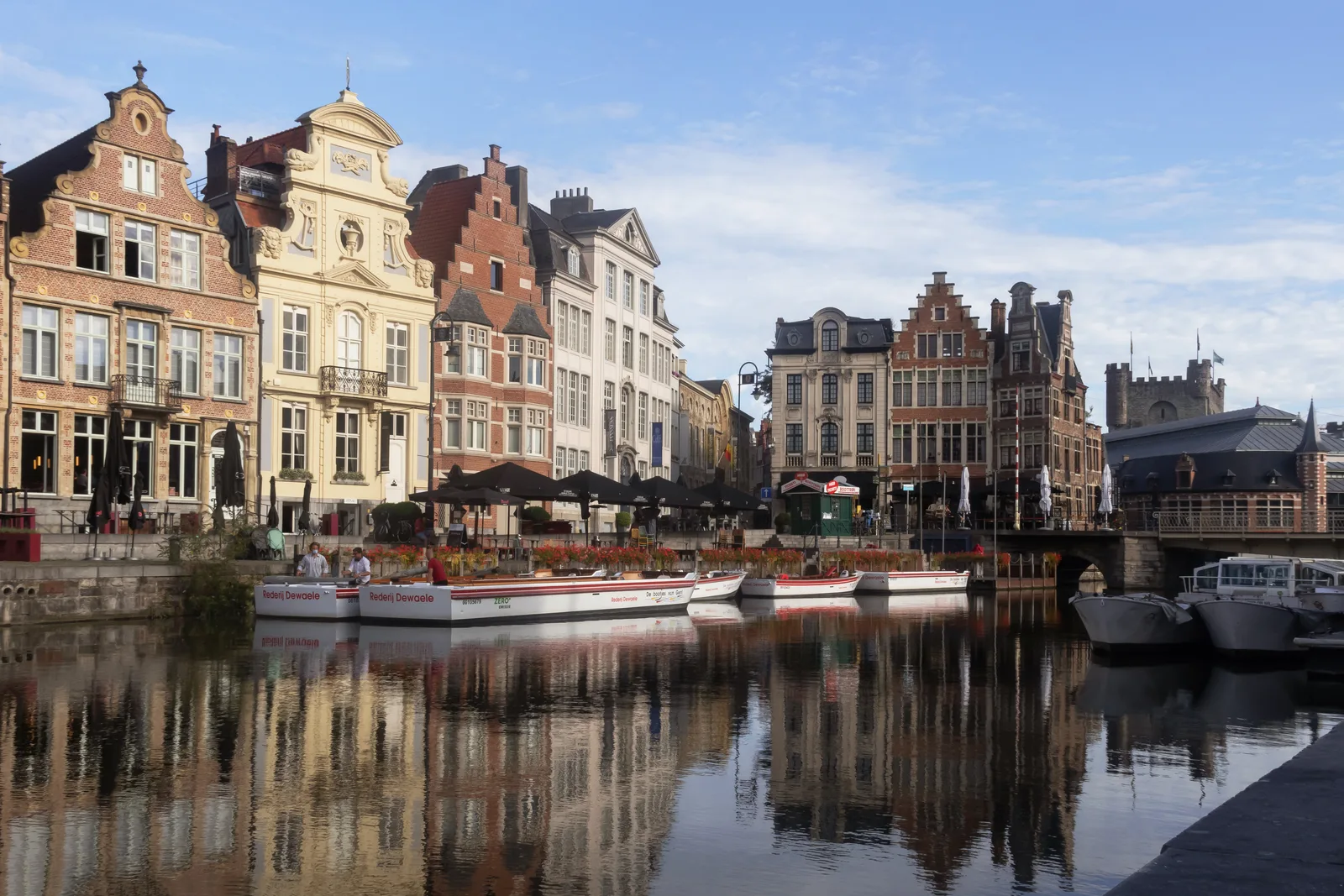
Ghent rewards an overnight stay because its most memorable scene is also somewhere to linger: gabled buildings facing each other across the Lys, with bridges connecting a sequence of squares and streets. The waterfront makes an easy introduction, but the city also asks for decisions. Do you want to concentrate on the historic centre, spend serious time with painting, or test whether everyday life here would suit you?
Allow two full days for a first visit, or three if art is a priority. That is an editorial suggestion rather than an official minimum. A day trip works if you choose one ticketed attraction and leave space to walk. Trying to fit the castle, cathedral, Belfry and major museums between two trains turns a compact centre into an unnecessarily hurried excursion.
Ghent is the English name; Gent appears on local signs, railway searches and this page’s address. Use VisaWand’s Belgium country guide for the wider national context, then plan the details around your actual arrival station and accommodation.
Reading the history along the water
The Graslei and Korenlei waterfront is a good place to understand why Ghent became prosperous. Ships have docked here since the eleventh century, and the buildings recall the movement and measurement of grain as well as the organisations that controlled river trade. The old corn store has a thirteenth-century stepped gable; the Guild House of the Free Sailors has a restored facade. The scene combines surviving fabric and later restoration rather than a row of buildings frozen unchanged in the Middle Ages.
Walk both banks instead of choosing a single photograph from a bridge. Looking back across the river makes the different rooflines easier to appreciate. For an inexpensive first evening, make this your main activity and spend selectively on food or one carefully chosen museum the following day.
This is also a useful test of your preferred pace. If the waterside is enough for an afternoon, leave that breathing room in the rest of the itinerary.
Choosing between the centre, Patershol and station areas
For a first sightseeing stay, compare accommodation around Korenmarkt and the historic core with the streets near Patershol. The latter is a residential quarter with small cobbled streets, restaurants and bars, rather than a purpose-built visitor district. Its attractions include the House of Alijn and the visual-arts venue Kunsthal. Keep evening conversations considerate: the neighbourhood is also somebody’s home.
If your trip involves repeated rail journeys, consider the approach to Gent-Sint-Pieters as part of the accommodation decision. Gent-Dampoort is a different station, so a listing described simply as “near the station” needs checking. Map the exact property entrance against your planned arrival and return journeys.
Choose a central base for short walks back between activities; choose a station-oriented base when onward travel matters more. Neither choice guarantees quiet, accessibility or a lower price. Ask about street-facing rooms, lift access and the final distance with luggage before comparing the nightly totals.
Saint Bavo and the Altarpiece: choose the right visit
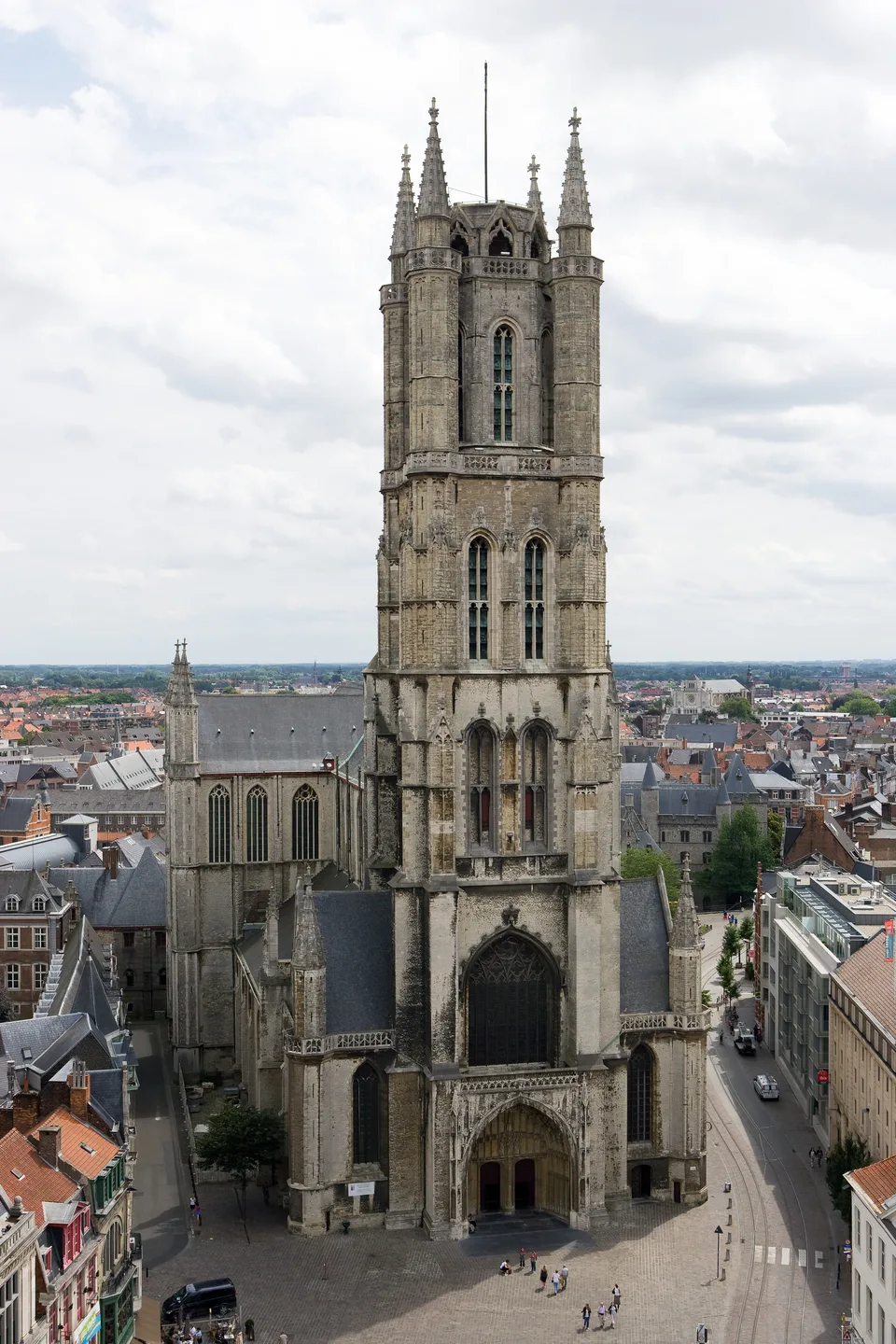
The Ghent Altarpiece’s cathedral history records its installation on 6 May 1432 and associates the work with Hubert and Jan van Eyck. The precise division of their painting remains uncertain. Its subsequent history includes war, fire and theft, which helps explain why seeing it deserves more attention than a quick stop between photographs.
Choose your admission deliberately. The cathedral’s official tour options list a sixty-minute standard augmented-reality experience plus the Altarpiece for €16, and a twenty-five-minute “Lam Gods Only” visit for €12.50. These are different products; the shorter option may suit someone who wants to concentrate on the painting. Recheck available slots and the conditions attached to any reduced ticket.
Do not assume that a cathedral visit and the paid Altarpiece experience are interchangeable, or that the advertised panel-opening time is the building’s admission time. Keep your booking confirmation accessible and leave a gap before the next fixed appointment.
Why the MSK belongs in an art-focused itinerary
There is an important current qualification to an Altarpiece visit. The MSK’s restoration programme runs through 31 December 2026 and places upper-register panels in the museum’s restoration studio. Restored exterior and lower-register panels can be seen at Saint Bavo’s. The programme anticipates completion at the end of 2026; that is a target, not evidence that the full work has already returned.
Restorers normally work Tuesday to Friday, with holidays and other absences. Panels remain visible at weekends, but that does not mean staff will be working when you arrive. Photography and filming of the restoration room are prohibited.
The MSK’s current ticket page lists €19 general admission and free admission for visitors aged eighteen or younger and CityCard holders. Its separate standard tariff page shows rates applying from January 2027, so check the effective date rather than taking the first price a search engine displays. Give this visit its own substantial part of a day if painting is your main interest.
Gravensteen: a castle with practical limits
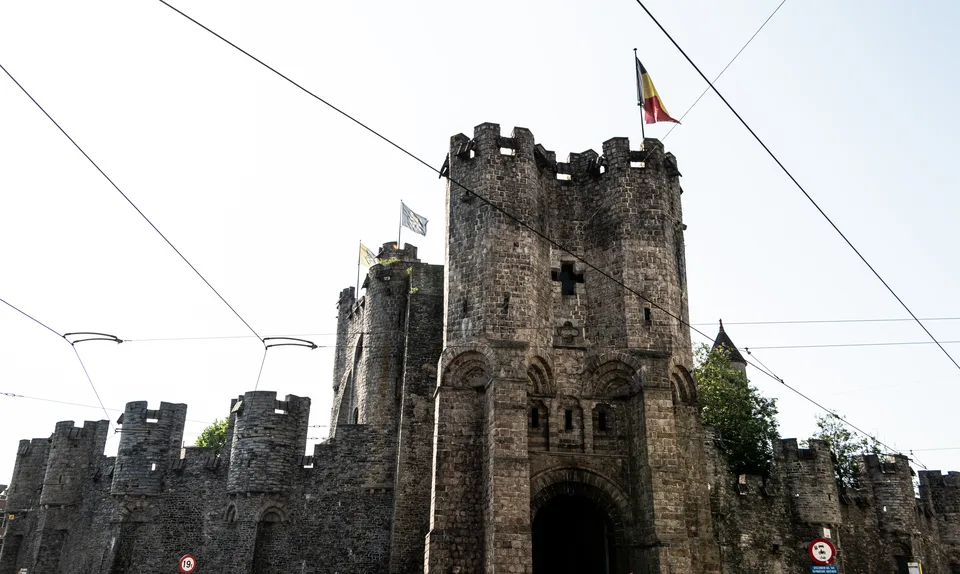
Gravensteen offers a very different encounter with the city: substantial stone walls and an entrance that makes the castle’s presence unmistakable. The castle’s official ticket information lists €15 adult admission, including an audio guide. The published hours are 10am–6pm, with last ticket sales at 4.40pm; closures include 24, 25 and 31 December and 1 January. Check again for your chosen date.
Visitors aged thirteen to eighteen have a €3 tariff, while children twelve and younger enter free. Those distinctions matter when comparing a family’s individual tickets with visitor passes. CityCard holders do not need an advance castle reservation under the published arrangements.
Treat the castle as an activity requiring time and attention, rather than a guaranteed brief indoor shelter. Before buying, ask the operator about the route if stairs, balance or limited stamina are concerns. Do not arrive relying on a secure locker for a large suitcase; leave luggage with your accommodation or investigate station storage first.
The Belfry and an honest accessibility check
The Ghent Belfry is the central tower between Saint Nicholas’ Church and Saint Bavo’s Cathedral. Its UNESCO heritage status and long civic role give the panorama a useful historical context: this was a place associated with privileges, watchkeeping and warnings, rather than simply a viewing platform.
The visitor listing shows a €13 basic tariff and free access with CityCard. There is a lift from the first floor, but the site explicitly says the Belfry is not accessible to visitors with reduced mobility. A lift somewhere in a monument does not establish an accessible entrance or a step-free complete visit.
For anyone who cannot use the tower, enjoying its exterior and the surrounding squares remains a meaningful part of the route. More generally, ask venues for specifics: entrance steps, accessible toilets, seating and the distance between rooms. Those answers are more useful than a booking platform’s broad accessibility label.
Is CityCard Gent worth buying?
The CityCard Gent benefits page lists €49 for forty-eight hours and €55 for seventy-two hours. Included attractions cover the castle, Belfry and participating museums; transport benefits also include specified boat, bicycle and water-tram use. Check operating periods and arrangements before assigning a value to an activity you might not actually use.
The Altarpiece benefit is a €10 discount requiring an advance online booking with the CityCard option. It is not blanket free entry. Make that reservation before committing the rest of your schedule.
The official CityCard questions and rules explain that cards are sold at physical outlets, rather than online. De Lijn travel is covered within Ghent, not outside the city; an airport train is a separate purchase. Compare the card against only the attractions and journeys you genuinely plan to take. Young visitors can have free or reduced museum admission, making a separate calculation essential. A pass that encourages unwanted stops can cost both money and time.
Where to stay and what to ask before booking
Ghent’s accommodation choice should follow the purpose of the trip. A central hotel suits a short cultural break; a room with cooking facilities can make a longer stay more flexible. A hostel may suit a visitor comfortable with shared facilities. Check each property’s current arrangements rather than assuming that a category guarantees a kitchen, laundry or staffed reception.
The Ghent Marriott’s own information provides one identifiable waterfront example on Korenlei. Its arrival address is Drabstraat 37, and it does not operate an airport shuttle. Verify which room category has the view you want; a riverside hotel does not mean every room faces the river. This is a location example, not a personal endorsement or a claim about the cheapest rate.
Compare the final bill, cancellation deadline, breakfast, parking and luggage storage. If arriving late, obtain instructions before travelling. For families, confirm the permitted room occupancy and actual sleeping arrangements instead of treating an advertised maximum as a promise of separate beds.
Accommodation tax and a useful budget framework
The municipality’s accommodation-tax schedule distinguishes categories. For 2026–2028, published amounts including VAT are €2.20 per adult per night for campsites and hostels, €4.40 for hotels and B&Bs, and €7.40 for holiday homes and similar accommodation where the operator is not registered as resident. Certain operator-resident holiday properties fall in the €4.40 category. The tax applies from age eighteen, with specified exemptions.
Ask your host which category applies and whether the displayed total includes it. Two adults spending three nights in a hotel would have €26.40 at the €4.40 rate, before any applicable exemption. A small nightly addition becomes noticeable over a longer booking.
Build the rest of your budget from confirmed accommodation, intercity travel, local journeys and chosen admissions, then add meals and a contingency. Food and room prices are not presented here as citywide averages: dates, room type and eating habits change the comparison too much. Save by reducing unnecessary purchases, not by relying on an unsupported “daily cost” figure.
Arriving by air or international train
Ghent has no airport of its own. The official airport-access guidance distinguishes Brussels Airport from Brussels South Charleroi Airport. Brussels Airport has a station beneath the terminal and direct rail connections to Ghent. Charleroi is a separate arrival point, with a Flibco coach connection serving Gent-Sint-Pieters. Confirm the service for your flight date and allow for baggage collection and delays.
For rail arrivals, Ghent’s railway information identifies Gent-Sint-Pieters and Gent-Dampoort as different stations. International high-speed passengers can connect towards Ghent through hubs including Bruxelles-Midi. Both Ghent stations have luggage-storage facilities listed, but availability and the size of your bag still need checking.
Use SNCB’s dated journey planner for the train you will actually take. Compare the complete airport-to-door journey, including the last local connection, rather than the flight price alone. On an early departure, work backwards from check-in and confirm the first available service before making a non-refundable booking.
Local transport and the decision to bring a car
Use the De Lijn route planner with your actual address and travel time. That avoids relying on an old tram number or assuming that a daytime connection also runs late at night. For unfamiliar journeys, save the stop name and the direction of travel before leaving your accommodation.
The operator’s current fare table lists a €3 ticket, a €22 ten-trip ticket and a €9 day ticket for ages twelve and older. Buy and activate the appropriate product before boarding, or use the operator’s contactless payment arrangements. Decide according to expected journeys rather than buying a day ticket automatically.
Drivers need to check the low-emission-zone rules for foreign vehicles. Eligible foreign-plated vehicles generally require free registration, with an exception for Dutch plates; processing can take fourteen days. Check eligibility first and arrange registration well ahead. A hotel’s parking space does not by itself settle emissions eligibility or permission to enter a pedestrian zone. Ask the hotel for the correct driving approach and access arrangements.
Food, shopping and making room for an unplanned meal
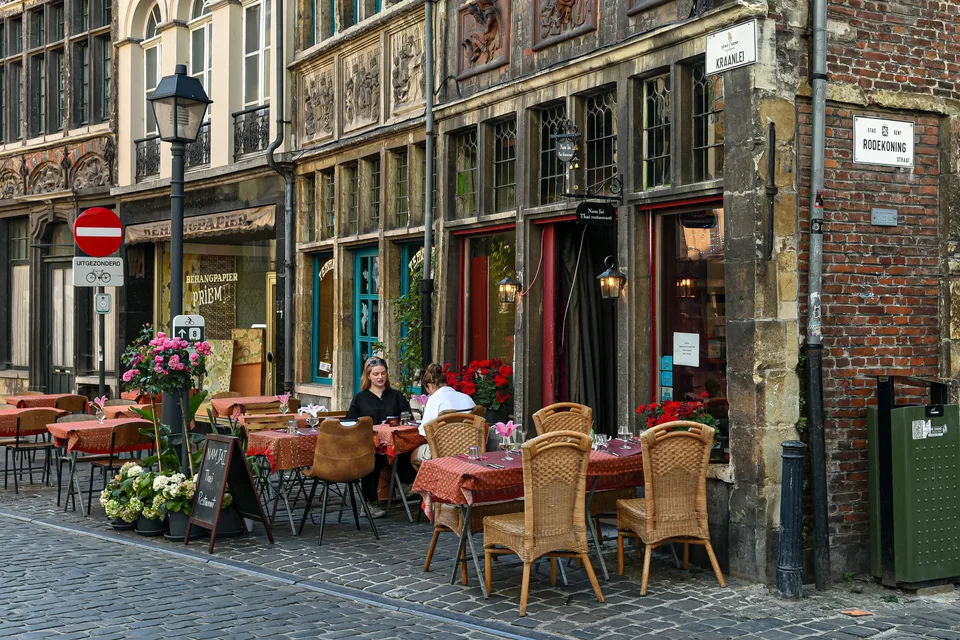
Waterzooi is a useful introduction to local cooking: versions use fish or chicken, vegetables and cream, sometimes with wine or egg yolk. Ask about the preparation if you avoid particular ingredients; the name alone does not establish suitability for an allergy or dietary requirement. The tourism board’s linked restaurant directory offers starting points without requiring you to treat any one venue as essential.
Make one meal a deliberate part of the trip, then keep the others flexible. Read menus and serving times before committing to an evening plan, especially when a museum booking leaves a narrow gap. For a longer stay, check the walk to an ordinary food shop as carefully as the walk to a landmark.
Shopping works best when it follows the neighbourhood you are already exploring. Leave room in your luggage for a purchase you actually want, and ask about packing fragile or perishable goods. A souvenir hunt should not consume the only clear afternoon you have for the waterfront.
Seasons, rain and the day of the week
The tourism board’s seasonal planning pages cover summer, winter and rainy-day alternatives, and specifically flag Mondays as a day when many attractions close. Plan around the individual venue calendar rather than assuming a museum will be available as a last-minute rain shelter.
For an outdoor-focused visit, favour a schedule with flexibility: move a waterside walk into the clearest part of the day and keep an indoor activity available. Spring and autumn are sensible choices to consider if you prefer walking without organising the trip around high summer, but neither season guarantees mild or dry weather. In winter, make daylight and indoor opening times part of the plan.
Pack a waterproof layer and shoes you can walk in comfortably. Check the forecast shortly before departure and again before a long outing. If the weather is poor, reduce the distance and enjoy fewer places properly; there is no need to preserve an ambitious route simply because it was written down first.
A realistic two-day route, with a third day if needed
This suggested route is an editorial plan, not a guided tour or a timetable guarantee. On day one, settle your luggage and begin around Korenmarkt, then walk both waterfront banks. Choose the castle as your main ticketed activity and leave the late afternoon for Patershol. Book dinner if a particular restaurant matters to you, while keeping the evening’s walking optional.
On day two, anchor the morning to a confirmed Altarpiece slot. Add the Belfry only if its physical demands and the weather suit you. Keep a proper lunch break rather than fitting another admission into every gap. Finish with whichever part of the centre you wanted more time to explore.
For a third day, make the MSK your main commitment, particularly while restoration panels are there. If you only have two days and art is the priority, substitute the museum for the castle or tower. Families, slower walkers and anyone using mobility assistance should shorten the route further rather than treating this sequence as a checklist.
Moving to Ghent starts with the right home
A successful exploratory visit does not establish what a year here will cost. For a move, compare properties against the daily journey to work or study, the lease conditions and the household’s space needs. Test the commute at the time you would actually use it, including the trip home after an evening commitment.
The Flemish government’s renting guidance stresses a sound tenancy agreement and inventory. For leases concluded from January 2019, the Flemish Housing Rental Decree applies; the landlord must register the agreement. Read the obligations before signing and record the property’s condition carefully at handover.
Ask which charges are included, how energy use is measured, what furniture remains and what notice is required. Confirm that the accommodation fits your intended residence-registration situation. Do not mistake a holiday booking for a suitable long-term housing contract. A short initial stay can be useful for viewings, but budget for that transition separately and avoid paying for an unseen property without verifying the landlord and agreement.
Students, healthcare and setting up the household
Ghent’s official private student-housing advice warns of a shortage affecting Belgian and international students. Short stays can be difficult because landlords often prefer ten- or twelve-month agreements. The city recommends starting in spring for a September arrival and directs students to Kotatgent and their institution’s housing officers. Admission to a course is not a guarantee of a room.
For insurance, use the route relevant to your status. Ghent University’s international student guidance distinguishes EHIC holders from students who need to arrange cover with a health fund or another appropriate policy. Visitors and workers should establish their own entitlement rather than assuming student arrangements apply to them.
At handover, record meter readings, obtain the heating and appliance instructions, and check broadband installation arrangements before relying on home working. Use the municipality’s recycling and collection information to find the arrangements for the address. Sorting rules and collection days are household essentials, not details to leave until bags have accumulated. Keep copies of the lease, insurance and registration correspondence together.
Visiting, working and residence are different legal routes
The European Commission’s Schengen application guidance explains the short-stay framework of up to ninety days in any 180-day period. Visa requirements depend on nationality and individual circumstances. Where an application is needed, the main destination and your place of legal residence determine the appropriate consular route. Include time spent elsewhere in Schengen in your calculation.
For arrival formalities, check current Belgian guidance. The Belgian embassy’s short-stay information describes the online My Address in Belgium process introduced in April 2026. Confirm which declaration obligations apply to your accommodation and status; do not assume the visa application settles every arrival requirement.
A tourist admission does not establish permission to take employment, study long term or settle permanently. The city’s work and registration pages separate EU and non-EU routes, including employee, single-permit and self-employed procedures. Use the municipal international-resident portal to begin the appropriate enquiry before committing to housing or work. VisaWand’s Belgium consultant listings can help identify advisers, while official authorities determine eligibility and decisions.
Other Belgian bases worth comparing
If you are deciding where to stay rather than collecting day trips, compare Ghent with Brussels and Bruges. Read their VisaWand destination pages alongside your actual rail connections and chosen attractions. A different base may suit a particular arrival airport, museum interest or onward journey better; there is no universal best choice for every traveller.
For a longer Belgian itinerary, avoid changing accommodation merely to shorten one sightseeing journey. Compare the effort of packing and moving with a return train trip, and check the final service home before extending an evening elsewhere. For relocation, make the comparison more concrete: a workable lease, suitable commute and the right administrative route matter more than the view from a weekend hotel.
The Belgium location directory provides further places to investigate. Directory entries vary in detail, so use them to identify locations and follow the relevant official sources before making bookings or treating them as fully researched guides.
Official planning resources
Reviewed 21 October 2026. Use the official resources linked throughout this guide for admission, transport, housing and immigration decisions. Prices, services and rules can change; confirm the details relevant to your dates. Photography illustrates the locations and is not a live view.
View all official resources
- Visit Gent: Graslei and Korenlei history
- Visit Gent: Patershol
- Saint Bavo: Altarpiece history
- Saint Bavo: visitor tour choices
- MSK: live Altarpiece restoration
- MSK: ticket rates today
- Historic Houses Ghent: Gravensteen tickets
- Visit Gent: Belfry visits
- Visit Gent: CityCard benefits
- Visit Gent: practical questions and CityCard rules
- Ghent Marriott: official hotel information
- Ghent municipality: tourist accommodation tax
- Visit Gent: airport connections
- Visit Gent: railway arrivals
- SNCB: Brussels and Ghent journey planning
- De Lijn: door-to-door route planner
- De Lijn: current tickets and passes
- Ghent municipality: foreign vehicles and low-emission zone
- Visit Gent: waterzooi and restaurant directory
- Visit Gent: seasonal planning
- Government of Flanders: renting a property
- Ghent municipality: private student housing
- Ghent University: international student health insurance
- Ghent municipality: recycling and collection calendars
- European Commission: Schengen visa applications
- Belgian embassy: short-stay and arrival information
- Ghent municipality: work and residence registration
- Ghent municipality: international resident services
Plan the next part of your journey
Explore the Belgium guide, browse other cities or compare consultants for your travel and relocation questions.