Visa
Bruges is worth more than a hurried circuit
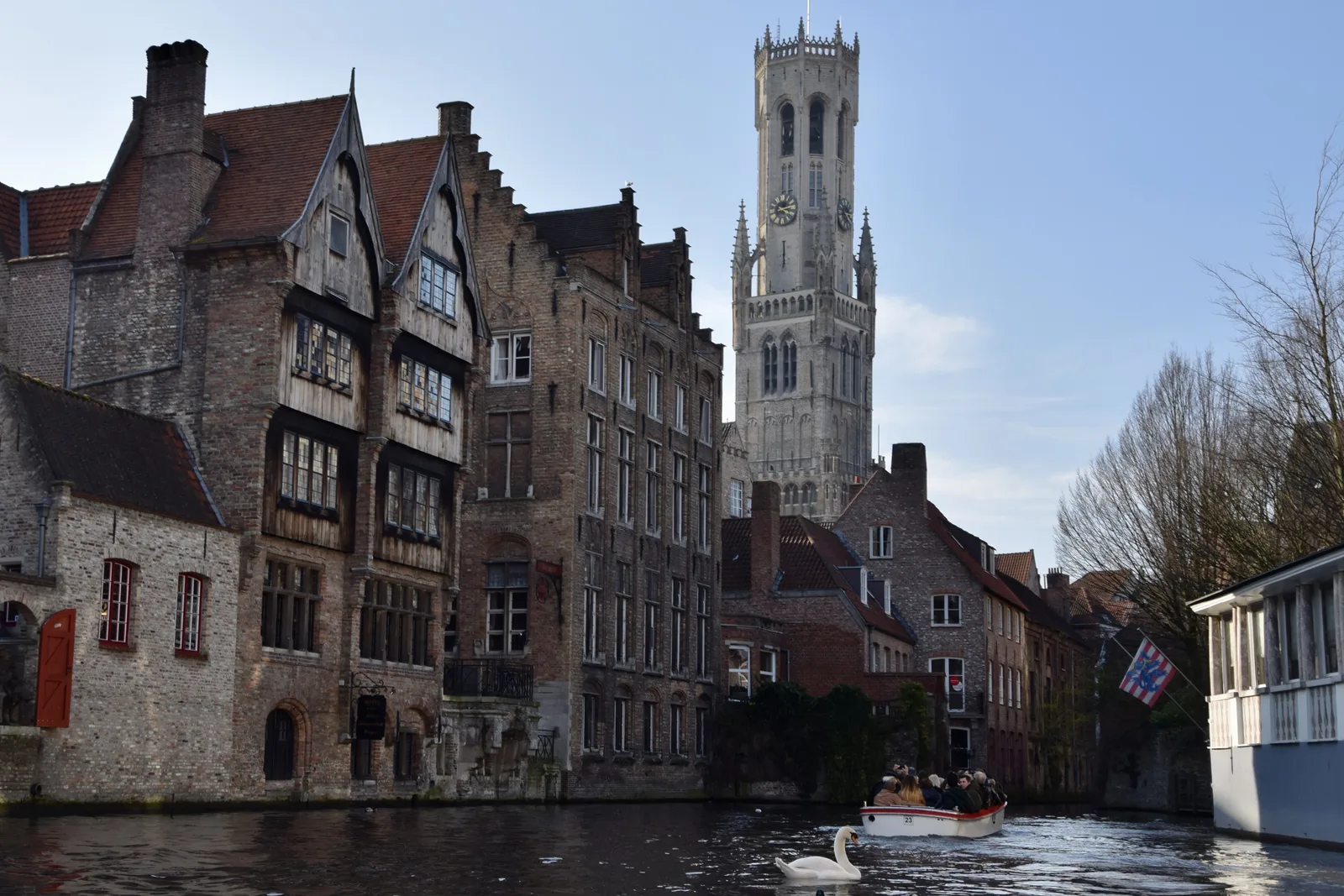
Bruges makes a strong first impression: stepped gables, canal reflections and the Belfry rising over the Markt. The reason to stay longer is the range behind that familiar image. Painting, civic history, quiet residential courtyards and the newer exhibition spaces can each occupy a substantial part of a day. Choose a few that matter to you rather than using every landmark as a compulsory photograph stop.
Two days allow a satisfying first visit without making every meal a deadline. A single day can cover the central streets and one important interior; three days create room for a slower museum visit or the surrounding region. For anyone considering living here, add a normal weekday and test the journeys you would actually make. Bruges and Brugge are the English and Dutch names of the same destination; VisaWand retains Brugge in this page's existing address.
Trade explains the city better than a fairy-tale label
The official World Heritage introduction connects Bruges's prosperity with the canals, access to the sea and international merchants. Its fifteenth-century flowering helps explain why important paintings and imposing civic buildings sit within such a compact centre. Look at the commercial and political purposes of those places as well as their façades.
That history does not mean the city is an open-air museum without residents. Homes, offices, shops and religious spaces continue to have everyday functions. The Beguinage, in particular, deserves more care than treating it as a convenient backdrop. A good visit combines the great public squares with quieter walks and the time to understand one collection. It also recognises that the medieval trading city and today's coastal port are different places within a wider municipal and regional geography; a photograph of central canals does not show a sea beach.
The Belfry: book the climb, then judge the stairs
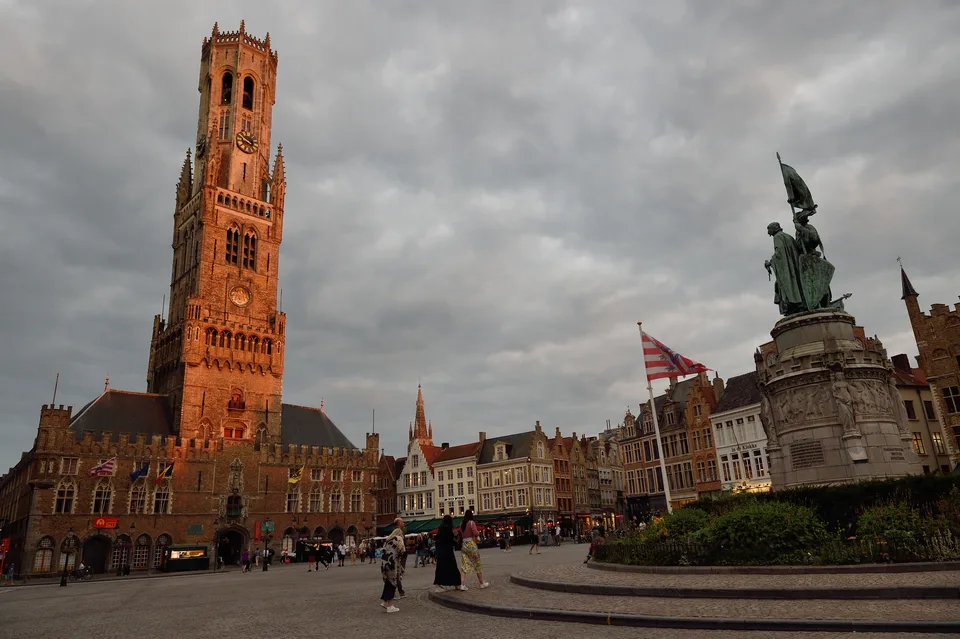
The Belfry's visitor information describes 366 steps inside an 83-metre tower. There is no lift. The single spiral stair becomes narrower and steeper higher up, and descending visitors have priority. Reserve a time slot in advance if the climb matters to your trip, including when using a museum card; admission capacity is limited.
Allow roughly an hour, with room for pauses rather than racing to the viewpoint. Children under twelve need an adult, and babies and toddlers must be carried in a front-facing carrier. The site states that it has no place to leave a pram. For wheelchair users, the tower climb is unavailable, while the courtyard and City Halls below offer an alternative encounter with the building. Check the date-specific fare and hours through the official booking link rather than relying on an old flat price. Strong wind or other severe weather can affect opening.
Canal boats are a round trip, not a transport pass
Visit Bruges's boat information lists a half-hour cruise at €15 for adults and €9 for children aged four to eleven, with under-fours free. Those published prices run through 31 December 2026. Individual visitors cannot reserve in advance through this offer: tickets are purchased at the boat companies' boarding points, and busy periods can mean a wait.
Five companies use their own jetties but follow the same route and tariffs. You return to the point where you boarded, with no intermediate stops. Choose the embarkation point that fits your walking route rather than expecting a hop-on service between attractions. Check payment arrangements before queuing; the visitor information names cash and Payconiq. If boarding steps or transfers are a concern, discuss the actual boat with the operator. A general description of a city as accessible does not establish suitable boarding for every passenger.
The Beguinage is a residential place of silence
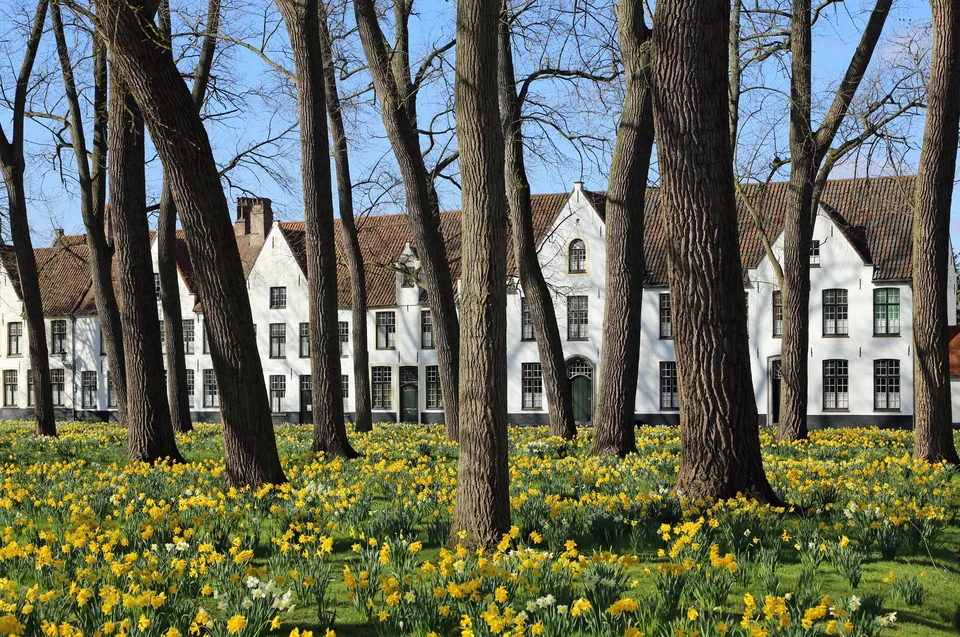
The Beguinage's official description dates its foundation to 1245 and explains its origins as a community of devout lay women. Today it remains inhabited by women, including some with a religious vocation. Its white façades and garden make a distinctive setting, but the city's request is clear: visit quietly and respect the people who live here.
Entry is listed as free. Use the current opening information rather than assuming that an outdoor courtyard is available at all hours. Keep conversations low, put phones on silent and avoid using residents' doors as portrait backdrops. Access information identifies assistance as necessary on some paths and at the entrance, so anyone needing an independently accessible route should check the detailed assessment beforehand. This is an excellent place to slow the pace of a busy sightseeing day, provided the visit follows the character of the place.
Art visits need the current collection calendar
The Groeningemuseum introduces Belgian visual art through works by painters including Jan van Eyck, Hans Memling and Gerard David. Its current standard admission is €15, and its published weekly closure is Monday. A reader planning around an older Tuesday closure could lose the main museum visit of a short stay.
There is also a larger change ahead. The museum flags a forthcoming extended refurbishment, and Musea Brugge's programme announcement schedules a presentation of the Groeninge Collection at BRUSK from 12 March 2027. Confirm the venue and available collection for your travel dates before buying transport specifically to see a particular work. Loans create further changes: an official notice announces a temporary London loan for the portrait of Margareta van Eyck. Because the language versions disagree about its final Bruges display day, this guide does not promise that painting on a specific November date.
BRUSK adds contemporary exhibitions to the programme
BRUSK's current programme is a useful counterpoint to the historic interiors elsewhere in Bruges. Standard admission is listed at €20. Exhibition spaces normally open Tuesday to Sunday, with hours changing from 10am–6pm to 9.30am–5pm on 3 November. Monday access to the Scala should not be read as general Monday admission to the exhibitions.
For autumn 2026, the published calendar runs Refik Anadol's Latent City through 8 November and starts High Tide on 30 October. These are dated programmes, so select the exhibition available during your own stay instead of assuming an inaugural show remains indefinitely. Compare the actual ticket conditions with any combined offer before paying for two separate visits. Leave time to look, read and pause: adding an exhibition because it happens to be near another museum is less rewarding than choosing one that interests you.
Explore north of the busiest central circuit
The Hanseatic Quarter around Jan van Eyckplein and Oude Beursplein offers a useful second walk after the Markt and Burg. Its squares and trading associations connect the picturesque canals with the city's commercial history. Use the visitor office's information to identify the Toll House and the old exchange area rather than walking past them as anonymous attractive buildings.
Continue only as far as your energy and interests suggest. A quieter-looking street is not an invitation to enter private courtyards or photograph through residential windows. For a short visit, this walk can replace an additional paid attraction. For a longer stay, return without a sightseeing agenda and look at the practical surroundings: groceries, bicycle storage, the route back to a station and the evening atmosphere. That makes a more useful comparison of places to stay than declaring an entire district either peaceful or busy.
The ramparts and mills offer a different landscape
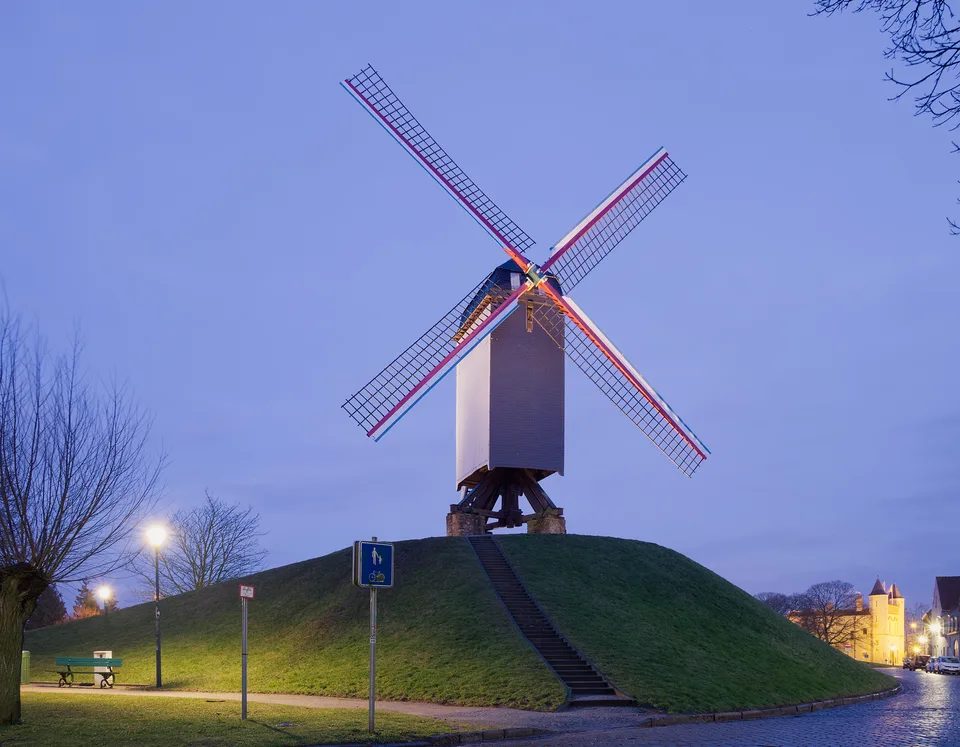
The Bonne Chiere Mill information explains why the eastern ramparts are an important part of the city's industrial heritage. Several surviving mills were moved here from elsewhere. Bonne Chiere, De Nieuwe Papegaai and Koelewei are decorative; Sint-Janshuis is the authentic Bruges mill that still grinds grain. Do not plan an operating-mill demonstration at whichever windmill appears in a photograph.
This is a good extension when you want more open space after central streets and museum rooms. Build the route around an outdoor walk, then add a confirmed interior visit separately. Wind, rain and the return journey matter more when you are farther from the accommodation. Travellers with limited mobility should check gradients and surfaces rather than assuming a green route is necessarily easier than a street. Choose the length to suit the group and keep time for an unhurried return.
Stay near the places you will use repeatedly
Start with the official accommodation directory to compare hotels, guesthouses and holiday accommodation, then read the property's own terms. Around the Markt and Burg, the main advantage is repeated access to the central sights. Near the station or 't Zand, the useful question is how much simpler arrivals, departures and regional journeys become. A photograph of an attractive canal should not be the only reason to accept an awkward daily route.
Compare the full price for your dates, including taxes, breakfast, parking and cleaning where relevant. Ask about the actual room's stairs, lift, bathroom access, noise and luggage storage. Families may value a kitchen and laundry more than another decorative feature. Check cancellation conditions before booking around a particular exhibition. A tourist apartment is also a different product from a residential tenancy: anyone considering moving should confirm whether the accommodation can support their actual registration requirements.
Local buses: activate the right ticket before travelling
De Lijn lists its single ticket at €3. The digital app or website ticket gives sixty minutes of travel and must be activated before boarding. Buying a ticket and activating it are separate steps. The operator also requires the account name to match your identification.
Contactless payment aboard the vehicle uses the white terminal. Present the same payment medium again when transferring within the permitted hour; for a group, follow the operator's instructions for each traveller. Contactless and card tickets allow completion of the last ride after the sixty-minute period. SMS tickets carry an additional €0.25 operator charge. Choose the medium that suits your phone, payment arrangements and journey rather than assuming all purchase methods behave identically. Check the actual bus route and stop before leaving your accommodation, particularly when travelling with luggage or returning late.
Arrivals: distinguish the airports and the final walk
Brussels Airport's rail information places its station directly beneath the terminal and gives Bruges an indicative journey time of about an hour and twenty-five minutes. Check the actual train rather than adding that time mechanically to your flight arrival. Collection of bags, waiting and the last journey to your accommodation require separate allowance. The airport rail supplement is listed at €6.90 and is often already included in the ticket: it is neither the complete fare nor necessarily a second charge to add yourself.
Brussels South Charleroi is a different airport. Visit Bruges's transport information describes a direct Flibco coach and places international coach arrivals behind Brugge station, on the Spoorwegstraat side. Its station-to-Markt walking estimate is around twenty minutes. Compare the complete connection and final arrival time before choosing a flight solely for the headline fare. Late check-in arrangements and an affordable final transfer can materially change the decision.
Walking, buses and driving need different plans
For central sightseeing, use the official city map to connect nearby visits and identify toilets, bus stops and boarding points. Its accessible walking-route information is especially useful when paving, kerbs or assistance requirements determine what is practical. A short distance on a map is only one part of an accessible journey.
The centre has streets with time-specific traffic restrictions. If driving, establish the legal approach and parking arrangement with your accommodation rather than following a navigation instruction into a restricted street. Budget parking separately and consider whether the car will be useful after arrival. For buses, check the correct direction and return stop in the live planner: the most convenient stop going into the centre may not be the best one coming back. With a bicycle, choose routes to match confidence and conditions, and slow down where pedestrians and sightseeing groups share limited space.
Food and shopping: choose deliberately
The official food and café listings cover traditional pubs, international cooking, lunch spots and other options. Use the directory as a way to find businesses, then check their own menus and opening information. It does not justify calling a place a personal favourite or promising that one restaurant will suit every budget and dietary requirement.
Keep a daily meal allowance that reflects how you want to travel. A simple breakfast and a planned main meal can leave more room for an important museum visit than buying every meal beside a major square. Ask about ingredients and portion sizes before ordering if restrictions or sharing matter. For purchases, consult the shopping directory to find relevant businesses, then compare provenance, price and usefulness rather than treating every souvenir as locally made. Check opening times before leaving essential groceries or a particular purchase until the last morning.
Turn the published prices into a usable allowance
As a worked example, one adult taking two separate €3 bus journeys, a €15 canal cruise and a €15 Groeningemuseum visit would allocate €36 before accommodation, meals and other purchases. This is arithmetic using the individual prices above, not a combined ticket or a promise of a whole holiday budget. Check eligibility and any current museum offer before buying separately.
The example also makes the choices visible. Walking instead of those two bus journeys saves €6; removing the cruise saves €15. Keep the experiences that matter to you and compare hotel totals for the same dates before deciding that a small attraction saving makes one itinerary cheaper overall.
Weather and seasons: leave flexibility in the day
The Royal Meteorological Institute's climate explanation emphasises Belgium's Atlantic influence and changing air masses. Its broad pattern of relatively cool, moist summers and comparatively mild, rainy winters still allows significant heat and cold exceptions. National climate descriptions are not precise forecasts for a Bruges weekend, and an appealing seasonal photograph is not evidence of the weather you will get.
For walking and canals, pack a practical rain layer and shoes suited to wet surfaces. In winter, plan outdoor sections around available daylight; in summer, leave room for drinking water and a rest if heat develops. Spring and autumn can suit a trip focused on walking and museums, but neither guarantees empty streets or low room prices. Choose against your actual interests, accommodation quotes and event dates. Keep one indoor option available and move it to the wetter part of the day when bookings allow.
A two-day itinerary with room to enjoy it
Begin day one at the Markt and Burg. If climbing the Belfry is a priority, use a reserved slot and keep the rest of the morning loose. Walk towards Rozenhoedkaai, then choose a canal cruise if the queue and conditions suit you. After lunch, visit the Beguinage quietly and leave time for the surrounding streets rather than adding another appointment just to complete a list.
Use day two for the art collection or BRUSK exhibition that most interests you, checking the current venue and Monday closures first. Add the Hanseatic Quarter or the ramparts and mills, keeping the longer outdoor section for the better weather. With three days, consider an excursion; with one, retain the central walk and one substantial activity. Families or visitors who need more rest can split these walks into shorter sections. A realistic programme survives a queue, rain shower or leisurely meal without making the remainder impossible.
Moving here starts with the tenancy and daily route
Inspect possible homes as places to live rather than extended holiday rooms. Test the commute at the time you would travel and check shopping, bicycle storage, laundry and evening access. Compare current equivalent listings instead of using a hotel rate or an old city-wide rent figure as a long-term housing budget. Include heating, utility arrangements and initial household purchases in the comparison.
Flanders's residential tenancy guidance requires a written agreement and sets out the importance of rent, duration, costs and charges. It also describes the landlord's registration obligation and a detailed, dated and signed inventory at the beginning of the tenancy. Read the rules that apply to the proposed contract before accepting notice or deposit terms. A student tenancy has its own framework. Do not assume that a short fixed term simply ends without any required action or that an informal promise replaces the written agreement.
Registration and essential services need advance preparation
The city's registration instructions for non-Belgians require an appointment, appropriate identity documents and other evidence relevant to the person's status. The process includes a check at the residential address and further instructions after the file is assessed. Contact the service about your circumstances before attending. Municipal registration does not by itself establish that every immigration condition has been satisfied.
At the property handover, record meter readings, the inventory and responsibility for electricity, water, heating and internet. Confirm an installation date if a reliable connection is essential for your work or course. For healthcare, Belgium's official insurance information explains the role of membership of an insuring organisation and the reimbursement system. Arrange suitable arrival cover and establish the process for your own entitlement rather than assuming all consultations will be free. Families should confirm school and childcare arrangements separately before treating a signed lease as a complete relocation plan.
Visiting, working and settling follow different rules
The Belgian Immigration Office distinguishes short-stay C visas and longer-stay D visas for third-country nationals. Some nationalities do not need a short-stay visa, but the ordinary Schengen short-stay framework still limits applicable visits to ninety days in any 180-day period across the area. Travelling onward to France or the Netherlands does not create a new allowance.
Employment, study, family reunification and long-term residence require their own assessment. The office's work guidance specifically distinguishes authorisation to work for more than ninety days from authorisation to reside for that period. A tourism arrangement should not be treated as permission to take a job or establish permanent residence. EU, EEA and Swiss circumstances follow separate rules. Use VisaWand's Belgium guide for broader orientation and its Belgium consultation listings to compare advice, while checking current requirements with the responsible authorities before making commitments.
Nearby alternatives and the next part of the trip
The visitor office's map information points towards Lissewege, between Bruges and Zeebrugge, and the coastal district of Zeebrugge. These offer a different setting from the central canals. Pick an outing for its own appeal and confirm the complete return journey for the actual day, particularly if adding a walk beyond a station. A bus ticket should not be assumed to include a regional train.
For another urban stay, compare VisaWand's Brussels page or Antwerp page, checking the content available for each destination. The Belgium location directory helps find further places without implying that every entry is a completed guide. Allow some unscheduled time in Bruges before leaving: returning to a painting, a walk or a square you enjoyed can be more rewarding than travelling farther simply because the timetable has a gap.
Official planning resources
Reviewed 16 October 2026. Use the official resources linked throughout this guide for admission, transport, housing and immigration decisions. Prices, services and rules can change; confirm the details relevant to your dates. Photography illustrates the locations and is not a live view.
View all official resources
- Visit Bruges: World Heritage
- Visit Bruges: Belfry access and reservations
- Visit Bruges: canal boat trips
- Visit Bruges: Beguinage
- Musea Brugge: Groeningemuseum
- Musea Brugge: forthcoming BRUSK programme
- BRUSK: current exhibitions and tickets
- Visit Bruges: Hanseatic Quarter
- Visit Bruges: Bonne Chiere Mill
- Visit Bruges: accommodation directory
- De Lijn: single ticket
- Brussels Airport: rail connections
- Visit Bruges: travelling to and around Bruges
- Visit Bruges: official city map
- Visit Bruges: food, bars and cafés
- Visit Bruges: shopping directory
- Royal Meteorological Institute: Belgian climate
- Flanders: residential tenancy agreements
- City of Bruges: registration for non-Belgians
- Belgium: healthcare costs and insurance
- Belgian Immigration Office: third-country nationals
- Belgian Immigration Office: work and residence
Plan the next part of your journey
Explore the Belgium guide, browse other cities or compare consultants for your travel and relocation questions.