Visa

About Asian University of Bangladesh
A private university in Ashulia
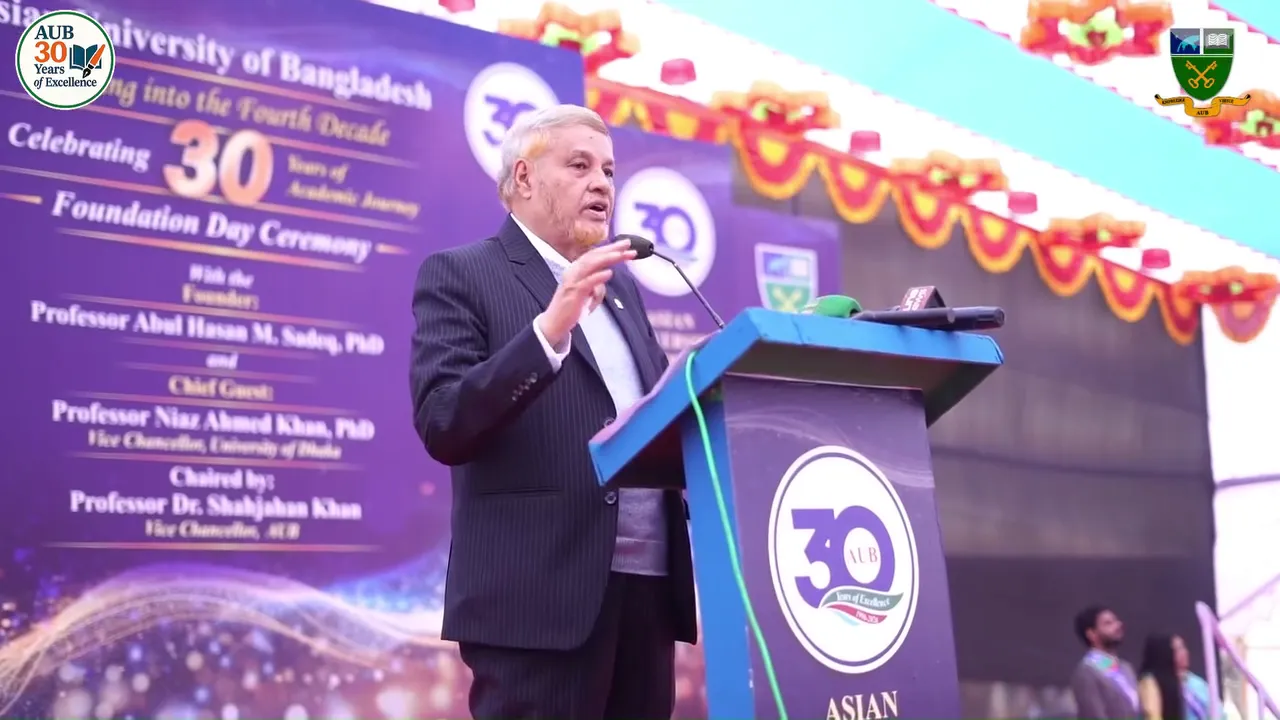
Asian University of Bangladesh, commonly known as AUB, is a private university whose permanent campus is at Tongabari, Ashulia, in the Dhaka area. Its official history records government approval on 4 January 1996 under Bangladesh’s Private University Act of 1992. The institution was founded by Professor Abul Hasan M. Sadeq. The history page also describes its inauguration, attended by government and University Grants Commission representatives. This institutional account places the university’s establishment within the development of private higher education in Bangladesh. Its present website identifies the Ashulia campus as the location for academic and administrative contact, connecting that founding history with the university’s current institutional base.
Sources: History of AUB ↗
Educational purpose and academic values
AUB’s mission combines tertiary education and training with research, innovation and ethical development. Its published objectives emphasise professional skills, moral responsibility and socially responsible citizenship. The university also sets out an intention to connect learning with practical engagement, rather than treating the acquisition of knowledge as an exclusively classroom activity. Its academic ambitions extend across science, engineering, business, humanities and education. Familiarity with research, exposure to new ideas and the development of leadership qualities are presented as parts of this educational purpose. These statements describe the institution’s goals for its teaching and research community, with service to Bangladesh and to wider society providing a recurring theme.
Sources: Vision and mission ↗
The Dr. Sadeq Library
The Dr. Sadeq Library was established in 1996 and supports the university’s teaching, learning and research. Its circulation desk handles loans, guidance, reference and referral enquiries. The collections span business, economics, liberal arts, social sciences, humanities, computing, mathematics, English language and literature, and Bangladesh studies, alongside other subject areas. Reference resources include dictionaries, encyclopaedias, atlases, reports, census material and statistical publications. Electronic books, journals and other digital resources complement the physical holdings. The library page provides routes to academic resources such as JSTOR, Emerald and Wiley, and links to issues of Asian Review. Its stated objectives include organising scholarly material, widening access to digital collections and encouraging information literacy. The library is described as being in the academic building at the permanent Ashulia campus, with professional staff responsible for collections and services. A committee representing faculties and departments advises on library policies, acquisitions, information services and operational matters.
Sources: Dr. Sadeq Library ↗
Student activities beyond classes
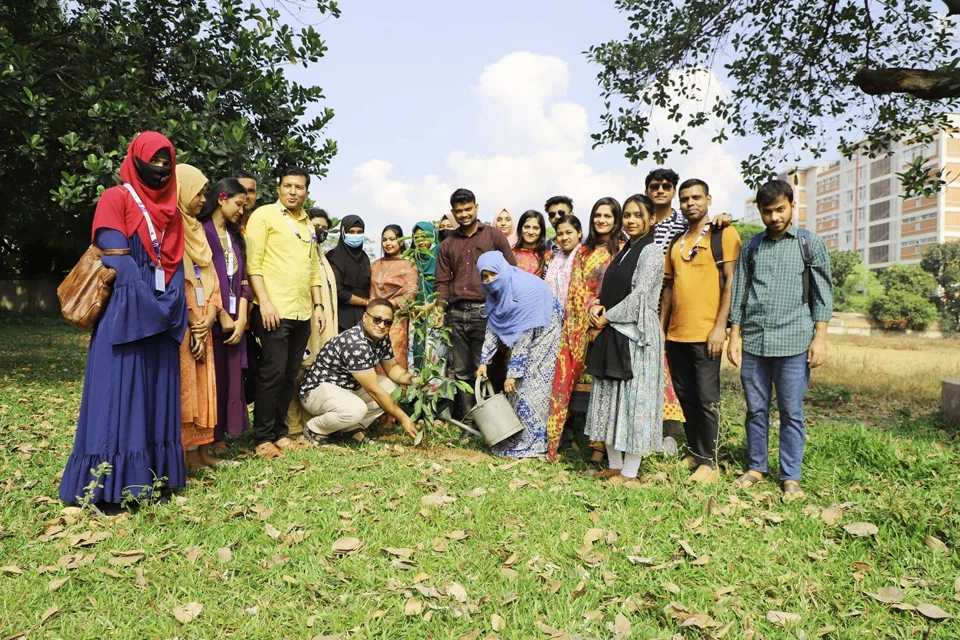
The campus-life information describes a mix of student societies, teams and clubs, with activities intended to complement formal study. Sports, games, debate, presentations and community service feature in this account. Group activity is presented as a setting for developing communication, organisational and leadership skills. The university’s gallery illustrates several aspects of this environment, including tree planting, cultural activities, football, cricket and indoor games. It also identifies practical facilities such as a canteen, hostel provision and transport. These activities and services form part of a campus experience that combines academic work with opportunities to meet other students and participate in collective projects, performances and recreation.
Sources: Campus life ↗
Computer science and engineering
The Computer Science and Engineering department describes educational objectives covering software development, information technology, research and professional ethics. Its graduate attributes include using programming languages and tools to build systems, analysing algorithms and specifications, and applying mathematics, logic and statistics to computing problems. Team experience in software and embedded systems is another stated element. The department lists a bachelor’s engineering programme in Computer Science and Engineering, with routes for regular entrants and students with diploma backgrounds. English is identified as the medium of instruction. Its student activities include seminars, workshops, programming contests, debates, symposia and poster presentations, alongside community service and sports. This combination connects the department’s technical subjects with opportunities to communicate work, collaborate and engage in activities outside individual coursework.
Language, literature and English studies
The English department lists both BA and MA study. Its published educational objectives connect knowledge of language and literature with communication and engagement with culture. Oral and written English proficiency forms part of its intended graduate development, while world literature and cultural study are incorporated into its curriculum description. The department also identifies classes, seminars and tutorials as settings for learning. Its account refers to related perspectives from psychology and pedagogy, placing language study within a broader understanding of people and education. The department’s ambitions are framed around the development of knowledgeable, ethically grounded graduates, combining language skills with literary and cultural awareness rather than treating English solely as a practical communication subject.
Sources: English department ↗
Business education and research
The Business Administration department traces its establishment within the School of Business to 1996. It lists Bachelor of Business Administration and Master of Business Administration programmes. The school’s stated objectives include developing creative approaches to strategic planning and implementation, administrative capability and professional integrity. It also identifies the dissemination of knowledge and research in business, economics and management as parts of its educational role. Another aim is to provide a setting where executives can exchange ideas, experience and knowledge. Together, these objectives connect business study with both organisational practice and academic enquiry. The department presents professional competence and ethical responsibility as complementary elements of its intended education, alongside the research interests represented within the school.
Sources: Business Administration department ↗