Visa

About Ad-din Women's Medical College
Women’s medical education in Dhaka
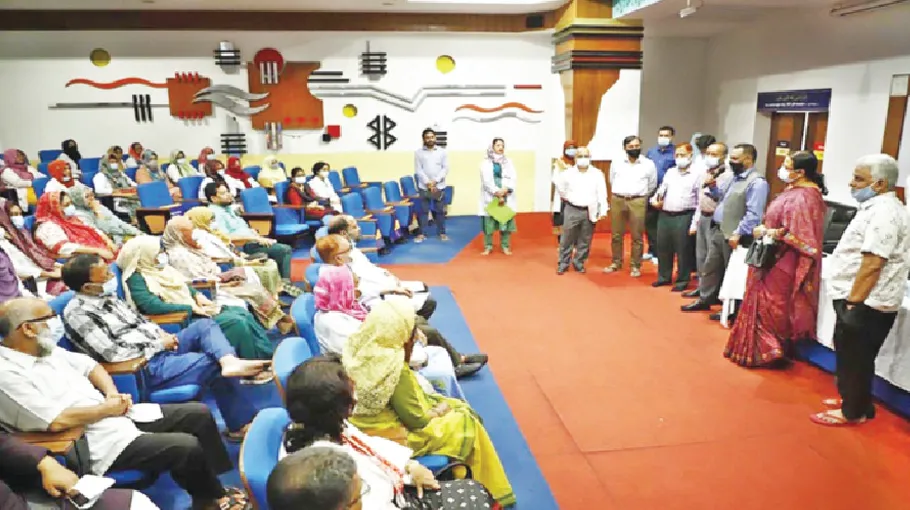
Ad-din Women’s Medical College is a medical education institution in Maghbazar, Dhaka. Its official introductory account dates the start of academic activity to December 2008. The college serves women students from Bangladesh and abroad, bringing academic departments, practical learning facilities and student accommodation into its educational environment. It is a distinct institution within Ad-din’s wider educational and healthcare activity.
The college’s stated approach connects medical knowledge with ethical conduct and responsibility towards the community. Its introductory material identifies teaching staff, library resources, practical laboratories and hospital proximity as parts of the learning setting. Beyond the formal curriculum, students have opportunities to participate in clubs, societies and cultural activities. This gives the college an identity combining structured medical study with the personal and social experience of a women’s academic community in the capital.
A phased medical curriculum
The published MBBS subject structure is organised in four phases. The first covers anatomy, physiology and biochemistry, establishing the study of human structure, function and molecular processes. Pharmacology and therapeutics, together with forensic medicine and toxicology, appear in the next phase. Community medicine and public health, pathology and microbiology provide further perspectives on disease, prevention and population health.
The final phase brings together medicine, surgery, and gynaecology and obstetrics. The college’s examination outline distinguishes written, oral and practical components, showing that assessment is not confined to written answers. The structure combines scientific foundations with progressively more clinically oriented subjects. It also places public health and the interpretation of laboratory evidence alongside the study of individual patients, creating connections across different areas of medical knowledge.
Sources: MBBS subject structure ↗
Laboratories and practical understanding
The college lists practical facilities for anatomy, physiology and biochemistry, together with an anatomy dissection hall and museum. Community medicine and forensic medicine have laboratory and museum resources, while pharmacology, pathology and microbiology have their own practical settings. Serology, immunology, histopathology and cytology are also identified within the laboratory provision.
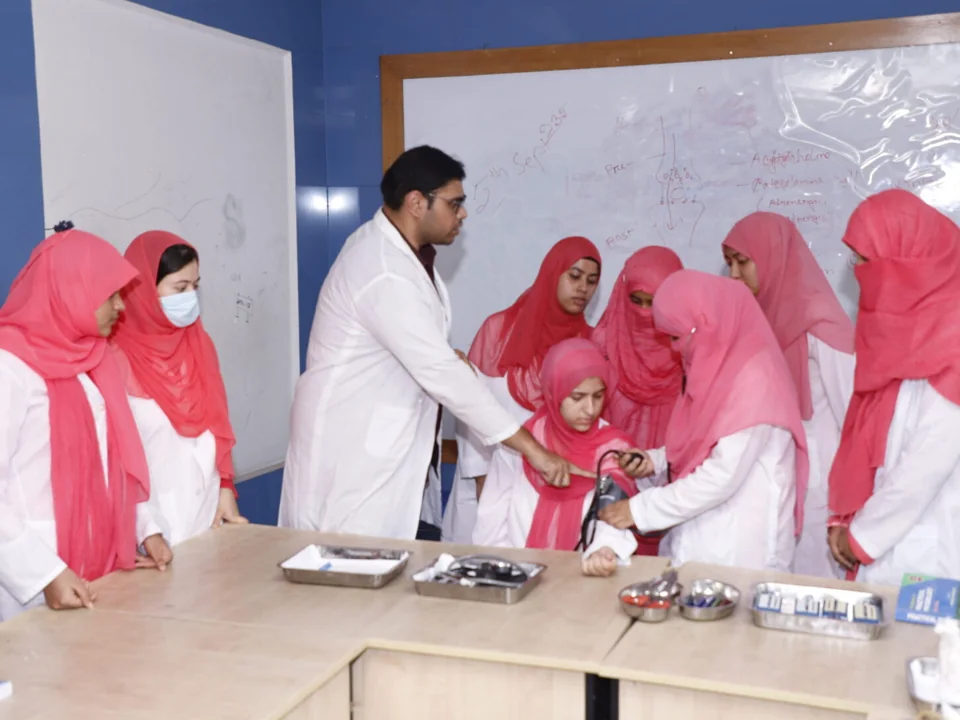
These facilities support different forms of learning, from examining structure and specimens to understanding processes and laboratory observations. The college’s laboratory gallery documents students and instructors working together, including a practical demonstration around a teaching bench. Such small-group activity complements the larger body of material introduced through lectures and reading. The range of laboratories reflects the variety of subjects that students encounter as they move through the medical curriculum.
Sources: Laboratory facilities ↗
Library resources and independent study
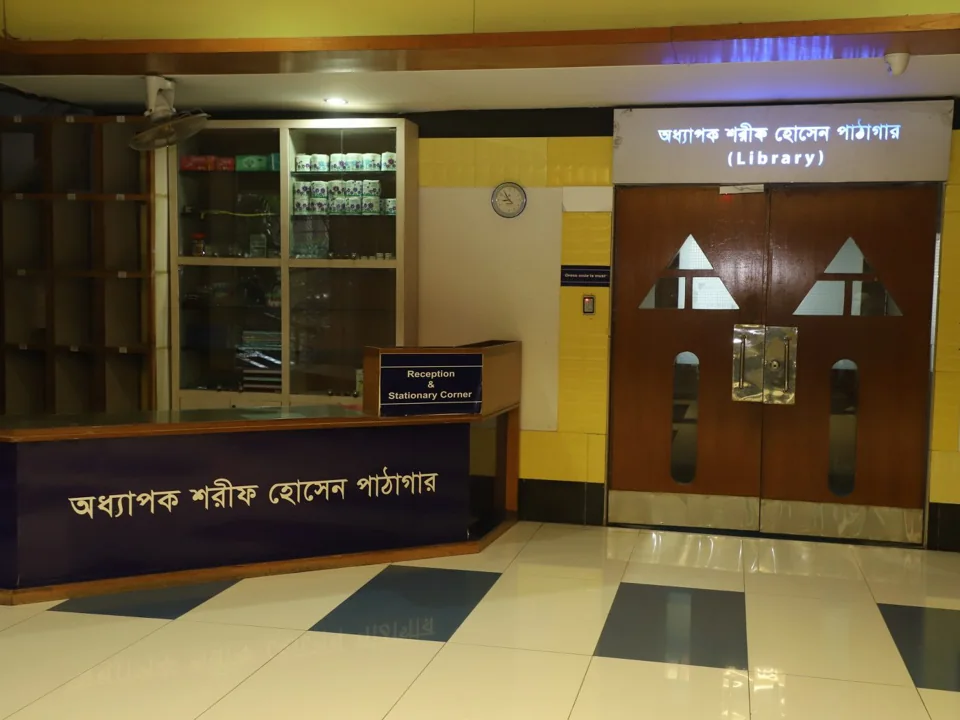
The academic library occupies the fifth and sixth floors of the college building. Its collection includes textbooks, reference works and monographs across medicine and surgery, as well as Bangladeshi and international journals in medical and related subjects. Reading space allows students to work with these materials outside scheduled classes. Computer facilities, Wi-Fi and audiovisual resources extend the ways in which learning material can be consulted.
The library’s published rules emphasise the shared use and care of its collections. Entry uses a student identity card, borrowing follows library procedures, and newspapers and journals are read in designated areas. These arrangements support both access and the preservation of material for other readers. Together, the collection, reading rooms and electronic facilities provide a setting for preparing for classes, revisiting difficult topics and developing the independent study habits required by a demanding professional curriculum.
Sources: Academic library ↗
Continuing development through the Medical Education Unit
The Medical Education Unit was established on 18 July 2023. Its organisational structure includes a core committee, a junior and trainee doctors’ development committee, a journal club and evidence-based practice committee, and a continuing medical education committee. The college records the start of associated academic activities on 7 November 2023 and publishes materials grouped by year.
The unit’s programme categories include faculty development, junior and trainee doctor development, journal-club activity, evidence-based practice and continuing medical education. The page also identifies special continuing-education sessions. Its published description assigns regular Tuesday sessions to the subunits, giving the development programme a recurring place within the weekly academic schedule. This structure provides several routes for discussing teaching, reviewing scholarly material and developing professional knowledge after the initial introduction of a subject. It connects staff development with the learning needs of trainees and maintains a place for academic exchange within the institution’s ongoing activity.
Sources: Medical Education Unit ↗
Accommodation and a shared college community
The college provides hostel accommodation for local and international students in buildings near the academic premises. Its accommodation page describes female hostel supervision, security arrangements, lockers, common lounges, kitchen and dining facilities. The proximity of the residences allows students to move between daily life and college activity within the surrounding neighbourhood. Accommodation is managed separately from the classrooms and laboratory spaces used for study.
The extracurricular programme gives students opportunities to share Bangladeshi cultural traditions. The college identifies picnics, cultural nights and celebrations such as Pitha Utshob, Pohela Falgun and Pohela Boishakh. It also commemorates Language Martyrs’ Day, Independence Day and Victory Day. These activities create occasions for domestic and international students to work together and become familiar with the cultural setting in which they study. Alongside academic preparation, they contribute to the social life and shared experience of the college community.
Sources: Student accommodation ↗ · Extracurricular activities ↗