Visa

About Army Institute of Business Administration, Sylhet
Business education in Sylhet
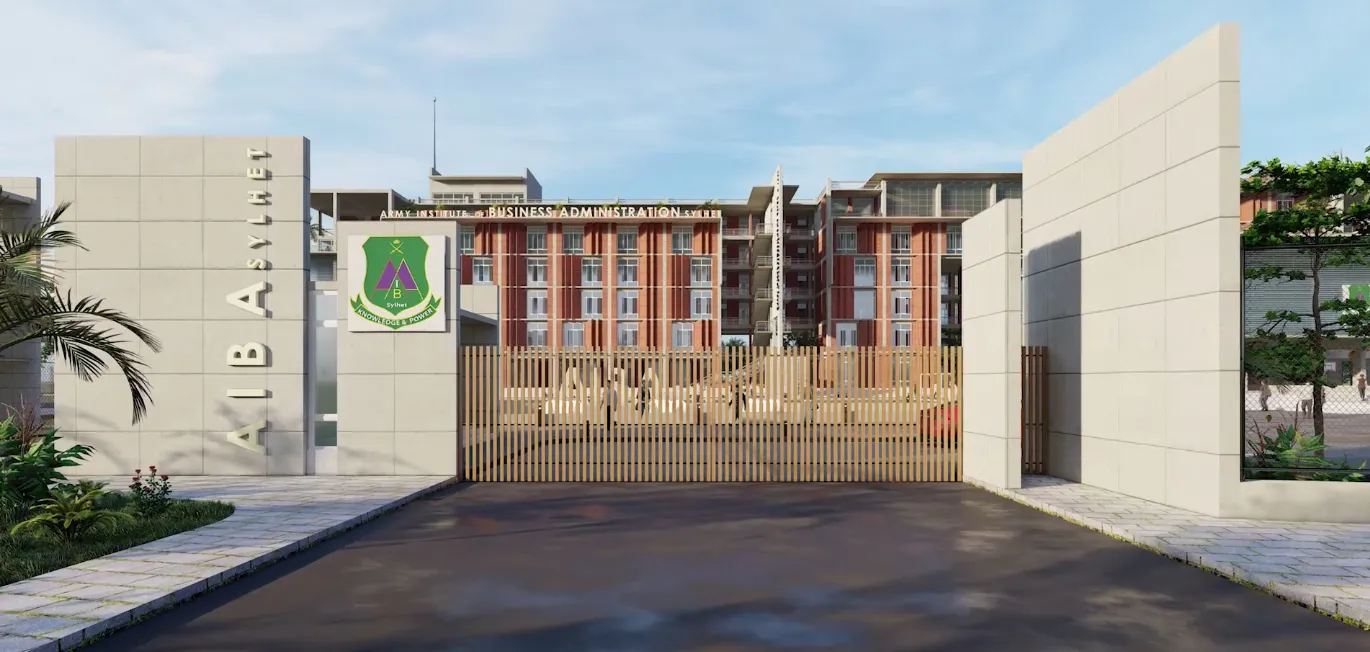
The Army Institute of Business Administration, Sylhet, is a business-education institution established in 2015. Based on Sylhet Cantonment Road, it serves students and professionals through business-administration programmes. Its official institutional overview lists BBA, MBA and Executive MBA provision. AIBA Sylhet operates under the supervision of the Bangladesh Army and is distinct from the similarly named institute at Savar.
Its academic relationship with Bangladesh University of Professionals is central to its organisation. AIBA describes its programmes as affiliated with BUP, which approves examination schedules and results and awards certificates to qualified graduates. The Sylhet institute's own role includes organising teaching and campus activities. The institution also describes an inclusive community drawn from military and civilian backgrounds, combining business study with an emphasis on discipline, structure and decision-making.
Sources: AIBA at a glance ↗ · Why AIBA stands out ↗ · Affiliation with BUP ↗
Educational mission and values
AIBA Sylhet's motto connects knowledge with empowerment. Its mission is to provide business education to young citizens and professionals, while its vision looks toward developing independent, innovative, dynamic and compassionate leaders. These are statements of educational purpose that guide the institute's work.
The institution identifies creativity, diversity, wisdom, integrity, ethics and discipline among its values. Its objectives include helping students make practical decisions based on informed judgement and develop a thorough understanding of theory before applying it. It also seeks to sustain an academic environment in which the curriculum can proceed without political interruption. Further objectives address international collaboration, the future diversification of education and research, and respect for national culture, heritage and traditions. This framework places personal conduct and social responsibility alongside the acquisition of business knowledge.
Sources: Mission and vision ↗
Spaces for study and campus life
The facilities overview describes classrooms equipped with audiovisual technology, computer laboratories, conference rooms and spaces for workshops and seminars. The library provides books, journals and digital resources for academic study and research. These facilities support different kinds of work, from classroom discussion to individual reading and organised group activities.
AIBA also describes a cafeteria and recreational areas within its campus provision. Accommodation for male and female students is offered through a third-party service provider, with monitoring by the institute; it is therefore distinct from a claim that AIBA directly operates every residential service. Its transport provision includes shuttle connections with locations in Sylhet and parking for cars and motorcycles. Campus connectivity includes Wi-Fi, electronic-library access, learning-management systems and digital attendance, linking physical teaching spaces with administrative and educational technology.
Sources: Facilities overview ↗
Clubs and student participation
The institute's club page brings together business, cultural, sporting, debating, social-welfare, hiking and trekking, information-technology, art, research, photography, and media-and-film interests. These groups provide activities alongside the formal academic programme.
The Photography Club's stated objectives make its role particularly clear. It photographs institute programmes, displays selected event photographs, maintains an image archive and contributes to documentaries about AIBA. It also organises photography workshops and exhibitions. The club has a structure involving faculty advisers and student officers. This combination of creative work, documentation and organisation gives students opportunities to participate in presenting institutional life, while preserving a record of events for the wider campus community.
Sources: AIBA clubs ↗
Postgraduate business learning
The MBA description emphasises business concepts, organisational circumstances and the judgement required for management and operational work. It presents postgraduate study as a means for professionals to deepen knowledge and connect conceptual understanding with practical responsibilities. Different concentrations are intended to help participants understand their own specialist areas while also recognising the activities of other parts of an organisation.
The programme's educational objectives include conceptual, practical and work-related skills, with professional experience providing a context for further study. Its description also addresses business environments with diverse cultural backgrounds. This is the institute's stated approach to postgraduate learning: developing an understanding of management in context and the capacity to analyse organisational situations.
Sources: MBA programme ↗
Research integrity in academic life
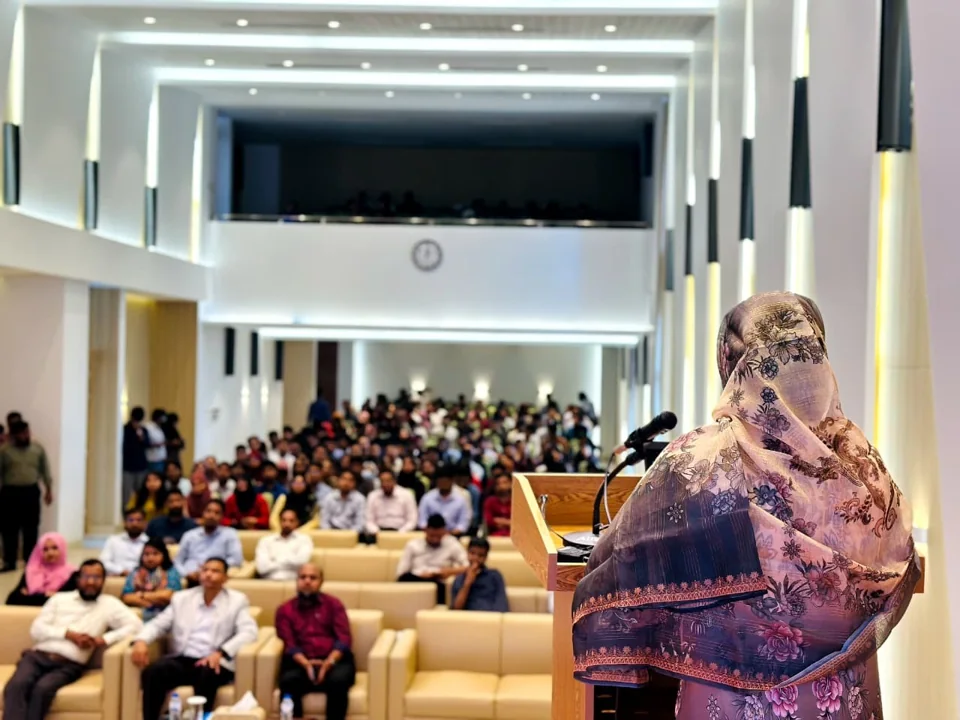
On 27 August 2026, AIBA Sylhet's Center for Research and Development organised a session on ethics, honesty and publication integrity in the institute auditorium. Badrun Nessa Ahmed of the Bangladesh Institute of Development Studies led the discussion for students and faculty.
Topics included data integrity, transparent analysis, ethical publishing, fair co-authorship and the protection of original research and datasets. The speaker also discussed ethical review committees and student-faculty collaboration. An interactive question-and-answer session addressed data management and publication standards. The event illustrates how research conduct enters the institute's academic activities, complementing business teaching with discussion of how scholarly work should be produced and shared.
Sources: Research-integrity session, 27 August 2026 ↗
Business ideas and industry exposure
A separate research-centre seminar on 6 July 2026 addressed social business and corporate leadership. Guest speaker AKM Moinuddin Chowdhury of Grameen Kalyan discussed how social business differs from conventional corporate charity or corporate-social-responsibility initiatives.
Practical exposure also featured in an industry visit on 3 October 2026. Students from the BBA-11 cohort visited Habiganj Industrial Park at Olipur, a PRAN-RFL Group concern. Coordinated with AIBA Career Club involvement, the visit included factory tours and interaction with industry professionals. The institute's report identifies production operations, supply chains and workplace practices as areas observed. These two examples connect classroom business concepts with discussion among practitioners and observation of industrial settings.
Sources: Social-business seminar, 6 July 2026 ↗ · Industry visit, 3 October 2026 ↗