Visa

About Army Institute of Business Administration, Savar
Business education in Savar
Army Institute of Business Administration, Savar, is a business-education institution supervised by the Bangladesh Army and affiliated with Bangladesh University of Professionals. It began its work at Savar Cantonment on 15 January 2015. Its educational provision includes a four-year Bachelor of Business Administration and a Master of Business Administration intended for graduates from different disciplines as well as people with professional experience.
The institute describes its purpose through the development of leadership, intellectual capability and practical skills for business. Its published facilities include classrooms with multimedia equipment and internet access, a library, a canteen, transport and accommodation. These are presented as parts of the setting supporting academic life. The combination of an institutional emphasis on discipline with business teaching is central to AIBA Savar’s account of its identity, connecting classroom work with responsibility and preparation for organisational life.
Sources: Business education in Savar ↗
The undergraduate business curriculum
The BBA curriculum combines general education with allied business subjects, core courses and more specialised study. General education includes English, presentation skills, Bangladesh and international studies, computer applications and environmental studies. Allied courses introduce business communication and leadership, economics, mathematics, organisational behaviour, statistics and research methods. This provides a foundation for work across different business disciplines.
Core coursework covers management, accounting, marketing, finance, operations, entrepreneurship, human resources, information systems and supply chains. Students also encounter legal questions about business and the context of international commerce. The published curriculum also provides for concentration courses and elective work, with specialist offerings subject to availability. A strategic-management capstone is intended to bring together knowledge developed across the programme. An internship follows the taught coursework, allowing students to apply classroom learning in a professional setting. Students prepare, submit and defend a report on a selected project. The degree’s structure therefore connects broad introductory learning, specialised business subjects and a final period of applied work.
Graduate study and supervised project work
The MBA’s published curriculum identifies specialist courses across entrepreneurship, finance, human resources, information systems, marketing and supply-chain management. These range from innovation and project management to organisational development, database systems, consumer behaviour and logistics. The programme places specialised business learning alongside an internship intended to expose students to how organisations operate.
The internship description centres on a project addressing a business problem. A student works with an organisational supervisor and a faculty adviser, linking the host organisation’s practical concerns with academic guidance. The published schedule includes project selection, an organisational attachment, preparation of a final report and an oral defence. Evaluation considers the proposal, written report, presentation and feedback on the intern’s work. This account gives practical experience a defined academic role, with supervision and assessment connecting the project to the programme. It presents applied learning as part of completing the degree rather than simply as an optional extracurricular experience.
Clubs, research and creative participation
Student clubs provide opportunities to work with peers beyond scheduled classes. The Research and Development Club, established in 2020, describes its purpose through research, innovation and critical thinking. Career-related activities have a separate home in the Career Enhancement Club, while other listed groups focus on information technology, photography and film, production and operations, entrepreneurship and investment, and marketing.
The Literature and Debating Club brings together reading, discussion and public speaking through activities such as debates, writing workshops and storytelling. The Cultural Club provides a setting for performances, music, visual arts and community gatherings. Sports activities add teamwork and recreation to this range of interests. These groups give students different ways to participate in institutional life: some connect directly with business subjects, while others emphasise creative expression, communication or shared recreational activity.
Welcoming a new undergraduate group
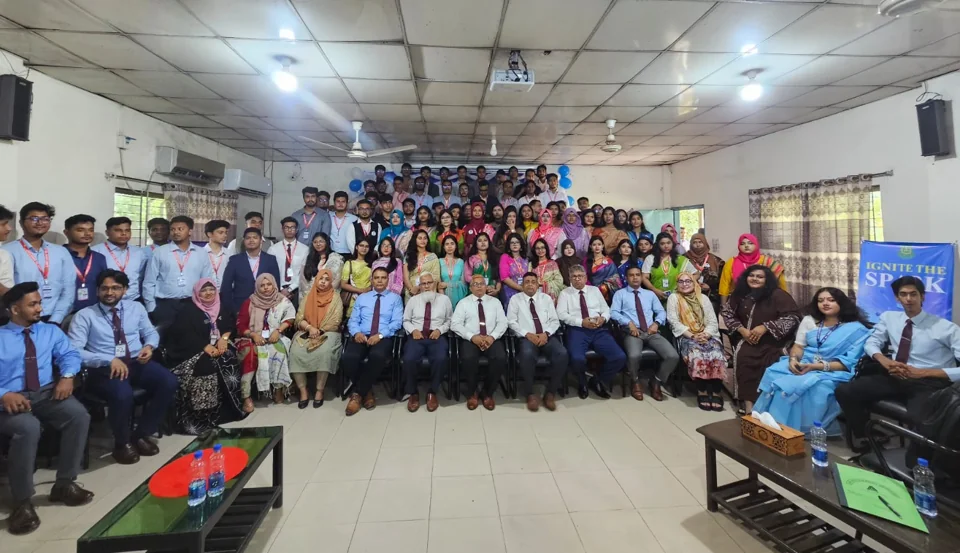
AIBA Savar’s July 2026 news coverage describes a reception for the eighteenth BBA batch. The programme brought newly admitted students together with faculty, officers and other members of the institute. Introductions, cultural performances and an exchange of greetings formed part of the event.
The report records an address encouraging academic work alongside integrity, leadership and discipline. This provides a specific example of how the institute introduces students to its educational community. The reception combined information and formal welcome with opportunities for social contact, marking the beginning of the group’s undergraduate experience at Savar.
Sources: Welcoming a new undergraduate group ↗
Business cases and student-organised events
A report dated 15 June 2026 describes several student-club activities at AIBA Savar. The Production and Operations Management Club organised Buckle Up 3.0, a learning programme with sessions on education opportunities, workplace skills and project management. Its format connected students with discussion of practical preparation alongside their regular academic work.
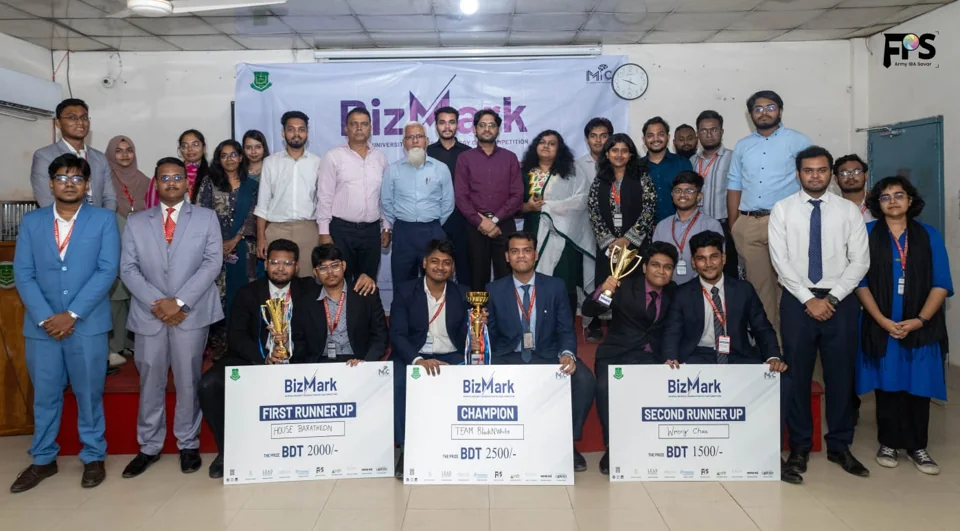
The Marketing and Innovation Club’s BizMark competition brought BBA teams together to analyse business cases and present strategies. This gave participants a setting for developing and explaining responses to organisational problems. The report also describes the Sports Club’s Club Day, with activities including futsal, short-pitch cricket, darts and a football-themed quiz. Taken together, these dated examples show different forms of student participation: a learning event, a case-based competition and recreational activities. They illustrate how subject interests and community life can meet through programmes organised by the institute’s clubs.
Sources: Business cases and student-organised events ↗