Visa
About Architectural Institute in Prague
An international architecture school in Prague
The Architectural Institute in Prague, known as ARCHIP, is an international school of architecture in the Czech capital. Its educational approach connects conceptual investigation with technical learning and practical design work. The school describes architecture as a subject explored through making, discussion and the examination of ideas, bringing a workshop atmosphere into architectural education.
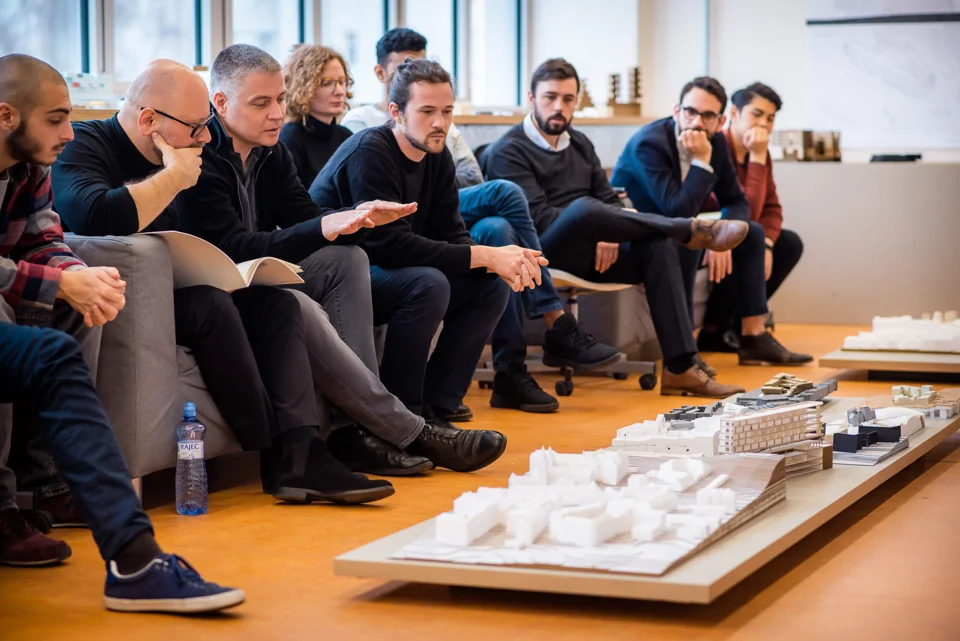
Students encounter different approaches through the design studios, spending time in each before deciding which direction best suits their interests. Studio leaders also practise architecture professionally, connecting academic projects with questions arising in planning, design and construction. The school works with Prague, other municipalities, nongovernmental organisations, developers and additional partners on projects linked to studio teaching. These relationships allow students to examine specific settings and engage with people outside the classroom. Prague itself provides an architectural context for this work, while the international student community brings different experiences and perspectives into everyday study.
Sources: An international architecture school in Prague ↗
Building a foundation in architectural design
ARCHIP’s bachelor’s programme is a three-year course of undergraduate study. Its curriculum develops progressively through architectural and urban-design work, bringing together ideas from the sciences, arts and contemporary technology. Conceptual thinking and the formulation of questions are presented as central parts of learning, alongside the development of design skills and a broad intellectual foundation.
Architectural Design forms the organising course through which students apply material from other subjects. These include architectural history and theory, construction and technology, and art and presentation. The programme also emphasises communicating proposals clearly and developing professional presentation skills. Its educational aims place architecture within wider questions of social responsibility, environmental concerns and sustainability. Field trips and opportunities associated with international school partnerships complement work in the studio. The published account presents undergraduate study as preparation both for further education and for different forms of work connected with architecture.
Graduate study through projects and dialogue
The master’s programme runs for two years and combines design, history, theory and research with practical project work. It is distinct from the undergraduate programme while sharing an interdisciplinary studio environment. The school describes close contact between graduate students and tutors, with individual consultations forming a substantial part of study.
Architectural Design remains a central element. Students develop a particular project with tutors who are practising architects, considering different aspects of architectural work within that project. Urban Design adds study of the principles through which complex urban systems develop and are planned. Communication is another part of professional preparation: the programme addresses dialogue with investors, consultants, stakeholders and the public. This connects the development of a design proposal with explaining decisions and working collectively. The programme uses the European Credit Transfer System, placing its coursework within a framework that supports student mobility between institutions.
Sources: Graduate study through projects and dialogue ↗
Student participation and an inclusive learning setting
ARCHIP’s student-wellbeing provision includes an equal-opportunities commitment, a student representative body and an adviser who helps communication between students and the school. Its stated inclusion policy covers teaching, assessment, support, studio relationships and both physical and digital learning environments. The school identifies a wide range of personal circumstances and characteristics within its commitment to preventing discrimination and harassment.
The Student Senate is elected by the student academic community. It provides feedback to management and can make suggestions about courses, teaching, extracurricular activities, school presentation and material or technical equipment. This gives students an organised channel for contributing to academic life. A student adviser and equality coordinator provides another point of contact, listening to concerns, helping mediate communication and discussing academic situations. Together, these arrangements combine collective representation with opportunities for individual conversation, connecting student experience with the administration and teaching community.
Sources: Student participation and an inclusive learning setting ↗
Studio concepts presented at Prague Castle
A report published on 29 October 2026 describes a presentation by students from Zuzana Drahotová’s master’s studio at Prague Castle earlier that month. The studio was examining the transformation of the Castle Riding Hall and its relationship with neighbouring spaces. Its design work considered how contemporary architectural approaches could respond to a historic setting and to the ways public space is used.
The presentation was followed by discussion with external architects, ARCHIP faculty and representatives of Prague Castle. Students therefore received responses from people approaching the proposals through both architectural practice and stewardship of a significant cultural site. The school presented this exchange as an opportunity to reassess concepts and develop students’ design approaches. The project offers a dated example of studio teaching extending into a specific institutional setting, where proposals are explained, questioned and discussed with people beyond the immediate teaching group.
Architecture and technological change
ARCHIP’s participation in Innovation Week 2026 provides another example of its engagement with architectural practice and public discussion. According to its October report, Winy Maas and Regina Loukotová addressed the changing relationship between architectural education and technologies such as artificial intelligence, robotics, digital tools and new materials. The event took place in Prague at the beginning of that month.
The keynote examined connections between experimental work and building projects, considering how developments explored in a laboratory can enter construction practice. A subsequent discussion addressed the knowledge and skills future architects may need as technologies change. The school’s account emphasised understanding tools critically and within a broader context. This activity connected architectural teaching with a forum that also brought together people working in innovation, technology and entrepreneurship. It illustrates one way the school contributes to conversations about how design education relates to changes affecting professional work.