Visa
About Academy of Performing Arts, Film and TV Fakulty
Prague’s Film and TV School
This directory entry identifies FAMU, the Film and TV School of the Academy of Performing Arts in Prague. It is one of the three faculties of AMU, alongside the Theatre Faculty and the Music and Dance Faculty. Based in Prague in the Czech Republic, FAMU combines practical filmmaking with theoretical study, bringing together the disciplines involved in film, television, photography and newer audiovisual forms.
The faculty's main home is Lažanský Palace at Smetanovo nábřeží 2, beside the Vltava River. Studio FAMU on Klimentská Street provides a separate base for production and post-production. The academy's account identifies both traditional 16 mm and 35 mm film technology and digital image and post-production equipment as resources for student work. Photography teaching also uses dedicated studios in the main building, at AMU's Malá Strana premises and in Beroun. These different settings support the connection between learning about images and making them.
Sources: About FAMU ↗
A film school shaped by history
FAMU's beginnings date to 1946, with teaching established within the Academy of Performing Arts. Founding figures included Jaroslav Bouček, whose expertise concerned film and photographic technology; photographer, documentary filmmaker and ethnographer Karel Plicka; and film and theatre critic Antonín Martin Brousil. Their different backgrounds connected technical understanding, artistic practice and critical study within the developing institution.
Practical production was part of the school from its early years. A small studio was established on Klimentská Street in 1947, providing space for exercises. FAMU subsequently became closely associated with the development of the Czechoslovak New Wave in the early 1960s. Its history places filmmaking education within the country's wider cultural and political changes, while the relationship between practical exercises, analysis and individual authorship remains visible in its departments today.
Sources: Faculty history ↗
Documentary film as an authored practice
Documentary education initially formed part of directing before becoming an independent department in 1961, particularly through the influence of Antonín F. Šulc. The department's account records changing approaches across the relatively open 1960s, the restrictions of the normalization period and the transformations following November 1989. Its present conception treats documentary as an artistic discipline encompassing different approaches, with particular emphasis on an author's own work.
Hands-on exercises form a substantial part of the programme. Students use them to acquire technical experience and to test their understanding through collaboration with peers in other FAMU fields. Practical study is complemented by humanities and art-related subjects, analytical work and specialist seminars. The department describes its educational purpose in terms of developing independent thinking and creative judgement, so that students can engage audiences with the subjects and questions their films address.
Sources: Documentary Film department ↗
Learning animation from idea to completed film
The Animated Film department places the short animated film at the centre of study. Its approach treats animation as a dramatic art and emphasizes communication with viewers, technical mastery and aesthetic choices. Bachelor's study is organized over six semesters and master's study over four. At the bachelor's stage, students learn the process from the first idea through execution, with exercises intended to give room for individual expression.
Later work is developed in creative workshops led by departmental teachers. Master's students have opportunities to extend their artistic education and produce a substantial film showing their abilities. The department connects animation with directing, screenwriting, visual design, soundtracks and sound design. Its account emphasizes animation as a foundational discipline whether the work is made by hand or with computers. Knowledge of Czech and international animation accompanies this practical education.
Sources: Animated Film department ↗
Books, films and shared viewing spaces
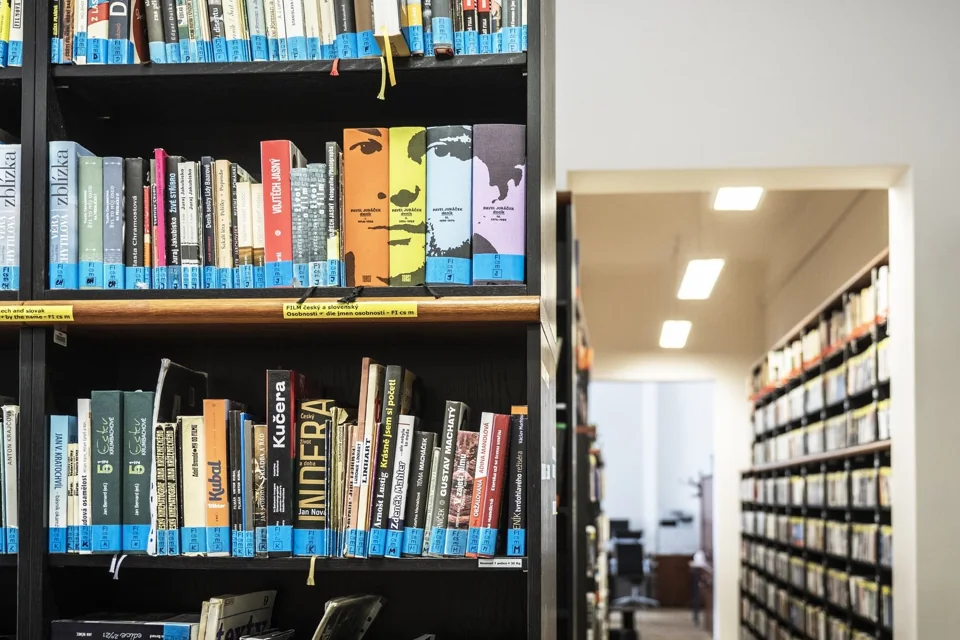
The FAMU Library occupies the first floor of Lažanský Palace. Its collections support film theory, criticism, technology, dramaturgy, screenwriting, photography, visual art, literary theory and game design. Books, recorded films, theses, periodicals and electronic publications provide different kinds of material for study. Much of the book and film collection is arranged on open shelves by subject, while other material is kept in storage.
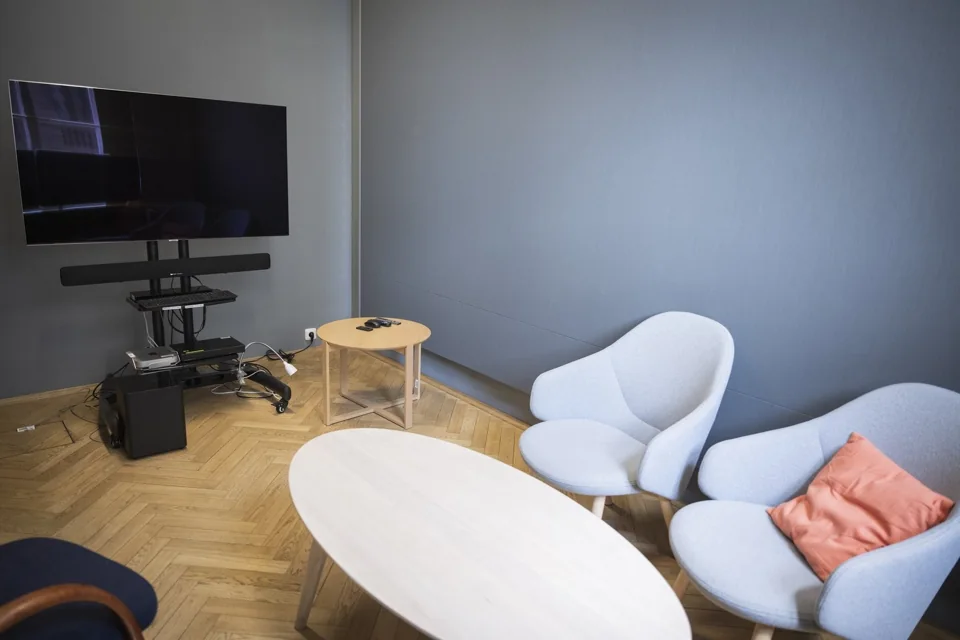
The library combines reading facilities with individual and group viewing. A small video room provides access to several playback formats, and a team viewing room supports shared screenings. Student films are also available through the library's digital storage. The online catalogue supports searching, reservations and loan management, while AMU's DSpace archive provides access to theses under different access conditions. Library services primarily support AMU students and teachers, with on-site consultation also available to the public.
Sources: FAMU Library ↗
Mentoring and exchange with professional filmmakers
The Mentoring Programme creates opportunities for students to discuss their artistic work in an international professional setting. Its activities connect students with filmmakers and artists from the Czech Republic and abroad through lectures, masterclasses, screenings, workshops and individual consultations. Some activities can also involve internships, participation in productions or observing professionals at work.
A mentoring board composed of academic staff and students advises the dean, gathers proposals and helps develop the programme. This collective structure connects visiting expertise with the faculty's continuing teaching activity and encourages discussion across departments. The programme's stated aims include developing professional experience, international contacts and awareness of current developments in cinema and audiovisual culture. It adds another setting in which students can examine creative decisions and encounter different approaches to their chosen medium.
Sources: Mentoring Programme ↗