Visa
About Arab Open University
Arab Open University in Saudi Arabia
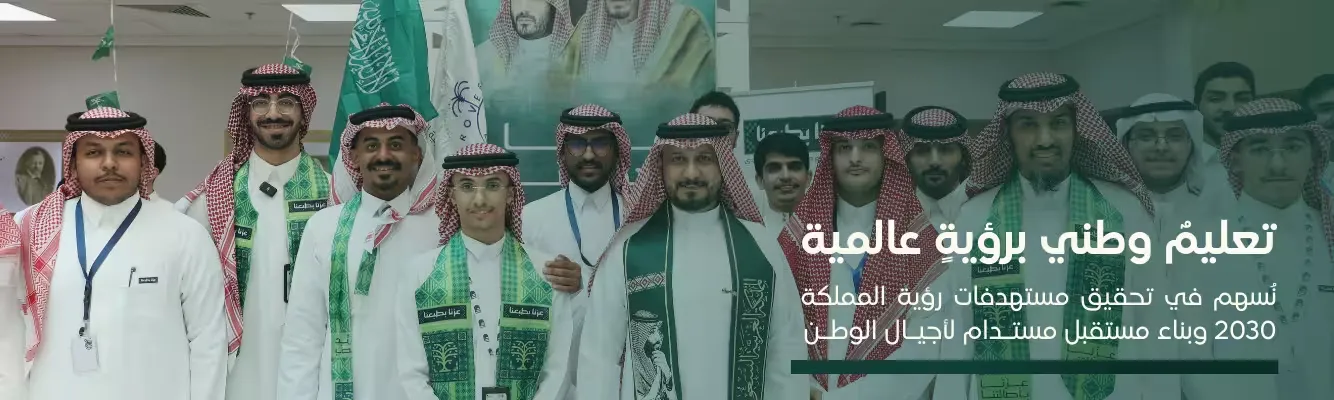
Arab Open University in Saudi Arabia is described in its president's message as a developmental, nonprofit academic institution using blended learning. The Saudi university's published address is in the Hittin district of Riyadh, on Prince Faisal Ibn Abdulrahman Road. Its president's account describes branches and regional centres in six cities across the Kingdom, connecting its educational mission with widening access to higher education. The message sets out priorities involving research, innovation, international cooperation and community partnerships. It also links educational planning with the development of knowledge and skills relevant to Saudi Arabia's changing economy. Students are encouraged to use the university's educational opportunities to develop their abilities and contribute to society. This institutional outlook places blended learning alongside research and community engagement within the Saudi university's work. The president's message explicitly links these priorities with Saudi Vision 2030 and with developing human capital through education, innovation and cooperation.
Sources: Saudi Arabia president message ↗
Connecting research with development and innovation
The Saudi Research, Development and Innovation Unit brings together support for academic research, student projects and partnerships. Its published framework identifies four connected areas: research support, applied innovation, student development and cooperation with external organisations. Research support includes reviewing proposals, following projects and referring eligible proposals to national research bodies. Student development encompasses entrepreneurship training, mentoring and presenting ideas, while applied innovation includes initiatives such as Innovation Day and a Creativity Lab concerned with artificial intelligence and digital transformation. The unit describes helping students develop ideas into projects and prototypes, and building links with organisations in Saudi Arabia's innovation ecosystem. Its partner account lists The Garage, Monsha'at and INJAZ Saudi Arabia, connecting research, training, startup support and incubation. The unit's stated direction also includes clearer pathways to mentoring, funding and investment. These are presented as components of an integrated approach to developing ideas and research within the university. The unit also describes a Creativity, Innovation and Artificial Intelligence Laboratory, located opposite the male-section library, which brings digital tools into its student-development activities.
The Applied College and professional education
The Applied College's welcome message links its establishment to a Universities Affairs Council decision concerning the transformation of university training and community-service centres into applied colleges. The message places this development within the university's community-service role and the preparation of national talent. It describes an intention to develop specialised training and professional programmes in different fields, supported by local and international educational partnerships. Its educational direction is connected with the knowledge economy and sustainable development. The college's account also emphasises keeping pace with change through institutional plans and initiatives, and welcomes enquiries and suggestions from its community. This description presents the Applied College as part of the Saudi university's approach to professional and practical education, with community engagement and cooperation forming important elements of its stated institutional purpose.
Sources: Applied College welcome and institutional purpose ↗
Continuing education and community service
The Saudi website also describes the establishment of a Center for Continuing Education and Development Skills. Its stated purpose is to support a university objective concerning community service through continuing-learning programmes. The centre's account connects training with the exchange of experience and cooperation between university branches. It identifies attention to national and international quality standards as an intended feature of its training and continuing-education work. The description places learning beyond degree programmes within the university's wider community-service mission, linking the development of skills with cooperation across its educational network.
Sources: Saudi continuing education and skills-development centre ↗
Reviewing institutional performance
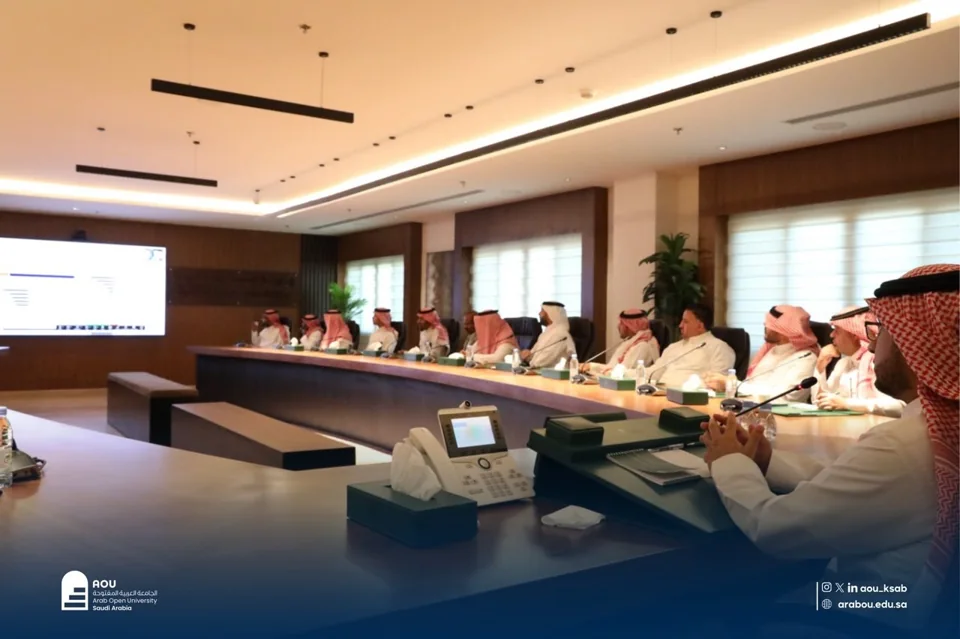
A Saudi university report published on 4 November 2026 describes a meeting reviewing departmental achievements during the preceding October. The meeting considered opportunities to improve institutional performance and the ways in which departments coordinate their work. According to the report, discussion addressed working procedures, integration between administrative functions and the effectiveness of institutional initiatives. The account also emphasised using performance results to identify development priorities and support more efficient operations. The university presented the meeting as part of its governance, monitoring and evaluation activity, with continuous improvement guiding the review. This dated example illustrates the administrative side of its institutional work: departments report on their activities, examine results and consider changes to the way services are organised. The report connects these processes with the quality of educational and administrative services provided by the university.
Sources: Institutional performance review, November 2026 ↗
Engagement with artificial-intelligence discussions
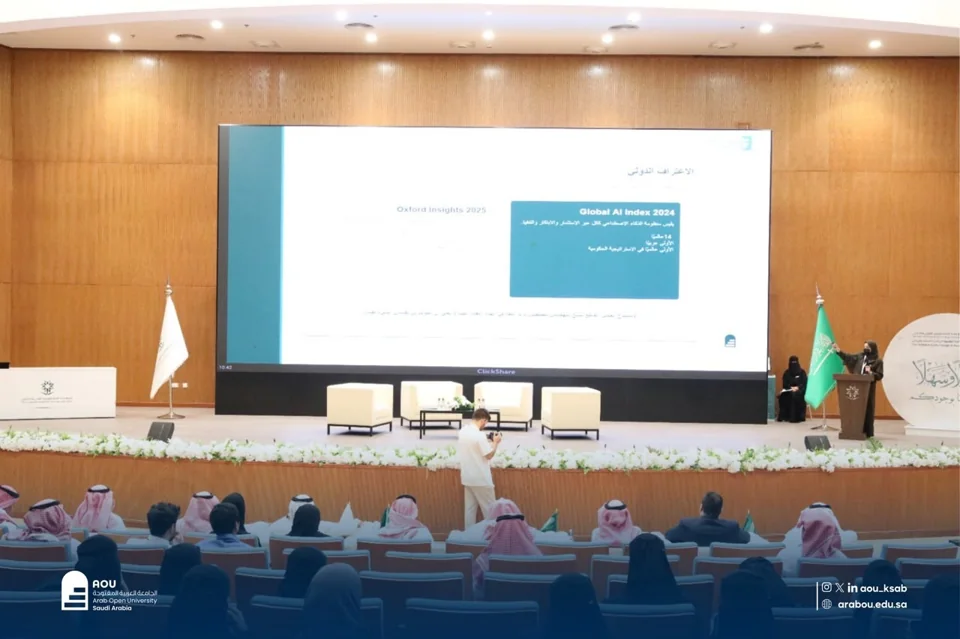
Another report dated 4 November 2026 documents the Saudi university's participation in the opening session of the Riyada AI hackathon, held within the Future of Artificial Intelligence Forum in Riyadh. The account describes a session on the future of artificial intelligence in Saudi Arabia, presented by Sarah Al-Turki. Its subjects included the prospects for intelligent technologies, opportunities across different sectors and the importance of keeping pace with technical developments. The university linked its participation with exchanging knowledge and experience in specialised settings and considering future changes in technology. It also connected the event with innovation, human-capacity development and digital transformation. This activity provides a dated example of the university's engagement with discussions beyond its own programmes, bringing higher education into contact with a wider forum concerned with the development and use of artificial intelligence.
Sources: Participation in Riyadh AI forum, November 2026 ↗