Visa
About Al-Farabi College
From Al-Farabi to Vision College
Al-Farabi College in Riyadh is the earlier institutional identity associated with what is now Vision College in Riyadh, Saudi Arabia. The Alkhabeer REIT Fund's 2024 annual report explicitly identifies its Riyadh educational property as Vision Education Colleges, formerly Al-Farabi. The present college operates within the Vision Colleges organisation and concentrates on education in the health professions. Its Riyadh campus brings together medical, dental and nursing education.
The college's institutional history records an important consolidation on 16 January 2022. A Ministry of Education resolution merged Vision College of Medicine in Riyadh with Vision College of Dentistry and Nursing in Riyadh under the name Vision College in Riyadh. This history explains why earlier records refer to separate colleges while the current institution presents their educational activities together.
Sources: Alkhabeer REIT Fund Annual Report 2024: Riyadh Vision Colleges, formerly Al-Farabi ↗ · Vision College Riyadh: Introducing the college ↗
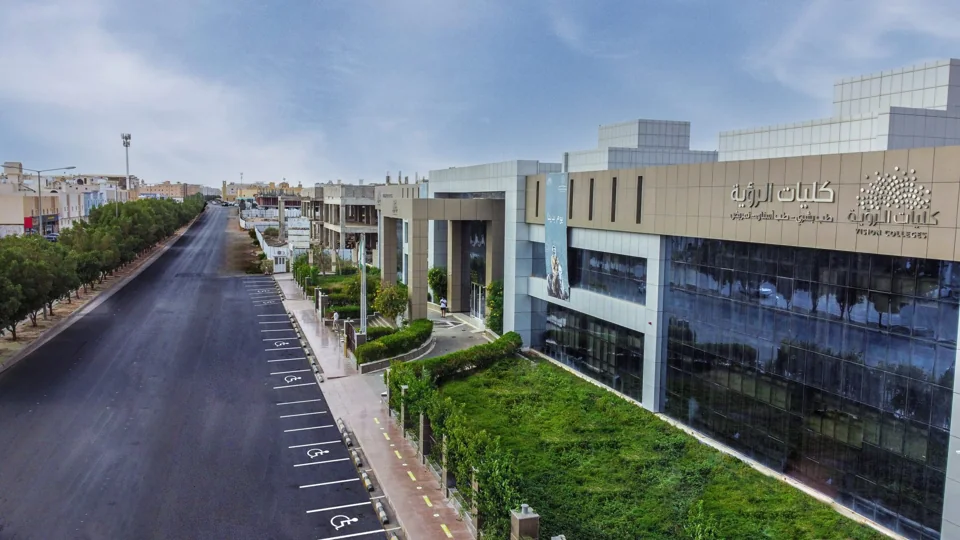
Development of the Riyadh institution
The college's development began with initial permissions for dentistry and nursing in 1430 AH. Its early study plans were prepared through the King Abdullah Institute for Research and Consulting Studies at King Saud University. By the end of 1431 AH, dentistry and nursing had been combined in a single college. Medicine developed alongside these subjects, accepting its first cohort for the 2014–2015 academic year.
Medicine and surgery
The medicine programme leads to the Bachelor of Medicine and Surgery, or MBBS. Its published requirements comprise 212 credit hours distributed across six academic years, followed by a year of internship training. The first year contains 35 credit hours of basic sciences, while the later years extend the academic and clinical components of the course.
The programme's learning objectives connect basic and clinical science with behavioural and social approaches to medicine. Students are expected to study the Saudi healthcare system, health promotion and disease prevention, alongside clinical reasoning and problem solving. Communication with patients, families and professional colleagues forms another part of the educational framework. Medical informatics and basic research methods appear in the stated skills, while teamwork, ethical conduct, reflection and continuing professional development are included among its intended graduate attributes.
Dental education
Dentistry is organised as a Bachelor of Dental Surgery requiring 200 credit hours across six years and an additional internship year. The first year allocates 35 hours to basic science courses. Later years distribute the remaining credits through the programme's academic and practical requirements.
Its curriculum objectives include the anatomy, development and function of teeth and their surrounding tissues. Students study oral disease, dental materials, instruments and the scientific principles behind dental practice. The published outcomes also include preclinical procedures, the interpretation of patient histories and diagnostic information, and the use of equipment and materials. Research methods support the programme's emphasis on evidence-based dentistry. Professional responsibilities, collaboration, community service and lifelong learning are incorporated into the educational aims alongside the technical subject matter.
General nursing
The Bachelor of General Nursing follows a four-year academic structure with 132 credit hours and a further year of internship training. Credit allocations are 36 hours in the first year, followed by 32, 33 and 31 hours in the successive academic years. The opening stage combines basic sciences with the foundations needed for nursing study.
The programme's published learning outcomes cover nursing concepts and theories, human body systems, common health needs and the equipment and procedures used in nursing settings. Health education and promotion are considered across the lifespan. Students also encounter research methods, nursing informatics and evidence-based approaches. The skills framework includes communication, prioritisation and evaluation of nursing activities. Critical thinking, management, leadership and professional ethics are among the values the programme seeks to develop.
Sources: Vision College Riyadh: Nursing programme ↗
Academic guidance
Academic advising provides an organised point of contact between students and the college. The responsible department assigns advisers to student groups each semester and helps explain academic regulations and the institution's educational aims. Its remit includes identifying difficulties that affect academic progress and helping students develop strategies for dealing with them.
The department also supports advisers themselves. Its published responsibilities link guidance with students' understanding of their abilities, interests and approaches to study. Attention is given to personal obstacles as well as academic problems, recognising that both can influence educational attainment. This places advising within the college's regular teaching structure and connects individual support with students' participation in their courses.
Research and its organisation
The Scientific Research Unit coordinates the college's research direction and encourages participation by faculty members and undergraduate students. Its responsibilities include developing research strategies, supporting publication and improving researchers' skills. International cooperation and agreements with other universities are also part of its stated remit.
The unit describes research as a component of the college's educational and community role. It is tasked with communicating research activities and preparing periodic progress reports. The institution also describes an internal research ethics review process through its Institutional Review Board. Research proposals are submitted for ethical consideration, with investigators expected to follow the relevant research ethics rules and procedures. These organisational arrangements connect student participation, faculty research development and the review of proposed studies.
Teaching spaces
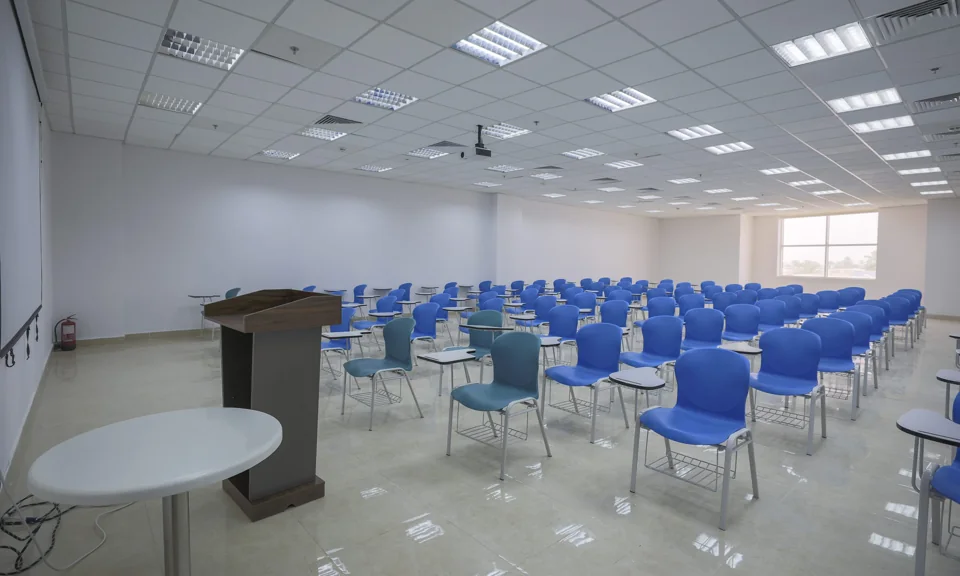
Facilities described by the college include laboratories for anatomy, physiology, pathology, biochemistry, microbiology and histology. Biology, chemistry and physics laboratories support the underlying sciences, while computer, English language, skills and phantom laboratories provide additional teaching settings. The classrooms page identifies lecture rooms equipped with educational aids. Together these facilities provide spaces for classroom instruction and practical components of the health programmes.
Sources: Vision College Riyadh: Laboratories ↗ · Vision College Riyadh: Classrooms ↗