Visa
About Al-Ghad International Health Sciences Colleges
A network for applied medical-sciences education
Al-Ghad International Health Sciences Colleges is a Saudi Arabian college network specialising in applied medical sciences. Its current central website presents the institutions as Al-Ghad Colleges for Applied Medical Sciences. The network's institutional account records ministerial approval for opening the colleges in 1430 AH and connects their establishment with the development of Saudi health education and technical expertise.
The central site links separate college websites for Riyadh, Jeddah, Qassim, Tabuk, Abha and Najran. Its network-wide objectives include academic education, research exchange, continuing training and cooperation with educational and research institutions. The colleges describe student learning through discussion, presentations, workshops, laboratory activity and field experience. This broad institutional framework is implemented through individual colleges, whose academic arrangements and support units are described on their respective branch websites.
The Riyadh college and its educational approach
The Riyadh college's official overview places it within the wider Al-Ghad network and describes an educational approach drawing on experience in Saudi universities. It identifies self-directed learning and problem solving as ways of encouraging students to take responsibility for their development.
The page's historical programme list is explicitly for 2019–2020. It includes nursing, medical imaging and emergency medicine in the male section and nursing, medical imaging and medical laboratory science in the female section. That dated list illustrates the college's earlier provision. The overview also describes the relationship between the Riyadh institution and affiliated Al-Ghad colleges elsewhere in Saudi Arabia, connecting its local academic work with the network's wider purpose in health and medical education.
English-language development in Riyadh
The English Language Centre at the Riyadh college describes an interactive learning environment built around regular use of English. Its stated purpose reflects the importance of the language in health-related academic and professional fields. Activities address both the language used within students' specialisms and broader linguistic development.
The centre's tasks include providing programmes for college students, using extracurricular activities to encourage language practice, and supporting graduates and students approaching graduation. It also identifies students' creativity and individual talents as resources for learning. This gives language development a role beyond a single classroom subject: it is presented as continuing support for academic study and for the specialised communication associated with the college's fields.
Organisation of clinical and field training
Riyadh's Clinical Training and Internship Unit coordinates the systems through which field and clinical experience are organised. Its published responsibilities include operational planning, training timetables and follow-up reporting. It works with academic affairs and scientific departments on proposed hospital agreements before these are submitted for approval.
The unit also maintains information about hospitals and training centres, follows training through established forms and procedures, and prepares reports evaluating placement experiences. Student workshops address field-training ethics and potential risks, while students' views are sought when evaluating training sites. These responsibilities show a structured administrative approach to placement organisation. They connect academic departments, external training settings and student feedback within the college's arrangements for applied learning.
Student activities at the Riyadh branch
The Student Services and Extracurricular Activities Unit in Riyadh plans internal and external college activities. Its mission connects academic achievement with opportunities to develop skills, interests and creativity. Sport and cultural participation form part of this description of student life.
The unit's duties include preparing activity plans, assessing programmes and encouraging participation within academic departments. Its published responsibilities also refer to activities associated with the Saudi University Sports Federation and cooperation with other educational institutions to use sporting and cultural facilities. Gathering student feedback is part of programme review. Coordination of attendance at scientific conferences and meetings adds an academic dimension to these activities, linking student services with experiences beyond scheduled teaching.
Digital learning support in Riyadh
The Riyadh college's e-learning unit supports teaching that uses digital systems and resources. Its remit includes training students and faculty, helping prepare electronic educational content, and providing technical advice. The unit describes interactive learning and technology-supported teaching as priorities within its mission.
Its tasks range from planning content development to following its implementation and reviewing academic materials available through the learning system. Faculty consultations concern appropriate practices and effective use of the platform. The unit also addresses technical problems, develops recommendations for improving the college's information-technology system, and monitors e-learning activity. These functions provide an institutional support structure for digital teaching and learning, alongside the college's classroom, language-development and training arrangements.
Sources: Digital learning support in Riyadh ↗
Research activity at Qassim
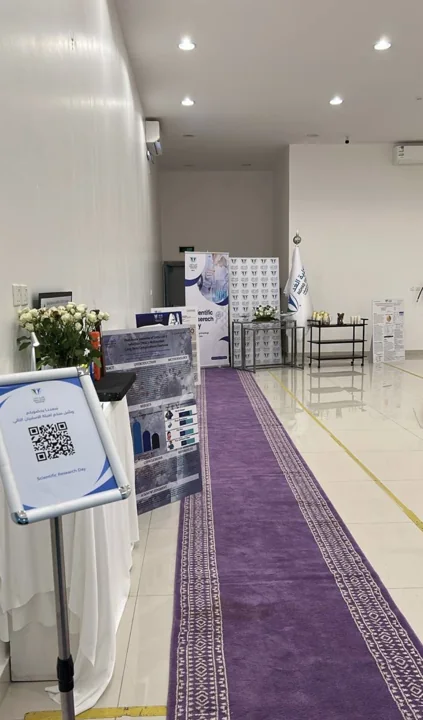
The Qassim branch's report dated 29 April 2026 describes a Scientific Research Day intended to encourage student investigation and innovation. The college presents the activity as support for developing research skills early in an academic programme and for participation in scientific projects.
The photographs accompanying its account show research displays and presentation materials within the college setting. This is a branch-specific example of the network's interest in scientific enquiry. It connects the general objective of developing applied medical sciences with an organised activity through which students' research work can receive attention and be shared within an academic environment.
Sources: Research activity at Qassim ↗
Nursing and college events in Qassim
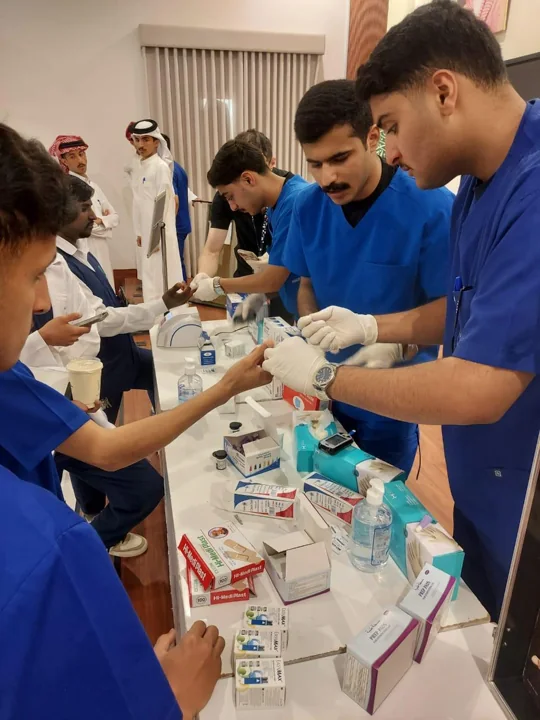
Another Qassim report, published on 14 May 2026, marks International Nurses Day. The college's account recognises nursing students and practitioners and describes the occasion in relation to the profession's public-service role. Its accompanying photographs include participants in practical activities and displays prepared for the event.
Together with the research-day report, this provides a dated view of activities at one Al-Ghad branch. Such events sit alongside the teaching and support arrangements described by the network and individual colleges, adding occasions for participation, professional reflection and the sharing of academic interests.
Sources: Nursing and college events in Qassim ↗