Visa
About Arab Academy for Management, Banking and Financial Sciences
A regional academy based in Egypt
The Arab Academy for Management, Banking and Financial Sciences describes itself as an independent, non-governmental, nonprofit Pan-Arab institution established in 1988 under the auspices of the League of Arab States. Its current website identifies its headquarters in Egypt, with contact details in Sheikh Zayed City, Giza. Academic programmes and professional training form the main parts of its educational provision. The institution also maintains a regional presence through branches, representative offices and cooperation with organisations across the Arab world.
Sources: Academy introduction ↗
Institutional purpose and working values
The academy's About page presents organisational development as a central purpose. Its intended audiences include governmental and nongovernmental institutions and companies seeking to improve staff capabilities and services. The mission describes an educational environment for scholars and professionals in the Arab region, Africa and beyond. Its stated values include responsibility, curiosity, resilience, modernisation, legacy and excellence. These are presented as guiding principles for institutional work. The page also describes teaching informed by academic research and professional experience, leadership development and personal development. Flexible arrangements, including online and offline options, are intended to accommodate working professionals. This account connects the academy's educational activity with the continuing development of people already participating in organisational life.
Sources: About the academy ↗
Business degrees and analytical learning
The MBA and DBA presentations connect business education with the use of SAS analytical tools. The MBA account identifies strategic thinking, market analysis, statistical proficiency, predictive modelling and operations management among its areas of emphasis. It describes an approach combining business theory with practical applications. The DBA presentation adds an emphasis on research proficiency, organisational development, strategic leadership and advanced data analysis. Both pages connect classroom learning with professional contexts and continuing skills development. They also describe opportunities to engage with software workshops, user communities and technical support. These presentations show the academy's stated interest in bringing analytical methods into management education.
Sources: MBA presentation ↗ · DBA presentation ↗
Professional training across several fields
The training directory extends the academy's provision beyond degree programmes. It lists courses concerned with marketing, hospital management and human resources, alongside banking, operational risk and internal audit. Other listed subjects address cybercrime risks and the prevention of money laundering and terrorist financing. These subjects are presented as educational offerings rather than instructions for handling a particular business or legal situation. The directory also links to an annual training plan and identifies professional diplomas and international-certification preparation as additional areas of provision. This range connects broad management subjects with specialised organisational functions. Individual course pages supply further descriptions, allowing readers to distinguish the general training portfolio from the particular aims of a selected course.
Sources: Professional training directory ↗
Human resources, analytics and artificial intelligence
One course focuses on human resources in the digital age, linking workforce management with analytics and artificial intelligence. Its description identifies strategic human-resource planning, talent management and employee experience as central topics. The published learning themes include examining workforce data, understanding tools used in recruitment and considering performance information. Predictive models are another topic within its account of decision-making. The course therefore places human-resource functions within a changing technological environment, rather than treating them solely as administrative processes. Its stated purpose is to introduce tools and techniques that participants can examine in relation to organisational needs. The emphasis on technology accompanies broader questions about planning and the experience of employees.
Sources: Human resources course ↗
Marketing in changing economic conditions
A separate training course examines marketing during an economic downturn. Its published topics include consumer behaviour, competitive analysis, digital marketing and cost-conscious approaches to the use of resources. Case studies are described as a way to explore adaptive marketing and crisis communication. The course's account connects these subjects with maintaining a brand's position when circumstances change. This provides an example of the academy's interest in management decisions shaped by the external environment. Its learning focus includes analysing shifts in consumer behaviour and considering how organisations adjust their methods. The description identifies the subjects to be studied without establishing that a particular strategy will produce a business result in every setting.
Sources: Marketing course ↗
Cooperation with Libyan institutions
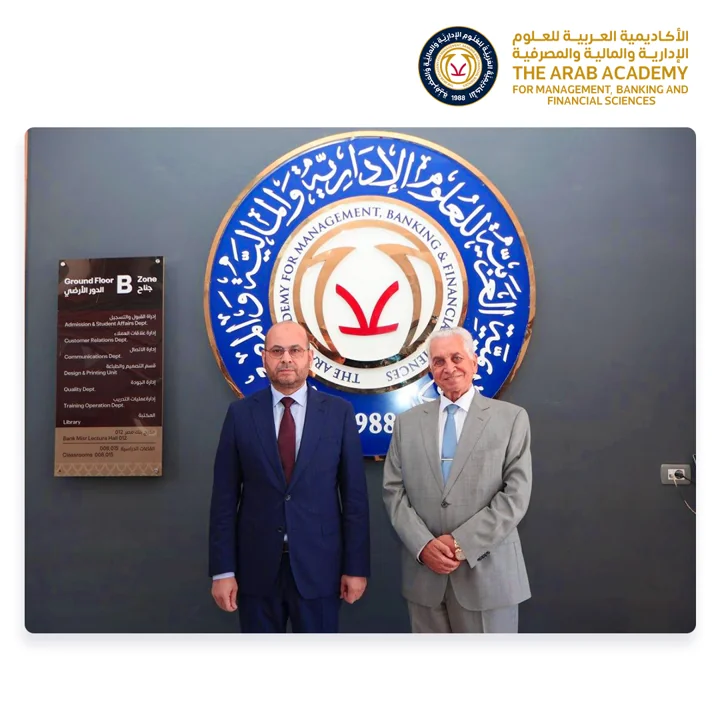
An official report describes a meeting with a delegation from Libya's Ministry of Civil Service. The discussions concerned training, professional development, capacity building and postgraduate education for government personnel and institutions. The academy's account places tailored programmes and the development of administrative and leadership capabilities within the proposed cooperation. It also describes interest in a sustainable institutional partnership. This report provides a specific example of the academy's regional engagement, linking its academic and training work with the needs discussed by a public-sector organisation. The report presents an exploration of cooperation, with attention to future programmes and the development of institutional relationships across the region.
Sources: Libyan civil-service delegation ↗
An educational partnership concerning intellectual property
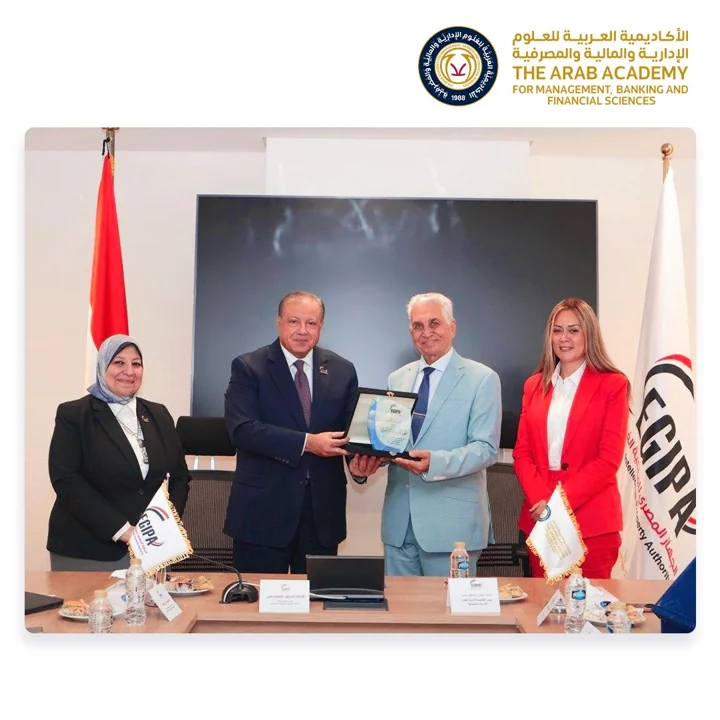
The academy also reports a cooperation protocol with the Egyptian Intellectual Property Authority. Its account describes training, professional development, exchange of knowledge and workforce development as intended areas of collaboration. Employees of the authority were to have opportunities to benefit from postgraduate and specialised training provision. The report links the agreement with the academy's broader institutional partnerships and with the authority's interest in developing staff capabilities. It also identifies the exchange of expertise concerning intellectual property as part of the arrangement. This example illustrates how formal cooperation can connect an educational institution with a specialist public body. The published report describes the partnership's purposes and anticipated educational activities, rather than documenting completed outcomes for individual participants.
Sources: Egyptian Intellectual Property Authority partnership ↗