Visa
About Ain Shams University
A university rooted in modern Cairo
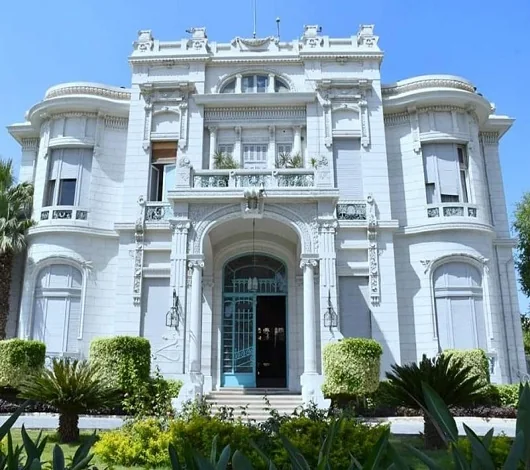
Ain Shams University is a university in Cairo, Egypt, with its main administrative address on El-Khalifa El-Mamoun Street in Abbassia. It was established in 1950 as Ibrahim Pasha University. In 1954 its name changed to Heliopolis and then, in the same year, to Ain Shams. The modern institution’s history is closely associated with Zafaran Palace and the development of academic buildings around it.
The palace became the university’s administrative headquarters in the early years of the institution. From 1962, expansion around the palace created additional space for faculties including Science, Arts, Law and Business. Other academic units developed at locations elsewhere in Greater Cairo. The university’s history describes this distributed setting across Abbassia, Heliopolis and Shoubra El-Kheima, rather than a single enclosed campus accommodating every discipline.
Sources: University history ↗
Breadth across academic disciplines
The current faculty directory shows the breadth of Ain Shams’ academic organisation. Health-related faculties include Medicine, Dentistry, Pharmacy and Nursing, while Engineering and Computers and Information Sciences address technical and digital fields. The Faculty of Science covers basic and applied scientific disciplines, and Agriculture addresses subjects associated with food, land and water resources.
Humanities and social sciences are represented through Arts, Law, Business and Al-Alsun, the university’s language faculty. Education, Specific Education and the Faculty of Women for Arts, Science and Education connect disciplinary study with educational preparation. The directory also identifies Archaeology, Mass Communication and Veterinary Medicine, alongside Graduate Studies for Childhood and Environmental Studies and Research. An institute for graduate studies and agricultural research in arid areas adds another specialised dimension to the university’s work.
The directory describes translation and language study within Al-Alsun, museum and heritage work within Archaeology, and communication through journalism, broadcasting and digital media. Its environmental faculty description includes renewable energy management and environmental impact assessment. These examples show how the university’s academic range extends from established disciplinary subjects to applied professional and environmental questions.
Sources: Current faculty directory ↗
Forms of study and student services
The Study in ASU portal brings together undergraduate and postgraduate information, faculty brochures and several forms of academic provision. It distinguishes general academic programmes, additional-fee credit-hour programmes, dual-degree arrangements and blended learning. Its credit-hour explanation focuses on courses and assigned hours, while blended provision combines conventional and distance learning.
International students are directed to the Study in Egypt platform and to the university’s international students office and guide. The same portal introduces transfer services, departmental enrollment information and support for students with disabilities or specific learning needs. These services connect programme choice with administrative and student-support processes. Faculty brochures and explanatory videos provide further routes into the details of individual subjects, reflecting the need to approach a large university through its particular academic units rather than a single standardised course structure.
Sources: Study at Ain Shams University ↗
Research and support for scholarly work
The research portal groups Ain Shams’ work across medical sciences, humanities and social sciences, basic sciences, agriculture, engineering and technology. It presents a digital research-scholar resource through which visitors can find scientific theses and research abstracts produced by university faculty. This gives the university’s research activity an information-access component alongside work conducted within faculties and centres.
Support links cover research projects, scholarships, research plans, patents, publication and academic integrity. The portal also identifies research centres, centres of excellence and the iHub innovation centre. Its account of iHub describes support for project ideas submitted by students or staff and assistance with finding financial backing. University journals and scientific conferences provide additional settings for presenting and discussing scholarly work. The research portal therefore connects disciplinary investigation with institutional resources for developing, funding and communicating projects.
Sources: Research and researcher resources ↗
The Central Library and scholarly collections
The Central Library supports researchers, faculty and students through collections and information services. Its published structure includes acquisitions, exchange and gifts, cataloguing and classification, and coordination with faculty and institute libraries. These functions link the development of collections with the systems needed to organise and locate them.
A dedicated theses and research function receives and records scholarly work, while reference and reader services assist users with books, periodicals, manuscripts and rare books. Audiovisual resources and reproduction services form other parts of the library’s published responsibilities. The library also coordinates information about holdings across university units, supporting a distributed academic institution. Together, these activities preserve research materials, make collections discoverable and provide assistance to people using them for study or investigation. Its organisational account shows that library work includes both public-facing assistance and the technical preparation that makes those services possible.
Sources: Central Library ↗
Zafaran Palace and the university museum
The Zafaran Palace Museum connects the university with the architectural and cultural history of its setting. The museum’s official account dates the present palace to 1901–1902 and attributes its design to Antonio Lashiak. It describes decorative monograms associated with Khedive Ismail and the commission by his widows.
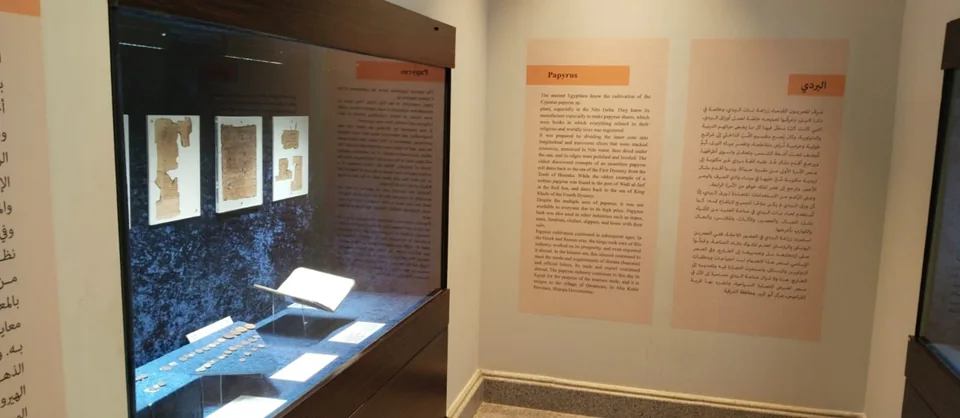
The museum website provides access to collections, museum stories, a digital heritage hall and educational activities. Its photographs show exhibition interiors with objects, documents and bilingual interpretation. This cultural resource sits within the university’s broader educational environment, bringing historical collections and the palace’s own story into contact with students and other visitors.
Sources: Zafaran Palace Museum ↗