Visa

About Ar-Rasheed Smart University
A private university in Sana’a
Ar-Rasheed Smart University is a private university in Sana’a, Yemen, with its published address on 14 October Street. Its institutional introduction dates its establishment to the 2021–2022 academic year under ministerial decision number 70, issued on 1 September 2021. The university’s name is associated in its introductory message with understanding, knowledge and the use of reason.
Its mission connects university education with scientific approaches, professional skills, positive values, research and community service. The university’s stated objectives include developing academic programmes, supporting theoretical and applied research, and strengthening relationships with research and training institutions. It also identifies continuing staff development, the provision of educational infrastructure and internal governance as priorities. These objectives describe the direction of a relatively young institution whose published account of its early development includes introducing and revising programmes and undertaking classroom, extracurricular and community activities.
Sources: About the university ↗
Engineering and technology
The Faculty of Engineering and Technology was established in the 2021–2022 academic year. Its historical introduction records three initial academic programmes, followed by two additions during 2022–2023. The faculty’s current programme list includes mechatronics, architecture, information technology, graphics and multimedia, cybersecurity, interior design and artificial intelligence.
The faculty describes innovation, creativity and research as important features of its educational approach. Its objectives include developing engineering and technology programmes and using educational technology within teaching. It also seeks to build students’ scientific knowledge and practical abilities while emphasising professional and ethical values. Relationships with engineering, technical and industrial organisations are another stated priority. The faculty proposes partnerships and advisory committees as ways to support cooperation and practical training. Staff development is included alongside programme development, with attention to strengthening academic and administrative performance in support of teaching activities.
Sources: Faculty of Engineering and Technology ↗
Finance and business education
The Faculty of Finance and Business also dates its establishment to 2021–2022. Its introduction sets out an approach combining academic knowledge with practical and professional skills in response to developments across business and financial sectors. The programme list includes international business administration, business administration in Arabic, accounting in English, accounting in Arabic and marketing.
The faculty’s stated objectives cover the academic environment, the development of staff capabilities and the organisation of educational programmes. Community partnerships are intended to connect its work with local and regional needs, including specialised studies and consultancy in finance and business. It also seeks scientific links with relevant institutions and research centres at local, regional and international levels. This combination places teaching, professional development and external cooperation within the faculty’s published framework, alongside its specialist provision in management, accounting and marketing.
Sources: Faculty of Finance and Business ↗
Languages and transferable skills
The Language and Skills Centre was established through a university presidential decision dated 20 December 2021. Its remit includes teaching English and other modern foreign languages to university students and people from outside the institution. It also provides training in specialist and everyday skills for students and members of the wider community.
The centre lists English provision from beginner level through TOEFL preparation, together with German, Turkish and Chinese. Its English enrichment programme includes two conversation courses and intermediate and advanced communicative grammar. The centre’s mission links language development with students’ academic needs, while its objectives include supporting the English skills required within their specialist subjects. Professional development for English-language teachers and translators is another stated area of work. The centre describes modern teaching and training methods as part of its approach to language learning, broader personal development and community-oriented education.
Sources: Language and Skills Centre ↗
Academic development and quality assurance
The Development and Quality Assurance Centre records its establishment on 1 June 2021. It is responsible for monitoring and evaluation across the university’s faculties, centres and administrative units. Its remit concerns the application of relevant laws, regulations, policies, standards and procedures, with improvement of educational inputs, processes and outputs as its purpose.
Its published structure comprises units for strategic planning, evaluation and follow-up, academic programmes, professional development, and information and documentation. The centre’s objectives include spreading a quality culture through meetings, workshops, conferences and publications. Periodic review of programmes and institutional performance is another part of its work. It also describes support for faculties preparing programme-accreditation applications, continuing staff development and the creation of an information base for academic and institutional improvement. These responsibilities connect strategic planning, staff development, programme review and the documentation needed for institutional improvement.
Facilities supporting study
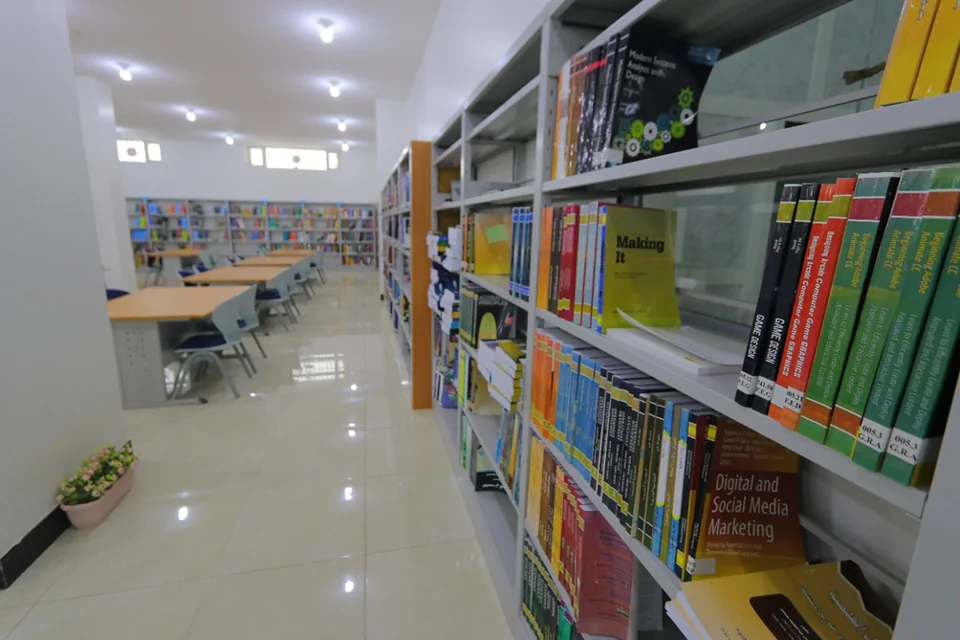
The university’s campus-life presentation brings together learning resources and specialist facilities. It identifies a central library with printed and electronic resources, alongside laboratories associated with its scientific disciplines. The library description includes books, journals and digital materials intended to support students, academic staff and researchers across different subjects.
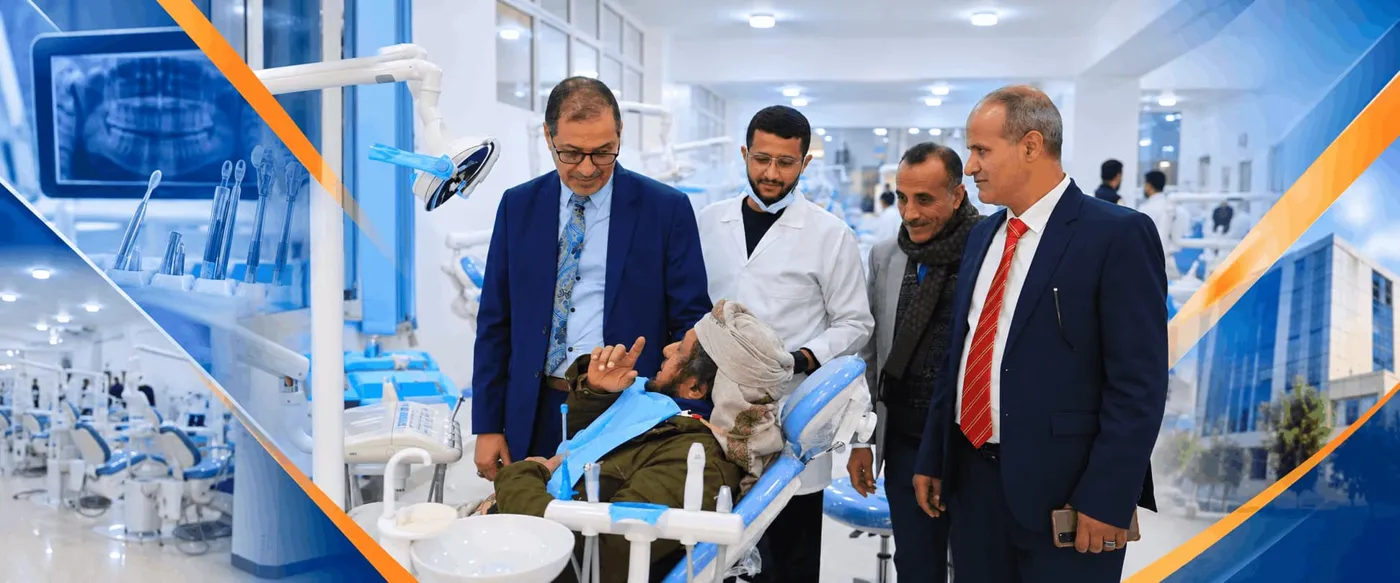
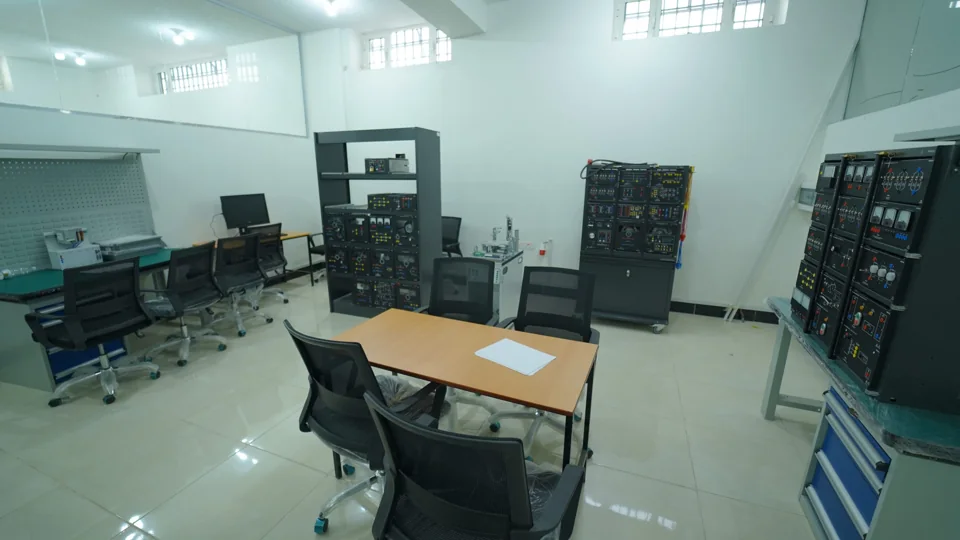
A separate facilities section introduces electronics laboratories in connection with engineering and technology education. Their stated role is to support practical learning, experimentation and cooperation. The same presentation includes medical laboratories as part of the university’s health-sciences provision. Its photographs show particular physical settings, including equipment workstations in an electronics lab and bookshelves and study tables in the library. These spaces sit within the university’s broader account of providing classrooms, educational technology and specialist resources for its programmes.
Sources: University life and facilities ↗