Visa
About Applied Artificial Intelligence Laboratory
An applied research laboratory at IPCA
The Applied Artificial Intelligence Laboratory, known as 2Ai, is part of the research environment at the Polytechnic Institute of Cávado and Ave in Barcelos, Portugal. Founded in 2018, it works on applied artificial intelligence with connections to academic research, industry and regional development in northern Portugal and Europe. Its institutional outline identifies two broad areas of intended impact for the 2025–2029 research plan: health and well-being, and future and sustainable industries. These are supported by three research areas covering human–AI collaboration, immersive environments, and digitalisation and data intelligence. The laboratory's stated purpose is to develop knowledge and technologies that can be translated into practical applications. Its approach brings together subjects such as machine learning, robotics, medical technology, serious games and sustainability. Collaboration across these fields is central to the way it describes its research programme. The plan explicitly links its priorities with the Sustainable Development Goals concerning health and well-being, and industry, innovation and infrastructure.
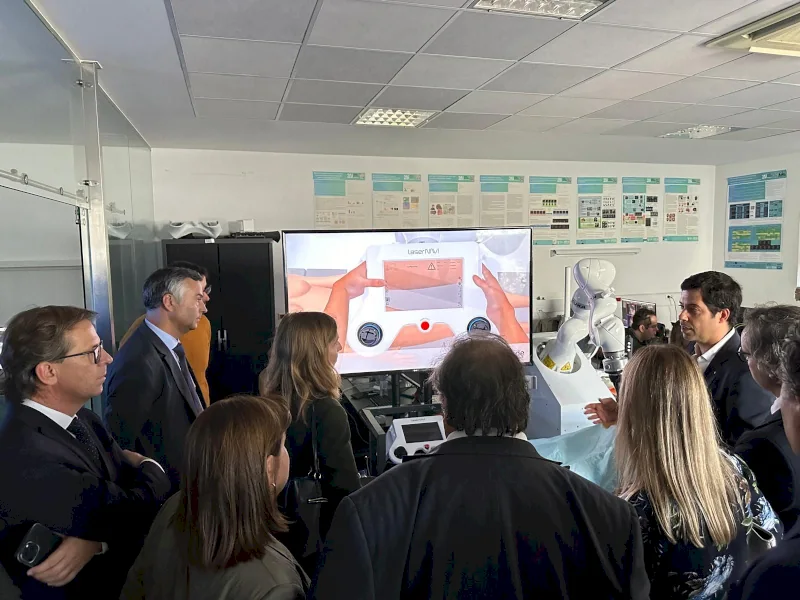
Sources: Applied Artificial Intelligence Laboratory overview ↗ · Laboratory visit during Welcome IPCA, September 2024 ↗
Human–AI collaboration and intelligent interventions
The Smart Interventions and Human–AI Collaboration research area examines how artificial intelligence can work alongside people in healthcare and industrial settings. Its research topics include surgical navigation, augmented reality, medical-image processing, personalised prostheses and wearable devices. The emphasis is on investigating combinations of data, robotic systems and visual guidance that could support interventions. In industrial work, the same area addresses manufacturing processes through collaborative robotics, artificial intelligence and data analysis. The laboratory links this activity with its interest in sustainability and understanding operational information. This research area therefore connects technologies that interact with people, equipment and physical processes, spanning both the health-related and industrial sides of 2Ai's programme. Its published account presents these subjects as directions for applied investigation.
Sources: Smart Interventions and Human-AI Collaboration ↗
Immersive environments for learning and testing
The Intelligent and Immersive Environments area investigates virtual, augmented and mixed-reality technologies alongside artificial intelligence. The laboratory describes work on simulations for training and for testing devices, including personalised physical models enhanced through generative-AI techniques. Serious games and gamification are also part of this research direction. In healthcare-related education, these approaches are explored for training and literacy; in industry, the emphasis includes practising operational tasks, virtual testing and prototyping. The research area connects simulation with spatial exploration, allowing different ways of representing and interacting with a task or environment to be investigated. Its stated scope also includes rehabilitation-related immersive experiences. These activities place digital environments and their interaction with users at the centre of a research programme spanning educational and technical questions.
Digital models, sensors and data intelligence
The Smart Digitalization and Data Intelligence area brings together information from sensors to create virtual models for simulation and optimisation. Its account identifies machine learning and predictive analysis as methods for exploring large datasets and developing decision-support systems. The laboratory also describes research involving physiological signals, including the study of sleep patterns and engagement with media. Industrial examples include simulation of batteries and geometries for additive manufacturing, as well as sensor development. Another strand connects cloud computing and the Internet of Things with the monitoring and management of products, framed around circular-economy principles. The area also lists work on piracy detection. Across these examples, the focus is on turning different forms of collected information into models and analytical systems that can be investigated and refined.
Introducing students to research through a summer school
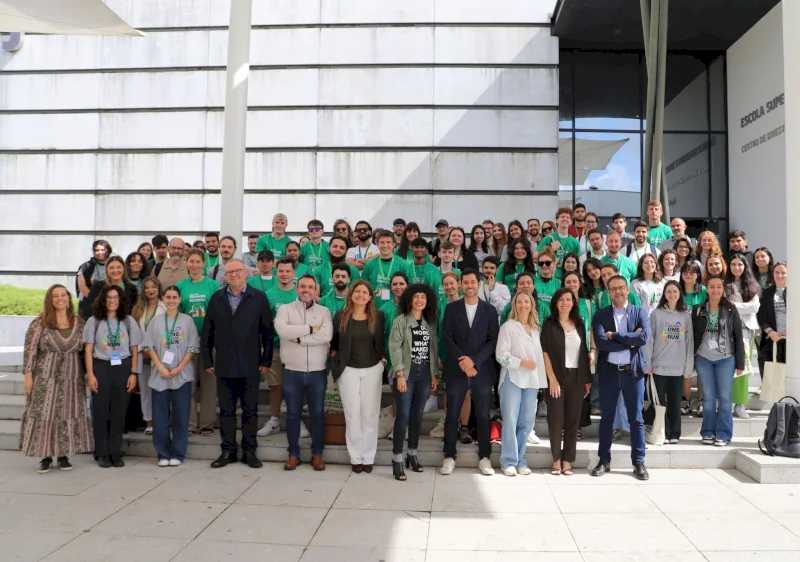
The laboratory's 2024 Summer School announcement identifies 2Ai as a research and development unit of IPCA's School of Technology. The call invited students from professional higher technical courses, bachelor's programmes, integrated master's degrees and master's programmes to take part in short-term research and development projects. It also described an international advanced course lasting one week, including introductory scientific workshops in artificial intelligence. Young researchers from partners in the Regional University Network–European University were to participate in this component. The programme was scheduled to begin in July 2024. This dated initiative illustrates a route by which students at different stages of higher education could encounter the laboratory's research activity. It combined project participation with a taught introduction to research topics and contact with an international group of early-stage researchers.
Sources: 2Ai Summer School 2024 announcement ↗
Public workshops and open-laboratory activities
For Science and Technology Week in November 2025, 2Ai published a programme combining workshops with an open-laboratory activity. The announcement placed the initiative within Ciência Viva's celebration of science and its contribution to society. Listed topics included medical-image processing, artificial intelligence, computational simulation and additive manufacturing. A workshop on lithium-ion batteries introduced modelling and simulation as research tools, including examples of investigations into battery behaviour. Another addressed the processes, materials and applications of three-dimensional printing. The programme also included a session introducing older participants to artificial intelligence and ChatGPT. The image-processing workshop addressed segmentation and anatomical modelling, while the printing session introduced fundamental manufacturing concepts and examples of applications in engineering and medicine. Its open-day description invited the public to learn about research projects and meet specialists from different fields. These advertised activities show how the laboratory communicates its work beyond its research team. The programme connected technical introductions with opportunities to ask questions and encounter the people and projects behind applied research, using both online workshops and an announced in-person open day.