Visa
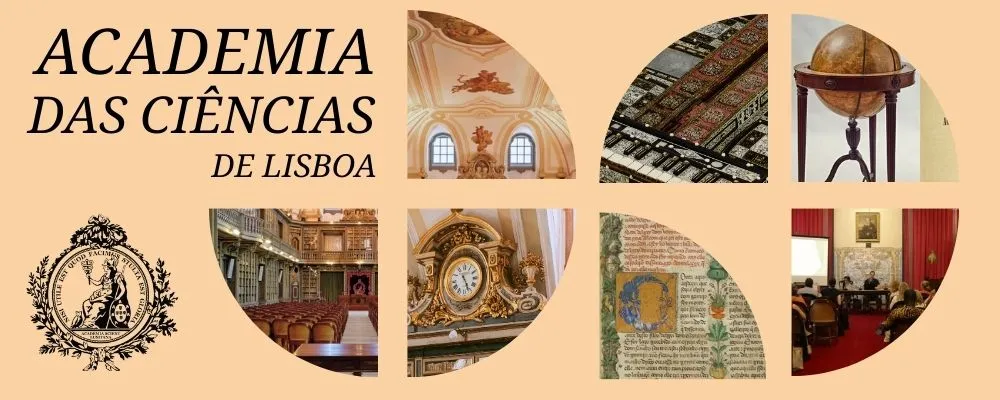

About Academia das Ciências de Lisboa
A learned academy with a national role
Academia das Ciências de Lisboa, the Lisbon Academy of Sciences, is a Portuguese learned institution devoted to science, the humanities and the public value of knowledge. Founded on 24 December 1779 during the reign of Queen Maria I, it continues a tradition of scientific and cultural activity extending over more than two centuries. Its role centres on scholarship, discussion, collections and public engagement, rather than a conventional undergraduate degree structure.
The academy’s responsibilities include encouraging research, making its results public, supporting education and promoting the study of Portuguese language, literature, culture and history. It also provides scientific advice and maintains international cultural relationships. Its history identifies the Duke of Lafões, José Correia da Serra and Domingos Vandelli among the people important to its foundation. The first session was held in January 1780. Originally a royal academy, it adopted its present name in 1910.
Sources: Presentation of the academy ↗ · History of the academy ↗
Historical setting and scientific heritage
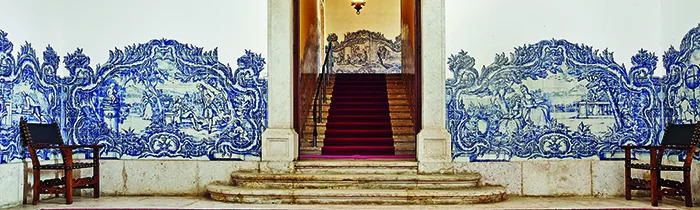
The academy settled in the former Convent of Nossa Senhora de Jesus in 1833. Its organisation was subsequently reformed into two classes, Sciences and Humanities, a structure that continues to express the breadth of its intellectual remit. Publications issued over its history document developments in Portuguese scientific and cultural life, while the building and its collections preserve evidence of earlier forms of teaching and research.
The museum’s collections page locates its permanent exhibition gallery in the former convent kitchens and dates that gallery to 2015. Scientific instruments and teaching materials sit alongside decorative art, painting, sculpture and azulejos, the ceramic tiles characteristic of Portuguese architecture. The academy therefore provides several kinds of historical evidence in one setting: the former convent itself, objects used in scientific investigation and teaching, and records of scholars and their work.
Sources: History of the academy ↗ · Museum collections and photographs ↗
A library for research and historical study
The academy’s heritage library combines the collection begun with its foundation in 1779 and the former convent library, transferred following the dissolution of religious orders in 1834. Its resources include early printed books, incunabula and manuscript collections. The Red Series of manuscripts comes from the convent, while the Blue Series developed through the academy’s activity and through purchases, gifts and bequests. Islamic and Chinese materials add to its European holdings.
The library’s mission is to support academy members, researchers and the general public through access to information and documentary sources. Its stated services include reference assistance, on-site consultation and reading, bibliographic searches and document reproduction. These services make its collections relevant not only as preserved objects but as sources for continuing research into language, literature, science, Portuguese history and relationships with other societies.
Sources: Heritage library ↗
Museum collections and the history of teaching
The museum preserves material connected with the academy’s educational and research activities. Its holdings span archaeology, ethnography, geology, palaeontology and zoology, together with scientific instruments and remnants of convent life. Conservation, documentation, study and public communication are part of its stated mission. Guided visits and exhibitions provide routes for researchers, students, museum professionals and other visitors to engage with those collections.
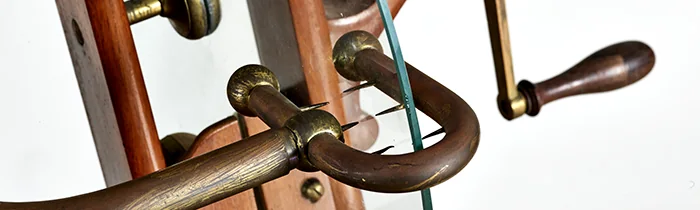
The teaching heritage is particularly visible in objects acquired for experimental science. The collections include anatomical models commissioned from Louis Auzoux in 1853, instruments for physics and chemistry, and natural history specimens used in teaching. The museum also preserves material associated with Alexandre Rodrigues Ferreira’s expedition to the Amazon basin between 1783 and 1792. These collections connect the academy with the history of observation, collecting and instruction, while providing material for contemporary historical and scientific study.
Sources: Museum presentation ↗ · Museum collections and photographs ↗
Portuguese language and lexical research
The Institute of Lexicology and Lexicography of the Portuguese Language contributes to the academy’s work on the Portuguese language. Created in the 1980s, it develops reference resources and supports study and dissemination of the language. Its projects include continuing work on the Portuguese language dictionary and orthographic vocabulary, alongside specialist publications such as the Earth Sciences Thesaurus collection. This work follows an interest in dictionary making that was present from the academy’s beginnings.
The institute’s responsibilities include preparing reference works, giving scholarly opinions on linguistic questions and building relationships with research and cultural organisations across the Portuguese speaking world. It also organises scientific meetings and working groups. Its activity connects detailed research on words and usage with a wider public function: providing reliable language resources and contributing expertise on Portuguese linguistic matters.
Public dialogue and younger researchers
The Institute of Advanced Studies provides a route for discussion between scholars and society. Its activities include conferences, meetings and debates involving scientists, teachers, civil society and decision makers. Scientific literacy and lifelong learning are central objectives. The institute emphasises communicating rigorous information in accessible ways and allowing dialogue around questions raised by changes in science, technology and society.
The Young Scientists Seminar offers another form of engagement. Established in 2010, it links younger researchers of recognised merit with the academy across science and the humanities. Its description encourages interdisciplinary work with social relevance and the preparation of material useful to science policy and society. These initiatives make the institution’s educational contribution visible through exchange, mentoring relationships and public discussion, alongside the preservation of its historic collections.
Sources: Institute of Advanced Studies ↗ · Young Scientists Seminar ↗
An archive of institutional memory
The historical archive documents the academy’s daily operations and the activities of its members since 1779. Its principal series include secretariat records, such as meeting minutes and correspondence, and individual files concerning members’ relationships with the institution. Its mission covers organisation, preservation and public communication of permanent historical documents. Digitisation and assistance to researchers, higher education students and other users help turn this institutional memory into a resource for studying Portuguese scientific and cultural history.
Sources: Historical archive ↗